






Furnace Repair in Sisters, OR
When you’re dealing with no heat, banging noises, short cycling, or a furnace that won’t start in Sisters, OR, it’s time to get the problem handled correctly. Mountain View Heating is known for honest pricing, dependable service, and trusted technicians, using a targeted inspection to identify the cause, eliminate the problem, and help keep the issue from coming back. Heating loss can become urgent fast, and we respond quickly to get your furnace working again.
Common furnace repair issues in Sisters, OR homes
Homes in Central Oregon often face high heating demand and seasonal stress on equipment. The most frequent issues local homeowners encounter include:
- No heat - Furnace won't start or runs but does not produce warm air. Common causes: ignition failure, gas supply issues, or thermostat problems.
- Frequent cycling (short cycling) - Furnace turns on and off repeatedly. Often caused by clogged filters, oversized unit, a failed limit switch, or airflow restrictions.
- Strange odors or burning smells - Dust burning after months of inactivity or electrical smells from failing components. Persistent fuel or rotten-egg smell indicates a gas leak and is a safety concern.
- Unusual noises - Rattling, banging, squealing, or humming can point to loose panels, failing blower motors, belts, or failing bearings.
- Uneven heating or weak airflow - Blocked ducts, failing blower, dirty filters, or thermostat calibration issues.
- Pilot or ignition problems - Older pilot assemblies or modern hot surface ignitors can fail with age or cycling.
- High energy bills - Inefficient combustion, dirty burners, failing components, or a worn heat exchanger can lower efficiency.
- Carbon monoxide concerns - Cracked heat exchangers or venting failures can create CO risks. This is urgent and requires immediate attention.
How furnace diagnostics are performed
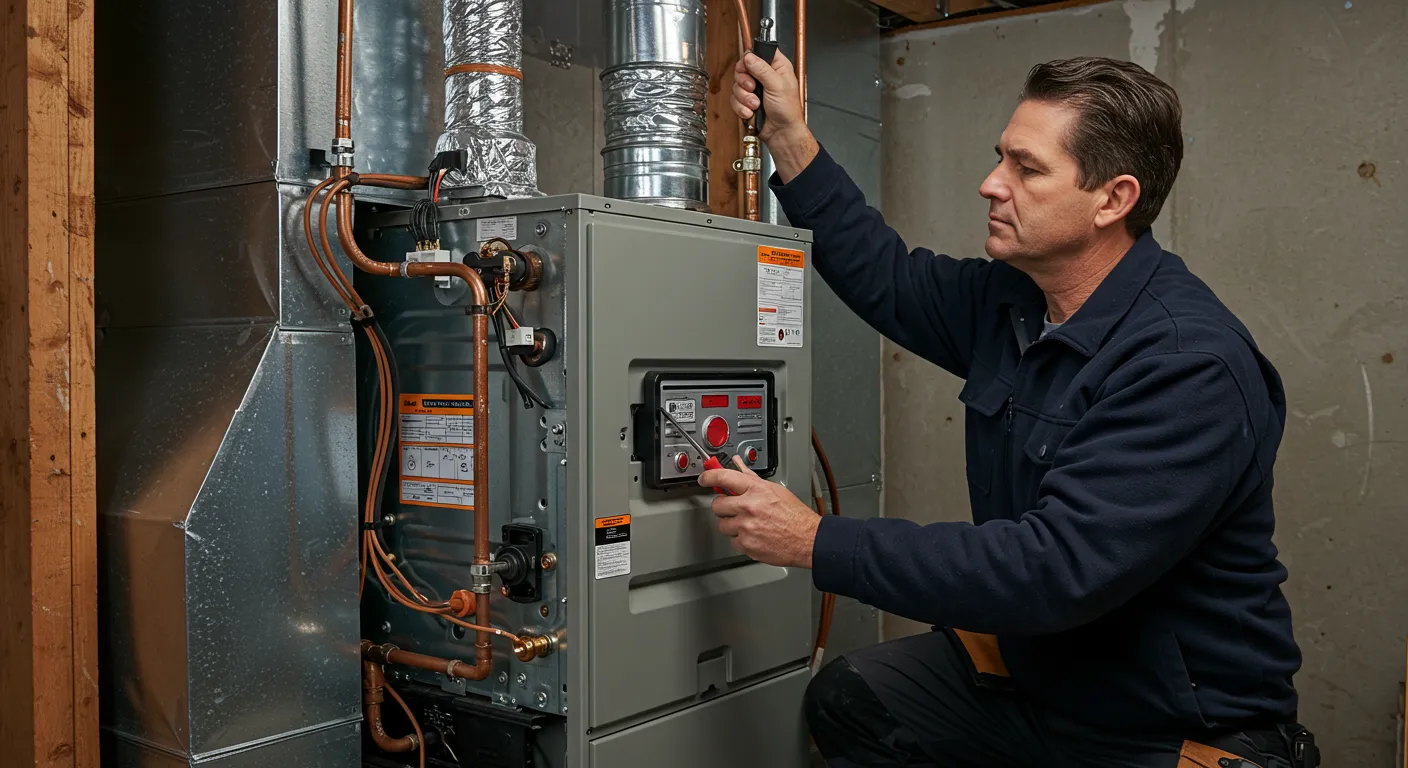
A proper diagnostic identifies the root cause rather than just treating symptoms. A typical diagnostic sequence includes:
- Visual and safety check - Inspecting burners, heat exchanger, vents, flue, and electrical connections for obvious hazards. Checking carbon monoxide detectors and vent termination.
- Thermostat and control verification - Confirming thermostat settings, wiring, and that control boards are receiving correct signals.
- Airflow assessment - Evaluating filters, blower operation, and ductwork for restrictions that affect performance.
- Ignition and gas system testing - Verifying gas valve operation, pilot or hot surface ignitor function, and burner firing.
- Electrical tests - Using meters to check capacitors, motor current draw, and control voltages.
- Combustion and safety measurements - Measuring flame quality and flue gases when necessary, and testing safety switches and limit controls.
Diagnostics aim to produce a clear written scope of repairs needed, safety notes, and options for repair versus replacement when appropriate.
Typical repairs explained
Here are common repairs you may encounter and what they involve:
- Ignition system repairs - Replacing a failed hot surface ignitor or repairing pilot assemblies. These parts wear out over time and are common failure points.
- Thermostat repair or replacement - Calibrating, reprogramming, or swapping an outdated thermostat to restore accurate control. Wiring faults are often resolved here.
- Blower motor and fan repairs - Repairing or replacing motors, capacitors, or belts that affect airflow and distribution. Noisy motors usually indicate bearing wear or capacitor issues.
- Heat exchanger inspection and action - Small cracks pose a safety risk. While some minor defects can be assessed, most heat exchanger failures necessitate replacement of the furnace because of CO risk.
- Control board and safety switch replacement - Modern furnaces rely on control boards; failed relays or sensors are common and must be replaced with compatible parts.
- Gas valve and burner servicing - Cleaning or replacing clogged burners and servicing gas valves to ensure proper combustion.
- Duct and airflow repairs - Sealing leaks, rebalancing dampers, and clearing obstructions to improve efficiency and comfort.
Each repair should include an explanation of parts, labor, and the expected outcome, along with any warranties available on parts and service.
Emergency furnace repair options
In Sisters, a furnace outage on a freezing night is more than inconvenient. Emergency response options typically include:
- Immediate safety steps - If you smell gas, evacuate, ventilate, and contact emergency services. If you suspect carbon monoxide, leave the home immediately.
- Temporary measures - Resetting breakers, checking the thermostat, changing a clogged filter, or switching to an alternate safe heat source can be short-term fixes. Avoid portable combustion heaters in enclosed spaces without proper ventilation.
- After-hours diagnosis and triage - Qualified technicians can often perform emergency diagnostics, secure unsafe equipment, and provide a temporary solution until full repairs are scheduled.
Emergency service prioritizes safety issues (gas odors, CO concerns, total heat loss in freezing weather) and aims to stabilize your system quickly.
Transparent pricing and repair decision guidance
Transparent pricing helps you decide whether to repair or replace a furnace. Good pricing practices include:
- Clear diagnostic fee explanation - Diagnostic charges should be stated up front and applied toward repair if work proceeds.
- Written estimates before work - Estimates should list parts, labor, and warranties. Compare cost of repair versus remaining useful life and efficiency loss.
- Flat-rate or itemized pricing - Clear breakdowns of parts and labor reduce surprises. Hourly rates should be explained when used.
- Repair versus replacement guidance - Recommended when repair cost approaches a significant portion of replacement cost, or when safety/efficiency is compromised.
- Warranty and follow-up - Transparent warranties on parts and labor and a clear follow-up policy for return visits if problems persist.
Being informed about pricing and options helps homeowners in Sisters make choices that balance budget, safety, and long-term comfort.
Maintenance tips to avoid repairs
Regular maintenance is the best way to reduce emergency repairs and extend furnace life, especially in Central Oregon’s climate:
- Change or clean filters every 1 to 3 months during heavy use.
- Schedule an annual tune-up before cold weather to inspect combustion, airflow, and safety systems.
- Keep vents and returns unobstructed and maintain proper clearance around the furnace.
- Install and test carbon monoxide detectors and replace batteries regularly.
- Consider programmable or smart thermostats to reduce run time and wear.
Timely maintenance reduces fuel use, improves indoor comfort, and lowers the likelihood of costly mid-winter failures. Keeping your furnace in good condition in Sisters, OR protects your family from cold nights and potential safety hazards. Accurate diagnostics, thoughtful repair options, emergency readiness, and transparent pricing empower you to make the best choice for your home and budget.
Stay Warm and Worry-Free With Mountain View Heating, Inc.
When your comfort and safety are on the line, trust Mountain View Heating, Inc. to deliver fast, expert furnace repair in Sisters, OR. Our team combines decades of experience with transparent pricing, honest recommendations, and long-lasting results that keep your home comfortable all winter long. Whether you need emergency repairs, professional maintenance, or guidance on upgrading your system, we’re here to help. Visit our About Us page to learn more about our commitment to quality, Contact Us to schedule your service today, or explore Financing Options to make your comfort upgrade even easier.