






Heating Installation in Bend, OR
When you’re dealing with an outdated heating system, uneven warmth, frequent breakdowns, or rising energy use in Bend, OR, it’s time to get the problem handled correctly. Mountain View Heating is known for honest pricing, dependable service, and trusted technicians, using a targeted inspection to match the right equipment, eliminate the problem, and help keep the issue from coming back with a proper installation. When your current system can’t keep up, we install quickly to restore dependable heating.
Why proper heating installation matters in Bend, OR
Bend’s climate combines freezing winter nights, wide temperature swings, and dry indoor air. Poorly sized or installed equipment can mean uneven heat, high fuel bills, and premature equipment failure. Additionally, wildfire smoke and particulate seasons make well-sealed ductwork and proper filtration more important for indoor air quality. A professional heating installation that accounts for local weather, home construction type, and ventilation needs reduces cold spots, improves comfort, and helps lower long-term operating costs.
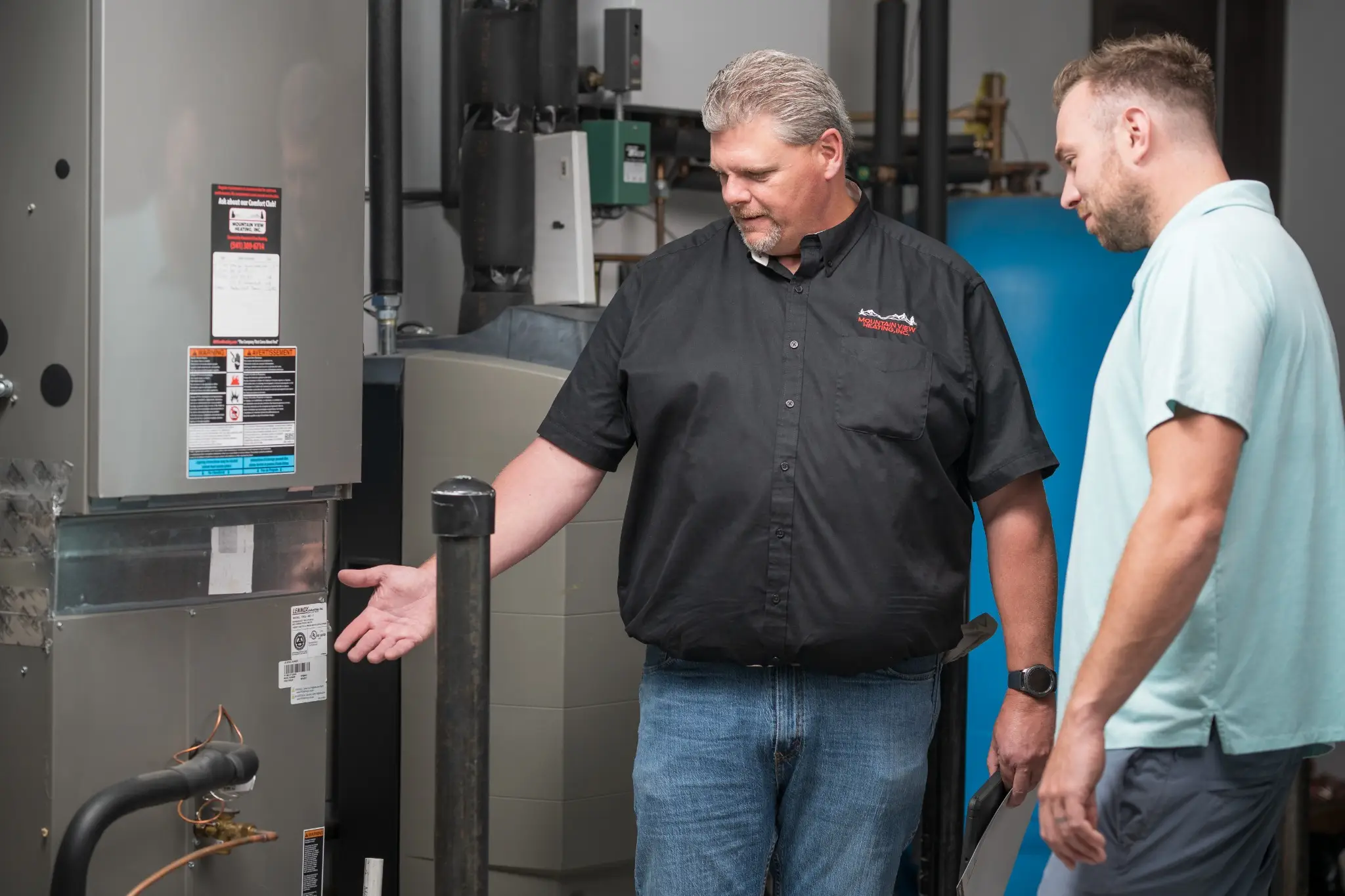
Common heating system options and which suits Bend homes
Gas and electric furnaces
- Pros: Powerful, consistent heat that handles cold snaps well. Gas furnaces are common in older Bend homes.
- Considerations: Requires proper venting, combustion safety checks, and right AFUE (annual fuel utilization efficiency) rating for efficiency goals.
Heat pumps (air-source and cold-climate models)
- Pros: High efficiency, provide both heating and cooling, and modern cold-climate heat pumps perform well at lower temperatures common in Central Oregon.
- Considerations: Best when paired with adequate insulation and sized correctly for heating loads.
Hybrid systems
- Pros: Combine a heat pump with a furnace to prioritize efficiency for moderate temperatures and use the furnace during extreme cold for reliability. Ideal for Bend’s variable winters.
Ductless mini-splits
- Pros: Excellent for additions, older homes without ducts, or zone control. Quiet, efficient, and can eliminate the need for major ductwork.
- Considerations: Multiple indoor heads may be needed for whole-home comfort; placement affects appearance and performance.
Common heating installation issues in Bend OR
- Undersized or oversized equipment causing short cycling or insufficient heat.
- Poorly designed or leaky ductwork increasing energy loss and bringing in outdoor smoke.
- Incorrect refrigerant charge or electrical setup on heat pumps reducing efficiency.
- Inadequate indoor air filtration for wildfire smoke and allergens.
- Lack of proper permits or combustion safety checks for gas systems.
Diagnostics and the installation process
Home assessment and load calculation
- A professional will perform a Manual J load calculation to determine accurate heating needs. This factors in local climate data, home orientation, insulation, windows, air infiltration, and elevation effects typical to Central Oregon.
System selection
- Based on load results, budget, and site conditions, choose between furnace, heat pump, hybrid, or ductless solutions. Consider long-term operating cost and the need for cooling in summer.
Ductwork evaluation or mini-split planning
- If ducts exist, a duct leakage test and airflow assessment ensure efficient distribution. For homes without ducts, mini-splits are mapped for optimal head placement and zone coverage.
Permitting and safety checks
- Proper permits, gas line inspection (for furnaces), electrical upgrades, and combustion safety tests are scheduled according to local code.
Installation
- Typical timelines: single-system furnace swap or heat pump replacement often takes 1 day; full system replacements or installations involving ductwork can take 2-4 days depending on complexity. Ductless multi-zone installs can take 1-3 days.
Startup, balancing, and homeowner walkthrough
- Technicians commission the system, adjust airflow and controls, and demonstrate operation and filter/warranty procedures.
Sizing, load calculations, and why they matter
Accurate sizing prevents inefficiency and wear. A correctly sized system runs longer cycles at steady output, maintains humidity and temperature better, and consumes less energy than an oversized unit that cycles on and off. In Bend, professionals factor in:
- Coldest design temperature for Bend winters
- Home insulation levels and window performance
- Orientation and solar gains
- Air infiltration common in older Central Oregon homes
- Elevation impacts on equipment performance
Ductwork vs mini-splits: pros and cons for Bend homes
- Ductwork pros: central distribution, compatible with high-capacity furnaces, compatible with whole-home filtration.
- Ductwork cons: leaks or poor insulation lose heat and can introduce wildfire smoke and dust.
- Mini-split pros: zoned control, high efficiency, no duct losses—good for older homes and additions.
- Mini-split cons: multiple head units can affect aesthetics and initial equipment cost for whole-home coverage.
Warranties, maintenance, and timelines
- Manufacturer warranties vary by equipment type and model; extended parts and compressor warranties are common on higher-efficiency heat pumps. Labor warranties from the installer are separate and should be documented.
- Registration of equipment with the manufacturer may be required to preserve full warranty benefits.
- Recommended maintenance includes annual tune-ups: combustion inspection for furnaces, refrigerant and electrical checks for heat pumps, duct cleaning or filter upgrades before smoke season, and thermostat calibration. Routine maintenance preserves warranty coverage and peak efficiency.
Energy efficiency guidance for Bend OR homeowners
- Look for high AFUE ratings on furnaces and high HSPF/SEER ratings on heat pumps, especially cold-climate-rated models.
- Consider a hybrid system if you want the efficiency of a heat pump with the backup reliability of a furnace during extreme cold.
- Improve insulation, seal air leaks, and upgrade windows or weatherstripping to reduce load and allow smaller, more efficient equipment.
- Use high-efficiency filters and consider air purifiers to protect indoor air during wildfire seasons.
Final considerations and long-term benefits
A properly planned and executed heating installation in Bend, OR provides reliable warmth, lower utility bills, and improved indoor air quality—especially important given the region’s cold winters and seasonal smoke. Prioritizing accurate sizing, sealed ductwork or thoughtfully designed ductless systems, and clear warranty and maintenance plans ensures the system delivers comfort and value for years. When evaluating options, weigh upfront equipment performance against long-term operating costs and local climate demands to choose the best solution for your Bend home.
Schedule Service Now
A professional heating installation in Bend, OR ensures dependable warmth, improved air quality, and energy savings throughout Central Oregon’s cold, dry winters. Mountain View Heating, Inc. specializes in correctly sized, high-efficiency systems—including furnaces, heat pumps, hybrid units, and ductless mini-splits—tailored to Bend’s high-desert conditions. Our licensed technicians perform detailed load calculations, precise installations, and thorough safety testing to deliver lasting comfort and value.
Enjoy peace of mind and long-term savings with flexible financing options and continued care through our Comfort Club maintenance program. Get expert heating solutions designed for your home and climate. Contact us today to schedule your heating installation with Mountain View Heating, Inc. in Bend, OR.