





AC Replacement in Sisters, OR
Upgrade your comfort system! Mountain View Heating, Inc. provides professional AC Replacement in Sisters, OR. Schedule your air conditioner estimate today.

AC Replacement in Sisters, OR
When you’re dealing with an aging air conditioner, higher utility bills, uneven cooling, or repeated repair calls in Sisters, OR, it’s time to get the problem handled correctly. Mountain View Heating is known for honest pricing, dependable service, and trusted technicians, using a targeted inspection to confirm replacement needs, eliminate the problem, and help keep the issue from coming back with properly selected equipment. When your AC is nearing the end of the line, we move quickly to replace it with reliable cooling you can count on.
Why AC replacement matters in Sisters, OR
Sisters sits at higher elevation with dry summers and occasional hot spells. Homes here often face rapid temperature swings between day and night and periods of poor outdoor air quality from regional wildfires. An older, undersized, or inefficient air conditioner can lead to:
- Uneven cooling and hot rooms during heat waves
- Higher electric bills during peak months
- Poor indoor air quality when filtration and ventilation are inadequate
- Frequent breakdowns during the busiest time for cooling
Replacing an aging or failing system restores consistent comfort, reduces the risk of mid-summer failures, and allows you to choose equipment with better filtration and smarter controls.
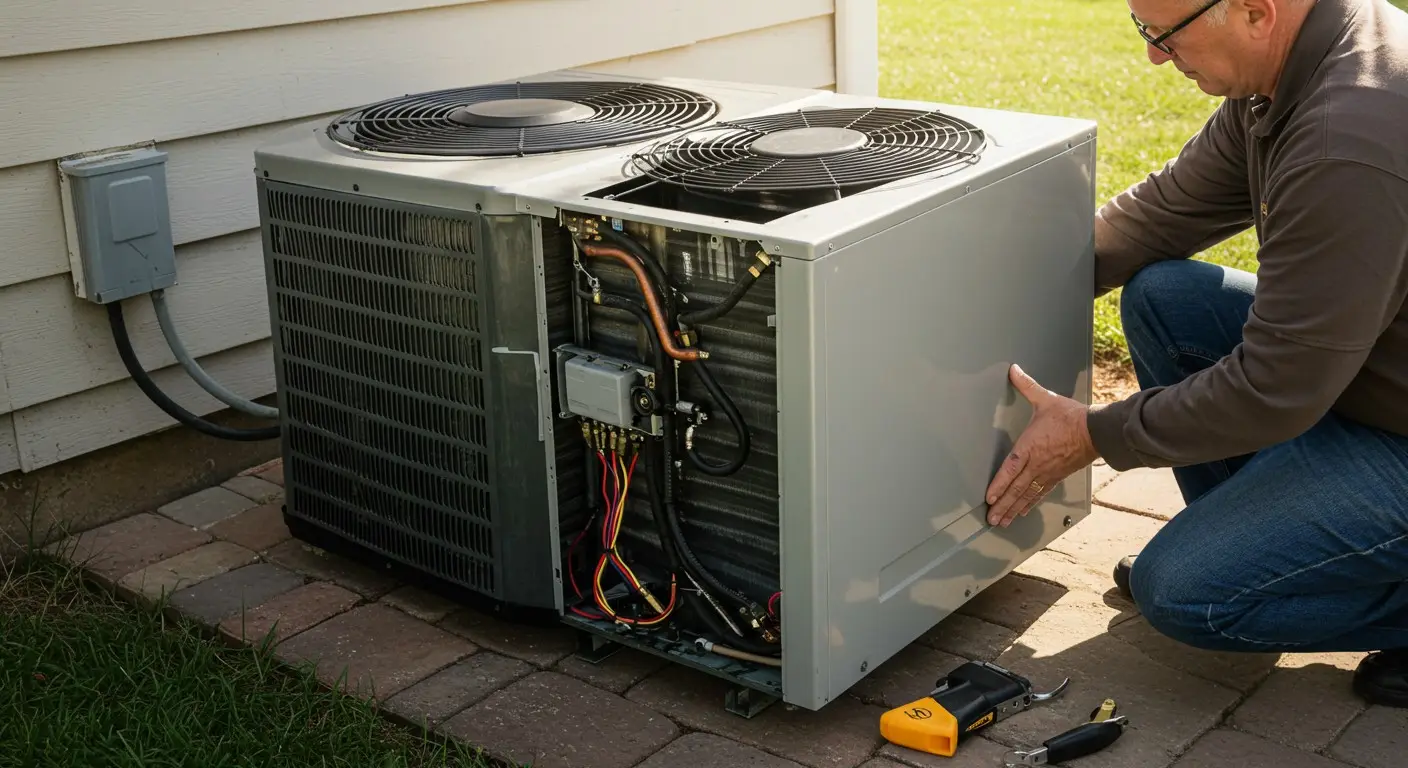
Common AC replacement issues in Sisters OR
Homeowners typically start considering replacement when they experience:
- Repeated repairs in a short period of time
- System age over 12 to 15 years (efficiency and refrigerant phase-out are factors)
- Rising energy bills despite routine maintenance
- Compressor failure or major refrigerant leaks
- Inadequate cooling during peak summer days
- Old units using phased-out refrigerant types (R-22)
System evaluation: what a professional inspection includes
A proper decision starts with a complete system evaluation, not just a quick look. Typical diagnostic steps include:
- Performing a cooling load calculation (Manual J) to size the new system for your home and local climate
- Inspecting ductwork for leaks, insulation deficits, and airflow restrictions
- Measuring refrigerant charge and compressor performance
- Testing airflow at registers and returning static pressure readings
- Checking electrical components, breakers, and thermostat compatibility
- Reviewing attic and insulation conditions that affect cooling load
A thorough evaluation identifies whether targeted repairs will provide reliable performance or if replacement is a smarter long-term investment.
When to repair vs replace
Consider repair when:
- The issue is isolated and covered by a recent inspection (e.g., a failed capacitor)
- The unit is relatively new and under warranty
- Repairs are minor and will restore normal efficiency
Consider replacement when:
- The system is more than a decade old with multiple failures
- The compressor or major components have failed
- The system uses obsolete refrigerant that is costly or restricted to service
- Your home’s cooling needs have changed (additions, remodeled spaces)
- You want to reduce energy use and improve indoor air quality long term
Comparing high-efficiency options
Key options homeowners evaluate for Sisters homes:
- Conventional central AC (high-SEER models): Good for homes with existing ductwork. Higher SEER ratings mean better summer efficiency.
- Cold-climate heat pumps: Provide efficient cooling and heating in many Central Oregon homes and eliminate separate systems. Modern heat pumps perform well in moderate winter conditions.
- Ductless mini-splits: Ideal for homes without ducts or for targeted room-by-room control. They offer high efficiency and zoning flexibility.
- Variable-speed and inverter-driven compressors: Provide gentler, more consistent cooling, better humidity control, and improved comfort compared to single-stage units.
Important considerations:
- Match outdoor unit, indoor coil, and furnace/air handler for best efficiency and warranty protection
- Prioritize proper sizing and duct sealing over choosing the highest SEER alone
- Consider filtration upgrades if wildfire smoke is a recurring concern
Expected energy savings
While exact savings vary by home, upgrading from an older low-efficiency unit to a modern high-efficiency system typically delivers notable reductions in cooling energy use. Factors that influence savings include initial system efficiency, home insulation and airtightness, thermostat settings, and local electricity rates. Upgrading also improves comfort and reduces the likelihood of emergency repairs during peak heat.
Removal and disposal of old equipment
Replacement services should follow environmental and safety rules:
- Refrigerant is reclaimed on-site per EPA regulations; refrigerant venting is prohibited
- Electrical disconnects and wiring are safely removed or reconnected to the new system
- The old condenser, coil, and components are hauled away and recycled when possible
- Any asbestos-containing materials (rare in AC components) are handled per code
Proper removal minimizes environmental impact and leaves the installation area neat and safe.
Financing and rebates commonly available
Many homeowners offset replacement cost through a combination of:
- Utility rebates for high-efficiency equipment or heat pumps (varies by provider)
- State or federal incentives for energy-efficient HVAC upgrades
- Manufacturer or dealer financing programs that spread payments over time
Qualification typically depends on system efficiency, installer certification, and documentation of the new equipment. When evaluating offers, look for clear terms, qualification requirements, and any efficiency thresholds required to receive incentives.
Maintenance to protect your investment
After replacement, simple maintenance keeps a new system running efficiently:
- Change or clean filters regularly to preserve airflow and filtration
- Schedule annual tune-ups for refrigerant charge, electrical checks, and airflow balance
- Seal and insulate ducts to prevent conditioned air loss
- Keep the outdoor unit clear of vegetation and debris and maintain 2 to 3 feet of clearance
- Use programmable or smart thermostats to reduce wasted runtime
Benefits of timely replacement
Upgrading an aging AC delivers multiple benefits for Sisters homes: consistent comfort during hot spells, improved indoor air quality during wildfire events, greater energy efficiency, and fewer emergency repairs. A professionally evaluated, properly sized, and correctly installed system is the most reliable path to long-term comfort and lower operating headaches.
This guidance provides the decision-making framework you need for AC replacement in Sisters, OR: when to repair or replace, what to expect during evaluation and installation, how modern options compare, and how to maximize savings and longevity through proper removal, incentives, and maintenance.
Ready for Reliable Comfort? Trust Mountain View Heating, Inc. for Your AC Replacement in Sisters, OR
When it’s time to upgrade your air conditioning system, Mountain View Heating, Inc. is your trusted partner for professional replacement, expert guidance, and long-term comfort. Our team ensures your new system is properly sized, energy-efficient, and built to handle the Central Oregon climate. From start to finish, we make the process smooth — including financing options to fit your budget.
Learn more about us and discover why homeowners across Sisters rely on our trusted HVAC expertise. Ready to schedule your replacement? Contact us today to get started!