


Why High Desert Homeowners in Bend, Oregon Are Turning to Mini Splits for Zone Comfort
Understanding how mini splits provide zone comfort in high desert weather starts with one simple reality: no two rooms in a high desert home need the same temperature at the same time.
Here's a quick summary of how mini splits deliver zoned comfort in high desert climates like Bend, Oregon:
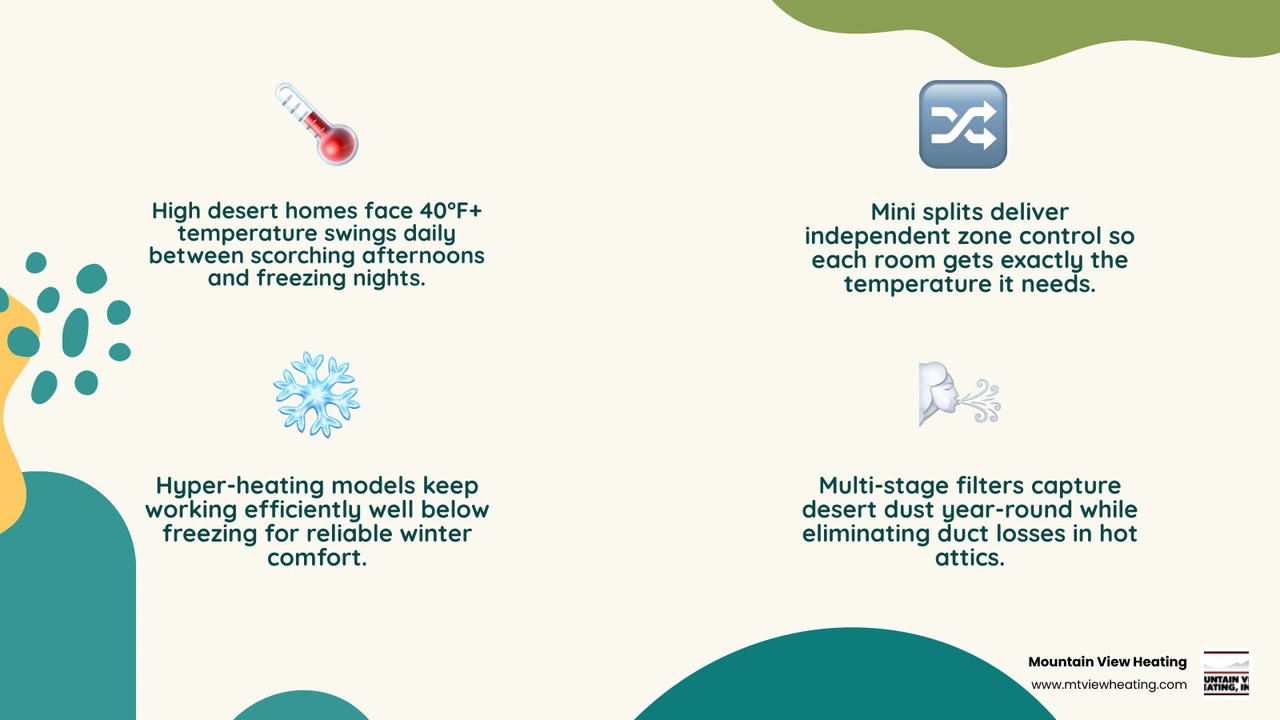
• Independent zone control - Each indoor unit heats or cools its own room, so a sun-drenched living room and a shaded bedroom get exactly what they need
• Handles extreme day-night swings - Inverter-driven compressors adjust output continuously, keeping up with 40°F+ temperature shifts between afternoon and midnight
• No duct losses - Refrigerant runs directly to each zone, so none of your conditioned air bakes away in a hot attic
• Cold-night capable - Hyper-heating models operate efficiently well below freezing, making them reliable through Central Oregon winters
• Improved air quality - Multi-stage filters capture the fine dust that high desert winds push into your home year-round
Central Oregon's high desert climate is genuinely demanding. Summer afternoons in Bend can push past 90°F, while nights drop into the 40s — sometimes lower. In winter, temperatures regularly fall below freezing, and dust from the surrounding high plateau works its way into everything. A standard central HVAC system treats your whole home as one zone, running at full blast or not at all, struggling to keep up with those rapid swings. Mini split systems work differently. By placing individual indoor units in the rooms that matter most, each zone gets its own precise control — no more fighting over the thermostat, no more wasted energy heating an empty guest room while your living room freezes.
For homeowners in Bend and surrounding communities like Redmond, La Pine, and Sisters, that kind of flexibility isn't a luxury — it's the sensible answer to a climate that doesn't follow the rules.
The Science of How Mini Splits Provide Zone Comfort in High Desert Weather
At the core of ductless technology is a shift in how we think about home comfort. Traditional systems rely on a single central thermostat to make decisions for your entire house. If your upstairs master bedroom is baking under the high desert sun while your downstairs kitchen remains shaded and cool, a central system has no choice but to blast cold air everywhere, freezing the kitchen just to make the bedroom livable.
Mini split systems bypass this issue entirely. By operating as localized heat pumps, they move thermal energy rather than generating it from scratch. In the summer, they absorb heat from your indoor air and dump it outside. In the winter, they reverse the process, extracting thermal energy from the cold outdoor air and bringing it indoors. To understand this thermodynamic magic in detail, take a look at our comprehensive guide on How Does a Heat Pump Work in a High Desert Climate.
By isolating this process to individual rooms, homeowners can enjoy customized, room-by-room temperature management. This targeted heating and cooling is just one of many Mini Split Benefits for Homeowners who want to take control of their indoor environments without wasting energy on empty spaces.
Inverter Compressors vs. Traditional Single-Stage Systems
The real hero behind how mini splits provide zone comfort in high desert weather is the inverter-driven compressor.
Traditional heating and cooling systems operate on an "all-or-nothing" cycle. When the temperature drifts, the compressor kicks on at 100% capacity, blasts conditioned air until the thermostat is satisfied, and then shuts off. In the high desert, where daytime solar gain can rapidly heat up south-facing rooms while northern rooms stay chilly, this constant cycling leads to dramatic temperature swings, annoying drafts, and high utility bills.
Inverter technology works more like a dimmer switch than an on/off toggle. Instead of shutting down completely, the variable-speed compressor runs continuously, scaling its output up or down in tiny increments to match the exact heating or cooling load of the room. When afternoon temperatures in Redmond peak, the system ramps up gently. As the cool desert night rolls in, it scales back to a whisper-quiet, low-power mode to maintain your exact comfort level.
For a clearer picture of how these technologies stack up, consider this comparison between inverter mini splits and standard central systems:
• Compressor Operation — Inverter Mini Split Systems: Variable-speed; runs continuously at optimal rates — Traditional Single-Stage HVAC: Single-speed; cycles on and off at 100% power
• Temperature Consistency — Inverter Mini Split Systems: Maintains within 1°F of your target setting — Traditional Single-Stage HVAC: Fluctuates by 4°F to 6°F during cycles
• Energy Losses — Inverter Mini Split Systems: 0% duct loss; direct-to-zone delivery — Traditional Single-Stage HVAC: 20% to 30% loss through attic/crawlspace ducts
• Zoned Customization — Inverter Mini Split Systems: Independent control for 2 to 8 indoor zones — Traditional Single-Stage HVAC: Single-zone control (whole house gets one setting)
• Noise Levels — Inverter Mini Split Systems: Ultra-quiet (19 to 40 dB indoors) — Traditional Single-Stage HVAC: Moderate to loud (50 to 70 dB indoors/outdoors)
This continuous operation prevents the "blast-and-freeze" cycles common with older equipment. To see how this impacts your year-round utility bills, explore our detailed Central AC vs Ductless Mini Split Comparison.
Eliminating Duct Loss in Arid Climates
In a typical ducted home, conditioned air must travel through a web of metal or flexible pipes running through unconditioned spaces like attics, crawlspaces, or unfinished basements. In the high desert, attic temperatures can easily climb past 130°F on a hot July afternoon.
As cool air travels through those hot ducts, it absorbs heat before it ever reaches your living room. According to the Department of Energy, typical ducted systems lose 20% to 30% of their heating and cooling energy through conduction and air leaks. In older homes with deteriorating ductwork, those losses can spike even higher.
Ductless mini splits eliminate this waste. Because they bypass ductwork entirely, there is zero duct-related energy loss. Instead of pushing air through dusty, uninsulated pipes, mini splits deliver comfort directly to the room. The indoor and outdoor components are connected by a small, insulated line set containing refrigerant, which passes through a minor three-inch opening in your wall.
This makes ductless systems incredibly efficient and uniquely suited for homes that struggle with uneven heating. If you want to learn more about how to bypass ductwork issues entirely, check out our guide on Ductless Heating and Cooling for Homes Without Ductwork. For a deeper dive into the pros and cons of going ductless versus keeping your ducts, read our breakdown on Ductless vs Ducted Cooling Pros and Cons.
Sizing and Placement Strategies for High Desert Homes
Getting the most out of a mini split system in Central Oregon requires careful planning. You cannot simply pick a system based on square footage alone. High desert homes face unique environmental factors, including intense solar radiation at high altitudes, rapid night-time heat loss (diurnal shift), and wind exposure.
To ensure each zone stays perfectly comfortable, we perform a detailed Manual J load calculation. This calculation takes into account:
• The thermal mass of your home's building materials
• The orientation of your windows (south-facing windows in Sisters receive massive solar heat gain)
• Local elevation and microclimate patterns
• Insulation levels in your walls and ceilings
Sizing the system correctly prevents the units from short-cycling (which happens when a system is oversized and turns off too quickly, leaving the air humid or stale) or running constantly without ever reaching the desired temperature (which happens when a system is undersized). Choosing between a dedicated unit for a single room or a larger system that manages multiple rooms is a critical first step. You can read more about this decision in our Single Zone vs Multi Zone Mini Split Comparison.
Once the sizing is established, we map out the physical connections between your indoor air handlers and the outdoor condenser. To understand how these components work together, read our article on How the Indoor and Outdoor Units Are Connected.
How Mini Splits Provide Zone Comfort in High Desert Weather Through Strategic Placement
The physical style and placement of your indoor units play a massive role in how air circulates through your rooms. Because warm air rises and cool air sinks, high desert homes benefit from tailored placement strategies:
• Wall-Mounted Units: Typically installed high on a wall (at least 7 feet off the floor), these units are perfect for living rooms and bedrooms. They excel at distributing cool air evenly across a room during hot summer afternoons.
• Floor-Mounted Consoles: Installed near the floorboard, these units are highly recommended for rooms where heating is the primary concern, or in homes with vaulted ceilings. By discharging warm air at floor level, they prevent heat from immediately rising out of your living space.
• Ceiling Cassettes: Recessed directly into the ceiling, these units provide a sleek, low-profile look and disperse air in four directions, making them ideal for open-concept layouts.
Proper placement ensures that airflow isn't blocked by furniture, curtains, or architectural features. To learn more about how proper layout design maximizes your system's output, explore Some Benefits of Setting Up a Ductless Mini Split System.
Microclimate Considerations in Central Oregon
Central Oregon is famous for its diverse microclimates. The weather we experience at our shop in Bend can be vastly different from what you encounter in Redmond, Sisters, or La Pine.
For instance, homes in La Pine sit at a higher elevation and experience colder winter nights and heavier snow loads than homes in Terrebonne. Meanwhile, properties on the east side of Redmond often deal with direct, unshaded sun exposure and higher wind speeds, which increases the cooling load during summer days.
When we design a mini split system, we adjust our sizing and equipment recommendations based on these exact local conditions:
• Redmond: Homes here often require robust cooling capacities to manage sun-exposed, open terrain. Learn more in our Mini Split AC Redmond OR Guide.
• Terrebonne: Managing canyon winds and sudden temperature shifts requires highly responsive systems. Read our Mini Split AC Terrebonne OR Guide for localized advice.
Managing Arid Air, Dust, and Extreme Temperature Swings
Our high desert air is notoriously dry. While low humidity makes hot summer days more tolerable, it also means our atmosphere doesn't hold heat well. Once the sun dips behind the Cascade Range, temperatures drop rapidly. This dry air can also worsen static electricity and allow fine desert dust to remain suspended in the air longer.
Standard heating systems — especially gas furnaces — can dry out your indoor air even further, leading to static shocks, dry skin, and irritated sinuses. Mini splits provide a gentler form of heating. Because they do not rely on combustion or super-heated metal elements, they do not scorch the air or strip away what little moisture you have indoors. This gentle, consistent heat delivery is a major reason why local families love them. To see more year-round advantages, read about the Heat Pump Benefits for Central Oregon Homeowners.
How Mini Splits Provide Zone Comfort in High Desert Weather Despite Dust and Low Humidity
Dust is a constant companion in the high desert. Whether it is seasonal pine pollen in Spring river communities or fine soil kicked up by summer winds in Terrebonne, keeping your indoor air clean is a challenge.
Mini splits address this issue through advanced, multi-stage filtration built directly into each indoor unit. Because each zone has its own dedicated air filter, the system continuously scrubs the air in that specific room, trapping dust, pollen, and pet dander before recirculating the conditioned air.
To keep your indoor air quality high and your system running efficiently, simple maintenance is key:
1. Clean the Filters Regularly: In dusty desert environments, we recommend checking and washing your indoor unit's reusable filters every 2 to 4 weeks during peak use.
2. Ensure a Tight Home Envelope: Combining ductless zone comfort with proper air sealing around windows and doors keeps outdoor dust from slipping inside.
3. Schedule Annual Professional Inspections: Before the winter cold or summer heat sets in, having our technicians inspect and clean the outdoor coils ensures maximum heat transfer.
For homeowners looking for the best performance in dusty conditions, finding the right system is crucial. Check out our recommendations in our article on the Best Mini Split AC in Terrebonne OR.
Cold-Climate Performance and Winter Reliability
A common question we hear from local homeowners is: Can a heat pump really keep me warm when Central Oregon temperatures drop below freezing?
A decade ago, standard heat pumps struggled to extract heat when outdoor temperatures fell below 32°F. However, modern cold-climate mini splits are engineered specifically for freezing environments. High-efficiency systems equipped with hyper-heating technology can deliver 100% of their heating capacity at 5°F and continue to operate efficiently at temperatures as low as -13°F or even lower.
These systems achieve this sub-zero performance through advanced inverter compressors and optimized refrigeration cycles that squeeze every bit of available thermal energy out of the freezing outdoor air. To understand why so many of your neighbors are making the switch, read our article on Why Central Oregon Homeowners Are Choosing Heat Pumps.
Protecting the Outdoor Unit from Desert Extremes
To ensure your mini split remains reliable when the winter snow flies, the outdoor condenser unit needs proper physical protection:
• Snow Stands: We mount outdoor units on elevated stands (typically 12 to 24 inches above the ground) to keep them clear of snow accumulation and allow meltwater to drain freely during defrost cycles.
• Base Pan Heaters: In cold climates, moisture can freeze in the bottom pan of the outdoor unit. An integrated base pan heater prevents ice buildup, protecting the fan blade and coils from damage.
• Wind Baffles: If your outdoor unit is installed on a side of your home exposed to strong desert winds, adding wind baffles prevents cold gusts from disrupting the defrost cycle.
• Coil Coatings: Specialized anti-corrosive coatings protect the delicate aluminum fins from dust abrasion and weathering.
Taking these steps ensures your system is ready for whatever winter throws our way. If you are still weighing your options, our guide can help you decide: Is a Heat Pump Right for Your Home.
Integrating Mini Splits with Existing Home Systems
You do not have to replace your entire heating and cooling system to enjoy the benefits of zoning. Many homeowners in Bend and Sisters use mini splits to solve specific comfort problems in their homes.
For example, if you have a traditional central furnace that keeps the main house comfortable but leaves an upstairs loft or finished bonus room freezing in the winter, a single-zone mini split can bridge the gap. This "hybrid" approach allows your central system to handle the bulk of the home while the mini split provides precise, efficient comfort in the spaces you use most.
Older homes in our historic districts often lack the space required for bulky metal ductwork. Retrofitting these properties with ductless mini splits preserves the architectural character of the home while delivering modern, whisper-quiet comfort. To see how mini splits compare to traditional systems in older properties, read our comparisons:
• Central Air vs Mini Split for Older Homes
• Central Air vs Mini Split High Desert Guide
Planning a Phased Ductless Installation
If you want to transition your entire home to ductless comfort but prefer to do it over time, a phased installation is an excellent strategy.
By choosing a multi-zone outdoor condenser during your initial installation, you can connect one or two indoor units now to condition your primary living spaces. When you are ready, you can easily run refrigerant lines to add more indoor units to bedrooms, home offices, or workshops later.
Planning this transition is simple when you have the right resources. Start by reading our Mini Split Installation Complete Guide. To help you plan your schedule, we have also outlined How Long Does a Mini Split Installation Take and detailed What Permits Are Needed for Mini Split Installation.
Frequently Asked Questions About High Desert Mini Splits
Do mini splits work when high desert temperatures drop below freezing?
Yes! Modern cold-climate mini splits are designed specifically to handle freezing winters. Systems featuring low-ambient or hyper-heating technology can maintain full heating capacity down to 5°F and continue to provide reliable, energy-efficient warmth even when outdoor temperatures plunge to -13°F.
How often do I need to clean mini split filters in a dusty desert environment?
Because high desert winds carry fine dust and pollen, we recommend inspecting and washing your indoor unit's reusable air filters every 2 to 4 weeks during peak heating and cooling seasons. Keeping the filters clean maintains optimal airflow, protects the system's motor, and ensures your indoor air stays clean.
Can I add more indoor zones to my mini split system later?
Absolutely, provided you plan ahead. If you install a multi-zone outdoor condenser with extra ports, you can easily connect additional indoor air handlers in the future. Our team can help you select an outdoor unit that leaves room for your future home comfort projects.
Conclusion
Achieving year-round comfort in Central Oregon's challenging high desert climate doesn't have to mean dealing with massive energy bills or drafty rooms. By delivering precise, independent zone control, bypassing wasteful ductwork, and utilizing advanced inverter technology, mini splits offer a smart, highly efficient solution tailored to our unique climate.
At Mountain View Heating, we have spent over 40 years helping our neighbors in Bend, Redmond, La Pine, Sisters, and surrounding areas stay comfortable in every season. Our commitment to 100% customer satisfaction means we take the time to design, size, and install the perfect system for your home's unique layout and microclimate.
Ready to experience the quiet, customized comfort of a ductless system? Contact our friendly local team today to explore our Mountain View Heating Mini Splits options and find the perfect fit for your home.