


Is a Heat Pump Right for Your Home? Here's What Bend Homeowners Need to Know
Is a heat pump right for your home? For most homeowners in Bend, Oregon, the answer is yes — but a few key factors determine whether it's the best fit for your specific situation.
Quick answer: A heat pump is likely a good fit if:
- Your home has existing ductwork in decent condition (or you're open to a ductless mini-split)
- Your electrical panel can support a 230V circuit (or you're willing to upgrade)
- You want one system that handles both heating and cooling
- Your home is reasonably well insulated
- You're replacing an aging furnace, AC, or electric resistance heating system
A heat pump may not be the best standalone option if:
- You're in an extremely cold area without access to a cold-climate model or backup heat
- Your home has significant air sealing or insulation problems that haven't been addressed
- Your local electricity rates are unusually high compared to natural gas
Heating and cooling account for roughly 43% of a home's energy bill in the United States. That's a big chunk of your monthly costs — and choosing the right system matters. Heat pumps have surged in popularity, with annual U.S. sales topping 4 million units in 2022, actually outpacing gas furnace sales. But popularity alone doesn't answer the question for your home.
This checklist-style guide walks you through everything you need to evaluate — from your ductwork and electrical setup to how well a heat pump handles Central Oregon winters — so you can make a confident, informed decision.

Understanding How Heat Pumps Work in Central Oregon
To determine if is a heat pump right for your home, we first need to pull back the curtain on how they operate. Unlike a furnace that burns fuel to create heat, a heat pump is a master of relocation. It uses a refrigeration cycle to move heat from one place to another.

Think of it like your kitchen refrigerator, but on a much larger scale and capable of running in reverse. The system consists of an outdoor unit (the condenser) and an indoor unit (the evaporator coil). Refrigerant travels between these two units, absorbing heat from the outdoor air—even when it feels cold to us—and pumping it into your home. During the summer, it simply reverses the process, pulling heat out of your house and dumping it outside. To learn the nitty-gritty details, check out our guide on How Does a Heat Pump Work.
The difference between heat transfer and combustion
The biggest shift for homeowners moving from a traditional furnace is moving away from combustion. Traditional gas furnaces are highly efficient today, often converting 90% to 97% of fuel into heat. However, they still rely on burning a fuel source and using an ignitor to start the process.
Heat pumps, on the other hand, use electricity to power a compressor. Because they are moving heat rather than creating it, they can deliver up to three times more heat energy than the electrical energy they consume. This makes them significantly more efficient than electric resistance heating (like baseboard heaters), which can use nearly 75% more electricity to achieve the same temperature. Understanding this efficiency is a key part of Why Heat Pumps Are a Smart Choice for modern homes.
Year-round comfort in a single system
One of the most attractive features of a heat pump is its "two-in-one" nature. In the past, you needed a furnace for the winter and a separate central air conditioner for the summer. A heat pump replaces both.
The secret is the reversing valve. This component allows the refrigerant to flow in either direction, switching the system from heating mode to cooling mode with a simple click on your thermostat. This dual functionality is one of the primary Heat Pump Advantages Over Traditional HVAC systems, as it simplifies your home maintenance and reduces the number of appliances you need to worry about.
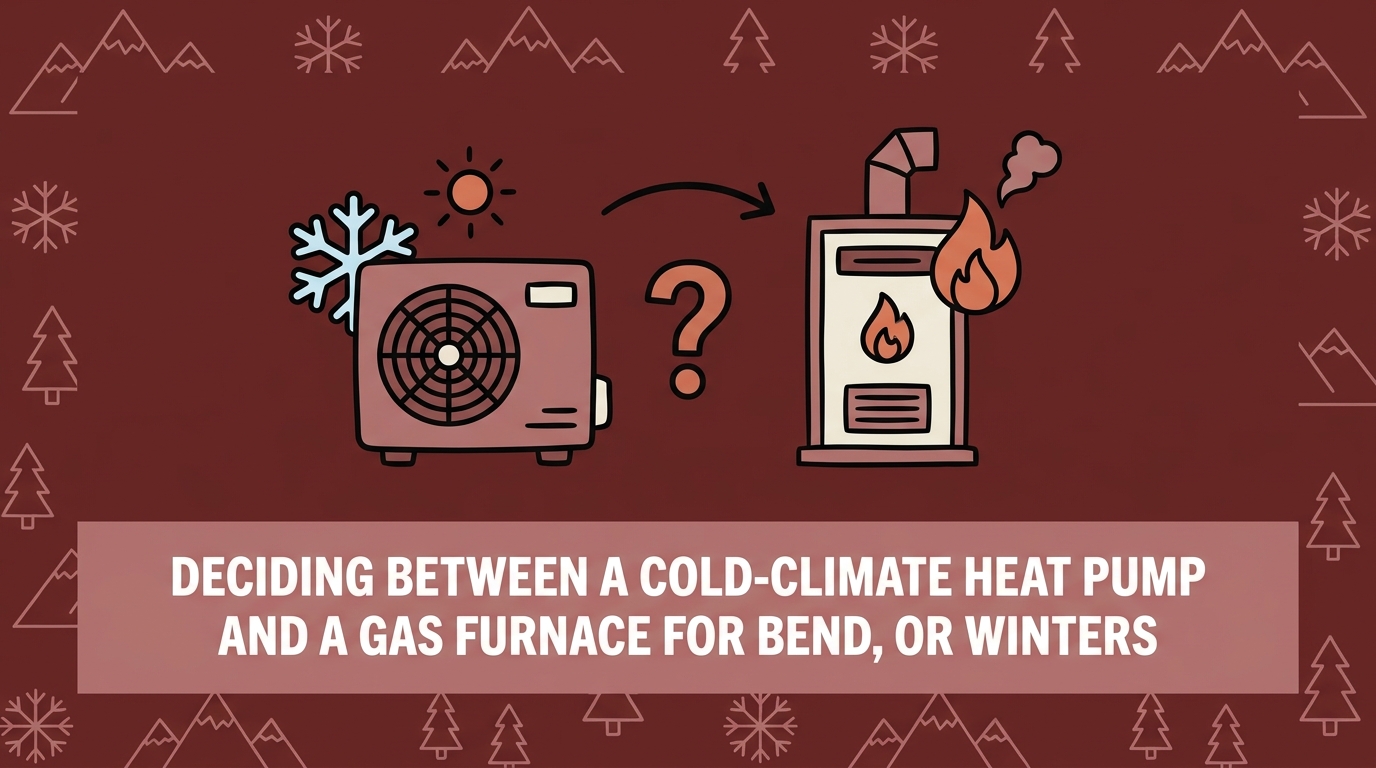
Comparing Systems: Is a Heat Pump Right for Your Home vs. a Furnace?
When we sit down with homeowners in La Pine or Sisters, the conversation often turns to the "Heat Pump vs. Furnace" debate. Both have their merits, but the right choice depends on your existing setup and your long-term goals.
| Feature | Heat Pump | Gas Furnace |
|---|---|---|
| Energy Source | Electricity | Natural Gas / Propane |
| Efficiency | Up to 300%+ (Heat Transfer) | 90% - 97% (Combustion) |
| Cooling | Built-in | Requires separate AC |
| Emissions | Zero (on-site) | Low (Combustion byproducts) |
| Ideal Climate | Moderate to Cold (with CCHP) | Any (especially extreme cold) |
Efficiency ratings are vital here. For cooling, we look at SEER2 (Seasonal Energy Efficiency Ratio), and for heating, we look at HSPF2 (Heating Seasonal Performance Factor). High-efficiency models can lead to substantial savings over the life of the unit. For a deeper dive into this comparison, read Heat Pump vs Furnace How to Choose the Right One.
Why a heat pump is right for your home's cooling needs
If you are currently looking to replace an aging central air conditioner, a heat pump is an excellent candidate. In fact, a heat pump is an air conditioner that can also heat.
One major perk for Central Oregon summers is humidity control. Heat pumps are exceptionally good at dehumidifying the air, often performing better than standard AC units. This leads to a "crisper" feel in the home during those hot July afternoons in Redmond. If you're wondering Is a Heat Pump Better Than AC, the answer often comes down to whether you want the added benefit of efficient heating in the shoulder seasons.
Environmental impact and carbon footprint
For many in the Sunriver and Bend areas, reducing their carbon footprint is a priority. Because heat pumps run on electricity, they can be powered by renewable energy sources like solar. Air-source heat pumps can trim household carbon dioxide emissions by about 40% compared to gas furnaces. Switching to an all-electric system is one of the 3 Advantages of a Heat Pump Versus a Furnace that appeals to forward-thinking homeowners looking to future-proof their homes against potential changes in energy policy.
Evaluating Your Home’s Infrastructure for a Heat Pump
Before you decide if is a heat pump right for your home, we need to look at the "bones" of your house. Not every home is ready for a heat pump without a few minor adjustments.
First, let's talk about power. Most heat pumps require a 230V circuit. If you are currently using a gas furnace, your electrical panel might only be set up for 115V for the blower motor. An upgrade to your panel or the addition of a new circuit is a common part of the installation process. Additionally, your home's insulation levels play a huge role. A heat pump works most efficiently when it doesn't have to fight drafts and poor attic insulation. You can explore more about the technical requirements on our Heat Pumps service page.
Determining if a ductless heat pump is right for your home
What if your home doesn't have ducts at all? Many historic homes in downtown Bend or newer additions like sunrooms and attics aren't connected to a central air system. In these cases, a ductless mini-split is the perfect solution.
These systems use an outdoor compressor connected to one or more indoor wall-mounted units. They allow for "zoned comfort," meaning you can heat the living room while keeping the bedrooms cooler. They are incredibly flexible and avoid the energy loss associated with leaky ductwork.
Assessing existing ductwork and airflow
If you do have ducts, we need to make sure they can handle the airflow. Heat pumps typically move a larger volume of air at a lower temperature than a gas furnace. If your ducts are undersized, restricted, or poorly sealed, the system won't perform as intended. Part of our assessment involves checking if your home is a candidate for Should You Purchase a Heat Pump or Furnace based on your current infrastructure.
Performance in Cold Climates: Can a Heat Pump Handle Bend Winters?
This is the most common question we hear: "Will it actually work when it’s 10 degrees outside?" Thirty years ago, the answer might have been "barely." Today, it is a resounding "yes."
Modern cold-climate heat pumps (CCHPs) are designed specifically for regions like ours. They use variable-speed inverter technology, which allows the compressor to modulate its speed rather than just being "on" or "off." This enables the system to find heat in the outdoor air even when temperatures drop significantly. There are many Heat Pump Benefits for Central Oregon Homeowners, but reliability in the snow is at the top of the list.
Advanced technology for low temperatures
Many high-end heat pumps are now rated to provide 100% of their heating capacity down to 5°F, and some can continue to extract heat as low as -15°F. Technologies like flash injection and advanced defrost cycles prevent the outdoor unit from icing up, ensuring that the system keeps humming along while the snow piles up in Sunriver.
Hybrid and dual-fuel configurations
For homeowners who want the ultimate peace of mind, we often recommend a hybrid or "dual-fuel" system. This setup pairs an electric heat pump with a gas furnace. The heat pump handles the heating for the majority of the year (when it’s most efficient). When the temperature drops into the extreme negatives, the system automatically switches over to the gas furnace. This provides a perfect balance of efficiency and "toasty" reliability.
Maintenance and Longevity: Keeping Your System Efficient
A heat pump is a significant investment, and like any high-performance machine, it needs regular care to reach its full potential.
Basic maintenance starts with the homeowner. Regularly changing your indoor air filters and ensuring the outdoor unit is clear of debris are simple steps that make a huge difference. For the more technical aspects, we recommend a professional inspection twice a year—once before the heating season and once before the cooling season. Our Heat Pump Tune-Up Guide Sisters OR provides a great roadmap for keeping your system in top shape.
Maximizing the lifespan of your equipment
On average, a well-maintained heat pump lasts between 12 and 15 years. Because the system works year-round (unlike a furnace that rests in summer or an AC that rests in winter), it does experience more consistent wear and tear. This is why professional technician inspections are so critical. We catch small issues—like a worn capacitor or a slightly low refrigerant charge—before they turn into expensive mid-winter breakdowns.
Seasonal care for outdoor units
In Central Oregon, our outdoor units face unique challenges. In the fall, pine needles and leaves can clog the fins. In the winter, heavy snow can block airflow. We always advise homeowners to keep a clear "breathable" space around their outdoor unit. If the system can't pull in air, it can't move heat, and your efficiency will plummet.
Frequently Asked Questions about Heat Pumps
Do heat pumps work in freezing temperatures?
Yes! Modern cold-climate heat pumps use inverter technology to extract heat from the air even when it is well below freezing. While older models struggled below 32°F, today's units are common in snowy climates like Maine and Norway because they remain highly efficient even in the cold.
How long do heat pump systems typically last?
You can expect a lifespan of 12 to 15 years. The key to reaching the 15-year mark is regular maintenance. Since the unit runs both summer and winter, it works harder than a standalone furnace, making those seasonal tune-ups vital.
Can I install a heat pump if I don't have ducts?
Absolutely. Ductless mini-split systems are designed exactly for this purpose. They are highly efficient, offer zoned temperature control, and are much easier to install in older homes or additions where running new ductwork would be too invasive or expensive.
Conclusion
Deciding is a heat pump right for your home doesn't have to be a guessing game. By evaluating your home's insulation, electrical capacity, and your personal comfort goals, you can determine if this efficient technology is the right move for your family.
At Mountain View Heating, we’ve spent over 40 years helping our neighbors in Bend, Redmond, Sisters, and beyond find the perfect HVAC solutions. We prioritize 100% customer satisfaction, whether we’re performing a simple repair or a full system replacement. If you're ready to explore your options or need 24/7 emergency support, our expert team is here to help. Explore our Heat Pumps services today and let's get your home ready for whatever the Oregon weather throws our way.