



Your Century Home Can Have Modern Comfort — Without Touching the Walls
Ductless heating and cooling for homes without ductwork is exactly what it sounds like: a modern heating and cooling system that requires no ducts, no major renovation, and no tearing into your walls. If your Bend, Oregon home was built before central air was common — think craftsman bungalows, Victorian-era houses, or mid-century ranches — you already know the struggle. Summers get hot, winters get cold, and your options have always felt limited to noisy window units, inefficient space heaters, or a gut-wrenching duct installation project.
Here's a quick answer to what ductless heating and cooling actually means for your home:
• What it is: A system with one outdoor unit connected to one or more indoor air handlers via a small refrigerant line
• How it installs: Through a hole as small as 3–4 inches in an exterior wall — no ductwork needed
• What it does: Heats and cools individual rooms or your entire home, depending on how many indoor units you install
• Who it's for: Older homes, home additions, garages, sunrooms, or any space where running ducts isn't practical
• How efficient it is: ENERGY STAR-certified models can reduce energy use by up to 40% compared to conventional ducted systems
The truth is, adding modern comfort to an older home used to mean a difficult choice: sacrifice the architecture or sacrifice the comfort. Ductless mini-split systems change that. They preserve your home's original character while delivering reliable, zoned heating and cooling year-round — even through Central Oregon's coldest winters and hottest summers.
In the average home, more than 25% of heating and cooling energy is lost through ductwork before it ever reaches a room. In a home that has no ducts at all, traditional central systems simply aren't an option without a major — and expensive — construction project. Ductless systems sidestep that problem entirely.
This guide walks you through everything you need to know: how these systems work, where they perform best, what installation looks like, and how to keep them running efficiently for years to come.
Why Ductless Heating and Cooling for Homes Without Ductwork is the Best Solution
For those of us living in Central Oregon, our homes are often our greatest pride. Whether it’s a historic craftsman in Bend or a mid-century gem in Redmond, these houses have "old-world charm" that we want to protect. However, that charm usually comes with a lack of modern HVAC infrastructure. Traditional central air requires bulky metal ducts that simply won't fit behind lath-and-plaster walls without a massive, messy demolition.
Ductless systems are the ultimate solution for historic preservation. Because they don't require large vents, we can bring 2026-level comfort into an 1890s home without disturbing the crown molding or original hardwood. There are Some Benefits of Setting Up a Ductless Mini-Split System that go beyond just saving your walls; these systems offer whisper-quiet operation and advanced air filtration that older homes desperately need.
Customizing Ductless Heating and Cooling for Homes Without Ductwork
Every home is unique, and ductless systems are incredibly flexible. We can design a system that fits your specific floor plan:
• Single-Zone Systems: Perfect for a single "problem room," like a primary bedroom that stays too hot or a new home office.
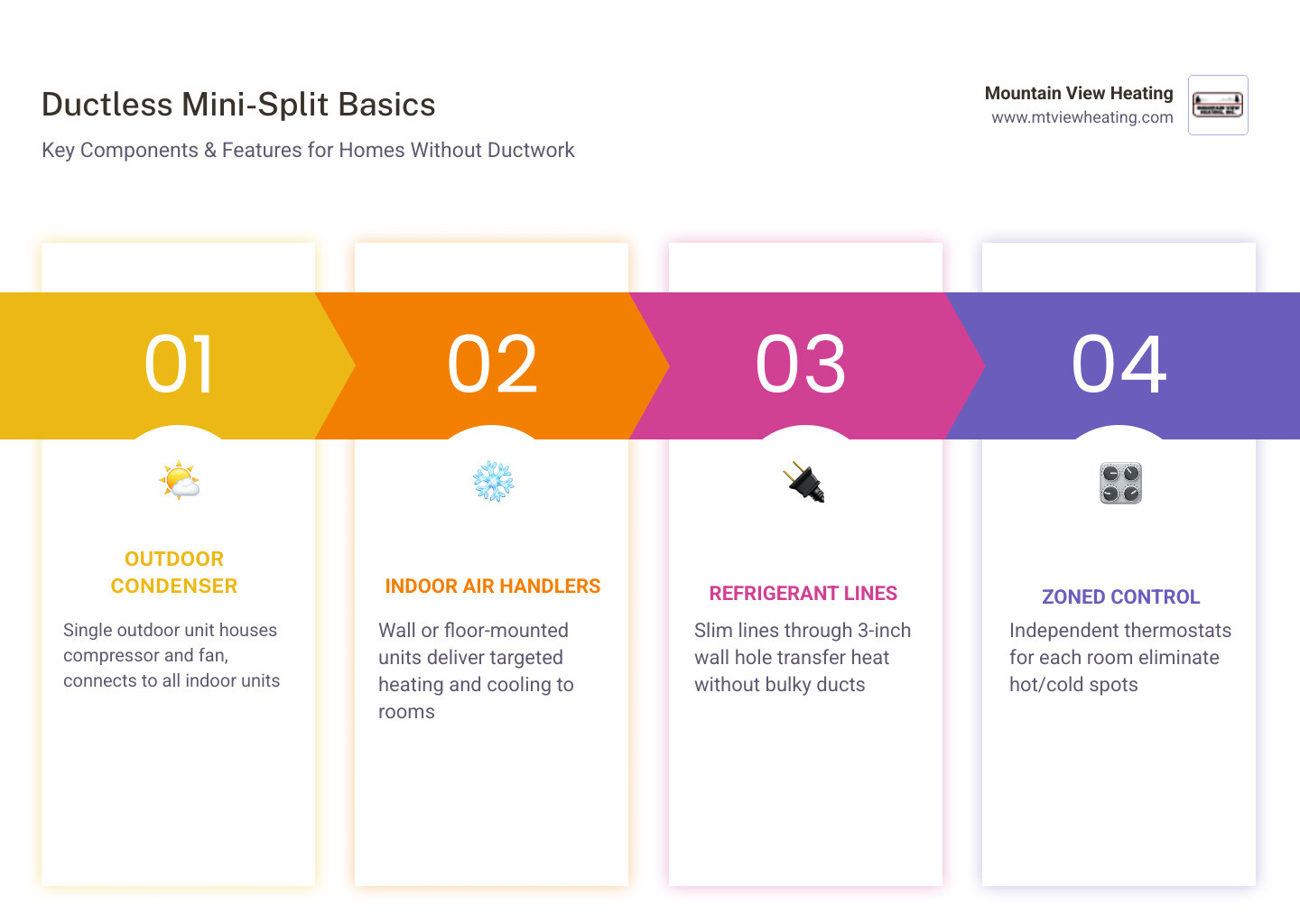
• Multi-Zone Flexibility: One outdoor unit can power up to four indoor units. This allows you to heat and cool your entire home, with each room having its own thermostat.
• Mounting Options: You aren't stuck with just wall units. We offer floor-mounted units (great for replacing old radiators) and ceiling cassettes that stay almost entirely out of sight.
If you are considering an upgrade, our team specializes in Mini-Split Installation Bend OR to ensure the placement is aesthetically pleasing and functionally perfect.
The Efficiency of Ductless Heating and Cooling for Homes Without Ductwork
Efficiency isn't just a buzzword; it’s a way to keep your monthly utility bills manageable during a Sunriver winter. Traditional ducted systems are notorious for "duct loss"—energy that leaks out of holes or uninsulated pipes in the attic or crawlspace. In fact, most mini-split systems lose less than 5% efficiency over time, whereas duct losses can skyrocket to 40% if not maintained.
By choosing ENERGY STAR-certified models, you can see up to 30% savings on your heating and cooling costs. This efficiency comes from inverter technology. Instead of a traditional furnace that blasts on and off like a light switch, a ductless inverter works more like a dimmer switch—it speeds up and slows down to maintain a perfect temperature without wasting energy. Many homeowners ask, Do Ductless Mini-Splits Use a Lot of Electricity? The answer is surprisingly no; they are often the most efficient option available today.
How a Ductless Heat Pump Works Without Vents
It might seem like magic, but the science is straightforward. A ductless system (often called a mini-split) consists of two main parts: an outdoor condenser and an indoor air handler. These are connected by a small bundle of cables and copper tubing known as a "line set."
The system works through a heat transfer process. In the summer, the indoor unit absorbs heat from your room and sends it outside. In the winter, the process reverses—even in freezing weather, the outdoor unit extracts heat from the air and brings it inside. Because we aren't "making" heat (like an electric space heater does), but rather "moving" it, the system is incredibly efficient. If you ever run into issues with this process, our Mini-Split Service Sisters OR team can quickly diagnose the refrigerant flow to get you back to peak comfort.
Performance in Extreme Central Oregon Weather
We know what you’re thinking: "Can a heat pump really handle a Sisters blizzard or a La Pine cold snap?" In the past, heat pumps struggled when temperatures dropped below freezing. But modern technology has changed the game.
Today’s high-performance systems feature hyper-heating technology. These units are designed to provide 100% heating capacity even when it’s 5°F outside, and they continue to provide efficient warmth down to -13°F. On the flip side, they can handle cooling in temperatures up to 115°F. This year-round reliability is why we see so many requests for Mini-Split Repair Sunriver OR only for routine maintenance—the systems themselves are built like tanks for our rugged climate.
Ideal Applications for Mini-Splits in Central Oregon
Ductless systems are the "Swiss Army Knife" of HVAC. While they are perfect for whole-home comfort, they excel in specific scenarios common to our area:
1. Century Homes: As mentioned, they preserve historic integrity.
2. Home Additions: If you’re adding a guest suite or a "man cave," it’s often cheaper and easier to go ductless than to try and tap into your existing furnace.
3. Sunrooms & Enclosed Patios: These glass-heavy rooms often get too hot or too cold for a central system to handle.
4. Garage Workshops: Keep your projects going year-round without shivering.
5. Attics and Basements: These converted spaces often lack the clearance for traditional ductwork.
Our Mini-Split AC Redmond OR Guide highlights how these applications are helping local homeowners reclaim unused square footage.
Solving Hot and Cold Spots
Do you have that one bedroom that is always five degrees colder than the rest of the house? Or a kitchen that gets sweltering when the oven is on? Ductless systems provide zoned comfort. Each indoor unit has its own thermostat and remote (or smartphone app), allowing you to cool the bedroom to 68°F for sleeping while leaving the rest of the house at 72°F. This independent control is a lifesaver for families who can't agree on the "perfect" temperature. Whether you need Ductless Terrebonne OR services for a single room or a whole-house solution, zoning is the key to true comfort.
Installation and Maintenance for Year-Round Comfort
One of the best things about going ductless is the lack of a "construction zone" in your living room. The installation is remarkably non-invasive. We simply drill a three-inch hole in the exterior wall to connect the indoor and outdoor components.
Professional placement is critical. We look for spots that provide optimal airflow while remaining unobtrusive. And because we’ve been serving Central Oregon for over 40 years, we provide 24/7 emergency support should you ever need us. For residents in the south end of the county, our Mini-Split Service La Pine OR ensures you’re never left in the cold.
Comparison: Ductless vs. Window Units
• Efficiency — Ductless Mini-Split: Very High (ENERGY STAR) — Window Unit / Space Heater: Low
• Noise Level — Ductless Mini-Split: Whisper Quiet (approx. 21-30 dB) — Window Unit / Space Heater: Loud and Clunky
• Security — Ductless Mini-Split: High (Small 3" hole) — Window Unit / Space Heater: Low (Window must stay open/unlocked)
• Aesthetics — Ductless Mini-Split: Sleek, permanent mount — Window Unit / Space Heater: Blocks the view/bulky
• Air Quality — Ductless Mini-Split: Multi-stage filtration — Window Unit / Space Heater: Basic or no filtration
Keeping Your System Efficient
While ductless systems are low-maintenance, they aren't "no-maintenance." To keep your system running for 15–20 years, you should:
• Clean the Filters: Most units have washable filters. We recommend checking them once a month, especially if you have pets.
• Annual Technician Inspections: Once a year, have a professional check the refrigerant levels and electrical connections.
• Keep the Outdoor Unit Clear: Ensure snow, pine needles, and debris aren't blocking the airflow of the outdoor condenser.
If your system starts making a strange noise or isn't cooling like it used to, don't wait. Quick Mini-Split Repair Bend OR can prevent a small sensor issue from becoming a major component failure.
Frequently Asked Questions about Ductless HVAC
Can a ductless system heat and cool my entire home?
Absolutely. By using a multi-zone outdoor condenser, we can connect up to eight indoor units. This allows for total whole-home coverage. We often perform Mini-Split Replacement Sisters OR for homeowners who are tired of their old, expensive electric baseboard heaters and want a complete ductless overhaul.
How quiet are these systems during operation?
They are incredibly quiet. Most indoor units operate at sound levels as low as 21 decibels—that’s quieter than a whisper in a library. Even the outdoor units are designed to be neighbor-friendly, with many operating at 46 decibels, which is about the level of a normal conversation. If you’re looking for a peaceful night’s sleep, Mini-Split AC Sunriver OR systems are the gold standard.
How long does the installation process take?
For a single-zone system (one indoor unit), we can typically finish the job in just a few hours. A whole-home, multi-zone project might take a few days, but even then, there is very little "mess" compared to traditional HVAC work. If you need a fast Mini-Split Installation Redmond OR, we can often get your new system up and running with minimal disruption to your daily routine.
Conclusion
Living in a home without ductwork shouldn't mean living in discomfort. Whether you are looking to preserve a historic treasure in Bend or just want to make your garage more usable in Terrebonne, ductless heating and cooling for homes without ductwork provides the efficiency, quiet, and comfort you deserve.
At Mountain View Heating, we’ve spent over four decades helping our neighbors across Central Oregon stay comfortable. We prioritize 100% customer satisfaction on every project, ensuring your new system is sized correctly and installed perfectly. Don't let another sweltering summer or freezing winter pass you by. Explore our options for Mini Splits today and see how we can bring modern comfort to your classic home.