






HVAC Repair Redmond, OR
When your heating or cooling system fails in Redmond, OR, you need fast, expert HVAC repair that restores comfort, protects indoor air quality, and avoids costly secondary damage. Redmond’s high desert climate—cold winters, hot summers, dust, and occasional wildfire smoke—puts extra strain on furnaces, heat pumps, and air conditioners. This page explains common HVAC problems in Redmond homes, how professional diagnostics work, typical repairs for compressors, motors, controls, and refrigerant issues, expected response times including emergency service, and how transparent pricing and warranties protect you.
Common HVAC repair issues in Redmond homes
- Compressor failure (AC/heat pump): Heavy summer use and dirty coils accelerate wear. Symptoms include reduced cooling, strange noises, or tripped breakers. Compressor failures are one of the most expensive repairs and often require evaluating whether repair or replacement is the most cost-effective option.
- Fan and motor problems: Condenser fan motors and blower motors can seize, overheat, or have failing bearings. Reduced airflow, unusual vibrations, or motor hum are typical signs.
- Controls and thermostat faults: Faulty thermostats, bad relays, or control board failures cause inconsistent cycles or no system response. Intermittent operation often traces back to control or sensor issues.
- Refrigerant leaks and charge problems: Low refrigerant reduces cooling performance and can damage the compressor if left unaddressed. Leaks are commonly found at joints, coils, and access fittings.
- Electrical issues: Worn capacitors, contactors, and wiring can prevent systems from starting or cause frequent trips. Electrical faults are common after storms or when systems age.
- Clogged condensate drains and airflow restrictions: Clogged drains cause water alarms and indoor leaks. Dirty filters and duct obstructions reduce efficiency and can freeze coil in cooling season.
- Furnace heat exchanger or ignition issues: Cracked heat exchangers, faulty ignition modules, and blocked flues are safety concerns that reduce heating reliability in winter.
How professional diagnostics work
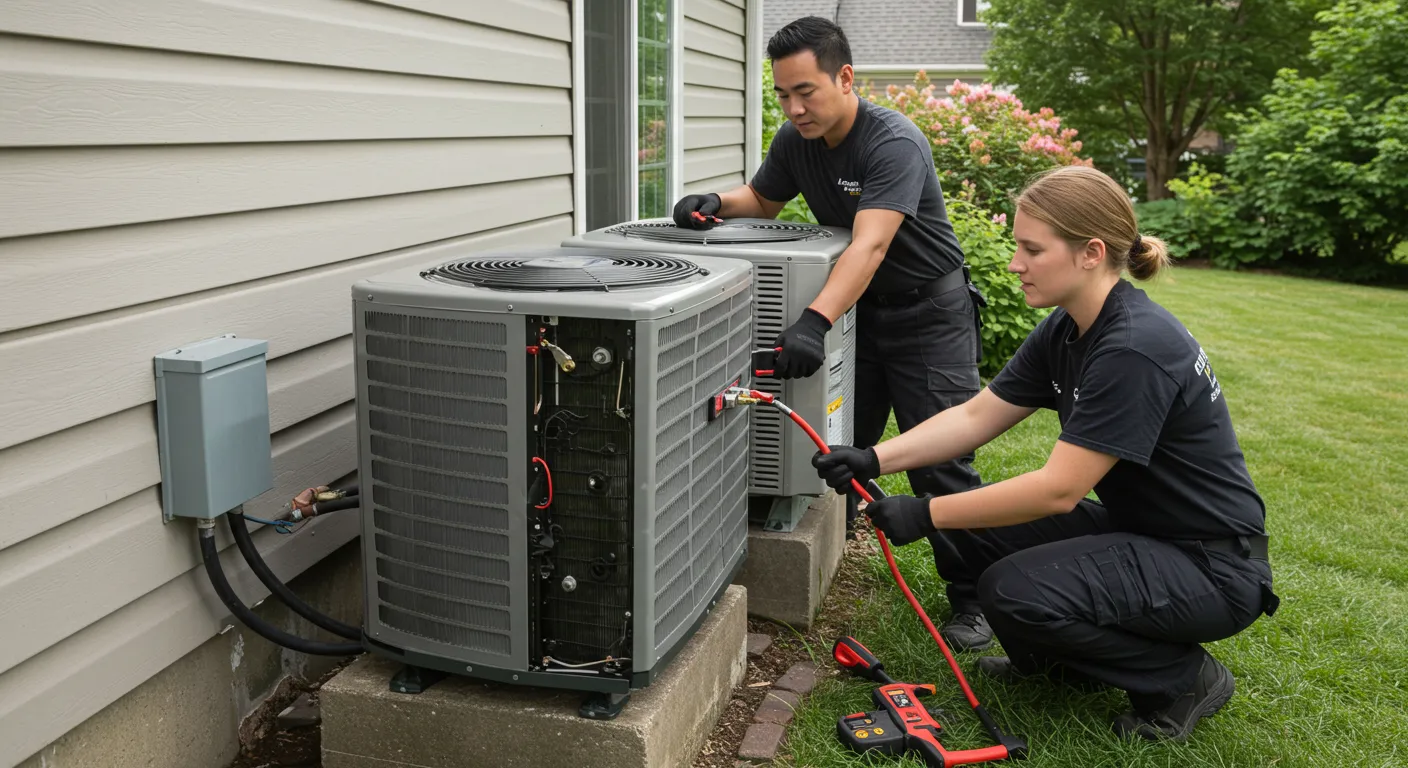
A careful diagnostic separates quick fixes from deeper problems. Typical steps include:
- Safety and visual inspection: Check panels, wiring, and visible damage. Confirm no safety hazards before testing.
- System start-up and operation tests: Measure voltages, amperages, airflow, and temperature differentials to identify failing components.
- Refrigerant pressure and leak checks: Use gauges and leak detection methods to find low charge or active leaks.
- Combustion analysis for furnaces: Test flue gases and ignition behavior to ensure safe, efficient operation.
- Control and sensor verification: Inspect thermostats, control boards, and sensors to rule out communication problems.
- Clear documentation: Provide an itemized diagnostic report explaining causes, recommended repairs, and expected outcomes.
Diagnostics prioritize fixes that restore safe operation first, then address efficiency and longevity.
Typical repairs: compressors, motors, controls, and refrigerant
- Compressor repair or replacement: If the compressor is failing, options include sealed system replacement or compressor swap where feasible. Technicians weigh system age, energy performance, and refrigerant type to recommend repair versus replacement.
- Motor and fan repairs: Capacitor replacement, motor bearing changes, or full motor replacement restore airflow. Proper balancing and blade inspection prevent repeat issues.
- Control and thermostat repairs: Replacing thermostats, relays, or control boards corrects erratic behavior. Upgrading to a modern thermostat can improve system performance and diagnostics.
- Refrigerant leak repair and recharge: Locate and repair leaks, evacuate and recharge the system to manufacturer specifications. Technicians verify no contamination before refilling.
- Electrical component replacement: Replace contactors, capacitors, breakers, and worn wiring with correctly rated parts to prevent nuisance failures.
- Duct and condensate work: Clear drains, repair condensate pans, and address duct leaks or blockages that reduce system effectiveness.
- Furnace repairs: Replace igniters, flame sensors, or repair burners and heat exchangers as safety and performance dictate.
For each repair, technicians will explain whether a part replacement, repair, or full system replacement is the most durable, cost-effective choice given system age and condition.
Estimated response times and emergency repair availability
- Standard repairs: For non-urgent issues, expect diagnosis and scheduling within 24 to 48 hours in most cases. Routine part replacements are typically completed within one service visit when common parts are stocked.
- Urgent repairs: For loss of heating during cold snaps or loss of cooling in extreme heat, same-day service is commonly available. Technicians prioritize safety concerns such as gas odors, combustion failures, or severe leaks.
- Emergency availability: 24/7 emergency service covers nights and weekends for critical failures. Complex repairs that require special-order parts may need additional visits; in those cases temporary fixes often restore safe operation until full repair is possible.
Technicians are upfront about realistic timelines and any parts lead times required to complete permanent repairs.
Transparent pricing and parts and labor warranties
Professional repair service provides clear, itemized estimates before work begins. Typical transparency measures include:
- Written diagnostic findings with cost breakdowns for labor, parts, and applicable fees
- Options when repair and replacement are both viable, including expected lifecycle and efficiency outcomes
- Warranties on parts and labor: manufacturer parts warranties remain in effect when applicable; technicians often provide a labor warranty (varies by provider) that covers workmanship for a stated period. Warranty details are documented so homeowners understand coverage and claim steps.
- Code compliance and permits: When a repair triggers required permits or code upgrades (electrical, refrigerant handling), estimates include those costs and explain the necessity.
Why timely HVAC repair matters in Redmond
Prompt repairs maintain comfort during temperature extremes, reduce energy waste, and prevent small issues from becoming system failures. In Redmond, preventing dust and smoke from compromising filters and coils keeps indoor air quality healthy. Addressing refrigerant leaks and electrical faults early preserves compressor life and avoids expensive replacements.
Maintenance tips to reduce repair needs
- Change filters every 1 to 3 months during heavy use and after wildfire smoke events.
- Schedule seasonal tune-ups to catch issues before high-demand periods.
- Keep outdoor units clear of dust, leaves, and snow; cover or elevate units if local conditions demand.
- Seal and insulate ducts to improve airflow and efficiency.
- Use thermostat schedules to avoid unnecessary runtime.
Professional inspection after a wildfire smoke period is advisable to ensure indoor air systems are not contaminated.
Timely, transparent, and expert HVAC repair in Redmond, OR protects comfort, safety, and investment value. When systems are diagnosed correctly and repaired with quality parts and clear warranties, homeowners avoid repeated failures and enjoy more efficient, reliable heating and cooling year-round.
Local Pros Who Know What Works in Redmond
System acting up? Our fast, efficient HVAC repair in Redmond, OR gets your home back to a comfortable temperature with honest diagnostics and expert fixes. Mountain View Heating, Inc. brings a personal touch to every repair—so you’re never just another service ticket. Let’s fix your comfort, fast.