

Why UV Exposure and Temperature Swings Are Hard on Outdoor HVAC Units in Central Oregon
Understanding how UV exposure and temperature swings affect your outdoor unit matters a lot if you live in Bend or anywhere in Central Oregon's high desert. At roughly 3,600 feet of elevation, the UV index here is meaningfully higher than at sea level, and summer days regularly climb to 95–105°F before dropping 30–40 degrees by morning. That combination — intense solar radiation beating down on your condenser all day, followed by a sharp overnight cooldown — puts real, measurable stress on the plastics, metals, and electrical components that make up your outdoor HVAC unit.
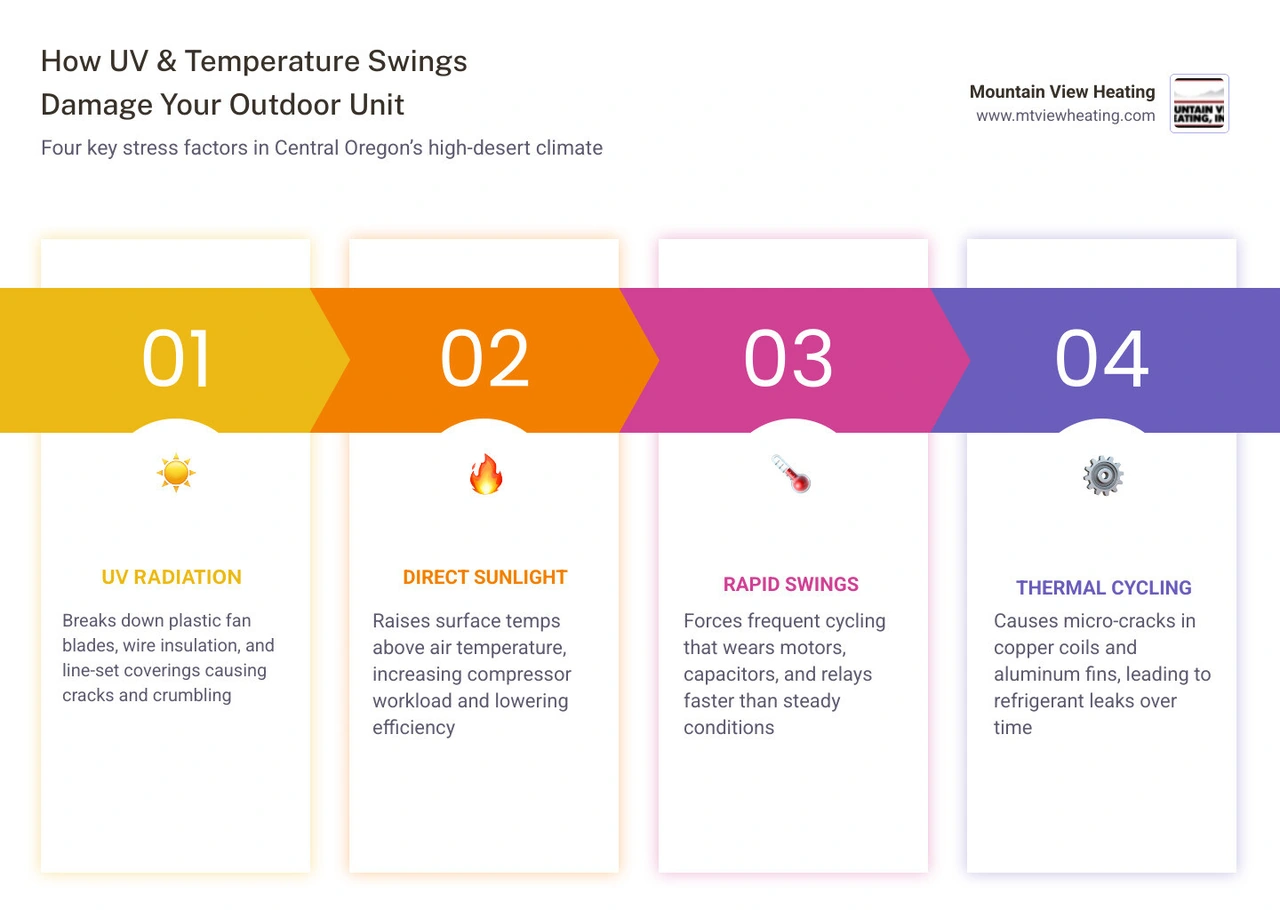
Here is a quick summary of the main effects:
- UV radiation breaks down plastic fan blades, wire insulation, and refrigerant line coverings, causing them to crack, yellow, and crumble over time
- Direct sunlight raises surface temperatures on the unit well above the ambient air temperature, increasing the workload on the compressor and reducing cooling efficiency
- Rapid temperature swings force the system to cycle more frequently, wearing down motors, capacitors, and relays faster than steady conditions would
- Thermal expansion and contraction from daily heat-and-cool cycles can open micro-cracks in copper coils and aluminum fins, eventually leading to refrigerant leaks
- Combined effects shorten overall equipment lifespan, raise energy bills, and increase the likelihood of a breakdown during the hottest part of the summer
The sections below walk through each of these effects in detail, show you the warning signs to watch for, and give you practical steps to protect your equipment and keep it running efficiently through Central Oregon's demanding seasons.
Quick how uv exposure and temperature swings affect your outdoor unit definitions:
The Science of Solar Bake: How UV Exposure and Temperature Swings Affect Your Outdoor Unit
To understand why our Central Oregon climate is so tough on home comfort systems, we have to look at the physics of solar radiation and thermal stress. Our high-elevation atmosphere in Bend, Redmond, and Sisters is thinner than sea-level air. This means it filters out less ultraviolet (UV) radiation.
When solar radiation strikes your outdoor unit, it delivers a double-whammy of high-energy UV-A and UV-B rays alongside intense infrared radiant heat. While ambient temperatures on a hot July afternoon in Sunriver might be 95°F, the actual surface temperature of a metal AC cabinet baking in direct sunlight can easily climb to 130°F or even 140°F. This intense heat load makes it much harder for your system to reject heat, forcing it to consume more power and run longer.
UV Degradation of Non-Metallic Components
Plastics, rubbers, and synthetic polymers are highly susceptible to UV degradation. When UV radiation hits these materials, it initiates an autocatalytic photo-oxidation process. Essentially, the high-energy light breaks the chemical bonds within the polymers.
For example, scientific testing shows that non-stabilized high-density polyethylene (HDPE) loses its tensile strength and becomes brittle after just 300 hours of accelerated weathering. Even UV-stabilized polymers degrade over time; after four years of natural weathering, standard polypropylene retains less than half of its fracture strain, and polycarbonate drops to just 17%.
In your outdoor AC or heat pump unit, this chemical breakdown directly targets several critical components:
- Refrigerant Line Set Insulation: The black foam insulation wrapping your copper suction line is highly vulnerable. Under intense high-desert sun, it quickly becomes dry, flaky, and crumbles away, leaving bare copper exposed to the hot air.
- Electrical Conduits and Wiring: The plastic jackets and flexible conduits protecting high-voltage wires become brittle. Once they crack, they can allow moisture from rain or melting snow to seep in, causing short circuits.
- Condenser Fan Blades: Many modern systems use composite plastic fan blades to reduce noise and weight. Over time, UV exposure can cause these blades to weaken, warp, or crack, which unbalances the fan motor.
When these non-metallic barriers fail, they disrupt how the entire system functions. You can learn more about how these parts interact by reading about How Your Air Conditioner Works.
Thermal Expansion and Metal Fatigue
While plastics suffer from UV light, the metals in your system bear the brunt of extreme temperature swings. Metals expand when heated and contract when cooled. In Central Oregon, where we regularly experience 40-degree temperature swings in a single day, this thermal movement is constant and dramatic.
Inside your outdoor unit, copper refrigerant tubes are physically bonded to aluminum cooling fins. Because copper and aluminum expand and contract at different rates, this daily temperature cycling creates mechanical shear stress along the joints where the metals meet. Over several seasons, this constant shifting leads to:
- Metal Fatigue: The aluminum fins can warp or separate from the copper tubing, which drastically reduces the unit's heat-transfer efficiency.
- Micro-Cracks: The copper lines themselves can develop microscopic fractures, especially at connection joints, service valves, and U-bends.
- Refrigerant Leaks: These micro-cracks slowly grow until they allow refrigerant to escape. Low refrigerant levels restrict your system's ability to cool and place immense pressure on the compressor.
To see how refrigerant pressure and temperature changes drive your system, take a look at our guide on How the Refrigeration Cycle Cools Your Home.
The Impact of Rapid Temperature Swings on System Performance
Our high-desert climate is famous for its rapid weather changes. It is not uncommon to need your furnace or heat pump’s heating mode on a chilly 35°F morning in La Pine, only to switch over to air conditioning when the afternoon sun pushes temperatures into the mid-80s. These sudden swings completely change the demands on your home's HVAC system.
Frequent Cycling and Energy Waste
When temperatures fluctuate rapidly, your thermostat and outdoor unit must constantly adjust. If the outdoor temperature spikes quickly, your home's building envelope absorbs that heat, causing the thermostat to call for cooling. If the temperature then drops rapidly as the sun goes down, the system is forced to cycle off or switch modes.
This rapid starting and stopping is known as short cycling. Short cycling is incredibly inefficient because an air conditioner consumes the majority of its electricity during the first few minutes of startup, before the system reaches its optimal operating pressures.
- Increased Energy Use: Repeatedly starting up uses far more power than running a single, longer, steady cycle.
- Electrical Wear: The high electrical current drawn during startup places heavy strain on your unit's contactors, relays, and capacitors.
- Reduced Humidity Control: Because a system needs to run for at least 10 to 15 minutes to begin effectively removing moisture from the air, short cycling leaves your indoor air feeling clammy.
Airflow also plays a massive role in how well your system handles these cycles. You can explore this connection further in our article on How Airflow Affects Your Air Conditioners Performance.
How UV Exposure and Temperature Swings Affect Your Outdoor Unit's Lifespan
The cumulative effect of UV radiation and thermal cycling directly shortens the operational life of your equipment. In milder, sea-level climates, a well-maintained central air conditioner might comfortably last 15 to 20 years. However, in Central Oregon, the intense sun and constant freeze-thaw cycles often compress that lifespan.
The most critical component at risk is your compressor—the heart of the HVAC system. When UV rays destroy line insulation, the bare copper pipes absorb extra solar heat. This forces the compressor to pump hotter refrigerant at higher pressures, known as high head pressure.
At the same time, extreme summer heat degrades the electrical capacitors that provide the starting torque for the compressor and fan motor. Standard AC capacitors are filled with an electrolytic fluid that can degrade when internal temperatures exceed 150°F. On a 100-degree day in Bend, the temperature inside a metal electrical cabinet facing south can easily surpass this limit, causing the capacitor to swell, lose its capacitance, and eventually fail. When a capacitor fails, the compressor will struggle to start, overheat, and eventually burn out.
Additionally, low refrigerant from thermal-fatigue leaks causes the system to run constantly, which can lead to ice buildup and severe mechanical damage. For a closer look at this issue, check out Why Do Air Conditioners Freeze Up.
Warning Signs Your Outdoor Unit is Struggling
Because weather damage happens gradually over several seasons, it can be easy to miss until your system suddenly stops working on a hot afternoon. Knowing what to look and listen for can help you catch small issues before they turn into costly breakdowns.
Visual Indicators of Sun and Weather Damage
We recommend performing a quick visual inspection of your outdoor unit at least twice a year—once in the spring before the cooling season starts, and once in the fall.
Keep an eye out for these clear visual red flags:
- Crumbling Line Insulation: Inspect the copper line running from the outdoor unit into your home. If the black foam insulation is flaky, cracked, or has completely worn away to expose bare metal, it needs to be replaced immediately.
- Yellowed or Brittle Plastics: Look at the plastic grilles, fan blades, and the electrical conduit pipe. If they appear faded, yellowed, or show hairline cracks, they are suffering from severe UV damage.
- Bent or Flattened Coil Fins: The delicate aluminum fins surrounding your condenser coils should be straight and evenly spaced. If they are bent, corroded, or packed with high-desert dust and pine needles, heat transfer will be severely restricted.
Performance Red Flags During Extreme Weather
Sometimes the warning signs are not visual, but show up in how your system operates when the weather gets tough.
- Non-Stop Operation: If your air conditioner runs continuously during the afternoon without ever reaching your thermostat's set temperature, it is struggling to reject heat.
- Unusual Clicking or Humming: A loud clicking sound when the outdoor unit tries to turn on, followed by a dull hum, is a classic sign of a failing capacitor or a bound fan motor.
- Uneven Cooling: If some rooms in your home feel comfortable while others remain hot and humid, your system is likely losing efficiency due to weather-induced wear.
- Ice on the Outdoor Lines: If you notice ice forming on the copper lines or the outdoor coil itself, your system has a serious issue, likely caused by low refrigerant or restricted airflow. If this happens, turn off the system and read our guide on Ice Forming on Your AC Unit Causes and What to Do.
Practical Steps to Protect Your Outdoor HVAC Equipment
Fortunately, you do not have to let the high-desert elements destroy your investment. There are several highly effective, practical steps you can take to shield your outdoor unit from intense sun and rapid temperature swings.
Strategic Shading and Clearance Rules
Providing shade for your outdoor unit is an excellent way to lower the surrounding microclimate temperature by 10 to 15°F, which reduces head pressure and saves energy. However, shading must be done carefully to avoid restricting airflow.
- Maintain Proper Clearance: Your outdoor unit needs to pull in massive volumes of air through the sides and blast it out the top. Never build a tight doghouse enclosure or place solid covers over the unit while it is running. You must maintain at least 24 inches of clear space on all sides of the unit, and at least 5 to 6 feet of open clearance above the fan discharge.
- Use Dappled Landscaping: Planting deciduous trees or tall shrubs to the west or south of your unit is a great way to provide natural afternoon shade. Just be sure to prune them regularly so branches and leaves do not clog the coils.
- Install an Open-Air Awning: A simple, high-clearance open-air trellis, awning, or shade sail placed well above the unit can block direct midday sun while allowing hot air to rise and escape freely.
Keeping the air moving is just as important as keeping the sun off. To understand why clear airflow is so vital, read about How Dirty Air Filters Destroy Your AC Performance.
Upgrading to UV-Resistant Materials
If your outdoor unit is installed in a spot that receives intense, direct sunlight all day, upgrading the protective materials around it can prevent rapid degradation.
- Install PVC Line Set Jacketing: Instead of leaving foam insulation exposed to the sun, have our technicians install a rigid plastic or aluminum line set cover (often called a line guard). These covers completely shield the insulation and copper lines from UV rays and physical damage.
- Use High-Quality UV-Resistant Insulation: When replacing worn suction line insulation, ensure the new foam is specifically rated for outdoor UV exposure, or wrap it with professional-grade UV-resistant tape.
- Select Durable Covers for Off-Season Use: If you choose to cover your unit to protect it from heavy snow and ice during our cold La Pine winters, make sure you use a breathable cover designed for HVAC equipment. Never use a cheap plastic tarp that traps moisture. For a complete breakdown of winter care, check out our guide on What to Know About Covering an Outdoor Unit During Winter.
Maintenance Strategies to Mitigate Weather Wear
Regular maintenance is the single most effective way to combat the wear and tear caused by Central Oregon's intense sun and rapid temperature swings.
How UV Exposure and Temperature Swings Affect Your Outdoor Unit's Efficiency
When an outdoor unit is baked by the sun and battered by dust storms, its operating efficiency drops quickly. High-desert dust, pollen, and pine needles settle deep inside the aluminum fins, forming an insulating blanket over the condenser coils.
This dirt blocks heat transfer. Because the refrigerant cannot release its heat efficiently, the compressor has to work much harder and run longer to cool your home, leading to skyrocketing utility bills.
| Well-Maintained Outdoor Unit | Weather-Stressed / Unmaintained Unit |
|---|---|
| Clean, straight aluminum fins for maximum heat transfer | Clogged, bent fins that trap heat and restrict airflow |
| Intact, UV-protected line insulation | Bare, sun-baked copper lines absorbing extra solar heat |
| Fully functional capacitors within factory specs | Swollen, weak capacitors causing compressor strain |
| Stable, efficient cooling cycles with lower energy bills | Frequent short-cycling, long run times, and high bills |
| Expected operational lifespan of 15+ years | Premature system failure in as little as 7 to 10 years |
Dirty components also create a chain reaction that can freeze your indoor system. To see how this happens, check out our article on How Dirty Filters Cause Frozen Evaporator Coils.
The Role of Professional Seasonal Tune-Ups
While there are a few tasks you can handle yourself—like keeping weeds cleared away from the cabinet—protecting your system from extreme weather requires specialized tools and professional training.
Our NATE-certified technicians at Mountain View Heating perform comprehensive seasonal tune-ups to keep your system resilient:
- Deep Coil Cleaning: We use professional, self-rinsing coil cleaners to dissolve baked-on high-desert dust and debris without damaging the delicate aluminum fins.
- Electrical Inspection and Testing: We test your capacitors with a multimeter to measure their microfarads, replacing weak ones before they fail and destroy your compressor. We also inspect contactors for pitting or arc welding.
- Refrigerant Charge Verification: We measure subcooling and superheat temperatures to ensure your system has the exact refrigerant charge needed for optimal efficiency, checking for any micro-leaks along the copper lines.
To get your home ready for the upcoming seasons, read our practical tips on How to Prepare Your Air Conditioner for the Summer and discover the 5 Ways a Professional Preps Your HVAC System for Summer.
Frequently Asked Questions
Can I cover my outdoor AC unit during the summer to protect it from the sun?
No, you should never put a protective winter cover or a tarp over your outdoor unit while it is operating during the spring and summer. Outdoor units require completely unrestricted airflow to dump the heat they pull from your home. Covering the unit will trap hot air inside the cabinet, causing the compressor to overheat rapidly, trip its thermal overload switch, and potentially suffer permanent mechanical damage. If you want to protect it from the sun, use a high-clearance, open-air awning or strategic landscaping that maintains at least 24 inches of clearance on all sides.
How do Central Oregon's rapid temperature swings affect my heat pump?
Our high-desert temperature swings are particularly demanding on heat pumps. When outdoor temperatures hover near freezing in the morning and rise quickly in the afternoon, the heat pump must manage shifting thermal loads. In cold weather, moisture can freeze on the outdoor coils, prompting the system to initiate automatic defrost cycles to melt the ice. Rapid temperature swings also force the system to switch between heating and cooling modes, which causes the internal reversing valve to shift and creates additional thermal expansion and contraction stress on the copper coils. Using a modern system with a variable-speed inverter compressor helps minimize this wear by adjusting performance smoothly rather than cycling on and off.
What is the "20-degree rule" and how does it relate to weather strain?
The "20-degree rule" is a fundamental concept in residential air conditioning. Under normal operating conditions, a standard AC system is designed to lower the indoor air temperature by a maximum of 20 degrees compared to the outdoor ambient temperature. For example, if it is a blistering 100°F afternoon in Redmond, your system will struggle to cool your home below 80°F without running continuously and experiencing severe strain. Expecting your system to bridge a larger gap during extreme heat waves pushes the compressor and condenser past their design limits, accelerating component wear and drastically increasing your energy bills.
Keep Your Home Comfortable in Every Season
Central Oregon's beautiful high-desert climate brings unique challenges for residential heating and cooling systems. From intense high-altitude UV rays in Sunriver to dramatic 40-degree temperature swings in Bend and Sisters, your outdoor unit works incredibly hard to keep your family comfortable.
At Mountain View Heating, we have over 40 years of local experience helping homeowners protect their investments and maintain peak efficiency. Our friendly, NATE-certified technicians are experts in residential HVAC service, repair, and replacement. We prioritize 100% customer satisfaction on every single service call, big or small, and we are proud to offer fast 24/7 emergency support when you need us most.
Do not let the summer sun and rapid weather changes run down your system. Contact us today to schedule your professional seasonal tune-up and keep your home comfort system running smoothly all year long!
Schedule Your Professional Air Conditioning Services with Mountain View Heating