


Why a Clogged Filter Is One of the Biggest Threats to Your AC System
How dirty air filters destroy your AC performance is something many Bend, Oregon homeowners discover the hard way — usually on the hottest day of the summer when the system stops keeping up.
Here is a quick look at the core ways a dirty filter damages your AC:
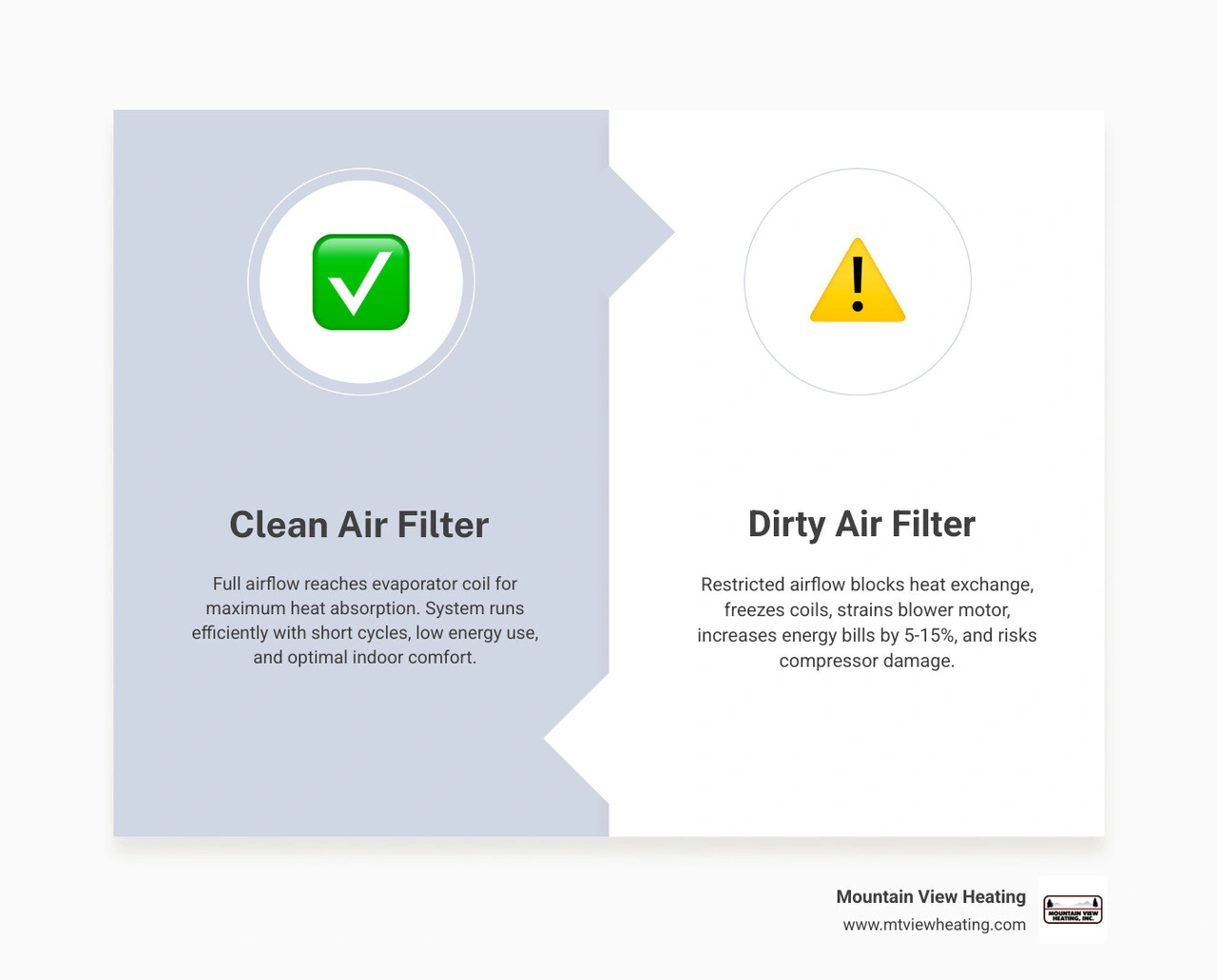
- Blocks airflow — forces your system to strain for every cubic foot of air it moves
- Freezes the evaporator coil — restricted airflow prevents heat absorption, causing ice buildup
- Burns out the blower motor — the motor runs longer and harder to compensate
- Damages the compressor — the most expensive part of your system, and highly sensitive to airflow problems
- Spikes your energy bills — the U.S. Department of Energy links clogged filters to 5% to 15% higher energy consumption
- Worsens indoor air quality — dust, pollen, and allergens recirculate through your home
- Triggers short cycling — your system turns on and off rapidly, adding wear to every component
Most homeowners never think about their air filter until something goes wrong. But an inexpensive filter left unchanged for too long can quietly set off a chain reaction that ends in costly repairs. The filter is the simplest part of your AC system, and also one of the most consequential.
In Bend, conditions like wildfire smoke in late summer and high desert dust mean filters can clog faster than in other parts of the country. That makes regular filter checks especially important here.
The Mechanics of Airflow: How Dirty Air Filters Destroy Your AC Performance
To understand why a simple piece of pleated fabric holds so much power over your home comfort, you have to look at how your air conditioner works. An AC does not actually "create" cold air. Instead, it works by pulling warm air out of your living spaces, passing it over a freezing-cold evaporator coil to extract heat and humidity, and then blowing the newly cooled air back through your vents.

This entire process relies on a delicate balance of volume and velocity. Your system is designed to move a specific amount of air per minute. When you insert a clogged, dust-caked filter into the return air duct, you introduce high static pressure. This is the HVAC equivalent of trying to breathe through a thick, wet sponge.
When static pressure rises, airflow drops dramatically. Without a steady stream of warm indoor air passing over the cold evaporator coil, the coil cannot absorb heat effectively. The temperature of the refrigerant inside the coil drops below freezing, causing the moisture in the air to freeze instantly on contact. As ice builds up, it forms a thermal barrier, blocking what little airflow was left.
Before you know it, your home starts heating up, and you might find yourself asking, Why Is My AC Blowing Warm Air? Troubleshooting Steps can help you narrow down the issue, but a choked air filter is almost always the prime suspect behind this sudden loss of cooling.
The Domino Effect: Mechanical Damage to Your Cooling System
When a filter is neglected, the damage is rarely contained to just a hot house. The restricted airflow starts a mechanical domino effect that puts immense strain on the most expensive components inside your outdoor and indoor units.
Blower Motor Strain and Burnout
The blower motor is the workhorse of your indoor HVAC unit. Its job is to spin a fan wheel and push air through the filter, over the coils, and into your ductwork. When a filter is clogged, the motor has to work twice as hard to pull air through the barrier. This constant resistance leads to overheating. Over time, the electrical windings inside the motor degrade, leading to premature failure. Replacing a blower motor is a major repair that could have easily been avoided with a simple, timely filter swap.
Compressor Failure
The compressor, located in your outdoor condenser unit, is the heart of your air conditioning system. It pumps refrigerant through the system, maintaining the pressure differences required to transfer heat. When restricted airflow causes the indoor evaporator coil to freeze, liquid refrigerant can travel back down the line to the compressor. Compressors are designed to compress gas, not liquid. This phenomenon, known as "liquid slugging," can instantly destroy the compressor's internal valves, leading to total system failure.
If you notice ice forming on your indoor or outdoor components, you are dealing with a serious cooling emergency. Learn more about this issue by reading Ice Forming on Your AC Unit: Causes and What to Do. If the system shuts down completely and refuses to turn back on, check out our guide on AC Not Turning On: What to Check First to determine if a tripped safety switch or blown motor is to blame.
Financial and Comfort Consequences of a Clogged Filter
The mechanical toll on your equipment is severe, but the immediate impact of a dirty air filter is felt in your wallet and your physical comfort.
Skyrocketing Utility Bills
Because a clogged filter restricts airflow, your air conditioner has to run much longer cycles to reach the temperature set on your thermostat. According to the U.S. Department of Energy, simply replacing a dirty filter can reduce your energy consumption by 5% to 15%. When your system is choked, it draws more electrical current and runs for hours on end, leading to a massive spike in your monthly utility bills.
Poor Indoor Air Quality and Dust Accumulation
An air filter's secondary job is to capture airborne particles, protecting both your equipment and your lungs. When a filter becomes completely saturated, it can no longer trap new contaminants. Dust, pet dander, pollen, and mold spores bypass the filter entirely or are pushed through the gaps, recirculating directly into your home. This leads to rapid dust buildup on your furniture and can trigger allergy and asthma flare-ups.
To recognize the warning signs of a deteriorating indoor environment, review our guide on the Signs of Poor Indoor Air Quality.
Humidity and Duct Issues
In addition to cooling, your AC plays a critical role in dehumidifying your home. When airflow is weak, the system cannot effectively pull moisture out of the air, leaving your home feeling clammy and stuffy. Furthermore, the increased static pressure can place immense stress on your ductwork, pulling dusty air from crawlspaces or attics through unsealed joints. For a deeper look at how your ventilation system affects what you breathe, explore The Impact of Air Ducts on Indoor Air Quality.
Warning Signs and Maintenance Solutions for Bend Homeowners
Living in Central Oregon brings unique environmental factors. Between high desert dust, seasonal pollen, and the unfortunate reality of summer wildfire smoke, our air filters work incredibly hard.
Understanding MERV Ratings
When shopping for a replacement filter, you will see a MERV (Minimum Efficiency Reporting Value) rating, ranging from 1 to 16 for residential systems.
- MERV 1–4: Basic fiberglass filters. They protect your equipment from large dust bunnies but do very little for indoor air quality.
- MERV 8–11: Pleated filters. Excellent for standard homes, capturing pet dander, pollen, and dust mites without restricting airflow.
- MERV 13+: High-efficiency filters. Great for severe allergies, but they are highly restrictive. Always consult with us before upgrading to a MERV 13+ filter to ensure your blower motor can handle the added resistance.
During the spring, preparing your system is key to ensuring it handles the upcoming heat. Take a look at How to Prepare Your Air Conditioner for the Summer to get your system ready.
Recognizing How Dirty Air Filters Destroy Your AC Performance
How do you know if your air filter is currently harming your system? Keep an eye out for these classic warning signs:
- Weak Airflow: The air coming out of your register vents feels like a gentle whisper rather than a strong breeze.
- Uneven Cooling: Some rooms in your home feel comfortable, while others remain warm and stuffy.
- Musty Odors: A damp, dirty smell coming from the vents when the system kicks on, often indicating moisture or mold on a frozen evaporator coil.
- Longer Run Cycles: The AC runs continuously without ever reaching your set temperature.
If you are noticing these issues, running through some basic AC Troubleshooting Tips Before Calling a Pro can save you time and help you identify if a quick filter change is all you need.
Step-by-Step Action Plan: How Dirty Air Filters Destroy Your AC Performance and How to Stop It
Replacing your air filter is a quick, straightforward task that every homeowner can perform. Follow this step-by-step guide to do it safely:
- Shut Down the System: Always turn off your AC at the thermostat before changing the filter. This prevents loose dust from being sucked directly into the unprotected system while the filter is out.
- Locate the Filter: Your filter is typically located in the return air duct grille on a wall or ceiling, or inside a slot on the indoor air handler unit (often in a garage, closet, or attic).
- Remove and Inspect: Slide the old filter out. Note which way the airflow arrows printed on the frame are pointing.
- Perform the Light Test: Hold the filter up to a bright light or flashlight. If you cannot see any light passing through the pleats, the filter is completely clogged and must be replaced.
- Install the New Filter: Slide the new filter in, ensuring the airflow arrows point toward the blower motor (away from the return duct).
- Washable Filters: If you have a reusable, washable electrostatic filter, rinse it thoroughly with warm water, let it dry completely (usually 24 hours) to prevent mold growth, and reinstall it.
Frequently Asked Questions
Can a dirty air filter cause my AC to freeze up?
Yes, absolutely. This is one of the most common causes of a frozen evaporator coil. When airflow is restricted by a dirty filter, there is not enough warm air passing over the cold coil to keep the condensation from freezing. Once ice begins to form, it cascades quickly, completely blocking airflow and eventually forcing a full system shutdown.
How often should I change my AC filter during peak summer in Oregon?
For standard homes, we recommend changing pleated filters every 60 to 90 days. However, if you have pets, smokers, or family members with allergies, you should check your filter every 30 days. During peak summer in Bend, especially if we are experiencing active wildfire season and smoky air, filters can clog in as little as 3 to 4 weeks.
Will a dirty filter increase my monthly energy bills?
Yes. When a filter is clogged, the blower motor draws more electricity and runs for significantly longer periods to cool your home. The U.S. Department of Energy estimates that keeping a clean filter in place can cut your heating and cooling energy use by 5% to 15% every single month.
Conclusion
Your air conditioner is a major investment in your home’s comfort, and keeping it running smoothly does not have to be complicated. Now that you know how dirty air filters destroy your AC performance, you can protect your system, lower your utility bills, and breathe cleaner air simply by staying on top of regular filter replacements.
At Mountain View Heating, we have spent over 40 years helping homeowners in Bend, Redmond, Sisters, Sunriver, La Pine, and surrounding communities keep their homes comfortable. We prioritize 100% customer satisfaction for every single job, whether it is a quick preventative maintenance check or a complex system repair.
If your AC is struggling to keep you cool, or if you suspect a dirty filter has caused deeper mechanical issues inside your system, do not wait for a total breakdown. Schedule professional air conditioning services today and let our experienced, local technicians get your cooling system back to peak performance.