


Why How Condenser Coil Damage Leads to Costly AC Repair Is Something Every Bend Homeowner Should Understand
How condenser coil damage leads to costly AC repair is one of the most common — and most expensive — surprises homeowners face when their system stops keeping up on a hot Central Oregon day. What starts as a dirty or bent coil can quietly snowball into compressor failure, frozen evaporator coils, and sky-high energy bills before you ever notice something is wrong.
Here is a quick summary of how condenser coil damage drives up repair costs:
- Restricted airflow forces your AC to work harder and run longer, burning more energy
- Heat buildup puts extra strain on the compressor — the most expensive part to replace
- Refrigerant leaks from corroded or damaged coils reduce cooling capacity and can damage the compressor
- Frozen evaporator coils can develop indoors as a direct result of outdoor coil problems
- Short cycling caused by overheating triggers safety shutoffs and accelerates wear on electrical components
- Neglected damage can cut a coil's 10–15 year lifespan in half, forcing full system replacement ahead of schedule
Bend summers are pushing into triple digits more often, and your outdoor condenser unit takes the brunt of it — baking in the heat, collecting wildfire smoke, pollen, and yard debris, and occasionally taking a hit from a lawnmower or hailstorm. A little damage that seems minor can quietly push your whole system toward a breakdown right when you need it most.
What is a Condenser Coil and How Does It Work?
To understand why a damaged coil is such a big deal, it helps to understand how your air conditioner actually cools your home. Many people believe an AC generates cold air from scratch. In reality, your air conditioner is a heat-transfer machine. It works by absorbing heat from inside your home and dumping it outdoors.
This process relies heavily on a continuous cycle of refrigerant moving between two main components: the indoor evaporator coil and the outdoor condenser coil.
- The Indoor Stage: The indoor evaporator coil absorbs heat and humidity from your home's air as the liquid refrigerant evaporates into a gas.
- The Outdoor Stage: The heated gas refrigerant travels outdoors to the compressor, which pressurizes it, pumping it into the outdoor condenser coil.
- The Dissipation Stage: The condenser coil's job is to release that captured heat into the outside air. As a powerful fan blows outdoor air across the coil's thin aluminum fins, the heat escapes, and the refrigerant cools back down into a liquid, ready to head back inside to repeat the process.
Because the outdoor condenser coil is responsible for releasing all the heat pulled from your living room, any disruption to this component breaks the entire cooling cycle. To learn more about how these components coordinate, check out our guide on How Your Indoor and Outdoor AC Units Work Together.
Common Causes of Condenser Coil Damage in Central Oregon
Living in Central Oregon brings unique climate conditions that can take a heavy toll on outdoor HVAC equipment. From La Pine to Redmond and everywhere in between, outdoor condenser units are exposed to elements that can easily cause physical or structural damage over time.
1. Dirt, Dust, and Wildfire Smoke Buildup
Central Oregon is known for its high-desert dust, heavy seasonal pollen, and, unfortunately, summer wildfire smoke. When these airborne particles are pulled into your outdoor unit by the condenser fan, they stick to the damp surfaces of the coil. Over time, this forms a thick, blanket-like layer of grime. This buildup acts as an insulator, trapping heat inside the coil and preventing proper heat transfer.
2. Bent or Flattened Aluminum Fins
The delicate aluminum fins surrounding the copper tubing of your condenser coil are designed to maximize surface area for heat dissipation. Because they are incredibly thin, they are highly susceptible to physical damage. Common culprits include:
- Lawnmowers and Weed Trimmers: Kicking up rocks or getting too close with landscaping equipment can flatten sections of fins instantly.
- Hailstorms: Heavy spring storms can leave behind dented, flattened fins.
- High Winds and Yard Debris: Falling pinecones, branches, and windblown debris can easily bend the fins.
3. Formicary Corrosion
Formicary corrosion is a type of chemical wear that creates microscopic, pinhole leaks in copper tubing. It occurs when household volatile organic compounds (VOCs)—found in common household cleaners, paints, and cosmetics—interact with moisture on the metal. Over time, this subtle corrosion eats through the coils, leading to slow, hard-to-detect refrigerant leaks.
4. Pet Urine
If you have a dog that regularly uses the backyard, your outdoor AC unit might be in danger. Dog urine is highly acidic. If a pet regularly "marks" the outdoor unit, the acid will rapidly corrode both the aluminum fins and the copper coils inside, leading to structural collapse of the fins and major refrigerant leaks.
How Condenser Coil Damage Leads to Costly AC Repair
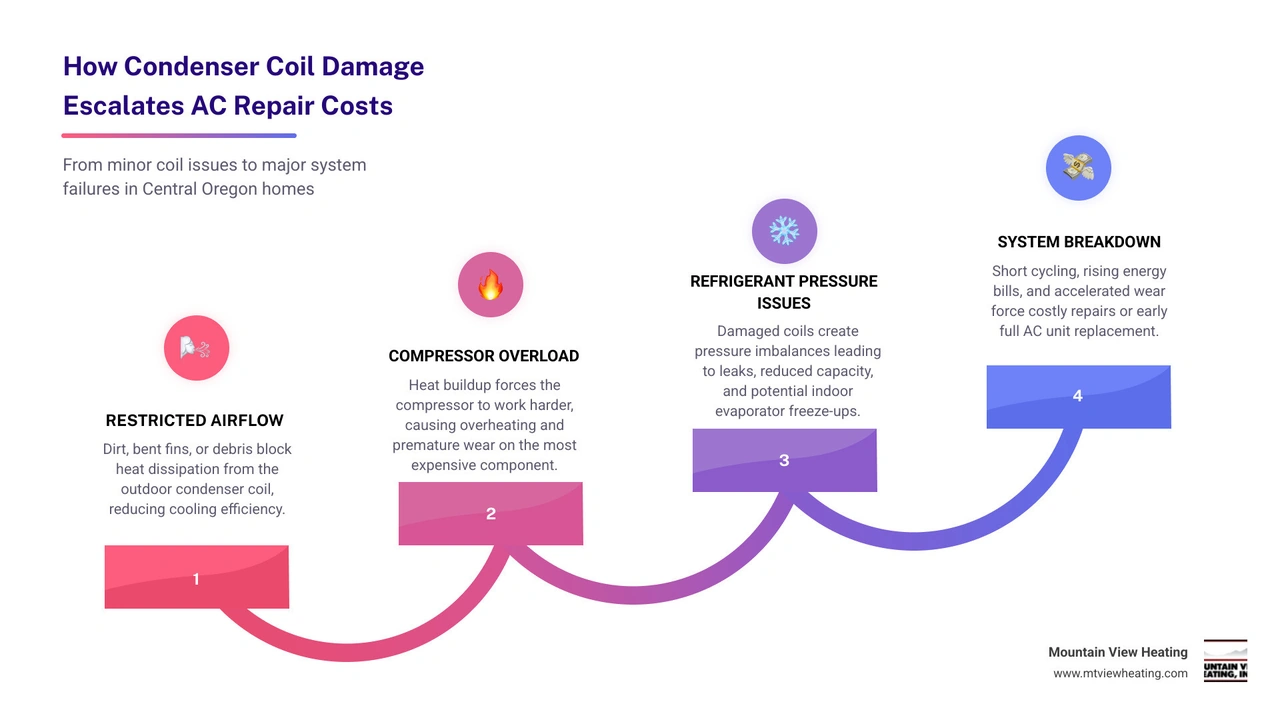
When a condenser coil is dirty, bent, or leaking, it cannot release heat efficiently. Because your thermostat is still calling for cool air, the system has to work twice as hard to reach your target temperature. This creates a destructive chain reaction throughout your entire air conditioner.
If your system is struggling to cool your home, you might notice the first warning signs of this process. For a closer look at initial troubleshooting steps, read our article on Why Is My AC Blowing Warm Air? Troubleshooting Steps.
How Condenser Coil Damage Leads to Costly AC Repair Through Compressor Strain
The compressor is often referred to as the "heart" of your air conditioning system. It is responsible for pumping refrigerant through the coils under high pressure. However, it is also the most expensive component in the entire unit to replace.
When the condenser coil is blocked by dirt or bent fins, the refrigerant cannot shed its heat. As a result, the compressor must operate at much higher pressures and temperatures to force the heat out. This leads to:
- Overheating: The compressor runs incredibly hot, which can break down its internal electrical windings.
- Lubrication Loss: Refrigerant carries a specialized oil that keeps the compressor lubricated. When temperatures spike due to a blocked coil, this oil can burn or degrade, causing mechanical friction and eventual compressor seizure (burnout).
- Premature System Failure: Running a compressor under these conditions is like driving your car with the engine redlined. It is only a matter of time before the compressor fails entirely, often forcing an expensive full-system replacement.
How Condenser Coil Damage Leads to Costly AC Repair and System Freeze-Ups
It might sound counterintuitive, but a damaged or dirty outdoor coil can actually cause your indoor unit to freeze solid.
When a condenser coil is leaking refrigerant or is so blocked that refrigerant cannot cycle properly, the system's overall pressure drops. When pressure drops in the refrigerant lines, the temperature of the indoor evaporator coil plummets below freezing. Moisture from your indoor air naturally condenses on the cold indoor coil, but because the coil is too cold, that moisture instantly turns to ice.
This ice accumulation completely blocks airflow, stops all indoor cooling, and can cause water damage inside your home when the ice eventually melts. If you are dealing with this issue right now, check out our guide on Ice Forming on Your AC Unit: Causes and What to Do.
Warning Signs Your Condenser Coil is Failing
Catching condenser coil issues early can mean the difference between a simple, inexpensive cleaning and a massive system replacement. Keep an eye and ear out for these common warning signs:
- Weak Cooling or Warm Air: If the air blowing from your home's vents feels lukewarm or weak, your outdoor coil may be failing to release heat.
- The AC Runs Constantly: If your system is running nonstop during a typical Central Oregon day without ever reaching your thermostat's set temperature, the coil efficiency is likely compromised.
- Unusual Noises: Hissing or bubbling sounds near the outdoor unit often indicate a refrigerant leak. Rattling noises can suggest the compressor is struggling under extreme pressure.
- Spiking Energy Bills: A dirty condenser coil can cause an AC system to use up to 30% more energy. If your utility bills are skyrocketing without a change in usage, your coils are likely to blame.
- Short Cycling: If your AC turns on, runs for a few minutes, and then abruptly shuts off before cooling the house, it may be overheating and triggering safety shutoffs to protect the compressor.
Before calling in our team, you can perform a few basic checks. Take a look at our AC Troubleshooting Tips Before Calling a Pro to see what you can safely inspect yourself.
Repair vs. Replace: Making the Right Choice for Your Home
When you are faced with a damaged condenser coil, you have to decide whether it is smarter to repair the component or replace the air conditioning unit entirely.
To help guide your decision, we use a simple framework based on system age, refrigerant type, and the overall health of the unit:
| Factor | When to Repair | When to Replace |
|---|---|---|
| System Age | Under 10 years old | Over 10–15 years old |
| Refrigerant Type | Uses modern R-410A refrigerant | Uses older, phased-out R-22 refrigerant (Freon) |
| Warranty Status | Coil is still covered under manufacturer warranty | Warranty has expired |
| Overall Condition | Minor damage (dirty, minor bent fins, single patchable leak) | Severe corrosion, multiple leaks, or a failing compressor |
If your system uses R-22 refrigerant, replacing the coil is rarely cost-effective. Because R-22 has been phased out due to environmental regulations, sourcing the refrigerant to recharge your system after a repair is incredibly difficult and expensive. In these cases, investing in a modern, energy-efficient cooling system is almost always the smarter long-term financial decision.
For a deeper dive into making this choice, explore our AC Repair Bend OR Complete Guide.
Preventive Maintenance Steps to Protect Your Cooling System
The best way to avoid the headache of a broken air conditioner is to prevent coil damage before it starts. With a few simple habits, you can protect your equipment and keep it running efficiently all summer long.
1. Maintain a Clear Zone Around the Outdoor Unit
Keep plants, shrubs, weeds, and stored items at least two feet away from your outdoor condenser. This ensures the fan can draw in plenty of fresh air to cool the coils. Be especially careful when mowing the lawn or weed-whacking to avoid throwing rocks or debris directly into the metal fins.
2. Change Your Indoor Air Filters Regularly
It might surprise you to learn that your indoor filter affects your outdoor unit. When indoor filters are clogged with dust, pet hair, or dander, airflow through the entire system drops. This forces the outdoor compressor to work harder, indirectly speeding up wear and tear on your outdoor condenser coil. Change your filters every 1 to 3 months.
3. Keep the Coils Clean (Safely)
You can gently rinse away loose dust, grass clippings, and pollen from your outdoor unit using a standard garden hose.
- Crucial Safety Tip: Never use a pressure washer on your AC coils. The intense pressure will instantly flatten the delicate aluminum fins, completely blocking airflow and causing severe damage.
4. Schedule Annual Professional Maintenance
While DIY cleaning helps, a professional technician has specialized, non-acidic foaming cleaners and precision tools (like fin combs) to deep-clean the coils and straighten bent metal safely.
Regular professional maintenance can significantly extend the life of your condenser coil and improve your AC system’s overall efficiency. To learn more about setting up a regular care schedule, read How Often Should You Schedule an AC Tune-Up.
For comprehensive local tips, you can also browse our Best AC Service Bend OR Guide or our AC Service Redmond OR Complete Guide.
Frequently Asked Questions About Condenser Coil Damage
Can I run my AC with a damaged condenser coil?
While your system might technically turn on and blow air with a dirty or slightly damaged coil, we strongly advise against running it. Operating an AC with a compromised coil creates a severe system imbalance, putting immense thermal and mechanical pressure on the compressor. Continuing to run the system significantly increases the risk of a catastrophic compressor burnout, turning a manageable repair into an emergency system replacement.
How often should I have my outdoor coils cleaned?
For most homes in Central Oregon, a thorough professional cleaning once a year during a spring tune-up is plenty. However, if you live in an area with heavy cottonwood trees, unpaved gravel roads, high pet activity, or frequent summer wildfire smoke, you may benefit from having your coils inspected and cleaned twice a year.
Does homeowners insurance cover condenser coil damage?
Homeowners insurance typically only covers "sudden and accidental" physical damage. For example, if a severe storm knocks a heavy pine branch onto your outdoor unit, or if a hail storm flattens your condenser fins, your policy may help cover the repair. However, insurance will not cover damage caused by normal wear and tear, corrosion, animal urine, or a lack of routine maintenance.
Conclusion
Understanding how condenser coil damage leads to costly AC repair is the first step toward protecting your home's comfort and your wallet. Your air conditioner's condenser coil plays a vital role in keeping your home cool during our hot Central Oregon summers. By keeping the area around your outdoor unit clear, changing your air filters, and investing in regular professional care, you can prevent minor issues from turning into major breakdowns.
At Mountain View Heating, we have been serving the Bend, Oregon community and surrounding areas like Redmond, Sunriver, La Pine, Sisters, Terrebonne, and Three Rivers for over 40 years. Our family-owned team is dedicated to providing honest advice, fast 24/7 emergency support, and a commitment to 100% customer satisfaction on every single job.
Don't wait for the summer heat to strain your cooling system. Schedule professional air conditioning service today to keep your home comfortable all season long!