


Why Heat Pump Advantages Over Traditional HVAC Matter for Bend, Oregon Homeowners

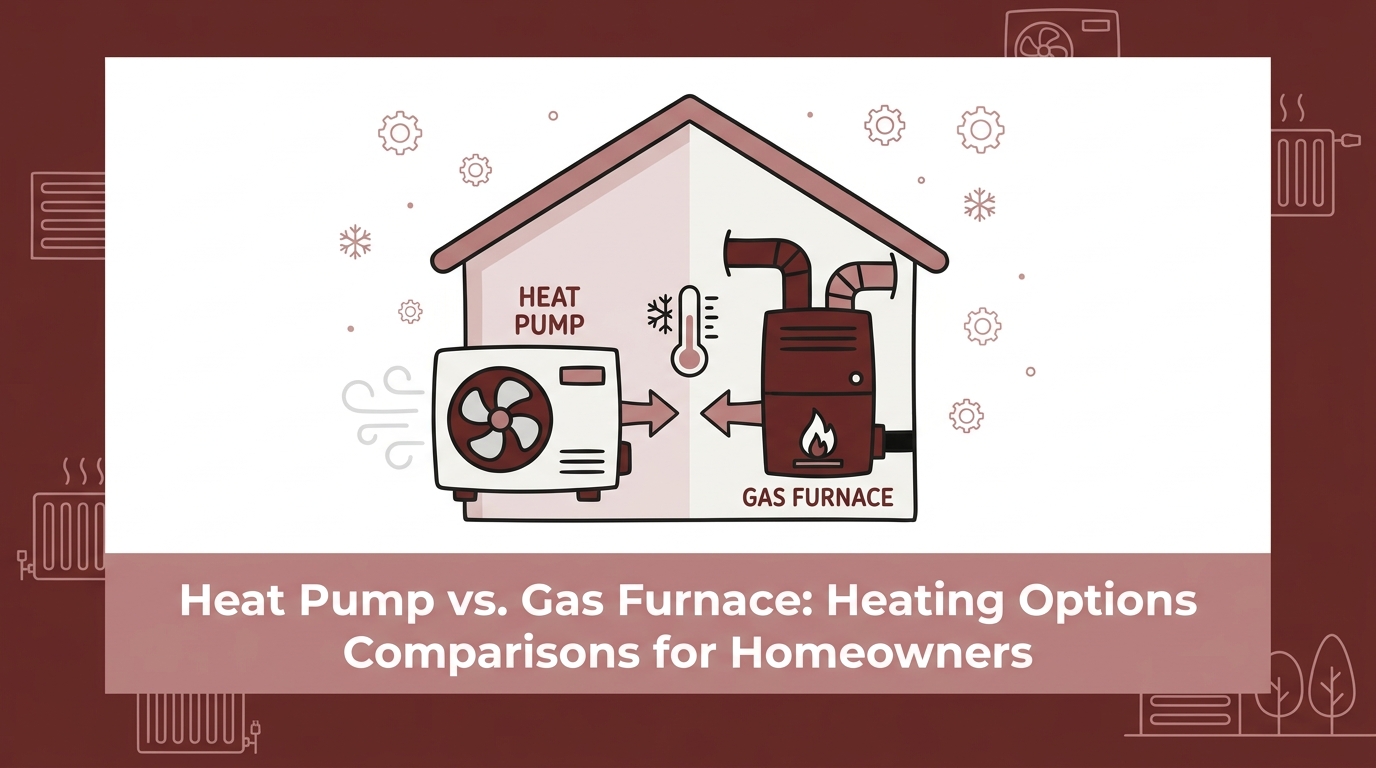
The heat pump advantages over traditional HVAC come down to one fundamental difference: heat pumps move heat instead of creating it. That single distinction affects your energy bills, your comfort, and your carbon footprint — all year long.
Here is a quick summary of the key advantages:
• Heating & cooling in one unit — Heat Pump: Yes — Traditional HVAC (Furnace + AC): No (requires two separate systems)
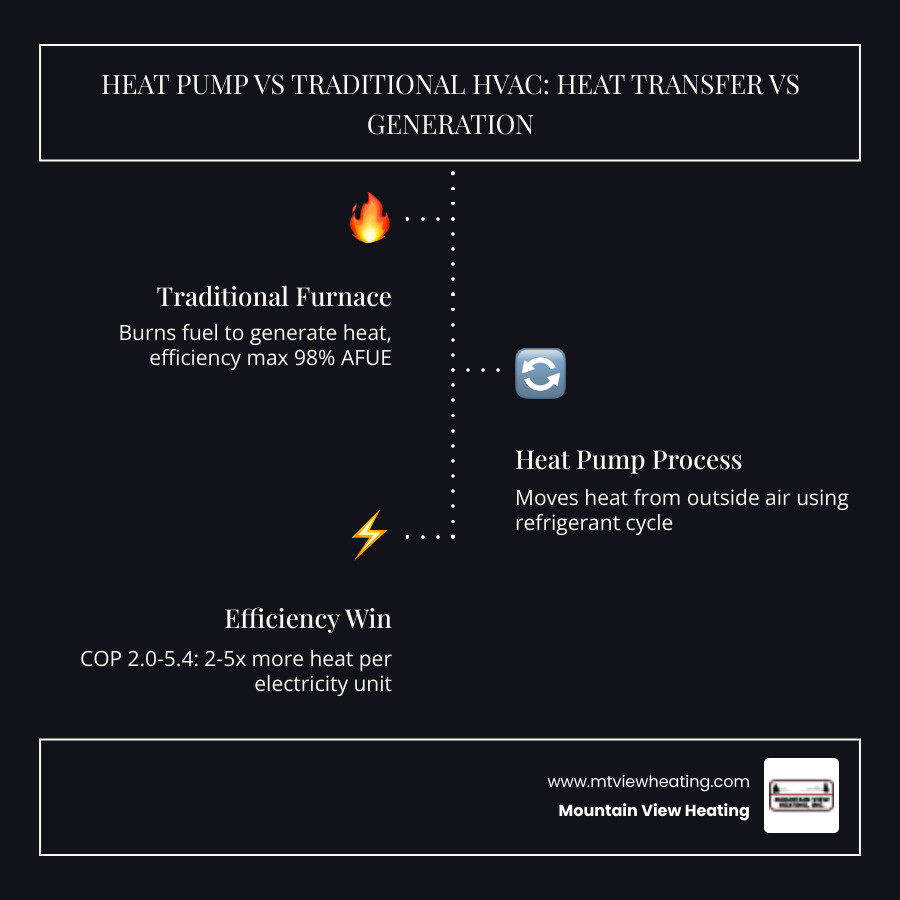
• Energy efficiency — Heat Pump: COP of 2.0–5.4 (produces more energy than it uses) — Traditional HVAC (Furnace + AC): Below 100% efficiency (burns fuel to generate heat)
• Fuel source — Heat Pump: Electricity only — Traditional HVAC (Furnace + AC): Natural gas, propane, or oil for heat
• Carbon footprint — Heat Pump: Lower — no on-site combustion — Traditional HVAC (Furnace + AC): Higher — burns fossil fuels
• Year-round comfort — Heat Pump: Yes — single system handles both seasons — Traditional HVAC (Furnace + AC): Requires separate furnace and AC
• Cold-climate performance — Heat Pump: Modern models work down to -23°F — Traditional HVAC (Furnace + AC): Reliable at all temperatures
• Typical lifespan — Heat Pump: 15–20 years — Traditional HVAC (Furnace + AC): Furnace: 15–30 years / AC: 10–15 years
If you are a homeowner in Bend, Oregon, this comparison matters more than you might think. Central Oregon's climate swings from hot, dry summers to genuinely cold winters — especially in communities like La Pine and Sunriver. Choosing the right system means understanding not just how these systems work, but how they perform here, in real Central Oregon conditions.
Traditional systems have been the default for decades. A gas furnace heats your home by burning fuel. A separate air conditioner cools it in summer. Both do their jobs — but they do them independently, and neither is doing anything particularly efficient with the energy it uses.
Heat pumps take a different approach entirely. By transferring thermal energy rather than generating it, they can deliver two to three units of heating or cooling for every single unit of electricity consumed, according to the U.S. Department of Energy. That kind of performance is simply not possible with a fuel-burning furnace, no matter how high its efficiency rating.
Below, we break down exactly how that works, what it means for your home, and when a traditional system might still make sense.
How Heat Pumps Differ from Traditional Furnaces and Air Conditioners
To understand the heat pump advantages over traditional HVAC, we first need to look under the hood. Most people are surprised to learn that a heat pump is essentially a "two-way" air conditioner. While a traditional HVAC setup relies on two completely different technologies to keep you comfortable, a heat pump uses one elegant process for everything.
Moving Heat vs. Generating Heat
In a traditional setup, your furnace is a "generator." Whether it uses gas or electricity, it works by creating heat from scratch. A gas furnace uses an ignitor to light burners, creating a flame that warms a heat exchanger. Your blower then pushes that air through your home.
A heat pump, however, is a "mover." It uses a refrigerant cycle to grab thermal energy from one place and dump it in another. Even when it feels "cold" outside in Redmond or Sisters, there is still a massive amount of thermal energy in the air. In fact, at -18°C (0°F), the air still contains about 85% of the heat it has at 21°C (70°F).
The heat pump uses an evaporator coil to absorb that outdoor heat into a refrigerant liquid. As the refrigerant warms up, it turns into a gas, which is then squeezed by a compressor. Squeezing that gas makes it very hot. This hot gas then travels to the indoor condenser coil, where your home’s air blows over it, picking up the heat and carrying it into your rooms.
When asking is a heat pump better than ac, the answer often lies in this versatility. An AC can only move heat from inside to outside. A heat pump can do both.
The Role of the Reversing Valve
The "magic" component that gives heat pumps their dual functionality is the reversing valve. This small but mighty part allows the system to change the direction of the refrigerant flow.
• In Cooling Mode: The heat pump acts exactly like a central air conditioner. It takes the heat from inside your home and pumps it outside, leaving you with cool, dehumidified air.
• In Heating Mode: The reversing valve flips. Now, the system takes heat from the outdoor air and pumps it into your home.
This means you only have one outdoor unit to maintain, rather than an outdoor AC condenser and an indoor furnace working separately. This streamlined approach is a major part of why many homeowners are making the switch.
Heat Pump Advantages Over Traditional HVAC for Energy Efficiency
When we talk about efficiency in Central Oregon, we are usually looking at how to keep utility bills manageable during a Sunriver winter or a scorching Bend July. This is where the heat pump advantages over traditional HVAC truly shine.
Understanding COP and HSPF2 Ratings
Efficiency in the HVAC world is measured by a few key acronyms. For furnaces, we use AFUE (Annual Fuel Utilization Efficiency). A high-efficiency furnace might have a 96% AFUE, meaning 96 cents of every dollar spent on gas goes to heating your home, while 4 cents is lost through the exhaust.
Heat pumps use different metrics because they don't burn fuel:
• COP (Coefficient of Performance): This measures instantaneous efficiency. A COP of 3.0 means the system provides three units of heat for every one unit of electricity it uses. That is effectively 300% efficiency!
• HSPF2 (Heating Seasonal Performance Factor 2): This measures how efficient the unit is over an entire heating season. Modern air-source heat pumps typically range from 7.1 to 13.2.
Because heat pumps move heat rather than creating it, they are mathematically superior in terms of energy output. We have seen case studies where homeowners saw a 52% reduction in energy use after switching to a heat pump. You can learn more about how heat pumps equal energy efficiency and how these ratings impact your monthly budget.
Reducing Your Home's Carbon Footprint
For many of our neighbors in the Pacific Northwest, sustainability is a top priority. Traditional furnaces rely on fossil fuels like natural gas or propane. Every time your furnace kicks on, it releases combustion byproducts into the atmosphere.
Heat pumps run entirely on electricity. As our local grid in Central Oregon incorporates more renewable energy sources like wind and solar, your home heating becomes progressively "greener." By eliminating on-site combustion, you also eliminate the risk of carbon monoxide leaks in the home, providing a cleaner, safer environment for your family. If you're ready to explore these eco-friendly options, check out our dedicated page on Heat Pumps.
Performance and Reliability in the Central Oregon Climate
One of the most common questions we get at Mountain View Heating is: "Can a heat pump really work in a La Pine winter?" It is a fair question. Older heat pumps from twenty years ago struggled once the temperature dropped below freezing. However, it is now April 2026, and the technology has advanced significantly.
Maximizing Heat Pump Advantages Over Traditional HVAC in Cold Climates
Modern "cold-climate" heat pumps are specifically designed for regions like ours. These units utilize variable-speed compressors and advanced refrigerants that allow them to extract heat even when it is -20°F outside.
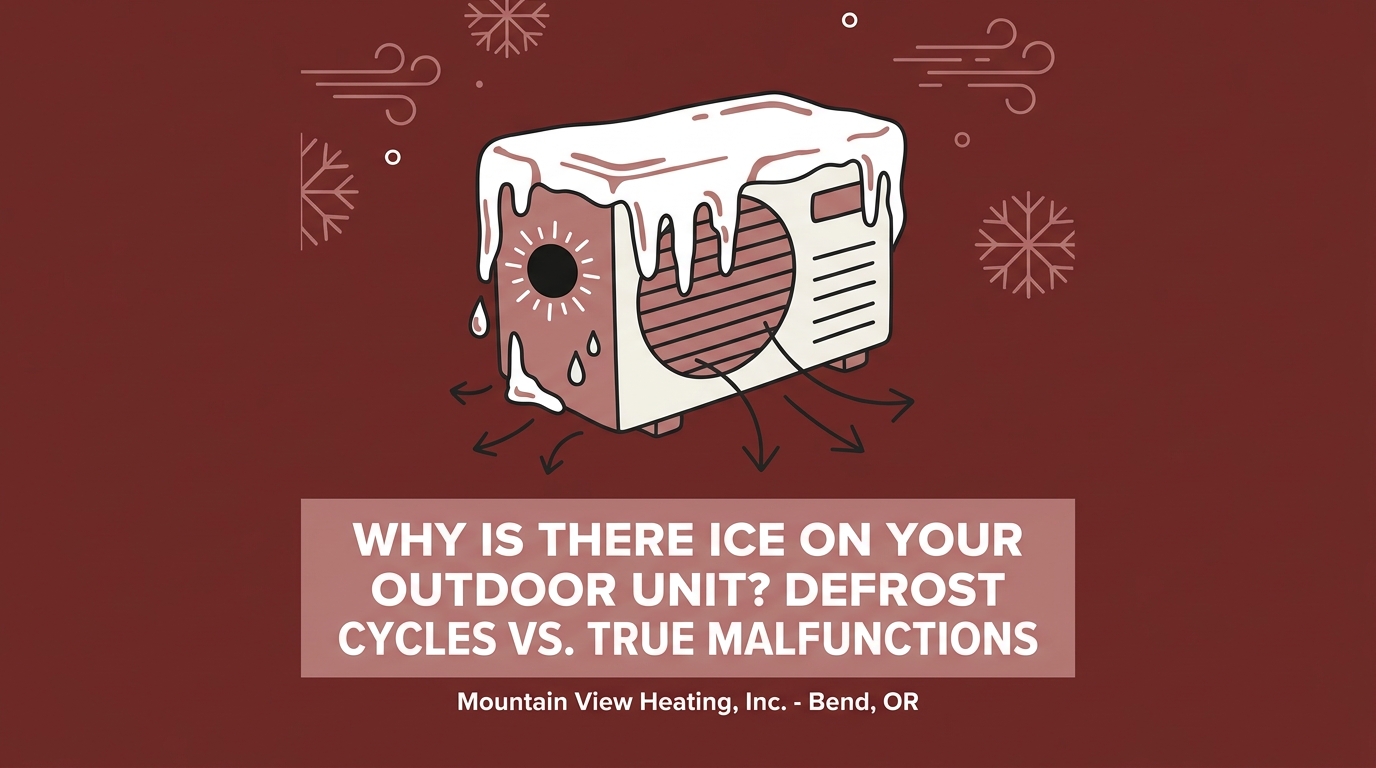
In places like Sisters and Terrebonne, where sub-freezing nights are common, these systems maintain high efficiency long after older models would have given up. They also feature intelligent defrost cycles to keep the outdoor coils clear of ice, ensuring that the heat pump advantages over traditional HVAC remain consistent even in the snow. This reliability is one of the many reasons why heat pumps are a smart choice for our specific corner of Oregon.
When to Utilize a Hybrid or Dual-Fuel System
Even with modern technology, some homeowners prefer a "safety net." This is where a hybrid or dual-fuel system comes in. A hybrid system pairs an electric heat pump with a high-efficiency gas furnace.
Here is how it works:
1. The heat pump handles the heating for the vast majority of the year (usually down to about 30°F or 35°F), operating at peak efficiency.
2. When a true "arctic blast" hits Central Oregon and temperatures plummet, the system automatically switches to the gas furnace.
3. The furnace uses modern ignitor technology (no more old-fashioned pilot lights!) to provide intense heat during the coldest hours of the year.
This setup offers the best of both worlds: the massive energy savings of a heat pump with the raw power of a furnace for extreme emergencies. Deciding between these setups can be tricky, so we have put together a guide on Heat Pump Vs Furnace How To Choose The Right One to help you weigh your options.
Lifespan and Maintenance for Modern Residential Systems
Investing in a new HVAC system is a big decision for any homeowner in Bend or Redmond. You want to know that the system you choose will last and that it won't be a headache to maintain.
Long-Term Heat Pump Advantages Over Traditional HVAC Maintenance
One of the 3 advantages of a heat pump versus a furnace is the simplicity of having a single system. However, because a heat pump works year-round (heating in winter, cooling in summer), it does experience more "run time" than a furnace that sits idle all summer.
To keep a heat pump running at peak performance, we recommend bi-annual service:
• Spring Visit: We check the refrigerant levels and clean the coils to get you ready for the summer heat.
• Fall Visit: We inspect the reversing valve, the compressor, and the electric heating elements to ensure you're ready for the first frost.
Regular maintenance is the key to protecting the compressor—the "heart" of the system. Keeping filters clean and ensuring the outdoor unit is clear of debris (like those high-desert pine needles) will go a long way in maintaining efficiency.
Comparing System Durability
When comparing lifespans, traditional systems have a slight edge in some categories, but the gap is closing.
• Heat Pumps: Typically last 15–20 years.
• Air Conditioners: Typically last 10–15 years.
• Furnaces: Can last 15–30 years.
While a furnace might last longer on paper, a furnace only heats. If you choose a traditional setup, you are maintaining two separate machines. If one fails, you are often left with a mismatched system. A heat pump provides a unified solution for your home's climate. If you are still on the fence, we recommend reading our deep dive into whether should you purchase a heat pump or furnace for your specific home layout.
Frequently Asked Questions about Heat Pumps
Can a heat pump really handle a Bend, Oregon winter?
Yes! Modern cold-climate heat pumps are designed to operate effectively in temperatures well below zero. For homeowners in particularly cold areas like La Pine, we often recommend a hybrid system that pairs the heat pump with a furnace for total peace of mind during extreme weather events.
How does the lifespan of a heat pump compare to a traditional furnace?
A heat pump typically lasts 15 to 20 years. While a furnace can sometimes last longer (up to 30 years), it is important to remember that a furnace does not provide cooling. A heat pump replaces both your furnace and your air conditioner, providing a more efficient, all-in-one solution for year-round comfort.
Do heat pumps provide the same level of cooling as a central air conditioner?
They actually provide the exact same level of cooling. In cooling mode, a heat pump is physically identical to an air conditioner. It uses the same refrigerant process to remove heat and humidity from your home. In fact, many modern heat pumps feature variable-speed technology that allows them to dehumidify and cool even more effectively than standard single-stage air conditioners.
Conclusion
Choosing between a heat pump and a traditional HVAC system is about more than just temperature; it’s about how you want to live in your home. The heat pump advantages over traditional HVAC—from superior energy efficiency and lower carbon emissions to the convenience of a single year-round system—make it a compelling choice for the modern Central Oregon homeowner.
At Mountain View Heating, we have spent over 40 years helping our neighbors in Bend, Redmond, Sisters, and beyond find the perfect comfort solutions for their homes. We know the local climate, we understand the unique challenges of our high-desert environment, and we are committed to 100% customer satisfaction on every project.
Whether you need a quick repair, a routine maintenance check, or a full system replacement, our team is here for you with 24/7 emergency support. We don't just install equipment; we build long-term relationships based on trust and expert service.
Ready to see if a heat pump is the right move for your home? Explore our Heat Pumps page or give us a call today to schedule a consultation with one of our residential HVAC experts. Let’s make your home the most comfortable place it can be.