


Why Central Oregon Homeowners Are Making the Switch to Heat Pumps
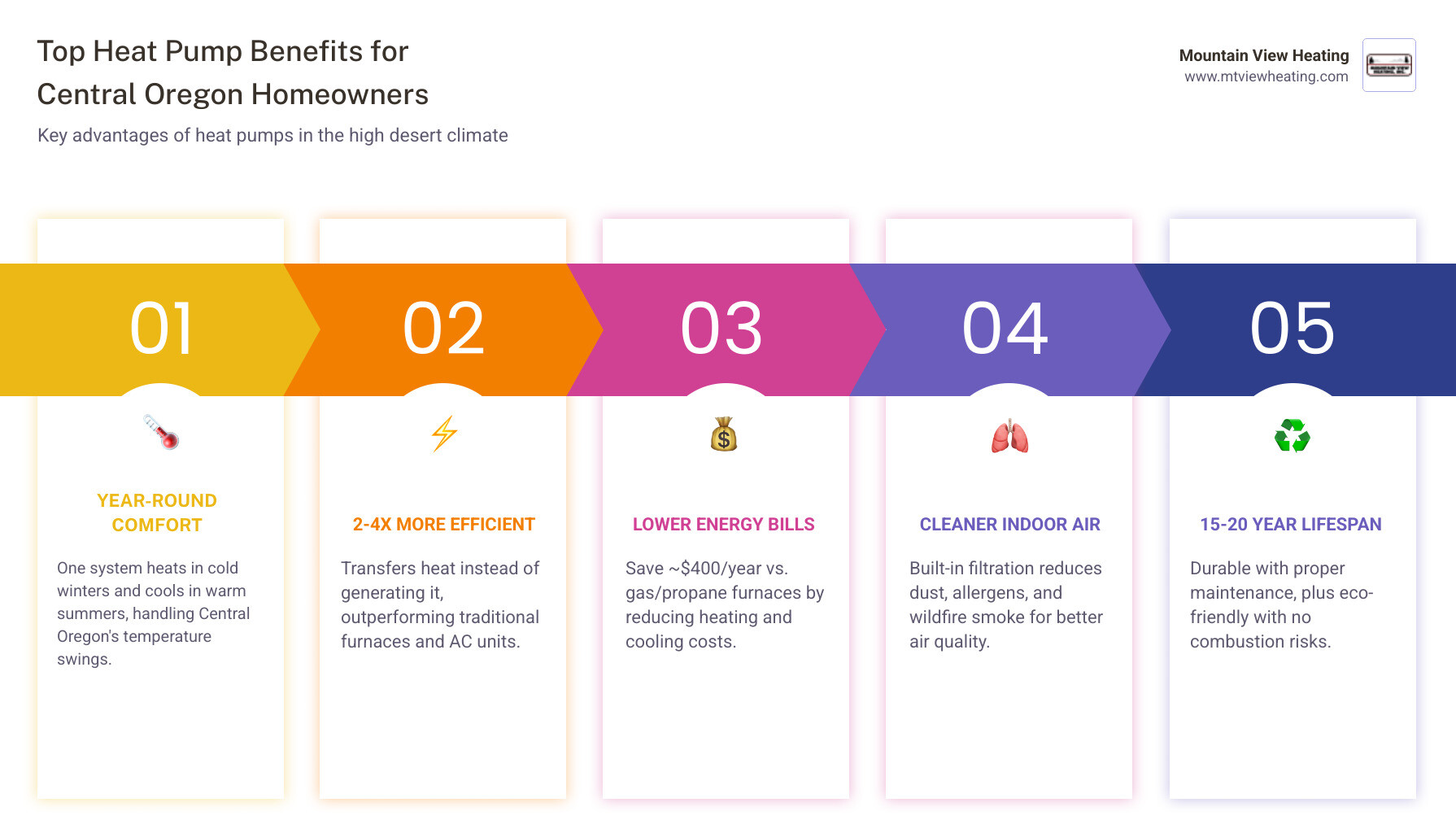
Heat pump benefits for central oregon homeowners are hard to ignore — one system handles both heating and cooling, runs far more efficiently than most traditional setups, and comes with some of the best financial incentives available right now in Oregon.
Here's a quick look at the top benefits:
• Year-round comfort — one system heats in winter and cools in summer
• 2–4x more efficient than conventional heating systems
• Lower energy bills — replacing a gas or propane furnace can lead to significant annual savings
• Cleaner indoor air — built-in filtration helps reduce dust, allergens, and wildfire smoke
• Strong incentives — including federal tax credits plus Oregon state and utility rebates
• Environmentally friendly — no combustion, no carbon monoxide risk
• 15–20 year lifespan with proper maintenance
Central Oregon's high desert climate — think warm, dry summers in Bend and cold, snowy winters in Sisters or La Pine — is actually a great fit for modern heat pump technology. Today's cold-climate heat pumps operate efficiently well below freezing, and they can handle the region's wide temperature swings without breaking a sweat. With nearly half of a home's energy bill tied to heating and cooling, switching to a heat pump is one of the smartest moves a Central Oregon homeowner can make right now.
How Do Heat Pumps Actually Work in Our High Desert Climate?
If you have ever stood behind a refrigerator, you have felt the warm air blowing out of the back. That is essentially how a heat pump works, just on a much larger scale. Unlike a furnace that creates heat by burning fuel, a heat pump simply moves heat from one place to another.
In the summer, it acts exactly like a traditional air conditioner, pulling heat out of your home and dumping it outside. In the winter, the process reverses. Even when it feels chilly in Redmond or Sunriver, there is still thermal energy present in the outdoor air. The heat pump uses a specialized refrigerant to absorb that heat and bring it indoors. Because it is moving heat rather than generating it from scratch, it is incredibly efficient.
For homeowners accustomed to traditional furnaces, it is important to understand that while a furnace uses high-voltage ignitors to start a combustion process, a heat pump relies on a refrigeration cycle. This cycle is powered by electricity and managed through copper refrigerant lines that connect an outdoor unit to an indoor air handler.
If you're curious about how this compares to your current setup, you can read more about Heat Pump Vs Furnace How To Choose The Right One or explore our Heat Pumps service page for a deeper dive into the mechanics.
Top Heat Pump Benefits for Central Oregon Homeowners
When we talk about heat pump benefits for central oregon homeowners, we usually start with the "big three": efficiency, cost, and comfort.
1. Incredible Efficiency: Heating and cooling account for nearly half (around 43-47%) of the average energy bill. While a high-efficiency gas furnace might reach 95% efficiency, a heat pump can deliver 2 to 3 units of heating or cooling energy for every single unit of electricity it consumes. This means it is essentially 200% to 300% efficient.
2. Significant Cost Savings: By switching from an older electric resistance furnace to a heat pump, you could see a noticeable reduction in your annual energy costs. If you are replacing a natural gas or propane furnace, those savings can be even more substantial. Over the 15-to-20-year lifespan of the system, that adds up to thousands of dollars back in your pocket.
3. Quiet and Consistent Comfort: Traditional furnaces often provide "blasts" of hot air followed by chilly lulls. Heat pumps provide a steady, consistent flow of air, maintaining a much more stable temperature throughout your home. Plus, modern units are remarkably quiet, so you won't have to turn up the TV every time the heat kicks on.
For more details on why these systems are such a game-changer, check out Why Heat Pumps Are A Smart Choice and see How Heat Pumps Equal Energy Efficiency.
Realizing Heat Pump Benefits for Central Oregon Homeowners through Improved Air Quality
In the high desert, we deal with more than just temperature swings. We have dust, pollen, and, increasingly, wildfire smoke during the summer months. One of the most underrated heat pump benefits for central oregon homeowners is the impact on indoor air quality (IAQ).
Because heat pumps circulate air more consistently than traditional systems, your home's air is passed through filtration systems more frequently. Most modern heat pumps allow for high-efficiency filters that can trap fine particulates, including smoke and allergens. Furthermore, because there is no combustion involved, there is zero risk of gas leaks or carbon monoxide being introduced into your living space by the heating unit itself.
In the summer, heat pumps also provide excellent dehumidification. While Central Oregon is generally dry, those occasional humid summer days can feel much more comfortable with a system that effectively pulls moisture out of the air. You can learn more about maintaining these systems for peak air quality in our Heat Pump Service Bend OR Complete Guide.
Comparing High-Efficiency Systems for the High Desert
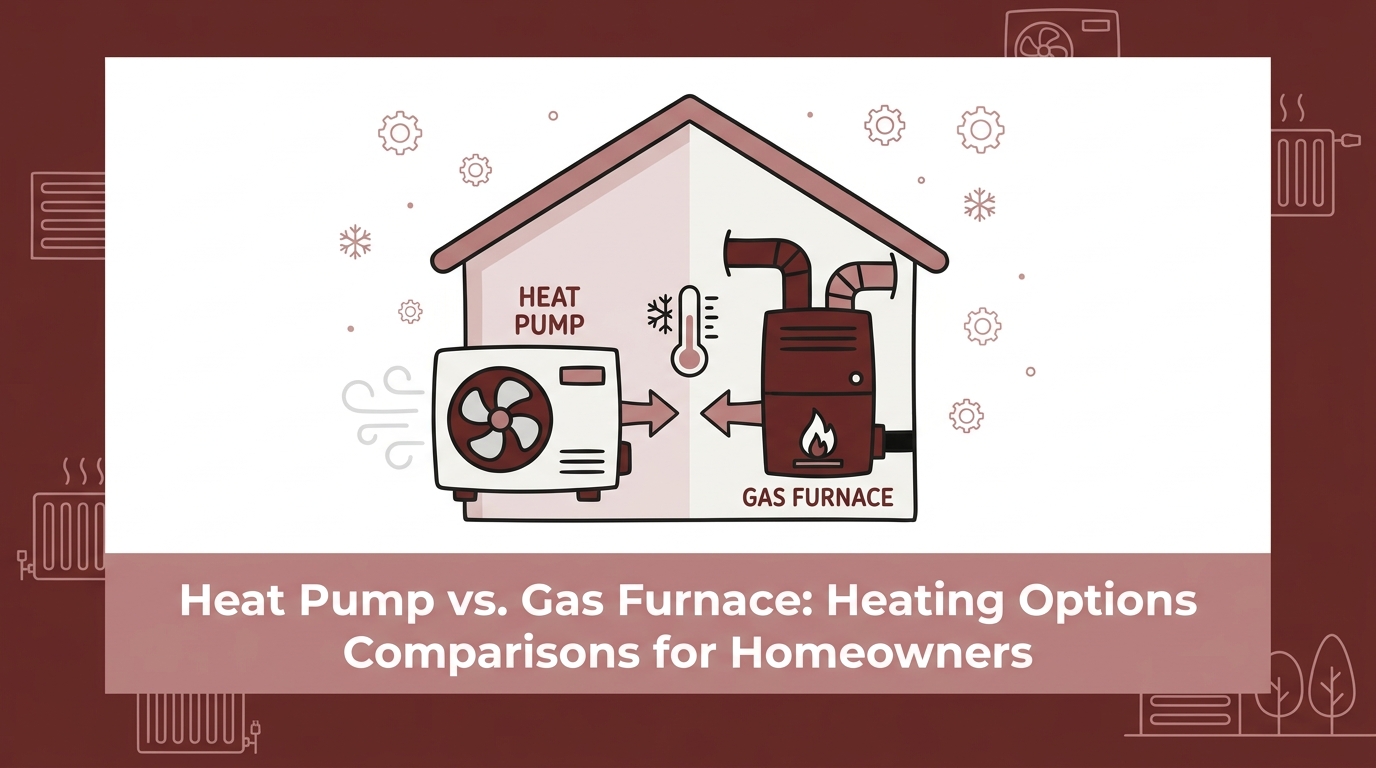
While today's gas furnaces are much better than the 56–70% efficient models from 15 years ago, they still operate differently than heat pumps. Here is how they stack up for a typical homeowner in our region:
• Energy Source — Modern 95% Gas Furnace: Natural Gas or Propane — High-Efficiency Heat Pump: Electricity
• Efficiency — Modern 95% Gas Furnace: Up to 95-97% — High-Efficiency Heat Pump: 200% - 400% (2-4 units per 1 used)
• Primary Function — Modern 95% Gas Furnace: Heating Only — High-Efficiency Heat Pump: Heating and Cooling (All-in-One)
• Ignition Type — Modern 95% Gas Furnace: Hot Surface Ignitor — High-Efficiency Heat Pump: N/A (Refrigerant Cycle)
• Environmental Impact — Modern 95% Gas Furnace: Low (but involves combustion) — High-Efficiency Heat Pump: Lowest (zero on-site emissions)
• Lifespan — Modern 95% Gas Furnace: 15–20 Years — High-Efficiency Heat Pump: 15–20 Years (with maintenance)
While a gas furnace is a reliable workhorse, many of our neighbors in Bend and Redmond are choosing to pair their furnace with a heat pump in a "dual-fuel" configuration. This allows the heat pump to do the heavy lifting most of the year, while the furnace (utilizing a modern ignitor) only kicks in during those rare sub-zero nights. To see which is right for you, read 3 Advantages Of A Heat Pump Versus A Furnace.
Which Type of Heat Pump is Best for My Home in Bend or Redmond?
There is no "one size fits all" when it comes to HVAC. Depending on your home's layout and existing infrastructure, we usually recommend one of the following:
• Ducted Heat Pumps: If your home already has a system of ducts, we can often replace your old AC and furnace with a single ducted heat pump. This uses your existing vents to distribute air throughout the house.
• Ductless Mini-Splits: Perfect for older homes in Sisters or Three Rivers that don't have ductwork, or for new additions and "bonus rooms." These consist of a small outdoor unit and one or more indoor heads mounted on the wall. They allow for "zoning," meaning you can heat the living room without wasting energy on an empty guest room.
• Cold-Climate Heat Pumps: Specifically designed for regions like ours, these units use advanced compressors to maintain high efficiency even when the mercury drops to 5°F or lower.
• Dual-Fuel Systems: This combines an electric heat pump with a gas furnace. It is a "best of both worlds" solution for the high desert, ensuring you stay cozy even during the most extreme winter storms.
Whether you need a full Heat Pump Installation Bend OR or you're looking for a Heat Pump Redmond OR Guide, choosing the right technology is the first step toward long-term savings.
Maximizing Heat Pump Benefits for Central Oregon Homeowners with Proper Sizing
One of the biggest mistakes a homeowner can make is "guessing" on the size of their system. At Mountain View Heating, we use a "Goldilocks" approach. If a system is too small, it will run constantly and struggle to keep up. If it is too large, it will "short-cycle," turning on and off too frequently, which wears out the components and leads to uneven temperatures.
We perform a professional Load Calculation (often called a Manual J). This assessment looks at your home's square footage, insulation quality, window types, and even which direction your house faces. This ensures your system is "just right" for your specific needs. For more on why professional expertise matters, see our Heat Pump Experts Bend OR Guide.
What Rebates and Tax Credits Can I Claim in Oregon This Year?
As of April 2026, the financial incentives for heat pumps are more robust than ever. Because the state and federal governments are pushing for more energy-efficient homes, you can significantly offset your initial investment.
• Federal Tax Credit (Inflation Reduction Act): You can claim a tax credit of up to 30% of the project cost for qualifying heat pump installations. This program is currently slated to run through 2032.
• Energy Trust of Oregon: Depending on your utility provider (like Pacific Power or Central Electric Cooperative), you may be eligible for cash-back incentives. For example, ductless mini-split systems can often qualify for valuable incentives.
• Oregon Heat Pump Purchase Program (ODOE): This program has provided incentives for eligible heat pumps in owner-occupied homes and rentals.
• Manufacturer Rebates: Periodically, brands will offer their own rebates which can be stacked with state and federal credits.
Navigating these can be tricky, which is why we help our customers in areas like Three Rivers and Sunriver identify every possible cent they can save. Check out our Heat Pump Replacement Three Rivers OR Guide for more on how these incentives apply locally.
How Long Will My System Last and What Maintenance Does It Need?
A well-maintained heat pump should provide comfort for 15 to 20 years. However, because these systems work year-round (unlike a furnace that sleeps all summer or an AC that sleeps all winter), regular maintenance is non-negotiable.
To keep your system running at peak efficiency, we recommend:
1. Filter Changes: Check your filters every 1 to 3 months. In Central Oregon, dusty summers and wildfire season mean you might need to change them more often.
2. Outdoor Clearance: Keep at least 2 feet of clearance around your outdoor unit. Clear away weeds, debris, and especially snow during our Bend winters.
3. Annual Professional Tune-Ups: We recommend a professional inspection once a year. We check refrigerant levels, clean the coils, and ensure all electrical connections are tight.
For more DIY tips, see our Heat Pump Maintenance Bend OR Tips or schedule a Heat Pump Tune Up Bend OR to ensure your warranty remains valid.
Signs It’s Time for a Heat Pump Replacement
Even the best systems eventually reach the end of the road. If your current unit is over 10-15 years old, you should watch for these red flags:
• Rising Energy Bills: If your electricity usage is climbing but your habits haven't changed, the system is losing efficiency.
• Frequent Repairs: If you're calling us for repairs more than once a year, it’s usually more cost-effective to replace the unit.
• Strange Noises: Grinding, squealing, or rattling often points to a failing compressor or motor.
• Uneven Temperatures: If the master bedroom is a sauna while the living room is an icebox, your system is struggling to distribute air.
If you are seeing these signs, it might be time to look into Heat Pump Replacement Bend OR to avoid a total system failure during a cold snap.
Frequently Asked Questions about Cold-Climate Heating
Do heat pumps work in Central Oregon's freezing winters?
Absolutely. While older models struggled when temperatures dropped below 35°F, modern cold-climate heat pumps are designed to work efficiently down to 5°F or even lower. Because heat exists in any temperature above "absolute zero" (-459.67°F), there is always energy available for a heat pump to harvest.
How much can I save by switching from an electric furnace?
Electric resistance furnaces are notoriously expensive to run. By switching to a high-efficiency heat pump, the average Oregon homeowner can save significantly on their annual energy costs, though some homeowners report their electric bills being cut nearly in half after an upgrade.
Is a dual-fuel system better than a standalone heat pump?
It depends on your home. For many in Bend or Sisters, a dual-fuel system (heat pump + gas furnace) provides peace of mind. The heat pump handles 90% of the winter days, and the furnace kicks in only during extreme sub-zero events. However, for homes without gas lines, a standalone cold-climate heat pump with an electric backup is an excellent, all-electric solution.
Conclusion
At Mountain View Heating, we have spent over 40 years helping our neighbors across Bend, Redmond, Sisters, Sunriver, and La Pine stay comfortable. We know the high desert climate because we live here, too. Whether you are looking to lower your energy bills, improve your home's air quality, or finally get a system that provides both heating and cooling, we are here to help.
Our commitment is simple: 100% customer satisfaction on every job. From helping you navigate the latest 2026 rebates to performing precision installations, our team is ready to show you why heat pump benefits for central oregon homeowners are the future of home comfort.
Ready to see if a heat pump is right for your home? Explore our Heat Pumps page or give us a call to schedule a consultation today.