


What Is a Heat Pump and How Does It Work? A Quick Answer for Bend Homeowners
How does a heat pump work is one of the most common questions homeowners ask when exploring their heating and cooling options — and the answer is simpler than you might expect.
A heat pump does not generate heat. It moves it. Using electricity and a refrigerant cycle, it pulls heat from the outdoor air and transfers it inside your home in winter. In summer, it reverses the process — pulling heat out of your home and releasing it outside, just like an air conditioner.
Here is a quick summary of how a heat pump works in both modes:
In heating mode:
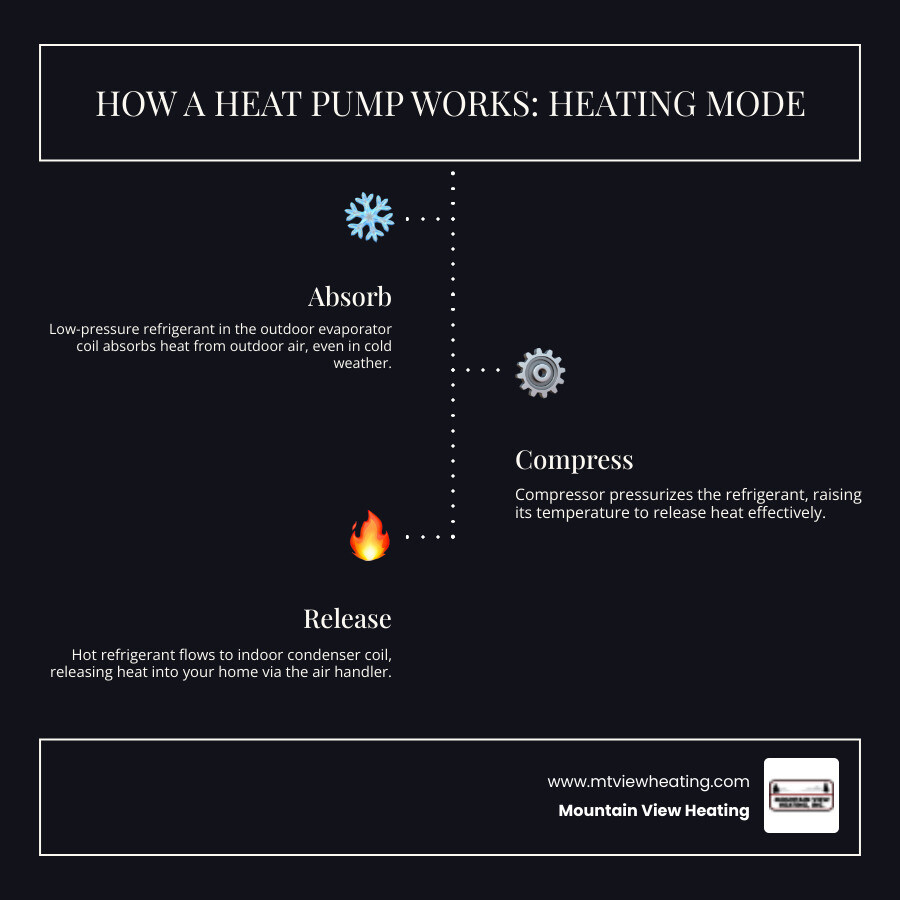
1. The outdoor unit absorbs heat from the outside air (even cold air contains usable heat energy)
2. A compressor raises the temperature of that heat
3. The warm air is distributed throughout your home
In cooling mode:
1. The indoor unit absorbs heat from inside your home
2. The refrigerant carries that heat to the outdoor unit
3. The heat is released outside, leaving your home cooler
This simple "move heat, don't make it" principle is why heat pumps can be 3 to 5 times more energy efficient than traditional gas furnaces. A typical heat pump delivers around 4 units of heating or cooling energy for every 1 unit of electricity used.
For homeowners in Bend, Oregon, where winters can be cold and summers warm, a heat pump offers year-round comfort from a single system — no separate furnace and air conditioner required.
The Science of Heat Transfer: How Does a Heat Pump Work?
To truly understand how does a heat pump work, we have to look at a bit of basic science. Don't worry, there won't be a quiz at the end! The fundamental principle is that heat always wants to move from a warm place to a cold place. If you’ve ever felt the back of your refrigerator and noticed it feels warm, you’ve experienced a heat pump in action. Your fridge isn't "making cold"; it’s pulling the heat out of your milk and leftovers and dumping it into your kitchen.
A residential Heat Pump does the exact same thing, just on a much larger scale for your entire home.
The Refrigeration Cycle and Phase Changes
The "magic" happens through the refrigeration cycle. This cycle relies on a special fluid called refrigerant. Refrigerant is a substance that has an incredibly low boiling point. While water boils at 212°F, some refrigerants boil at -15°F or even lower.
By changing the pressure of this refrigerant, we can force it to change states between a liquid and a gas. This is called a phase change. When a liquid turns into a gas (evaporation), it absorbs a massive amount of energy (heat). When that gas turns back into a liquid (condensation), it releases all that stored energy. This energy is known as latent heat.
Moving Heat vs. Generating Heat
Traditional heaters, like electric baseboards or old-fashioned furnaces, generate heat. They take one unit of energy (like electricity or gas) and turn it into one unit of heat. This is 100% efficient at best.
A heat pump, however, uses electricity only to move the heat. Think of it like a bicycle. It’s much easier to coast down a hill than it is to build the hill yourself! Because we are just moving existing heat from the air or ground, we can achieve efficiencies of 300% to 400%. This is why we often say heat pumps seem to "break the laws of physics," though they are actually just very clever at using them.
How does a heat pump work in heating mode?
When the Central Oregon winter settles in and the temperatures drop in Redmond or Sisters, your heat pump enters heating mode. It might seem impossible to find heat in 30-degree air, but physics tells us that heat exists in all air until you reach "absolute zero" (-459°F). In fact, air at -18°C (0°F) still contains about 85% of the heat energy found in air at 21°C (70°F).
The Step-by-Step Heating Process
1. The Evaporator Coil: In winter, the outdoor unit acts as the evaporator. Cold, liquid refrigerant flows through these coils. Because the refrigerant is even colder than the outdoor air, the heat from the air naturally moves into the coils.
2. Phase Change: As the refrigerant absorbs this outdoor heat, it boils and turns into a low-temperature gas.
3. The Compressor: This gas travels to the compressor (the "heart" of the system). The compressor squeezes the gas tightly. When you compress a gas, its temperature skyrockets. It becomes a very hot, high-pressure vapor.
4. The Condenser Coil: This hot gas is pumped into your indoor unit. A fan blows your home's air over these hot coils. The heat moves from the coils into your home's air, warming your rooms.
5. Release and Repeat: As the refrigerant releases its heat, it cools down and turns back into a liquid. It then heads back outside to start the process all over again.
There are 3 Advantages of a Heat Pump Versus a Furnace that our customers love: they provide more even heat, they don't dry out the air as much, and they are incredibly safe since they don't burn fossil fuels inside your home.
How does a heat pump work in cooling mode?
One of the best things about a heat pump is that it replaces your air conditioner. In fact, if you looked at a heat pump and an AC unit side-by-side, you might not be able to tell the difference. They use the same components and the same refrigerant.
The Reversing Valve
The secret weapon of the heat pump is the reversing valve. This is a four-way valve that changes the direction of the refrigerant flow. When you flip your thermostat from "Heat" to "Cool" in July, this valve clicks into place and reverses the entire cycle.
The Cooling Process
1. Indoor Heat Absorption: Now, the indoor coil acts as the evaporator. It becomes very cold. As the warm air from your Sunriver home is blown across it, the refrigerant absorbs that heat.
2. Dehumidification: As a bonus, as the air cools down, it loses its ability to hold moisture. This moisture condenses on the coils and drains away, acting as a powerful dehumidifier.
3. Transport: The refrigerant, now a gas carrying your home's heat, travels outside.
4. Outdoor Release: The outdoor unit now acts as the condenser. The compressor squeezes the gas, and the outdoor fan blows the heat away into the Central Oregon sky.
When people ask, Is a Heat Pump Better Than AC, the answer is often a resounding yes. You get the same high-quality cooling with the added benefit of high-efficiency heating in the winter, all in one package.
Essential Components of a Residential Heat Pump
To keep your home in La Pine or Terrebonne comfortable, several key parts have to work in perfect harmony. We like to think of these as the "Big Four" of the heat pump world.
1. The Compressor
Located in the outdoor unit, the compressor is the engine. It provides the pressure that moves the refrigerant through the system. Modern units often use "variable-speed" compressors, which can slow down or speed up depending on how much heating or cooling you actually need, rather than just being "on" or "off."
2. The Expansion Valve
If the compressor is the engine, the expansion valve is the brain. It regulates the flow of refrigerant. It acts like a nozzle on a spray bottle, turning high-pressure liquid into a low-pressure mist, which allows it to absorb heat again.
3. The Refrigerant
This is the "messenger" that carries the heat back and forth. In the past, systems used R-22 (Freon), but today we use much more eco-friendly options like R-410A or R-32, which are better for the environment and more efficient at carrying heat.
4. The Air Handler
This is the indoor part of the system. It contains the indoor coil and a powerful blower fan that circulates the conditioned air through your ductwork. If you have a ductless system (a mini-split), the air handler is the unit mounted on your wall.
Comparing Heat Pump Systems
While air-source heat pumps are the most common in Bend, some homeowners opt for ground-source (geothermal) systems. Here is how they compare:
• Source of Heat — Air-Source Heat Pump: Outdoor Air — Ground-Source (Geothermal): The Ground or Groundwater
• Installation — Air-Source Heat Pump: Easier and less invasive — Ground-Source (Geothermal): Requires digging or drilling
• Efficiency — Air-Source Heat Pump: Very High (COP ~2-4) — Ground-Source (Geothermal): Extremely High (COP ~3-6)
• Performance in Extreme Cold — Air-Source Heat Pump: May need backup heat below -5°F — Ground-Source (Geothermal): Remains steady year-round
• Lifespan — Air-Source Heat Pump: 15–20 years — Ground-Source (Geothermal): 25+ years (indoor) / 50+ (loops)
Proper Heat Pump care is essential for both types to ensure they reach their full lifespan.
Efficiency, Performance, and Cold Weather Operation
In April 2026, efficiency standards are higher than ever. When we talk about how does a heat pump work efficiently, we use a few specific acronyms that you’ll see on the yellow "EnergyGuide" stickers.
• COP (Coefficient of Performance): This measures efficiency at a specific moment. If a unit has a COP of 4, it’s providing 4 units of heat for every 1 unit of electricity.
• HSPF2 (Heating Seasonal Performance Factor): This is the total heat output over an entire winter divided by the total electricity used. The "2" indicates it meets the newest, more rigorous testing standards.
• SEER2 (Seasonal Energy Efficiency Ratio): This measures cooling efficiency over a typical summer.
We’ve seen that How Heat Pumps Equal Energy Efficiency isn't just marketing—it's a result of moving heat rather than burning fuel.
Factors That Affect Your Efficiency
Several things can impact how well your system performs in our local climate:
• Outdoor Temperature: As it gets colder, the heat pump has to work harder to "squeeze" heat out of the air.
• Home Insulation: A leaky home makes the heat pump run longer.
• Filter Cleanliness: A dirty filter blocks airflow, forcing the motor to work overtime.
• System Sizing: A unit that is too small won't keep up, while one that is too large will "short cycle," wasting energy.
Handling Freezing Temperatures in Central Oregon
A common myth we hear in Bend is that heat pumps don't work in the cold. While that may have been true in the 1980s, today’s "Cold Climate Heat Pumps" are absolute workhorses. Many models can now provide 100% of their heating capacity down to 5°F and continue to operate efficiently down to -15°F or -22°F.
The Defrost Cycle
In our humid winters, frost can sometimes build up on the outdoor coils. When this happens, the heat pump automatically enters a defrost cycle. It temporarily reverses into cooling mode to send warm refrigerant to the outdoor coils to melt the ice. This usually only takes a few minutes.
Backup Heating and Ignitors
For those rare nights when Bend hits -20°F, most systems have a backup. In an all-electric system, this is usually an "electric heat strip." However, many of our customers prefer a Dual Fuel System. This pairs a heat pump with a high-efficiency gas furnace.
When the temperature is above 35°F, the heat pump handles everything. When it gets "Central Oregon cold," the system switches to the furnace. Modern furnaces use electronic ignitors, making them much more reliable and efficient.
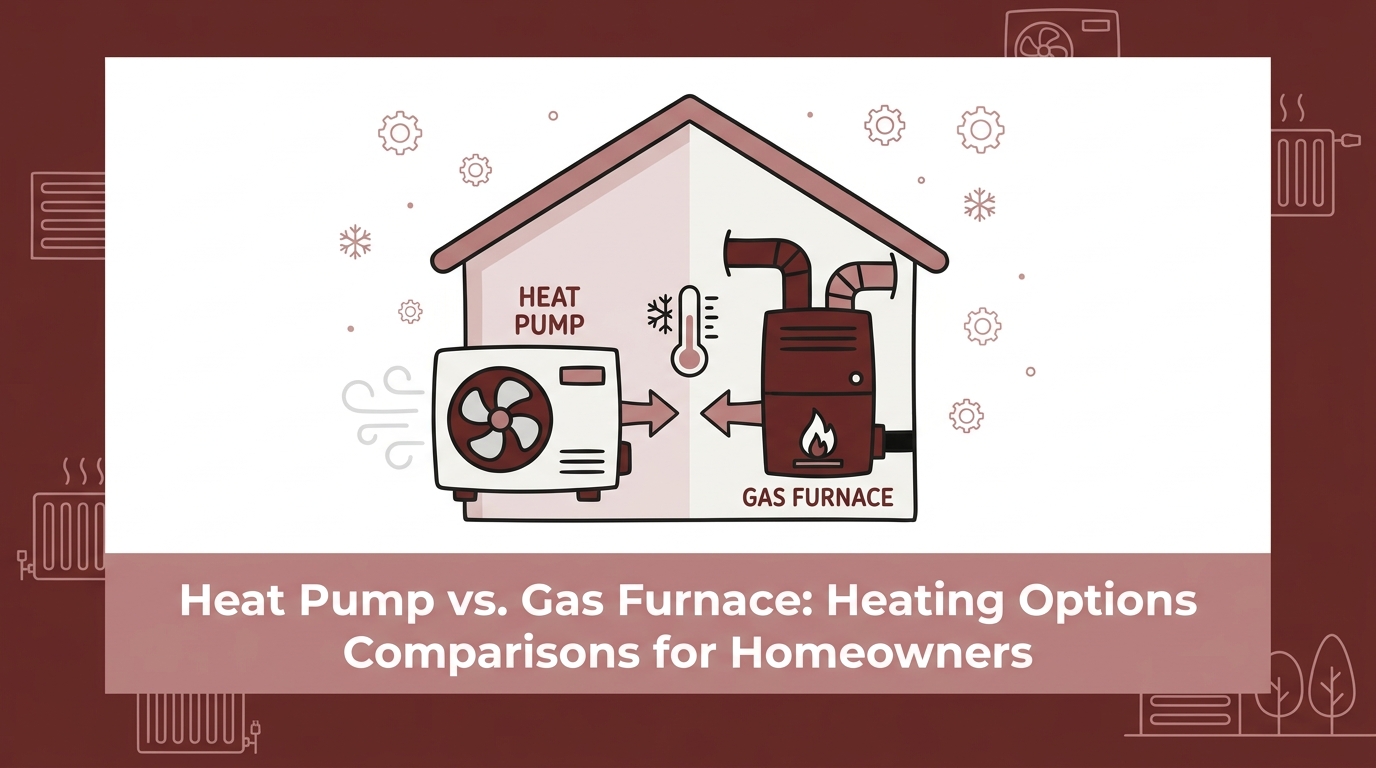
Deciding between a Heat Pump vs Furnace: How to Choose the Right One often comes down to your home's specific needs and your energy goals.
Frequently Asked Questions about Heat Pump Operation
Can a heat pump really extract heat from freezing air?
Yes! It sounds like a magic trick, but it’s just physics. As long as the refrigerant in the outdoor coils is colder than the air outside, heat will flow into it. By using low-pressure refrigerant, we can make those coils reach temperatures far below zero. This is Why Heat Pumps Are a Smart Choice even in our high desert climate—they are designed to find heat where we can't feel it.
Do heat pumps require a lot of maintenance?
Not "a lot," but they do need regular attention. Because they run year-round (heating and cooling), they work twice as hard as a furnace.
• Monthly: Check your air filters.
• Seasonally: Keep the outdoor unit clear of snow, ice, and debris like pine needles.
• Bi-Annually: Schedule professional Heat Pump maintenance. We recommend one check-up in the spring and one in the fall to ensure everything is lubricated, charged, and ready for the extreme seasons.
Should I choose a heat pump or a furnace for my home?
The best choice depends on your existing setup. If you currently have an air conditioner that is over 10 years old and a furnace that is reaching the end of its life, a heat pump is an excellent replacement for both. If you live in an area without natural gas, a heat pump is a highly efficient alternative to propane or electric baseboards.
Many homeowners find that the best of both worlds is a hybrid system. Check out our guide on Should You Purchase a Heat Pump or Furnace to see which fits your lifestyle best.
Conclusion
At Mountain View Heating, we’ve been serving the Central Oregon community for over 40 years. We’ve seen HVAC technology evolve, and we truly believe that modern heat pumps are one of the best upgrades a homeowner can make for their year-round comfort.
Whether you are in Bend, Redmond, Sisters, or Sunriver, our team is dedicated to providing 100% customer satisfaction. We don't just install equipment; we help you understand your home's ecosystem. If you're still wondering how does a heat pump work for your specific floor plan, or if you're ready to upgrade to a more efficient system, we are here to help.
Ready to experience the year-round comfort of a Heat Pump? Give us a call today, and let’s find the perfect solution for your home!