


Why Central Oregon Homeowners Need a Plan to Keep Their AC Running Longer
Knowing how to extend the life of your AC in Central Oregon can mean the difference between a system that lasts 15 to 20 years and one that gives out before its time. Central Oregon's high desert climate — with its dry air, juniper pollen, wildfire smoke, and daily temperature swings of up to 30 degrees — puts unique stress on cooling equipment that homeowners in wetter, milder climates simply don't face. Add in the fine dust and silt that blankets the region each summer, and your AC is working harder than the thermostat reading suggests.
The good news? A well-maintained air conditioner in Bend, Redmond, Sisters, Sunriver, or La Pine can absolutely reach — and even exceed — that 15-to-20-year mark. The key is knowing which habits actually protect your system in this specific climate, and which shortcuts quietly shorten its life.
Here's a quick overview of the most effective ways to extend your AC's lifespan in Central Oregon:
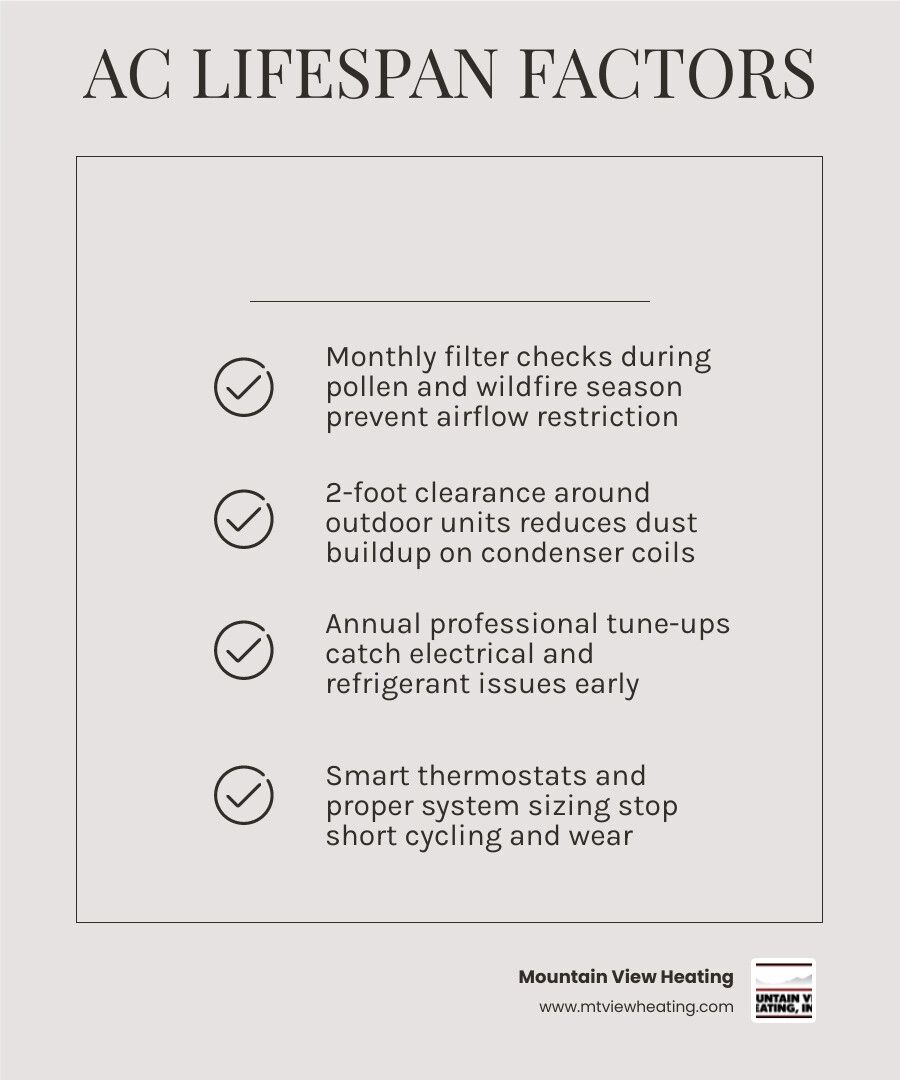
- Replace or check air filters monthly during wildfire smoke and pollen season
- Keep at least 2 feet of clearance around your outdoor condenser unit
- Schedule a professional tune-up every spring before the heat arrives
- Use a programmable or smart thermostat to reduce unnecessary runtime
- Seal and insulate your ductwork — leaky ducts can waste 20–30% of your energy
- Rinse outdoor coils after heavy smoke events to clear fine particulate buildup
- Address small problems quickly before they become compressor-level failures
- Make sure your system is properly sized for your home — oversized units short-cycle and wear out faster
High Desert Climate Challenges: Why Your Central Oregon AC Needs Extra Care
Living in Central Oregon means enjoying over 300 days of sunshine, stunning mountain views, and a beautifully unique high desert landscape. However, the exact environmental factors that make Deschutes County so spectacular are the very things that put your air conditioning system through a seasonal gauntlet.
Unlike the humid Eastern United States or the hot Southwest, Central Oregon has a relatively short but highly demanding cooling season. Standard air conditioners here typically log about 500 to 800 hours of runtime per year, compared to over 3,000 hours in states like Arizona. While this lower runtime naturally helps extend your system's life, our unique high desert elements create distinct forms of wear and tear.
First, let's talk about the dry air and fine high desert dust. Because we receive only about 11.36 inches of precipitation annually, our soil is incredibly dry and powdery. Summer winds easily whip up fine silt and volcanic dust, which acts like a physical blanket on your outdoor condenser coils. This layer of grime insulates the coils, trapping heat inside the system and forcing the compressor to work twice as hard to cool your home.
Second, our region experiences dramatic daily temperature swings, often fluctuating by 30 to 40 degrees within a single 24-hour period. You might wake up to a crisp 45°F morning in Bend and come home to an 85°F afternoon. This rapid shift causes intense thermal stress. The metal components in your AC expand and contract rapidly, which can loosen electrical connections, stress capacitors, and create tiny cracks in copper coils over time.
Additionally, late summers often bring wildfire smoke to the Pacific Northwest. Wildfire smoke particles are incredibly fine—much smaller than typical household dust—and can easily bypass low-quality filters, settling directly onto your indoor evaporator coils. When airflow is restricted by these combined elements, your system suffers. To understand this dynamic better, check out our detailed guide on How Airflow Affects Your Air Conditioner's Performance.
How to Extend the Life of Your AC in Central Oregon: Essential DIY Maintenance
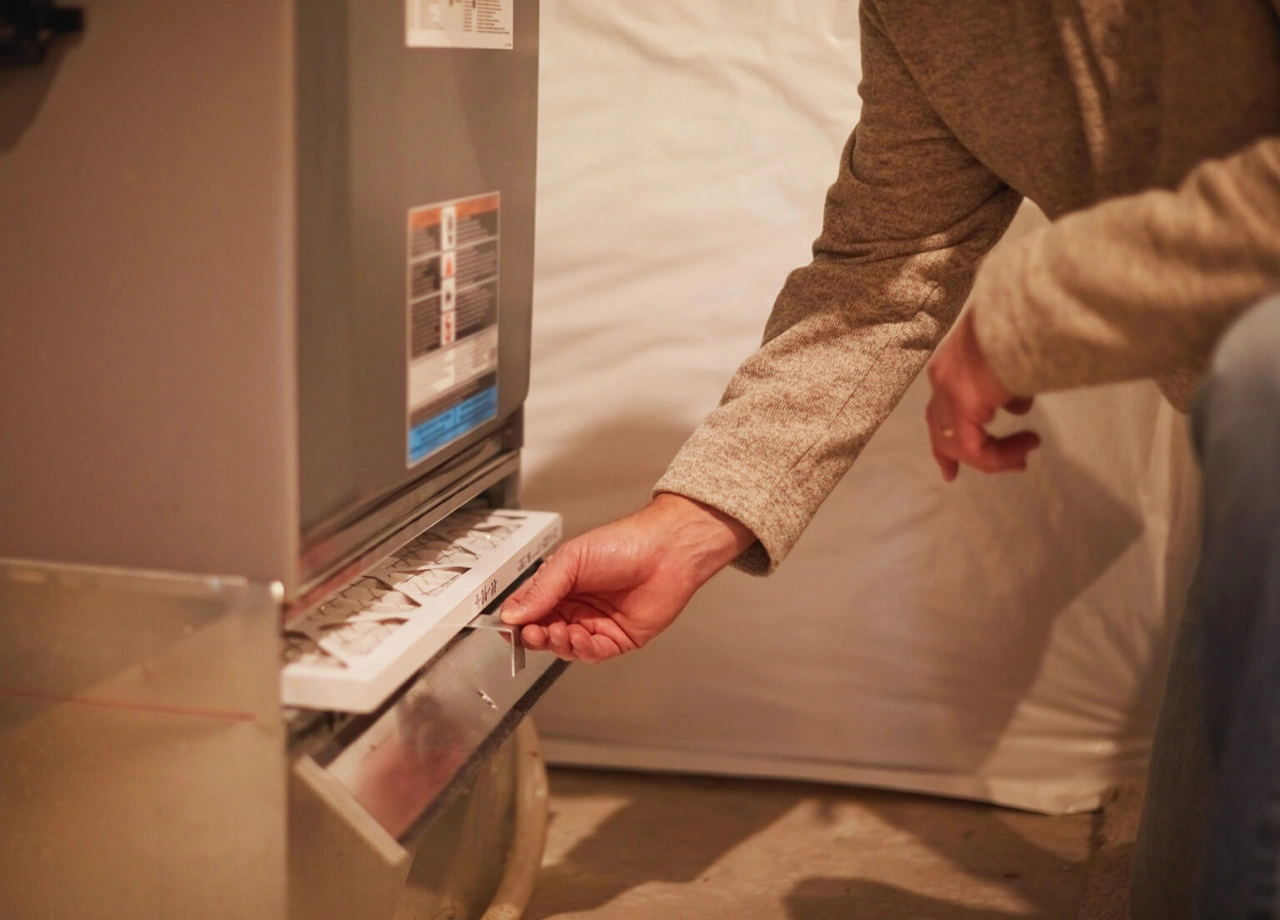
While professional service is irreplaceable, there are several highly effective habits you can adopt right at home to keep your air conditioner running smoothly. Taking a proactive approach to your cooling system prevents minor issues from compounding into expensive failures. Before the summer heat officially kicks off, we highly recommend reading our checklist on How to Prepare Your Air Conditioner for the Summer to ensure you are starting the season on the right foot.
Here are the two most critical DIY tasks that every Central Oregon homeowner should master to maximize system longevity.
Monthly Filter Checks During Wildfire and Pollen Seasons
Your air filter is the primary line of defense for both your indoor air quality and your cooling equipment. During the spring, Central Oregon is inundated with thick yellow juniper pollen, followed closely by pine pollen. By late summer, wildfire smoke can introduce heavy loads of fine particulate matter into the air.
If you use standard 1-inch fiberglass filters, they should be checked and replaced every 30 days during these peak seasons. For high-quality pleated filters (which we recommend, ideally with a MERV rating between 8 and 11), you should still check them monthly, though they may last up to 90 days under normal conditions.
When a filter becomes clogged with pollen, dust, and smoke residue, it restricts airflow. This forces your blower motor to run longer and hotter, putting immense pressure on the compressor. A restricted filter is also the leading cause of frozen evaporator coils, which can cause liquid refrigerant to flood back and destroy your compressor—the most expensive part of your system.
Maintaining the Two-Foot Clearance Rule for Outdoor Units
Your outdoor condenser unit needs to breathe. It works by releasing the heat extracted from inside your home out into the surrounding air. If the unit is crowded by landscaping, sagebrush, weeds, or stored items, that heat cannot escape efficiently.
We recommend maintaining at least a two-foot (24-inch) clear zone on all sides of your outdoor unit. In Central Oregon, this means regularly clearing away:
- Falling pine needles and cones (especially common in Sunriver and La Pine)
- Encroaching sagebrush, bitterbrush, and ornamental grasses
- Windblown dust, leaves, and weeds that accumulate against the metal grates
If you notice a heavy accumulation of dust or pine needles on the metal fins of your outdoor unit, you can gently rinse them with a garden hose (with the power turned off). Avoid using a pressure washer, as the high-pressure stream will easily bend the delicate aluminum fins, permanently restricting airflow.
Professional Maintenance: The Key to High Desert AC Longevity
While DIY care keeps the worst of the dust and debris at bay, professional maintenance is where you truly add years to your system's life. In fact, regular professional maintenance can extend the life of your AC system by 5 to 7 years, saving you from premature replacement.
Think of a professional AC tune-up like changing the oil and rotating the tires on your car. You wouldn't drive a vehicle for years without basic service and expect it to run reliably, and your HVAC system is no different. To learn more about what to expect during a professional visit, read our AC Tune-Up Guide 2026 Central Oregon Homeowners. Conversely, if you are tempted to skip a season, make sure you understand the risks detailed in our article on What Happens If You Skip HVAC Maintenance.
Why You Need a Professional to Help How to Extend the Life of Your AC in Central Oregon
Modern air conditioning systems are highly calibrated machines that require specialized diagnostic tools to service correctly. During a professional tune-up, a technician does far more than just look at the system.
Key professional tasks that directly target how to extend the life of your AC in Central Oregon include:
- Deep Coil Cleaning: Technicians use self-rinsing chemical cleaners to dissolve baked-on high desert dust and wildfire ash from both the indoor evaporator coil and the outdoor condenser coil. This restores perfect heat transfer.
- Electrical System Calibration: Because of our extreme daily temperature swings, electrical connections can loosen over time. Technicians tighten all electrical terminals, measure voltage, and test the microfarad ratings of your capacitors. Replacing a failing capacitor early prevents it from damaging the fan motor or compressor.
- Refrigerant Level Verification: Running an AC with too little or too much refrigerant places an extreme thermodynamic load on the compressor, leading to mechanical failure. Technicians measure superheat and subcooling to ensure the charge is exact.
- Motor Lubrication: Reducing friction in the fan motors keeps them running cool and prevents electrical burnouts.
For a deeper dive into how these steps safeguard your home, check out our guide on 5 Ways a Professional Preps Your HVAC System for Summer.
Localized Care Across Deschutes County Communities
Central Oregon's geography is incredibly diverse, and microclimates vary significantly from town to town. An air conditioner in Sunriver faces different environmental challenges than one in Redmond or Sisters. That is why localized, community-specific care is so important.
- Bend: Homes in Bend often feature mature landscaping and high-ceiling floor plans that require precise airflow balance. Learn more about our services on our AC Maintenance Bend OR page.
- Redmond: Redmond's lower elevation brings hotter summer afternoons and higher wind-blown dust levels, making coil cleanliness paramount. See how we help on our AC Maintenance Redmond OR page.
- Sisters: Surrounded by dense ponderosa forests, systems in Sisters must contend with heavy seasonal pine pollen and pine needle debris. Explore our local care on our AC Maintenance Sisters OR page.
- Sunriver: Sunriver homes are often surrounded by native brush and trees, and many serve as vacation properties that sit empty before running at maximum capacity. Find out how we keep these systems ready on our AC Maintenance Sunriver OR page.
- La Pine: At a higher elevation with colder nights and sandy soils, La Pine systems experience intense temperature swings and heavy dust. Visit our AC Maintenance La Pine OR page for specialized local tips.
- Terrebonne: Sitting near Smith Rock, Terrebonne homes are exposed to open, windy canyon conditions that carry fine agricultural silt directly into outdoor units. Check out our localized solutions on our AC Maintenance Providers Terrebonne OR page.
Sizing, Thermostats, and System Types: Smart Choices for Longevity
Extending the life of your AC actually begins before the system is even installed, and continues with how you control it day-to-day. Making smart choices regarding equipment sizing, thermostat technology, and system type will dramatically reduce the wear and tear your cooling system experiences over its lifetime.
If you have rooms in your home that struggle to stay cool during sunny summer days, you can find helpful tips in our guide on How to Keep Sun-Facing Rooms Cool This Summer.
How Proper Sizing and Smart Thermostats Help How to Extend the Life of Your AC in Central Oregon
When it comes to air conditioning, "bigger" is definitely not better. An oversized AC unit will cool your home too quickly and shut off. This cycle repeats every few minutes—a phenomenon known as short cycling.
Because the startup cycle is the most stressful part of an AC's operation, drawing the most electrical current and causing the most mechanical friction, short cycling rapidly wears out contactors, capacitors, and the compressor motor. A system must be sized precisely using a professional Manual J load calculation, which accounts for your home's square footage, insulation levels, window orientation, and local climate.
Once you have a properly sized system, managing its workload is key. This is where smart and programmable thermostats shine. By setting your thermostat to raise the temperature by 5 to 7 degrees when you are away from home, you drastically reduce the system's total daily runtime. Each degree you raise the thermostat can save you about 1% to 3% on cooling energy use while giving your equipment a much-needed break.
Smart thermostats can also automate this process, learning your daily schedule and pre-cooling your home during the cooler morning hours before the peak afternoon heat hits.
Comparing Lifespans: Central AC, Heat Pumps, and Ductless Mini-Splits
Different types of cooling systems have different lifespans and operational demands in our high desert climate. Understanding these differences can help you make the right choice when it is time to upgrade.
| System Type | Typical Lifespan | Suitability for Central Oregon | Key Longevity Advantage |
|---|---|---|---|
| Central AC | 12 to 17 Years | Excellent for homes with existing ductwork. Only runs 3–4 months a year. | Low annual runtime preserves mechanical parts. |
| Air-Source Heat Pump | 10 to 12 Years | Outstanding year-round efficiency; provides both heating and cooling. | Eliminates the need for a separate AC; highly efficient. |
| Ductless Mini-Split | 15 to 20 Years | Perfect for older homes, bonus rooms, or homes without existing ducts. | Inverter technology allows constant, low-speed operation. |
Because heat pumps work year-round to provide both heating and cooling, they naturally accumulate more operational hours and may need to be replaced sooner than a dedicated central AC. However, ductless mini-splits use advanced inverter technology, allowing the compressor to run continuously at ultra-low speeds rather than constantly cycling on and off. This smooth, variable-speed operation makes mini-splits the "marathon runners" of the HVAC world, often lasting up to 20 years with proper care.
Knowing When to Repair vs. Replace Your Central Oregon Cooling System
No matter how well you care for your air conditioner, there will eventually come a day when you must decide whether to invest in another repair or replace the unit entirely.
To help make this decision easier, we recommend keeping the 15-Year Rule in mind. If your system is over 15 years old and requires a major repair, replacing it is almost always the more financially sound decision. At this age, the system's overall efficiency has dropped significantly, and finding replacement parts can become difficult and complex.
Additionally, older systems manufactured before 2023 operate on lower SEER (Seasonal Energy Efficiency Ratio) standards. Modern units must meet strict SEER2 efficiency regulations, meaning a new system will immediately lower your monthly utility bills while providing superior comfort.
If you are trying to gauge where your current system stands, we suggest reading our comprehensive guide on How Long Does an AC Unit Last in Central Oregon. It provides a detailed breakdown of age indicators, warning signs, and how to plan for a future upgrade without any stressful summer surprises.
Frequently Asked Questions About Central Oregon AC Lifespan
How often should I schedule professional AC maintenance in Central Oregon?
We strongly recommend scheduling professional AC maintenance once a year, ideally in the spring before the summer cooling season begins. Because our high desert climate subjects systems to extreme dust, pollen, and temperature swings, annual service is essential to prevent unexpected breakdowns on hot July afternoons. For heat pumps that provide both heating and cooling, semi-annual maintenance (spring and fall) is highly recommended. To learn more about proper timing, read our articles on How Often Should You Schedule an AC Tune-Up and HVAC Maintenance Frequency for Central Oregon Homes.
Why is my air conditioner freezing up in the high desert?
A frozen air conditioner is almost always caused by restricted airflow or low refrigerant. In our dry, dusty climate, a heavily clogged air filter or a thick layer of dust on the indoor evaporator coil prevents heat from being absorbed. As a result, the temperature of the coil drops below freezing, causing the condensation on it to turn to ice. If you notice ice on your indoor or outdoor lines, turn the system off immediately to protect the compressor, replace your filter, and call us for a professional diagnostic inspection.
Can wildfire smoke permanently damage my air conditioning system?
Yes, if left unaddressed. While wildfire smoke won't instantly destroy your AC, the fine, sticky ash and particulate matter can bypass standard filters and coat your indoor evaporator coils. This creates a physical barrier that blocks heat transfer and restricts airflow. Outdoors, heavy smoke ash can settle into the condenser coils, forcing the compressor to run hotter and longer. To prevent permanent damage and protect your indoor air quality, we recommend upgrading to high-quality pleated filters during smoke season and scheduling a professional coil cleaning after heavy wildfire events.
Conclusion
Taking proactive steps to extend the life of your air conditioner is one of the smartest investments you can make as a Central Oregon homeowner. By combining simple DIY habits—like checking your air filters monthly and keeping the outdoor unit clear of debris—with annual professional maintenance, you can keep your home comfortable, lower your energy bills, and protect your cooling system for up to 20 years.
At Mountain View Heating, we have been helping our neighbors in Bend, Redmond, Sisters, Sunriver, La Pine, and surrounding communities stay comfortable in every season for over 40 years. We focus exclusively on residential HVAC service, repair, and replacement, prioritizing 100% customer satisfaction for every single home we visit. Whether you need a quick spring tune-up, a complex repair, or a complete system replacement, our team is here for you with fast, friendly support and 24/7 emergency services.
Don't wait for the summer heat to strain your system. Schedule professional cooling services today with Mountain View Heating and let us help you maximize the life of your air conditioner!