


What Wildfire Smoke Means for Your AC Filter in Bend, Oregon
Knowing how often to change your AC filter during wildfire season can make a real difference for your home's air quality — and your HVAC system's health. Here in Central Oregon, wildfire smoke isn't just an outdoor problem. Fine smoke particles push their way inside through your ventilation system, and your AC filter takes the hit fast.
Quick answer: How often to change your AC filter during wildfire season:
| Conditions | Filter Change Frequency |
|---|---|
| Normal (no smoke) | Every 90 days (pleated) or 30 days (fiberglass) |
| Mild smoke / AQI 51–100 | Every 3–4 weeks |
| Moderate smoke / AQI 101–150 | Every 2–3 weeks |
| Heavy smoke / AQI 151–200 | Every 1–2 weeks |
| Severe smoke / AQI 200+ | Every few days to once a week |
Under normal conditions, most homeowners replace their HVAC filters every 90 days. But during an active wildfire smoke event, that same filter can become clogged and saturated within days or weeks. A filter that's overwhelmed by smoke particles stops protecting your home — and starts straining your system.
In Bend and across Central Oregon, wildfire season typically runs from late June through October, with the heaviest smoke events hitting in August and September. That's a long stretch where your AC filter is working much harder than usual.

How Wildfire Smoke Impacts Indoor Air Quality and HVAC Systems
When wildfires spark near Bend, La Pine, or Sisters, the sky turns a familiar, ominous shade of orange. But the real danger is invisible. Wildfire smoke is packed with PM2.5—microscopic particulate matter that is 2.5 microns or smaller in diameter. To put that in perspective, a single human hair is about 70 microns wide. These tiny particles bypass your body’s natural defense mechanisms and travel deep into your lungs, which is why local health officials advise staying indoors during heavy smoke events.
However, your home is only a safe haven if your heating and cooling system is prepared to handle the onslaught. Smoke particles, ash, and soot enter your living space through natural ventilation, tiny structural cracks, and mechanical HVAC intakes. Once inside, your air conditioner or heat pump continuously circulates this air.
As your system works, the air filter acts as the primary defense line, capturing these microscopic pollutants. But wildfire smoke is incredibly dense. It carries not just wood ash, but also chemical residues, volatile organic compounds (VOCs), and carbon monoxide. This heavy mixture leads to rapid ash accumulation on the filter fibers.
When a filter becomes completely saturated with smoke residue, several things happen to your home and equipment:
- System Strain: A clogged filter restricts airflow. Your HVAC blower motor has to work twice as hard to push air through the dense barrier of soot.
- Overheating and Freeze-ups: Without sufficient airflow, your air conditioner's evaporator coils can freeze over, or your furnace's heat exchanger can overheat, triggering safety shutdowns.
- Increased Energy Consumption: Because the system is working harder and running longer to cool your home, your monthly utility bills can climb significantly.
- Bypassing Pollutants: Once a filter is completely full, the pressure can cause air to bypass the filter edges entirely, sending unfiltered smoke and ash directly into your indoor living spaces.
Understanding Indoor Air Quality During Fires is the first step in protecting your household. Neglecting your air filter during these critical times can lead to immediate respiratory discomfort and long-term damage to your home’s heating and cooling equipment. You can learn more about identifying these issues by reading up on the Signs of Poor Indoor Air Quality.
How Often to Change Your AC Filter During Wildfire Season
The speed at which a filter clogs depends heavily on its design. Standard fiberglass filters—the flat, semi-transparent ones you can buy in multi-packs—are only designed to capture large particles like pet hair and lint. Under normal circumstances, they need to be replaced every 30 days. During wildfire season, however, they saturate almost instantly because their surface area is incredibly small, and they let the majority of fine smoke particles pass right through.
High-quality pleated filters, on the other hand, are designed with deep folds that drastically increase the surface area available to trap particles. Under normal, smoke-free conditions, a pleated filter can easily last 90 days to six months. But wildfire smoke is a game-changer. The sheer volume of fine particulates can saturate even a premium pleated filter in a matter of weeks.
During active forest fire events, you should plan to change your AC filter as often as every 2 to 4 weeks. If you live in high-exposure areas like Sunriver or Redmond during an active blaze, you may even need to swap it out every few days during extreme conditions.
Checking your filter frequently is the only way to ensure your system continues to run safely. For more information on operating your system safely when the air is thick, check out our guide on Is It Okay to Operate Your AC During Wildfire Season. To keep your entire system in peak shape year-round, you can also review our recommended HVAC Maintenance Frequency for Central Oregon Homes.
Determining How Often to Change Your AC Filter During Wildfire Season Based on AQI
To remove the guesswork, you can use the Air Quality Index (AQI) as a reliable guide for your filter maintenance schedule. The EPA updates local AQI levels in real-time on sites like AirNow.gov.
Here is a breakdown of how different air quality tiers should dictate your filter inspection and replacement habits:
- AQI 0–50 (Good): Stick to your standard schedule. Inspect your filter monthly and replace it every 90 days if you use pleated media.
- AQI 51–100 (Moderate): If smoke is drifting into the region from distant fires, inspect your filter every two weeks. Plan to replace it within 3 to 4 weeks if the hazy conditions persist.
- AQI 101–150 (Unhealthy for Sensitive Groups): High-risk individuals will notice indoor air quality issues quickly. Check your filter weekly. Replace it every 2 to 3 weeks to prevent smoke bypass.
- AQI 151–200 (Unhealthy): Active smoke is present in Central Oregon. Check your filter every 3 to 5 days. Replace it every 1 to 2 weeks.
- AQI 201+ (Very Unhealthy / Hazardous): Severe local fire activity. Inspect your filter daily or every other day. Be prepared to replace it every few days to once a week, especially if you notice a smoky smell indoors.
Using this structured approach ensures you aren't running your system with a choked filter, protecting both your family's lungs and your air conditioner's compressor.
Signs That Show How Often to Change Your AC Filter During Wildfire Season to Prevent Damage
You don't always have to rely solely on the calendar or the AQI. Your HVAC system and your home will drop clues when the filter has reached its limit.
Perform a quick check for these common warning signs:
- The Visual Light Test: Pull the filter out and hold it up to a bright light or the sun. If the light cannot penetrate the filter media because of a thick layer of grey or black soot, it is completely saturated and needs to be replaced immediately.
- Grey or Black Discoloration: A normal filter turns a light dusty brown over several months. Wildfire smoke will turn a filter dark grey or black very quickly due to the high concentration of carbon and ash.
- Reduced Airflow: If the air blowing from your supply registers feels noticeably weaker or warmer than usual, a clogged filter is likely restricting the airflow.
- Smoky or Musty Odors: If turning on your air conditioner brings a sudden wave of campfire smell or a stale, musty odor into your rooms, your filter is saturated and is releasing captured odors back into your home.
- System Short Cycling: This occurs when your air conditioner turns on and off rapidly—running for only 5 minutes or less instead of a healthy 15-to-20-minute cycle. Restricted airflow causes the system to overheat and shut down prematurely to protect itself.
If you notice these signs, replacing the filter is your first step. However, if a new filter doesn't resolve the short cycling or poor airflow, it's time to call in the professionals. For a deeper look into professional system care, read our article on How Often Should You Service Your HVAC System.
Choosing the Right MERV Rating for Wildfire Smoke Protection
To protect your home from microscopic smoke particles, you need a filter with the right rating. Air filters are rated using the Minimum Efficiency Reporting Value (MERV) scale, which ranges from 1 to 16 for residential systems. The higher the MERV rating, the smaller the particles the filter can trap.
- MERV 1–4: Typically basic fiberglass filters. These only capture large particles like carpet fibers and sanding dust. They provide virtually zero protection against wildfire smoke.
- MERV 5–8: Standard pleated filters. While great for trapping pollen, mold spores, and dust mites, they are not dense enough to stop fine PM2.5 smoke particles.
- MERV 11: Superior residential filters. They capture some fine particles and offer moderate protection during mild smoke events.
- MERV 13: The EPA and ASHRAE recommended minimum for wildfire smoke. A MERV 13 filter is designed to capture up to 85% of PM2.5 particles, including soot, ash, and smoke.
While upgrading to a MERV 13 filter is the single best step you can take for your indoor air quality, you must ensure your system can handle it. Higher-efficiency filters are denser, which means they naturally create more airflow resistance (also known as static pressure).
If your HVAC system's blower motor is older or not designed to push air through a dense MERV 13 filter, it can restrict airflow, causing the system to work less efficiently, consume more energy, or even overheat on hot summer days.
Before upgrading, it is always wise to consult an expert to verify your system's compatibility. To explore advanced filtration upgrades, such as whole-home air purifiers that work alongside your standard filter, visit our dedicated page on Indoor Air Quality.
Best Practices for Running Your HVAC System During Active Smoke Events
To maximize your filter's efficiency and keep outdoor smoke from invading your home, you need to adjust how you run your HVAC system during active fire events.
- Switch Your Thermostat Fan Setting to "On": Most homeowners leave their thermostat fan set to "Auto," meaning the fan only runs when the system is actively cooling or heating. During a wildfire smoke event, switch this setting to "On." This keeps the fan running continuously, providing constant filtration and air circulation even when the compressor isn't running.
- Enable Recirculation Mode: If your HVAC system has a fresh-air intake damper or an economizer, make sure it is closed. You want your system to recirculate the air already inside your home rather than pulling in smoky air from the outdoors.
- Close Windows and Doors: This may seem obvious, but even a brief open door can let a massive amount of PM2.5 inside. Keep your home sealed tightly.
- Avoid Venting Exhaust Fans: Avoid running kitchen range hoods or bathroom exhaust fans that vent directly to the outdoors. These fans push indoor air out, creating negative pressure inside your home. This negative pressure will pull smoky outdoor air inside through tiny cracks around windows, doors, and electrical outlets.
- Seal Physical Gaps: Use weatherstripping or temporary painter's tape to seal up drafts around older windows and doors during heavy smoke events.
By combining continuous filtration with smart system settings, you can reduce indoor smoke concentrations by up to 50% compared to outdoor levels. For more tips on managing seasonal air quality challenges, check out our guide on 5 Factors That Will Affect Your Indoor Air Quality During Fall.
Frequently Asked Questions about Wildfire Smoke and HVAC Filters
Can I run my AC during a wildfire smoke event?
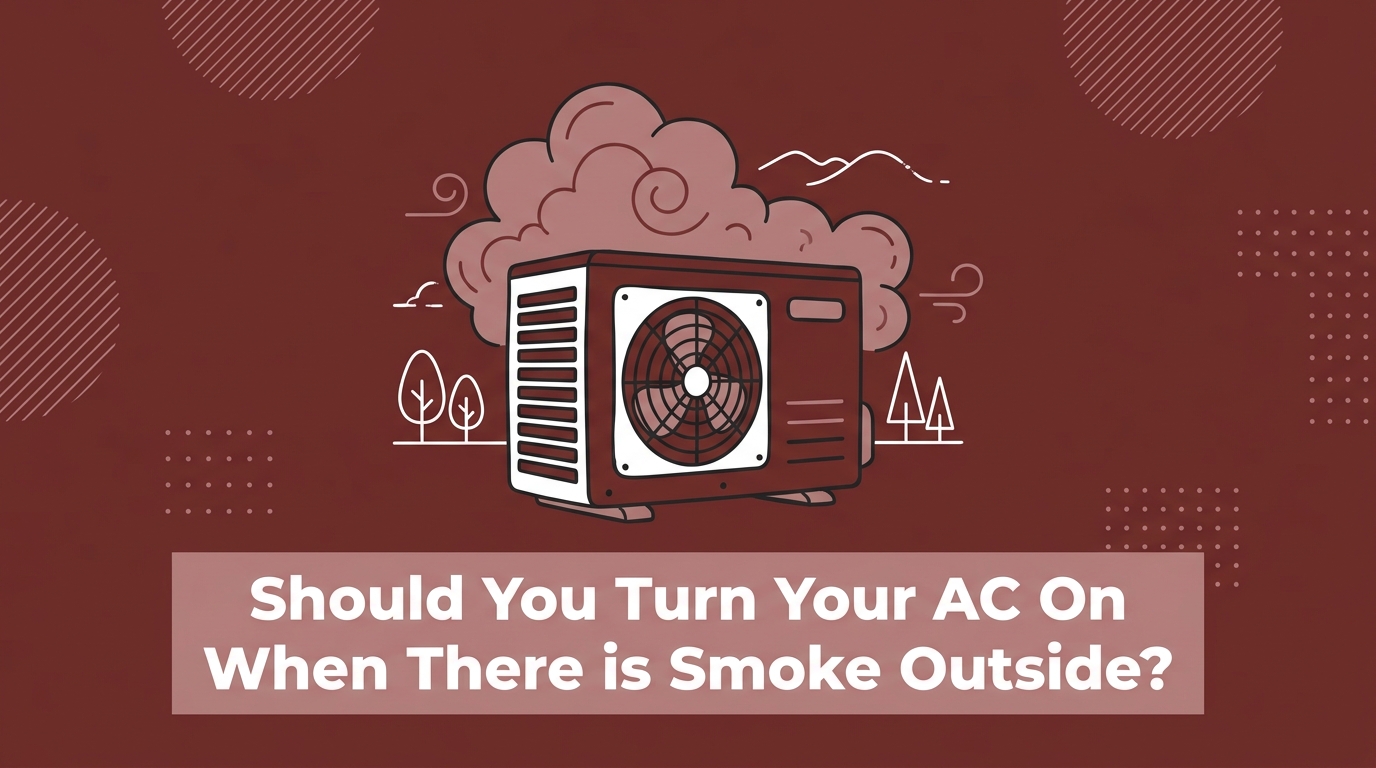
Yes, you can and should run your air conditioner during a wildfire smoke event, provided you have it set correctly. A standard central air conditioning system does not pull outdoor air into your home to cool it. Instead, the outdoor unit (the compressor) simply cools down refrigerant, which travels to your indoor unit to cool the air already inside your house. Running your AC on the recirculate setting with a clean, high-efficiency filter is actually one of the best ways to clean your indoor air and stay comfortable during a fire event.
Will a MERV 13 filter restrict my HVAC system's airflow?
It can, depending on the age and design of your system. Modern pleated MERV 13 filters are engineered with deeper pleats and advanced media to allow maximum airflow while capturing fine particles. Most residential HVAC systems built within the last 15 years can handle a MERV 13 filter without any issues. However, if you notice your system short cycling, or if the air blowing from your vents feels weak after installing one, you should have a technician check your system's static pressure.
Should I get my air ducts cleaned after wildfire season?
In most cases of typical seasonal smoke, professional duct cleaning isn't immediately necessary. Your air filter should capture the vast majority of airborne soot before it enters your ductwork. However, if you live very close to an active burn zone (within a mile or two), or if you noticed a heavy, persistent smoky smell inside your home that won't go away even after replacing your filter, a professional inspection is highly recommended. Soot and ash can settle inside your ductwork and continue to recirculate long after the outdoor air clears. To understand how your duct system affects your home's air, read about The Impact of Air Ducts on Indoor Air Quality.
Conclusion
Managing how often to change your AC filter during wildfire season is one of the simplest and most effective ways to protect your home, your family, and your HVAC equipment from the harsh realities of Central Oregon's summer fire season. By keeping a close eye on the local AQI, stocking up on high-quality MERV 13 filters before the smoke arrives, and running your system on the right settings, you can breathe easy knowing your indoor air is clean and safe.
At Mountain View Heating, we have been helping our neighbors in Bend, Redmond, La Pine, Sisters, Sunriver, Terrebonne, and Three Rivers stay comfortable for over 40 years. Our priority is always 100% customer satisfaction, and we are proud to offer fast 24/7 emergency support when you need us most.
Whether you need help selecting the right filter, verifying your system's compatibility with a MERV 13 upgrade, or scheduling a post-smoke system tune-up, our friendly, experienced technicians are here to help. Schedule professional air conditioning services to protect your home today and make sure your system is ready for whatever wildfire season brings.