


What the Refrigerant Transition Means for Your Next AC Purchase
How the refrigerant transition affects your next AC purchase is something every homeowner in Bend, Oregon needs to understand right now — because the rules have already changed.
Here's the short version:
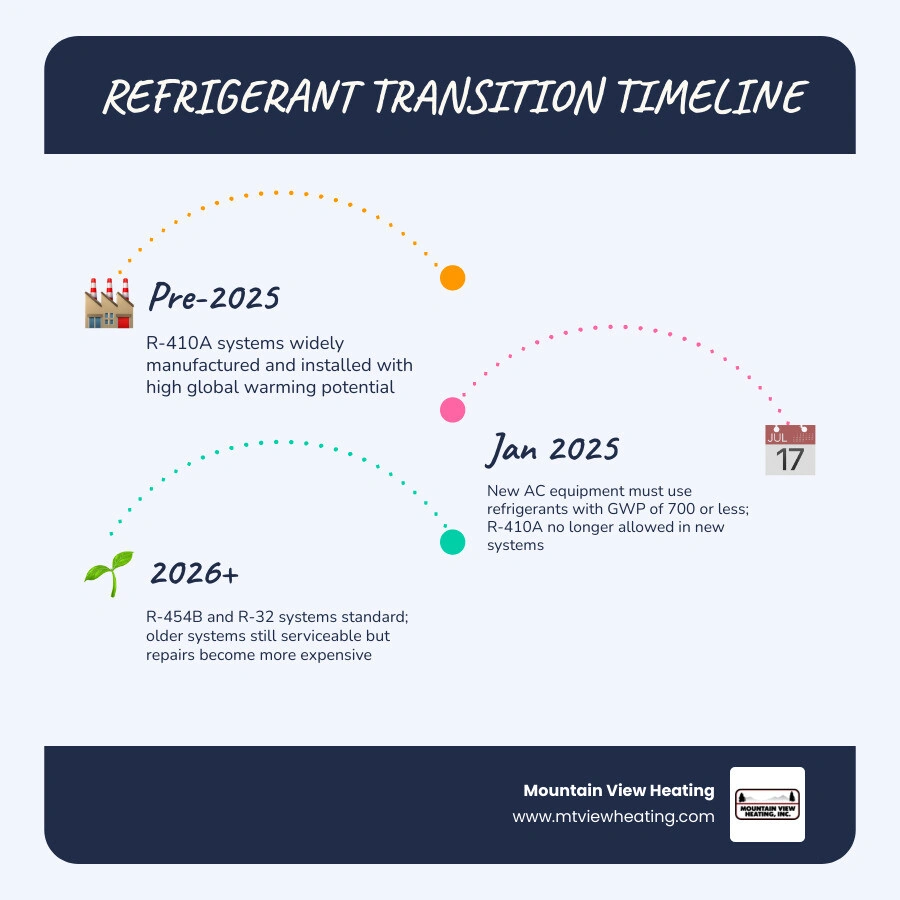
- All new residential AC equipment manufactured after January 1, 2025 must use a refrigerant with a GWP of 700 or less — meaning R-410A is no longer used in new systems
- You do not need to replace your current R-410A system right away — existing systems can still be serviced and operated legally
- New systems use R-454B or R-32, both of which are more environmentally friendly and 10–15% more energy efficient than R-410A systems
- R-410A refrigerant is becoming increasingly scarce, making repairs on older systems less practical over time
- Retrofitting an R-410A system to use new refrigerants is not possible — the systems are fundamentally incompatible
- New A2L systems include built-in safety features like leak detection sensors designed for residential use
If your AC is aging or needs a major repair, the transition makes now a smart time to plan your next move. If your system is running well, there's no immediate rush — but understanding what's changed will help you make a much smarter purchase when the time comes.
The HVAC industry has gone through big refrigerant changes before. Back in the 1990s, R-22 was phased out under the Montreal Protocol for damaging the ozone layer. R-410A replaced it — and now R-410A itself is being phased out, this time because of its very high global warming potential. The cycle continues, and each transition brings both short-term adjustment and long-term benefit for homeowners.
For residents in Bend and Central Oregon, where summer cooling demands are growing every year, this transition directly shapes what equipment is available, how repairs are handled, and what to look for when shopping for a new system.
This guide walks you through everything you need to know — clearly and without the jargon.
Understanding the 2025–2026 Refrigerant Transition
The transition we are currently experiencing in May 2026 is part of a coordinated global effort to reduce the environmental impact of modern cooling systems. By shifting away from older chemical compounds, the HVAC industry is adopting next-generation refrigerants that protect our atmosphere while keeping our homes perfectly comfortable.
This change is not a sudden whim of the industry. It represents a carefully planned phase-down of Hydrofluorocarbons (HFCs) overseen by environmental protection agencies worldwide. For homeowners, this means the air conditioner or heat pump you purchase today is engineered to be more sustainable and efficient than any system that came before it.
Why the EPA Mandated the Phase-Out of R-410A
To understand why R-410A is being phased out, we have to look at how refrigerants are measured. While R-410A was a massive improvement over its predecessor, R-22, because it did not damage the Earth's ozone layer, it had a different environmental drawback: a very high Global Warming Potential (GWP).
GWP is a measure of how much heat a greenhouse gas traps in the atmosphere relative to carbon dioxide (which has a GWP of 1). R-410A has a GWP of 2,088, meaning it is over two thousand times more potent than carbon dioxide when released into the atmosphere. Under the American Innovation and Manufacturing (AIM) Act of 2020, which aligns with the international Kigali Amendment, the U.S. Environmental Protection Agency (EPA) mandated a phased reduction of high-GWP HFCs.
By phasing out R-410A, the industry is drastically cutting down on potential greenhouse gas emissions. If you are currently evaluating your options, understanding these regulations is the first step in learning How to Choose the Right AC System for Your Home.
How the Refrigerant Transition Affects Your Next AC Purchase in Central Oregon
Now that we are well into 2026, the transition is fully in effect. The EPA's manufacturing cutoff on January 1, 2025, followed by the installation grace period ending on January 1, 2026, means that older R-410A systems are no longer being manufactured or installed. If you are shopping for a new air conditioner today, your options will utilize the new, compliant low-GWP refrigerants.
In Central Oregon, our climate brings unique demands. From hot, dry summer days in Redmond and Bend to chilly desert nights in Sisters and La Pine, we rely heavily on responsive, durable cooling systems. The shift to low-GWP equipment ensures that you are installing a future-proof system that complies with all modern environmental standards.
If you are a homeowner preparing for summer, scheduling a professional evaluation is the best way to navigate these changes. We specialize in helping local families plan for the future with reliable AC Replacement Bend OR and seamless AC Replacement Redmond OR services.
Comparing R-410A, R-454B, and R-32

As the industry pivots away from R-410A, two primary low-GWP alternatives have emerged for residential applications: R-454B and R-32. Both belong to a class of refrigerants known as A2L, which are highly efficient and have a much lower environmental footprint.
These new options are excellent matches for modern residential heat pumps. Because heat pumps handle both heating and cooling, upgrading to a next-generation system is a highly effective way to maximize year-round comfort. To learn more about how these systems function, read our guide on How Heat Pumps Equal Energy Efficiency.
Global Warming Potential and Environmental Impact
The primary driver of this transition is the dramatic reduction in carbon footprints.
- R-454B is a blend of R-32 and R-1234yf. It has a GWP of 466, representing a roughly 78% reduction in global warming potential compared to R-410A.
- R-32 is a single-component refrigerant with a GWP of 675, which is a 68% reduction compared to R-410A. Because it is a single-component chemical, it does not experience "fractionation" (where blended gases leak at different rates), making it easy to top off during service.
Here is a quick look at how these three refrigerants compare:
| Refrigerant | GWP Rating | Flammability Class | Primary Use Case in 2026 |
|---|---|---|---|
| R-410A | 2,088 | A1 (Non-Flammable) | Legacy systems (no longer manufactured) |
| R-454B | 466 | A2L (Mildly Flammable) | Ducted central ACs and heat pumps |
| R-32 | 675 | A2L (Mildly Flammable) | Mini-splits and select central systems |
System Efficiency and Performance Upgrades
The transition to R-454B and R-32 isn’t just good for the planet; it’s also great for your home's energy efficiency. Because these newer refrigerants have superior heat transfer properties, manufacturers have re-engineered their systems to be significantly more efficient.
New A2L-compliant systems are generally 10% to 15% more efficient than their R-410A predecessors. This improved performance is closely tied to updated regional standards. To understand how these efficiency gains are measured and how they impact your monthly energy consumption, you can explore our articles on What is a SEER Rating and What You Need to Know About SEER2 Energy Efficiency Standards.
How the Refrigerant Transition Affects Your Next AC Purchase: Repair vs. Replace Decisions
If your current R-410A air conditioner is running smoothly, there is absolutely no need to panic or replace it prematurely. However, if your system is approaching the end of its typical 12-to-15-year lifespan, or if you are facing a major repair, the refrigerant transition should heavily influence your decision-making.
For homeowners in communities like Sisters and Sunriver, balancing whether to keep an older system running versus upgrading to a modern unit is a key decision. We are always here to help you weigh these options with our dedicated AC Replacement Sisters OR and AC Replacement Sunriver OR services.
Can I Retrofit My Existing R-410A System?
A common question we hear is whether an existing R-410A air conditioner can be retrofitted or converted to use R-454B or R-32. The short answer is no.
These refrigerants operate at different pressures, utilize entirely different compressor oil chemistries, and require advanced safety sensors and electrical components that older systems simply do not have. Attempting to mix refrigerants or force a new gas into an old system will permanently damage the compressor, void your manufacturer warranty, and create safety hazards. When you are ready to make the switch to a low-GWP refrigerant, it will require a complete system replacement.
If you are trying to decide which type of system fits your home's layout, check out our Central Air vs Mini Split High Desert Guide to compare your options.
The Limited Availability of R-410A Recharges for Older Units
While it remains perfectly legal to service and repair R-410A systems, doing so is becoming increasingly difficult. Because the EPA has cut R-410A production allocations by 40% in 2026, the supply of virgin refrigerant is shrinking rapidly.
As a result, sourcing R-410A refrigerant is becoming much harder. If your older system develops a refrigerant leak, finding the necessary refrigerant for a recharge can be a significant challenge, making a full system upgrade a more practical long-term solution. For homeowners in outlying areas, planning ahead can prevent emergency summer breakdowns. If you are in La Pine or the surrounding communities, we can help you evaluate your system's health through our AC Replacement La Pine OR consultations.
Safety Features and Technology in New A2L Systems
Because R-454B and R-32 represent a new class of refrigerants, manufacturers have integrated advanced engineering and safety standards into every compliant air conditioner and heat pump. These systems are highly reliable and built to keep your household safe.
Understanding the Mildly Flammable A2L Classification
The new refrigerants are classified as A2L under ASHRAE Standard 34. This means they are "mildly flammable." While that term might sound intimidating at first, the real-world risk is incredibly low.
For an A2L refrigerant to ignite, it requires a highly concentrated leak and a direct, high-energy open flame. In everyday household conditions, A2L refrigerants are incredibly difficult to ignite—in fact, common household products like hairspray, rubbing alcohol, and cooking oils are far more flammable. These gases also have a very slow flame propagation speed, meaning that even in the highly unlikely event of ignition, the flame does not spread rapidly.
How the Refrigerant Transition Affects Your Next AC Purchase Safety Standards
To ensure complete safety, all new residential A2L systems are engineered with built-in safety components that older R-410A systems never had:
- Refrigerant Detection Systems (RDS): Sensors are mounted near the indoor evaporator coil to constantly monitor for leaks.
- Mitigation Boards: If a leak is detected, the system immediately shuts down the compressor to stop the flow of refrigerant.
- Automatic Blower Activation: The indoor blower fan automatically turns on to circulate air, safely dispersing the refrigerant long before it can reach a concentration level that poses any risk.
These advanced safety standards make modern cooling systems some of the safest home appliances ever designed. If you are interested in how these smart technologies integrate with modern energy solutions, take a look at our article: Are Heat Pumps and Renewable Energy Sources an Ideal Match for Homeowners.
Frequently Asked Questions About the Refrigerant Transition
Navigating industry-wide changes can bring up plenty of questions. Here are the answers to some of the most common concerns Central Oregon homeowners have in 2026.
Is R-410A illegal to use in my current home AC system?
No, R-410A is absolutely not illegal to use. The EPA regulations only restrict the manufacture and installation of new equipment using high-GWP refrigerants. If your current R-410A system is operating properly, you can continue to use it and have it serviced. Parts and refrigerant will remain available for repairs for many years to come, though servicing these systems will become more difficult as the supply of R-410A decreases.
What should I ask an HVAC contractor before buying a new AC in 2026?
When purchasing a new system in 2026, it is important to ensure your contractor is fully prepared for the new standards. We recommend asking these key questions:
- Are your technicians EPA Section 608 certified and specifically trained to handle A2L refrigerants?
- Does the system you are quoting use R-454B or R-32?
- What built-in leak detection and safety mitigation features are included in this model?
- Will you be performing a proper nitrogen pressure test and pulling a deep vacuum (below 250 microns) during installation to ensure there are no leaks?
Are there energy efficiency benefits with these new systems?
Yes! Because the new A2L systems are designed to be highly energy efficient, they help reduce overall energy consumption. Homeowners can transition to these modern systems to enjoy superior performance and lower energy usage. Additionally, many models meet strict regional efficiency standards, ensuring your home remains comfortable while utilizing less power.
Conclusion
The 2025–2026 refrigerant transition represents a major step forward for both environmental sustainability and home energy efficiency. While navigating these regulatory changes might seem complex, the result is a generation of residential cooling systems that are safer, more efficient to run, and better for our planet.
At Mountain View Heating, we have spent over 40 years helping families across Central Oregon stay comfortable in every season. Whether you live in Bend, Redmond, Sisters, Sunriver, La Pine, Terrebonne and Three Rivers, our team is committed to prioritizing 100% customer satisfaction on every single project. We can help you evaluate your current air conditioner, weigh the benefits of repairs versus replacement, and guide you to the perfect future-proof system for your home.
If you are ready to discuss your home cooling options or have questions about your existing system, contact us today to learn more about our Mountain View Heating Air Conditioning Services.