






UV Lights in La Pine, OR
When you’re dealing with musty odors, microbial concerns, stale air, or indoor air that never feels as clean as it should in La Pine, OR, it’s time to get the problem handled correctly. Mountain View Heating is known for honest pricing, dependable service, and trusted technicians, using a targeted inspection to identify air treatment needs, eliminate the problem, and help keep the issue from coming back with properly installed UV light solutions. Air treatment should be handled with a clear plan, and we move quickly to improve indoor air quality.
Why La Pine Homeowners Consider UV Lights
La Pine’s high-desert climate and proximity to forested areas create two local realities:
- Summer wildfire smoke events increase particle and odor loads indoors. While UV lights do not remove particulate matter, they help reduce the microbial growth that can worsen odors and surface contamination after smoke exposure.
- Homes often run heating systems for long stretches in winter and cooling or dehumidification in summer, creating conditions for coils and the air handler to develop moisture-related mold or bacterial growth. UV germicidal lights target those biological sources directly.
If you notice musty smells coming from vents after the AC runs, recurring visible mold near the coil, or increased allergy symptoms indoors, UV lights can be an effective part of a broader indoor air quality strategy.
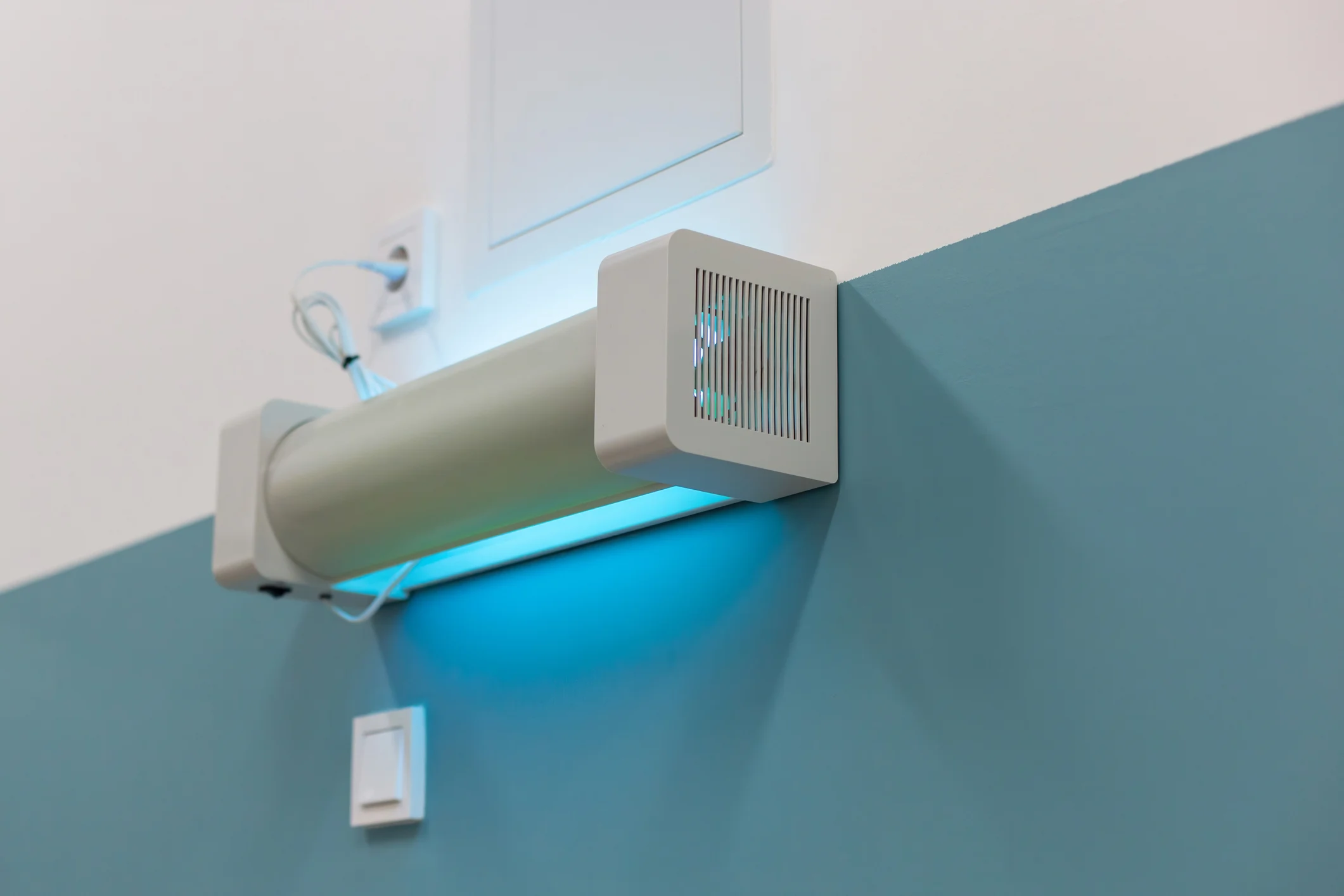
Common UV Solutions and Recommended Placement
There are two primary UV installation approaches for residential HVAC systems, each with distinct benefits:
Coil-mounted (evaporator coil) UV lights
- Purpose: Continuously disinfect the wet coil surface where mold and biofilm form.
- Benefit: Keeps the coil cleaner, improves heat transfer, reduces odors, and lowers the likelihood of microbial particulate entering the duct system.
- Typical placement: Mounted just downstream of the evaporator coil inside the air handler.
In-duct or air-handler UV lights (airstream UV)
- Purpose: Irradiates the moving air within the duct or air handler to reduce airborne microbes.
- Benefit: Treats air passing through the system and reduces airborne bacteria and viruses in conditioned spaces.
- Typical placement: Inside the supply plenum or inline in major duct runs; often used in combination with coil-mounted units for broader protection.
Many La Pine homes benefit from a dual approach: a coil-mounted lamp to protect the evaporator and a duct/air-handler lamp to treat passing air. Both solutions are compatible with most forced-air systems, including gas furnaces, electric furnaces, heat pumps, and ducted mini-splits.
What to Expect During Installation
A professional installation generally follows these steps:
- System assessment: Technician inspects the HVAC layout, coil access, available electrical supply, and ductwork configuration to determine lamp type, length, and mounting location.
- Mounting and wiring: Install UV lamp(s) on or near the coil and/or inside the duct/air handler. Units are wired to existing 120V or 24V circuits, depending on model; ballast and mounting hardware are secured.
- Safety integration: Install warning labels and shutter/covering if needed. Ensure the unit automatically powers off when service panels are opened to protect technicians and occupants from UV exposure.
- Performance check: Verify lamp operation, proper orientation, and that lamps are delivering the correct output. Discuss maintenance schedule and safety precautions with the homeowner.
Installation is minimally invasive when the air handler is accessible, but older or tight installations may require additional routing or custom brackets.
Maintenance, Life Expectancy, and Safety
- Lamp life and replacement: Most low-pressure UV-C lamps lose disinfecting output over time. Expect effective output for roughly 9 to 12 months; annual lamp replacement is a common recommendation to maintain full germicidal performance. Some modern LEDs promise longer life, but verify manufacturer guidance.
- Cleaning: Bulbs and reflectors should be wiped clean during routine HVAC maintenance because dust or film can reduce UV output. A quarterly visual check and an annual cleaning at tune-up time is typical.
- Ballasts and components: Ballasts and mounting hardware should be inspected during annual HVAC service. Ballasts may last several years but can fail unexpectedly; a failing ballast reduces lamp effectiveness.
- Safety: UV-C light can damage skin and eyes. Lamps must be installed inside the HVAC cabinet or ductwork with interlocks or covers that shut power off when the service panel is opened. Never operate lamps outside of enclosed spaces or look directly at a powered lamp.
Expected Air Quality and System Benefits
When installed and maintained correctly, UV germicidal lights provide several measurable and practical benefits:
- Reduction of biological contamination: UV-C inactivates or prevents the growth of mold, mildew, bacteria, and certain viruses on treated surfaces and in the airstream, which helps reduce odors and microbial loading in ducts.
- Improved HVAC efficiency: Cleaner coils transfer heat more effectively, which helps the system maintain set temperatures with less strain and can reduce the likelihood of condenser/coil-related maintenance.
- Odor control: UV treatment reduces the organic films that cause musty or stale smells from the system.
- Health and comfort: Fewer viable microbes and reduced odors can lead to fewer allergy triggers and a more comfortable indoor environment, particularly helpful during wildfire recovery or when indoor humidity and condensation cycles promote microbial growth.
It is important to set realistic expectations: UV lights are effective against biological targets but do not remove dust, pollen, smoke particles, or volatile organic compounds. For best results in La Pine — especially during smoke seasons — pair UV systems with upgraded filtration (higher MERV rating or high-efficiency portable/whole-home air purifiers) and routine duct and filter maintenance.
Compatibility and Retrofit Considerations
- Most forced-air systems: UV solutions can be retrofitted to most gas and electric furnaces, heat pumps, and central air systems. Accessibility of the coil and air handler determines the complexity of the retrofit.
- Power options: Residential units commonly use standard 120V supply or low-voltage control wiring; installers will select compatible models based on the home’s electrical setup.
- Integration with existing IAQ equipment: UV systems work alongside filters, humidifiers, and purifiers. To maximize results, planners typically design a combined IAQ approach rather than relying solely on UV.
Long-Term Value and When to Choose UV
Choose UV lights when you have recurring coil mold, musty vent odors, occupants with sensitivity to microbial triggers, or want to protect system efficiency in a humid summer or post-smoke cleanup context. UV is especially valuable in La Pine where seasonal smoke events and varying indoor humidity can contribute to microbial growth on HVAC components.
Regular maintenance — annual lamp changes, periodic cleaning, and routine HVAC tune-ups — preserves UV performance and helps realize the energy, comfort, and health benefits homeowners expect. When combined with proper filtration and scheduled HVAC care, UV germicidal lights are a reliable component of a long-term indoor air quality strategy for La Pine homes.
Breathe Easier with UV Light Solutions from Mountain View Heating, Inc.
Protect your family’s health and your HVAC system’s efficiency with advanced UV germicidal lights from Mountain View Heating, Inc.. Our expertly installed UV-C systems help eliminate mold, bacteria, and other biological contaminants that thrive on HVAC coils and inside ductwork—especially during La Pine’s wildfire and humid seasons. Enjoy cleaner air, fewer odors, and a more reliable system year-round.
Call Mountain View Heating, Inc. today to schedule your UV light installation in La Pine, OR, and take the next step toward a healthier, fresher home environment!