


The Sunk-Cost Trap of an August AC Breakdown
When deciding between a late-season AC repair or waiting for a winter heat pump upgrade, our team at Mountain View Heating, Inc. frequently sees homeowners fall for a common myth: that fixing a broken air conditioner in August is always the most financially sound choice. Throwing funds at a failing unit just to get through the final weeks of the back-to-school transition often results in paying twice for climate control. You pay once for a temporary cooling fix, and then you pay again when the heating system inevitably needs replacement shortly after. This sunk-cost trap keeps you locked into a cycle of reactive maintenance rather than proactive home management.
Addressing an air conditioning failure during the hot late-summer transition period is undeniably frustrating. Your immediate instinct is to restore cooling as quickly as possible. However, taking a step back to evaluate the broader picture reveals a more strategic alternative. By toughing it out briefly or utilizing temporary cooling solutions, you can redirect that significant repair budget into a comprehensive, year-round heating and cooling solution. Viewing your HVAC system as an integrated, twelve-month climate strategy rather than isolated seasonal units is the key to maximizing your investment and ensuring long-term comfort.
If you are ready to evaluate your options, exploring modern heat pump systems or scheduling a comprehensive heat pump installation can provide a reliable, year-round solution for your home.
Understanding the High Desert Climate Shift
The timing of an HVAC breakdown becomes critical when you factor in the unique environmental conditions of the region. Having served the Bend, OR area for years, we know firsthand that our high desert climate is characterized by intense diurnal temperature variation, meaning the weather changes drastically from day to night. Because the arid air does not hold heat well, hot late-summer afternoons can rapidly give way to unexpectedly freezing autumn evenings. This rapid transition from the cooling season to the heating season leaves very little room for error when managing your home's climate control systems.
In this environment, a reliable heating system becomes a non-negotiable priority almost immediately after the peak summer heat subsides. You do not have the luxury of a long, mild autumn to slowly deliberate over your heating options. Entering the heating season with a compromised, inefficient, or aging system puts your home at risk of severe discomfort during the first major cold snap. Understanding this rapid climate shift is essential when weighing a temporary cooling repair against a permanent heating upgrade.
The Short Window Between Cooling and Heating
The transition window between relying on your air conditioner and desperately needing your furnace is remarkably short. Once August concludes, the weather turns rapidly. Homeowners who wait until the first freeze to evaluate their heating needs often find themselves facing emergency scheduling, limited equipment availability, and rushed decisions. By recognizing this short window, you can make a proactive choice that secures your home's warmth well before the high desert winter sets in.
When Does a Late-Summer AC Fix Make Financial Sense?
Despite the advantages of upgrading, there are specific scenarios where repairing your current air conditioner is the most logical and financially responsible choice. Making this determination requires an objective look at the condition of your equipment, the nature of the breakdown, and the long-term viability of the unit. You need clear criteria to separate a minor setback from a major system failure.
When issues arise, accurate diagnostics are critical. For example, our technicians recently helped a local homeowner who experienced a complicated problem with their heat pump. Our team identified the root cause, developed an effective fix, and repaired the unit quickly, getting the system back online in a short amount of time. If a professional determines your AC issue is similarly straightforward, a targeted repair is often the smartest path forward. Knowing when to proceed with AC repair in Bend depends on evaluating a few core factors.
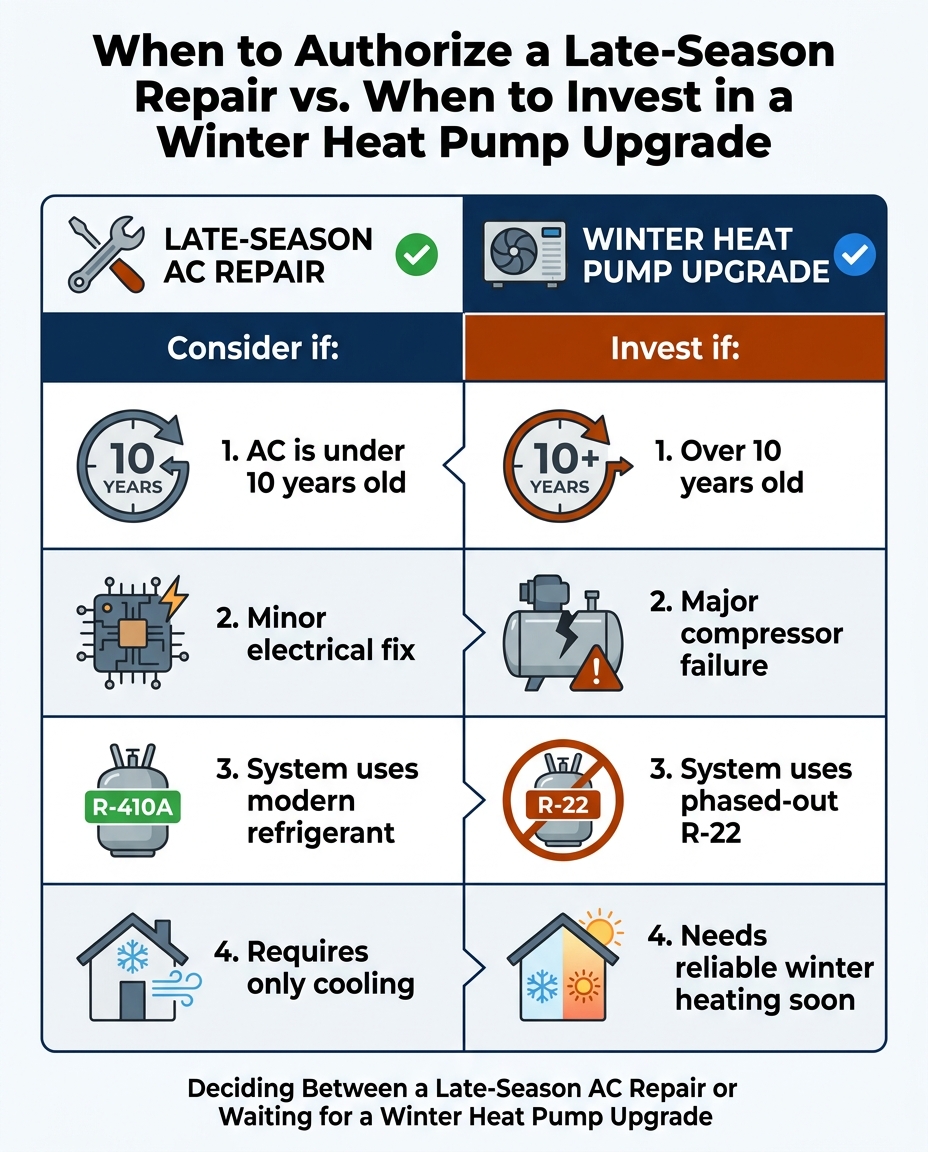
• Age of the current AC unit: If your air conditioner is under ten years old and has been well-maintained, it likely has several years of efficient life left, making a repair a sound investment.
• Severity of the breakdown: Replacing a minor electrical component, a blown capacitor, or a faulty contactor is vastly different from addressing a major compressor failure or a severe refrigerant leak.
• Recent performance history: A system that has run flawlessly for years is a better candidate for repair than a unit that requires constant service calls and struggles to maintain the thermostat setting.
• Refrigerant type: Older systems relying on phased-out R-22 refrigerant face sky-high recharge costs due to scarcity. If your repair involves an R-22 leak, investing in a modern system is almost always the better financial move.
The Cost-to-Age Ratio Rule
A highly effective way to evaluate a repair quote is to multiply the estimated cost of the repair by the age of the equipment in years. If the resulting number exceeds a certain threshold—often referred to in the industry as the 5,000 rule—we generally recommend replacement. This formula helps you quantify the risk of investing in aging machinery. Highlighted by this rule, minor, quickly resolved issues are often worth fixing to extend system life, while major overhauls on old units rarely pay off.
The Dual-Fuel Heat Pump Advantage for Impending Winters
If your air conditioner fails the cost-to-age test, upgrading to a dual-fuel heat pump offers a powerful solution that addresses both your immediate cooling deficit and your upcoming winter heating requirements. A heat pump is a two-in-one system that provides both heating and cooling by transferring heat rather than generating it. During the summer, it operates exactly like an air conditioner, pulling heat out of your home. During the winter, it reverses the process, extracting ambient heat from the outside air and moving it indoors.
Upgrading now eliminates the need for separate, isolated seasonal unit replacements. Instead of buying an air conditioner this year and a furnace next year, you invest in a unified system that handles your climate needs year-round. Modern systems also meet stringent ENERGY STAR standards, delivering significant improvements in energy efficiency compared to older, single-stage equipment. If you already have a heat pump that is struggling, professional heat pump repair can sometimes restore efficiency, but a full dual-fuel upgrade provides unmatched cold-weather reliability.
1. Define the technology: A heat pump serves as a comprehensive two-in-one system, handling both cooling and primary heating duties seamlessly.
2. Understand dual-fuel mechanics: A dual-fuel system pairs an electric heat pump with a gas furnace, creating a hybrid setup that utilizes the most efficient fuel source for the current weather conditions.
3. Consolidate replacements: Upgrading to a unified system prevents the fragmented approach of replacing a broken AC now and an aging furnace later.
4. Maximize energy efficiency: Modern ENERGY STAR rated heat pumps use significantly less electricity to move heat than older systems use to generate it, lowering your overall energy consumption.
How Dual-Fuel Systems Optimize Cold-Weather Efficiency
The brilliance of a dual-fuel setup lies in its automatic switching capability. The system monitors outdoor temperatures and transitions between the electric heat pump and the gas furnace based on a pre-set balance point. During mild autumn and early winter days, the heat pump provides highly efficient electric heating. When temperatures plummet during extreme winter freezes and the heat pump loses efficiency, the gas furnace automatically takes over. This maximizes energy efficiency without ever sacrificing your indoor comfort.
Side-by-Side Comparison: Repairing the Old AC vs. Upgrading Now
To facilitate a clear, objective decision, it helps to view the two options side-by-side. The choice between repairing an old air conditioner and upgrading to a new dual-fuel heat pump involves balancing short-term upfront costs against long-term investments, reliability, and ongoing operational expenses.
• Upfront Investment — Repairing the Old AC: Lower immediate cost, but functions strictly as a short-term fix for the remaining summer weeks. — Upgrading to Dual-Fuel Heat Pump: Higher initial investment, but secures a permanent, year-round heating and cooling solution.
• Winter Reliability — Repairing the Old AC: Uncertain. The repair only addresses cooling, leaving you reliant on an older, unverified furnace for winter. — Upgrading to Dual-Fuel Heat Pump: Guaranteed. A new dual-fuel system is fully tested and ready to handle extreme cold-weather demands.
• Energy Efficiency — Repairing the Old AC: Maintains the lower efficiency rating of your aging equipment, keeping monthly utility bills high. — Upgrading to Dual-Fuel Heat Pump: Operates at modern ENERGY STAR standards, offering significant potential savings on monthly utilities.
• Environmental Impact — Repairing the Old AC: May rely on environmentally harmful, phased-out R-22 refrigerant, which is increasingly scarce. — Upgrading to Dual-Fuel Heat Pump: Utilizes modern, environmentally compliant refrigerants and reduces overall fossil fuel dependency.

Financial Considerations and Long-Term Value
The broader financial implications of this decision extend far beyond the immediate quote on a technician's clipboard. Repairing a failing system often leads to a full replacement shortly after, resulting in paying twice for the same outcome. Every dollar spent keeping a doomed air conditioner limping along is a dollar that could have been invested in a high-efficiency upgrade that actually adds value to your home.
Furthermore, upgrading to modern, high-efficiency equipment often unlocks various financial incentives. Generic federal tax credits and local utility rebates may apply to qualifying high-efficiency heat pump installations, helping to offset the initial investment. Because these programs change frequently and have specific qualification criteria, it is always advisable to consult with tax professionals and your utility provider to understand exactly how generic efficiency incentives apply to your specific upgrade.
Making the right financial choice requires a transparent, objective assessment of your current equipment. When you work with our team at Mountain View Heating, Inc., we ensure you receive honest, transparent cost-benefit assessments. This approach guarantees that you do not waste money on a doomed AC unit when an upgrade is clearly the smarter, more reliable long-term investment for your property.
Timing Your Installation for Maximum Comfort
Addressing the logistics of scheduling the work requires balancing the end of the summer heat with the impending rush of fall furnace preparations. If you decide that an upgrade is the right path, you may need to wait a short period for the installation to be completed. Discussing strategies for managing indoor temperatures—such as utilizing portable cooling units, adjusting ceiling fans, and managing window coverings—can keep your home comfortable during this brief interim period.
Navigating high temperatures while planning an upgrade requires strategic timing. During a period of intense heat in early summer, we helped a homeowner who recognized the urgent need for a new ductless heat pump system. Despite the high seasonal demand for service, our installation team completed the job efficiently, managing all project details and generic rebates seamlessly. Booking an assessment during the late-summer window allows you to secure your spot before the peak fall heating rush begins.
Early high temperatures or sudden cold snaps drive massive demand for new systems across the region. By scheduling your comprehensive system replacement proactively, you ensure that your home is fully equipped and tested before the harsh winter weather arrives. A professional installation team will outline exactly what to expect during the process, from the initial removal of your old equipment to the final calibration of your new dual-fuel thermostat.
Make a Confident Decision for Year-Round Comfort
The right choice for your home balances immediate cooling relief with essential winter readiness. Evaluating the age of your equipment, the severity of the breakdown, and the rapid shift of the high desert climate provides a clear framework for deciding between a late-season repair and a full system upgrade.
You do not have to navigate this sunk-cost dilemma alone. Expert guidance can clarify the financial and comfort tradeoffs, ensuring your investment serves your home for years to come. Schedule an objective consultation today to evaluate your specific system and make a confident, financially sound decision for your year-round comfort.
Frequently Asked Questions
Is it worth fixing an AC at the end of summer?
Fixing an AC at the end of summer is worth it if the unit is relatively new and the repair is a minor, inexpensive fix. However, if the system is over ten years old or requires a major component replacement like a compressor, investing that money into a new system is usually wiser. A late-season breakdown is often a warning sign of broader system fatigue. Evaluating the cost-to-age ratio can help determine if the repair is a sound financial decision.
Can a heat pump replace my air conditioner completely?
Yes, a heat pump can completely replace a traditional air conditioner while providing identical cooling performance. Heat pumps use the exact same refrigeration cycle to pull heat out of your home during the summer months. The primary advantage is that a heat pump can also reverse this process in the winter to provide highly efficient electric heating. This makes it a superior, two-in-one replacement for a standalone cooling unit.
What are the benefits of a dual-fuel heat pump in cold climates?
A dual-fuel heat pump provides the perfect balance of energy efficiency and reliable warmth in cold climates. During mild winter days, the electric heat pump operates at peak efficiency to warm your home. When temperatures drop below freezing and the heat pump loses efficiency, the system automatically switches to a robust gas furnace. This hybrid approach ensures you are always using the most effective and economical heating method for the current weather.
Should I wait until winter to replace my HVAC system?
Waiting until winter to replace your HVAC system increases the risk of a total breakdown during freezing temperatures. Winter is a peak season for HVAC contractors, which can lead to longer wait times for emergency installations and limited equipment availability. Replacing your system during the late-summer or early-fall shoulder season ensures you have ample time to schedule the work. Proactive replacement guarantees your home is ready before the severe cold arrives.
How do generic energy rebates apply to heat pump upgrades?
Generic energy rebates and tax credits are often available for homeowners who upgrade to qualifying high-efficiency heat pump systems. These incentives are designed to encourage the adoption of energy-saving technology and can help offset the initial installation costs. Because specific programs, qualification tiers, and available funds vary by location and utility provider, you should always verify current offerings. Consulting with a tax professional or your local utility company ensures you maximize your eligible benefits.
What is the typical lifespan of a central AC unit before replacement is recommended?
A typical central air conditioning unit lasts between 10 and 15 years, depending on usage patterns and the consistency of professional maintenance. As the unit approaches the decade mark, components begin to wear down, and the system loses its original energy efficiency. Once an older unit requires frequent repairs or a major component fails, replacement is generally recommended. Upgrading prevents the compounding costs of keeping obsolete, inefficient machinery running.