


Why Is My AC Blowing Warm Air? Troubleshooting Steps That Actually Help
If you're searching for why is my ac blowing warm air troubleshooting steps, here's a quick overview of the most common causes and what to do first:
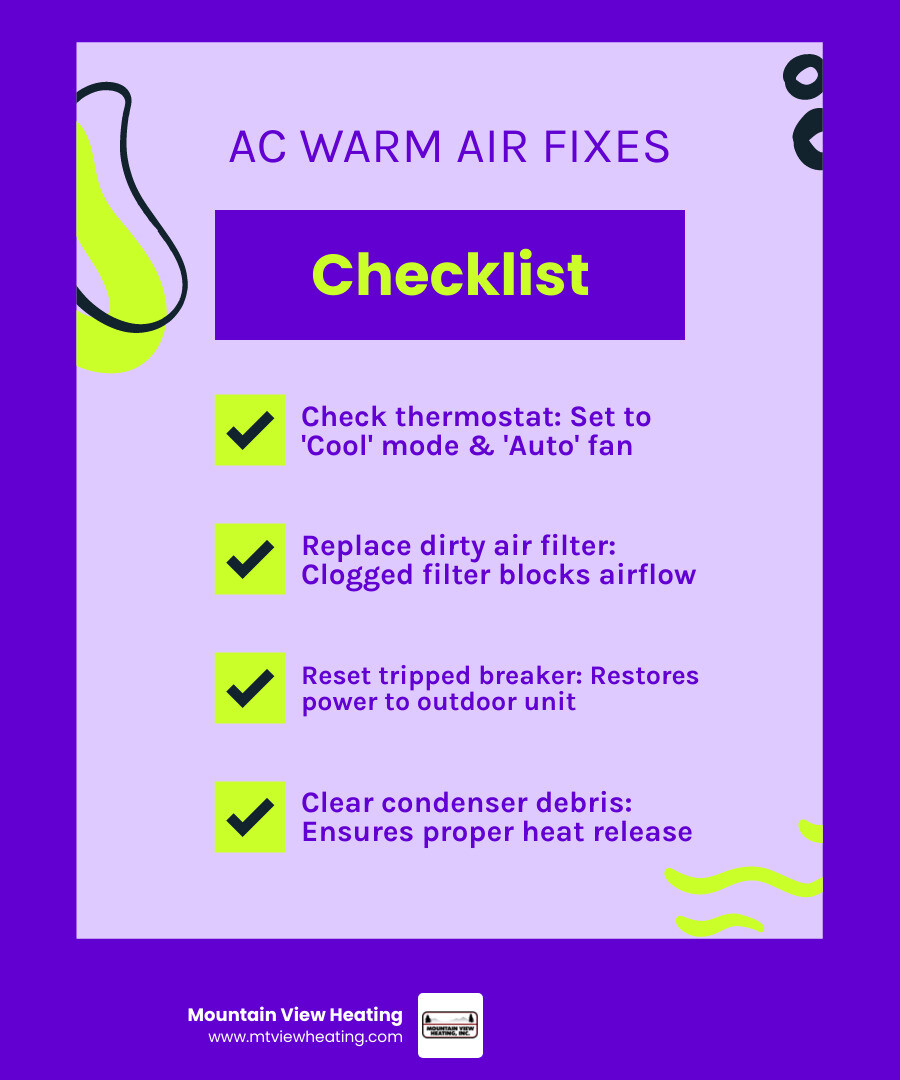
1. Check your thermostat - Make sure it's set to "Cool" mode and "Auto" fan, not "Heat" or "Fan On"
2. Inspect your air filter - A clogged filter is one of the most frequent culprits; replace it if it looks dirty
3. Check your circuit breaker - A tripped breaker can cut power to the outdoor unit while the fan still runs
4. Look at your outdoor condenser unit - Clear any debris, leaves, or vegetation blocking airflow
5. Look for ice buildup - Frozen evaporator coils will cause warm air; turn the system off and let it thaw
6. Listen for unusual sounds - Hissing or bubbling can signal a refrigerant leak; call a professional right away
7. Check the condensate drain line - A clog can trigger a safety shutoff that stops cooling
If none of those quick checks solve it, you likely need a professional HVAC technician to diagnose the issue.
There's nothing quite like walking into your Bend, Oregon home on a hot summer day and feeling warm air blowing from your vents instead of the cool relief you were counting on. Central Oregon summers may be drier than most, but temperatures can still climb uncomfortably high — and a malfunctioning AC makes it worse fast.
The good news is that most cases of an AC blowing warm air come down to a handful of common problems. In fact, about 90% of the time, the root cause is in the outdoor condenser unit — but before you assume the worst, there are several simple things you can check yourself right now.
Understanding how your AC works helps make sense of why these problems happen. Your system pulls warm air from inside your home, passes it over cold evaporator coils filled with refrigerant, and blows the now-cooled air back through your vents. The refrigerant then carries that absorbed heat outside, where the condenser releases it. When any part of that cycle breaks down — whether it's airflow, refrigerant, power, or a component failure — warm air is usually what you feel first.
The sections below walk you through each troubleshooting step, from the simplest fixes you can do right now to the signs that it's time to call Mountain View Heating for professional AC repair in Bend, OR.
Why is my ac blowing warm air troubleshooting steps for your thermostat
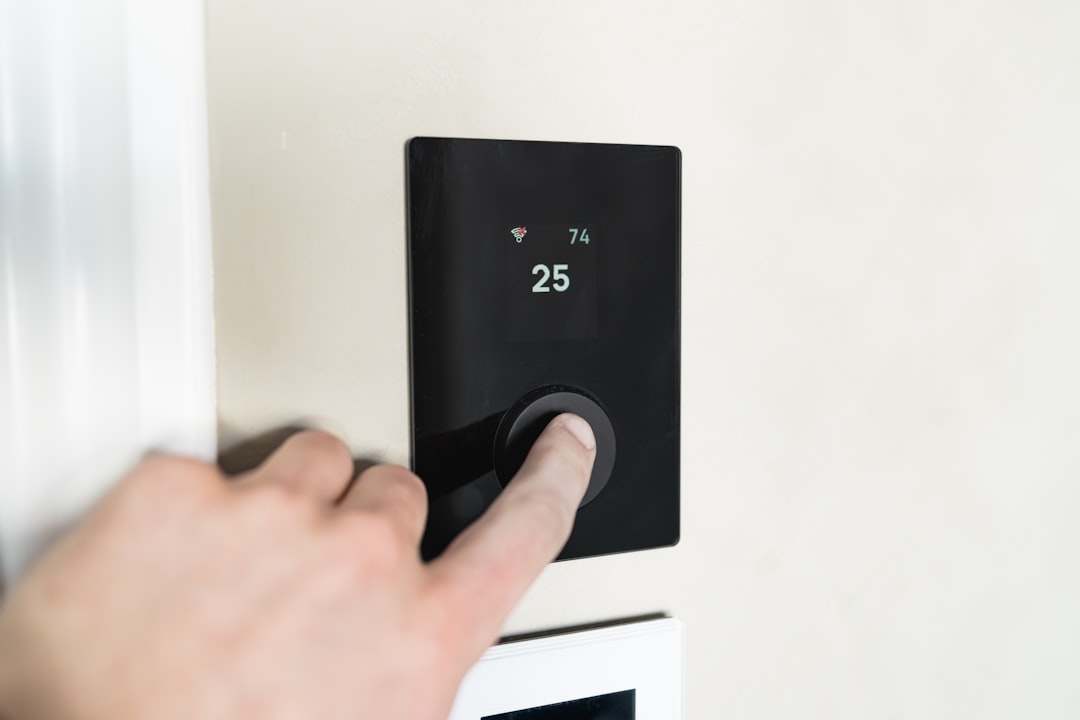
When your air conditioning starts acting up in April 2026, the first place we recommend looking isn't the attic or the backyard—it’s the wall. Your thermostat is the brain of your HVAC system, and sometimes that brain just needs a quick reminder of what its job is.
Check the Mode and Fan Settings
It sounds simple, but you would be surprised how often a thermostat is accidentally bumped into "Heat" mode or "Fan On" mode.
• Cool Mode: Ensure the thermostat is explicitly set to "Cool." If it’s on "Heat," the system will obviously blow warm air.
• Fan Auto vs. Fan On: This is a big one. If your fan is set to "On," the blower motor runs 24/7, even when the AC isn't actually cooling the air. This means that during the "off" cycles, the fan is just circulating room-temperature air through your vents, which can feel quite warm. Switching to "Auto" ensures the fan only blows when the air is being actively chilled.
For more details on these settings, take a look at our A Quick Guide to Your Thermostat's Modes and Settings.
Temperature and Batteries
Check the set temperature. It should be at least a few degrees lower than the current room temperature to trigger a cooling cycle. If the display is blank or flickering, it might be time for a battery replacement. Low batteries can cause communication errors between the thermostat and the rest of the system, leading to erratic behavior.
Checking Airflow and the Indoor Air Handler
If the thermostat looks good, the next step in why is my ac blowing warm air troubleshooting steps involves the indoor portion of your system, usually located in a closet, attic, or crawlspace. Air conditioning is all about airflow. If the air can't move, the system can't remove heat.
The 20-Degree Rule
Most air conditioners are designed for approximately a 20-degree temperature drop across the evaporator coil. If the air coming out of your vents is only slightly cooler than the air going in, or if it’s downright hot, the heat exchange process has failed. Often, this is because the evaporator coils have become "starved" for air.
Frozen Evaporator Coils
When airflow is restricted, the evaporator coils can get too cold and actually freeze over. It might seem counterintuitive that a block of ice would cause warm air, but that ice acts as an insulator, preventing the refrigerant from absorbing heat from your home's air. If you see ice on the copper lines leading to your indoor unit or on the unit itself, you have a freeze-up.
If this happens:
1. Turn the AC off immediately at the thermostat.
2. Switch the fan to "On" to help move warmer air over the coils and speed up the thawing process.
3. Wait for the ice to completely melt (this can take up to 24 hours) before trying to run the system again.
To understand the science behind this, read our article on Why Do Air Conditioners Freeze Up?. You can also find more context in our guide on Reasons Your AC System May Be Blowing Out Warm Air.
Why is my ac blowing warm air troubleshooting steps for dirty filters
Dirty air filters are the number one cause of AC performance issues. In Central Oregon, we deal with unique challenges like dust and, occasionally, wildfire smoke. These particles clog filters much faster than the manufacturer-recommended 90 days.
We suggest checking your filter every 30 days during the peak of summer. A clogged filter blocks airflow, causes the system to overwork, and leads to those frozen coils mentioned above. If your filter looks gray or fuzzy, replace it immediately. Regular filter changes are a core part of AC Maintenance in Bend, OR.
Inspecting the Outdoor Condenser Unit
If the indoor unit is clear and the filter is clean, we need to head outside. As we mentioned, 90% of the time, the culprit of a "running but not cooling" issue is found in the outdoor condenser unit.
The 2-Foot Rule
Your outdoor unit needs to "breathe" to release the heat it collected from inside your home. If it’s crowded by overgrown sagebrush, weeds, or lawn debris, it can’t shed that heat. We recommend keeping a minimum 2-foot clearance around the entire unit.
Check the condenser coils (the metal fins on the outside). If they are caked with dirt or grass clippings, you can gently hose them down with a low-pressure garden hose (never use a pressure washer, as it will bend the delicate fins). For a deeper dive into outdoor unit care, see How to Troubleshoot an AC Issue and our AC Service Bend, OR: Complete Guide.
Why is my ac blowing warm air troubleshooting steps for electrical issues
Sometimes the indoor fan is blowing air, but the outdoor unit isn't running at all. This is a common reason for warm air.
• Tripped Breaker: Check your home's main electrical panel. Air conditioners usually run on a double-pole breaker. If it has tripped, reset it once. If it trips again immediately, do not reset it a second time—this indicates a serious electrical fault or a failing compressor that needs professional attention.
• Disconnect Switch: There is usually a metal box near the outdoor unit containing a "pull-out" or a switch. Ensure it hasn't been turned off or bumped.
• Capacitor Failure: If you hear the outdoor unit humming but the fan isn't spinning, you might have a blown capacitor. This is a small component that gives the motor the "kick" it needs to start.
While some homeowners wonder, "Can I Service My AC Myself?", electrical components and high-voltage areas are best left to the experts for safety reasons.
When to Call a Professional for AC Repair
While we love helping our neighbors in Sisters and Redmond with DIY troubleshooting, some problems require specialized tools and EPA certifications.
Refrigerant Leaks
If you hear hissing or bubbling noises coming from your AC, or if you see ice on the refrigerant lines despite having a clean filter, you likely have a refrigerant leak. Refrigerant is not like gas in a car; it shouldn't "run out." If it’s low, there is a hole that needs to be found and repaired. Because of federal environmental regulations, only a certified technician can handle and recharge refrigerant. If you suspect a leak, turn the system off and call for AC Repair in Bend, OR immediately.
Compressor and Component Failures
The compressor is the "heart" of your AC. If it fails, the refrigerant won't circulate, and you'll get nothing but warm air. Signs of a failing compressor include loud grinding or banging noises when the unit tries to start.
Clogged Condensate Drain
Your AC removes a lot of moisture from the air. This water drips into a pan and out through a drain line. If this line clogs with algae or debris, a safety "float switch" may trigger. Depending on how your system is wired, this might shut down the entire system or just the outdoor unit, leading to warm air. These are among the many Signs You Need Emergency HVAC Service.
Frequently Asked Questions about AC Troubleshooting
Should I turn off my AC immediately if it is blowing warm air?
Yes. If your AC is blowing warm air but you keep it running, you are essentially forcing the system to work harder for zero benefit. This can lead to the compressor overheating or permanent damage to central air components. It also wastes a significant amount of electricity. Turn it off at the thermostat while you perform your troubleshooting steps.
How often should I change my air filters in Central Oregon?
In areas like Sunriver and La Pine, we recommend checking your filter every month. While a standard pleated filter might last 90 days in a pristine environment, pet dander, high desert dust, and seasonal smoke can clog them in as little as 30 days. If you can't see the filter material through the dust, it's time for a change.
What are the signs of a refrigerant leak?
The most common signs are:
• Hissing or whistling sounds near the indoor or outdoor unit.
• Ice forming on the copper refrigerant lines.
• The AC is running constantly but the air from the vents is barely cool.
• A "bubbling" sound in the lines.If you notice these, you'll need a professional to perform a "soap bubble test" or use an electronic leak detector to find the source.
Conclusion
Dealing with an AC that’s blowing warm air is never fun, but we hope these why is my ac blowing warm air troubleshooting steps have given you a clear path forward. Whether it’s a simple thermostat adjustment or a quick filter swap, many cooling issues can be solved in minutes.
However, if you've checked the basics and you're still sweating, don't wait for the problem to get worse. At Mountain View Heating, we’ve been serving the Bend, Oregon community for over 40 years. We prioritize 100% customer satisfaction and offer 24/7 emergency support to ensure your family stays comfortable all summer long.
From Terrebonne to Three Rivers, our team is ready to help. Visit our Air Conditioning page to learn more or schedule your service today. We’ll get your cool air back in no time!