


Before You Call Anyone, Try These AC Troubleshooting Tips Before Calling a Pro
AC troubleshooting tips before calling a pro can save you time and a lot of frustration — especially when temperatures in Bend, Oregon climb and your system picks the worst possible moment to act up. The good news? A surprising number of AC problems have simple fixes you can handle yourself in under an hour.
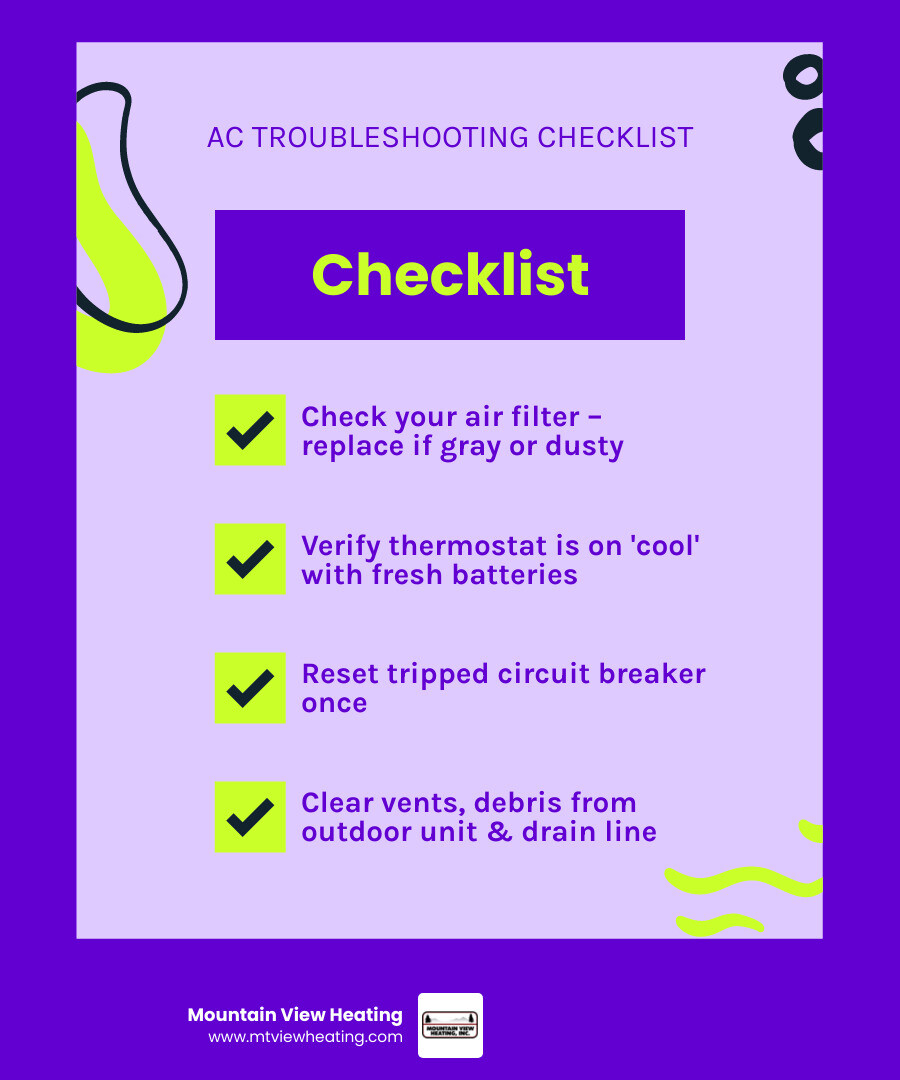
Here are the most common things to check first:
- Check your air filter — A clogged filter is the number one cause of AC problems. If it looks gray and packed with dust, replace it.
- Check your thermostat — Make sure it's set to "cool," the temperature is lower than the room, and the batteries aren't dead.
- Check your circuit breaker — A tripped breaker can shut the whole system down. Reset it once and see if it holds.
- Check your outdoor unit — Look for debris blocking the condenser and make sure the power disconnect is in the "on" position.
- Check your vents — Make sure all supply and return vents are open and not blocked by furniture or rugs.
- Check the condensate drain line — If water is pooling near your indoor unit, a clogged drain line may have tripped a safety shutoff.
- Look for frozen coils — Ice on your indoor unit means the system needs to be shut off and allowed to thaw before restarting.
If none of these steps resolve the issue, that's when it's time to call a professional HVAC technician.
One HVAC professional put it plainly: when central AC units aren't working well, nine out of ten times it comes down to a dirty filter. It's the simplest fix, and it's the best place to start.
In Bend and Central Oregon, conditions like wildfire smoke, high desert dust, and dramatic seasonal temperature swings can push an AC system harder than in many other parts of the country. That means minor issues — a slightly dirty filter, a partially blocked vent — can snowball into bigger problems faster than you might expect. Knowing what to check first puts you in control.
Essential AC Troubleshooting Tips Before Calling a Pro
When your cooling stops, your first instinct might be to panic. However, many homeowners in Redmond and Sisters find that a little detective work can solve the mystery. Learning how to troubleshoot an AC issue is often about looking for the most obvious culprits first.
As we mentioned, dirty filters are the primary reason for system failure. When a filter is clogged, it acts like a wall, restricting the airflow your system needs to breathe. This restriction forces the blower motor to work harder, which can lead to overheating, frozen coils, and a massive drop in system efficiency. If you are wondering, "Can I service my AC myself?" the answer is a resounding yes when it comes to these basic maintenance tasks.
Inspecting and Replacing the Air Filter
In our high-desert climate, air filters have a tough job. Between the summer wildfire smoke and the dust that blows across the Central Oregon plains, a standard filter can fill up much faster than the manufacturer's estimate. We generally recommend checking your filter every month and replacing it at least every one to three months.
If you have pets or family members with allergies, you might need to change it even more frequently. When selecting a new filter, pay attention to the MERV rating; while higher ratings catch more particles, they can also restrict airflow if your system isn't designed for them. Always ensure the airflow direction arrow on the side of the filter points toward the furnace or air handler. For residents needing AC service in Redmond, OR, starting with a fresh filter is the best way to ensure your system runs at peak performance.
Verifying Thermostat Settings and Power
It sounds silly, but we’ve seen many service calls resolved just by flipping a switch. Double-check that your thermostat is set to "Cool" mode and that the fan is set to "Auto" (setting it to "On" keeps the fan running even when the AC isn't cooling, which can blow warm air).
If the screen is blank, replace the batteries immediately. Most programmable thermostats need fresh batteries every 12 months. Also, ensure the temperature setting is at least 5 degrees lower than the current room temperature to trigger the system. If you're experiencing glitches with a smart thermostat, a hard reset—turning it off for 30 seconds—can often clear the internal errors. If the unit still won't engage, you might need professional AC repair in Bend, OR to look at the wiring or internal components.
Maximizing Airflow and Power Efficiency in Central Oregon

Power and airflow are the two pillars of a healthy air conditioner. In April 2026, as we prepare for another warm season in Sunriver and La Pine, it’s important to understand how your home's electrical system interacts with your cooling unit. Power surges during spring storms can often trip safety devices designed to protect your sensitive equipment.
| DIY Check | Estimated Time | Difficulty | When to Call a Pro |
|---|---|---|---|
| Replace Air Filter | 5-10 Mins | Easy | If coils remain frozen after change |
| Reset Circuit Breaker | 2 Mins | Easy | If it trips a second time immediately |
| Clear Vent Obstructions | 5 Mins | Easy | If airflow remains weak in one room |
| Clean Outdoor Unit | 30 Mins | Moderate | If fins are deeply crushed or damaged |
| Thermostat Batteries | 2 Mins | Easy | If display remains blank after change |
Resetting the Circuit Breaker and Disconnect Switch
Your AC uses a lot of electricity, and it typically has two different power sources: one at your main electrical panel and a "disconnect" switch near the outdoor unit. If your system won't turn on at all, check your electrical panel for a tripped breaker. It will be the switch that is stuck in the middle position between "On" and "Off."
Flip it all the way to "Off" first, then back to "On." Safety Warning: If the breaker trips again immediately, do not try to reset it a second time. This indicates a serious electrical fault or a failing compressor that requires expert AC repair in Redmond, OR. Also, check the outdoor disconnect box; sometimes the switch can be accidentally bumped into the "Off" position during yard work or by a curious pet.
Clearing Blocked Vents and Registers
Did you know that about 30% of the energy in ducted HVAC systems is lost due to leaks or poor layout? You can exacerbate this by blocking your vents. We often find that homeowners in Terrebonne or Sisters have rearranged furniture for the summer, inadvertently covering up a return air grille or a supply register.
Common vent obstructions include:
- Heavy curtains or drapes
- Area rugs or carpeting
- Large sofas or bookshelves
- Dust and pet hair buildup inside the register
Ensure there is at least two feet of clearance around every vent. Closing vents in unused rooms is also a bad idea; it increases the pressure in your ductwork, which can lead to leaks and strain your blower motor. Keep them open to maintain proper system balance.
Outdoor Unit Maintenance and Drainage Solutions
The outdoor portion of your system, known as the condenser, is responsible for releasing the heat collected from inside your home. If it can't "breathe," your house won't get cool. We recommend maintaining a 3-foot radius of clear space around the unit and at least 5 feet of clearance above it.
Cleaning the Condenser Coil and Fins
Over time, the aluminum fins on your outdoor unit get coated in grass clippings, cottonwood seeds, and dust. This "blanket" prevents efficient heat transfer. To clean it, turn off the power at the disconnect switch and use a garden hose to gently rinse the coils from the top down.
Pro Tip: Never use a pressure washer, as the high-pressure stream will flatten the delicate metal fins, permanently restricting airflow. If you see bent fins, you can carefully straighten them with a fin comb, but if the damage is extensive, it will decrease your system's efficiency and eventually kill the compressor.
Unclogging the Condensate Drain Line
Your AC doesn't just cool the air; it removes humidity. This moisture turns into water that should flow out through a PVC pipe. If this pipe gets clogged with algae or "sludge," a safety float switch will trigger and shut your system down to prevent a flood in your home.
If you see water pooling around your indoor unit, locate the drain line access point. You can often clear a clog by using a wet/dry vacuum on the outdoor end of the pipe to suck out the blockage. To prevent future clogs, pour a quarter-cup of white vinegar down the drain line every few months during the cooling season. This kills the biological growth that causes most blockages.
When DIY Isn't Enough: Recognizing Serious System Failures
Sometimes, despite your best efforts, the problem is deeper than a dirty filter or a tripped switch. Knowing when to stop and call for help is crucial to avoid causing more damage. If you notice refrigerant smells (often a sweet, chemical scent) or see frost on the copper lines, you've reached the limit of DIY.
AC Troubleshooting Tips Before Calling a Pro for Frozen Coils
If you see ice on the indoor unit or the copper pipes, your evaporator coil has frozen. This usually happens because of restricted airflow or low refrigerant. You can find more detail on why air conditioners freeze up here, but the immediate solution is always the same: turn the thermostat to "Off" but set the fan to "On."
This allows the indoor fan to blow warm air over the coils to melt the ice. This process can take several hours. Once thawed, replace your filter and try the system again. If it freezes up a second time, you likely have a refrigerant leak. Handling refrigerant requires federal EPA Section 608 certification, meaning it is illegal and dangerous for a homeowner to attempt a repair.
AC Troubleshooting Tips Before Calling a Pro for Strange Noises
Your AC should hum, not scream. If you hear unusual sounds, it's a direct message from your system that something is wrong.
- Squealing: Usually indicates a failing blower motor or a loose fan belt.
- Grinding: Often means the motor bearings are shot.
- Buzzing: Typically signals an electrical issue, like a failing capacitor or a loose wire.
- Banging: Could mean a loose component is rattling around inside the housing.
If you hear metal-on-metal sounds or a loud screeching from the compressor, shut the system down immediately. Continuing to run a noisy unit can turn a simple repair into a total system replacement. There are many reasons your AC system may be blowing out warm air, and strange noises are often the first warning sign.
Frequently Asked Questions about AC Troubleshooting
Why is my AC short cycling?
Short cycling is when your AC turns on and off every few minutes without ever really cooling the house. This is often caused by a severely dirty filter or a thermostat located in a drafty area or direct sunlight. However, it can also be a sign that your system is oversized for your home or that you have an electrical fault in the control board.
What should I do if my AC is blowing warm air?
First, check the thermostat mode. Then, go outside and make sure the condenser fan is spinning. If the outdoor unit isn't running, check your circuit breaker. If everything seems powered on but the air is still warm, you might have a clogged condenser coil or a refrigerant leak that needs professional attention.
How often should I schedule professional maintenance?
We recommend an annual tune-up every spring. A professional inspection can catch 90% of potential problems before they lead to a mid-summer breakdown. Our technicians check refrigerant levels, tighten electrical connections, and lubricate moving parts, which can improve efficiency by 5% to 15% and significantly extend the lifespan of your unit.
Conclusion
At Mountain View Heating, we’ve been serving the Central Oregon community for over 40 years. From the quiet streets of Sunriver to the growing neighborhoods of Redmond, our priority has always been 100% customer satisfaction. We know how stressful it is when your home comfort is compromised, which is why we offer 24/7 emergency support for those times when DIY troubleshooting just isn't enough.
While these ac troubleshooting tips before calling a pro can solve many common issues, some repairs require the tools and training of a residential HVAC expert. Whether you need a simple tune-up or a complex repair, our team is ready to help you stay cool.
Schedule your professional AC service today or give us a call to experience the customer-first attitude that has made us a staple in Bend for decades.