


Why Understanding How a Failed Blower Motor Affects Your Cooling Could Save Your AC This Summer
How a failed blower motor affects your cooling is something every Bend, Oregon homeowner should know before the heat of summer arrives — because when this one component stops working, your entire AC system can't do its job, even if everything else is running fine.
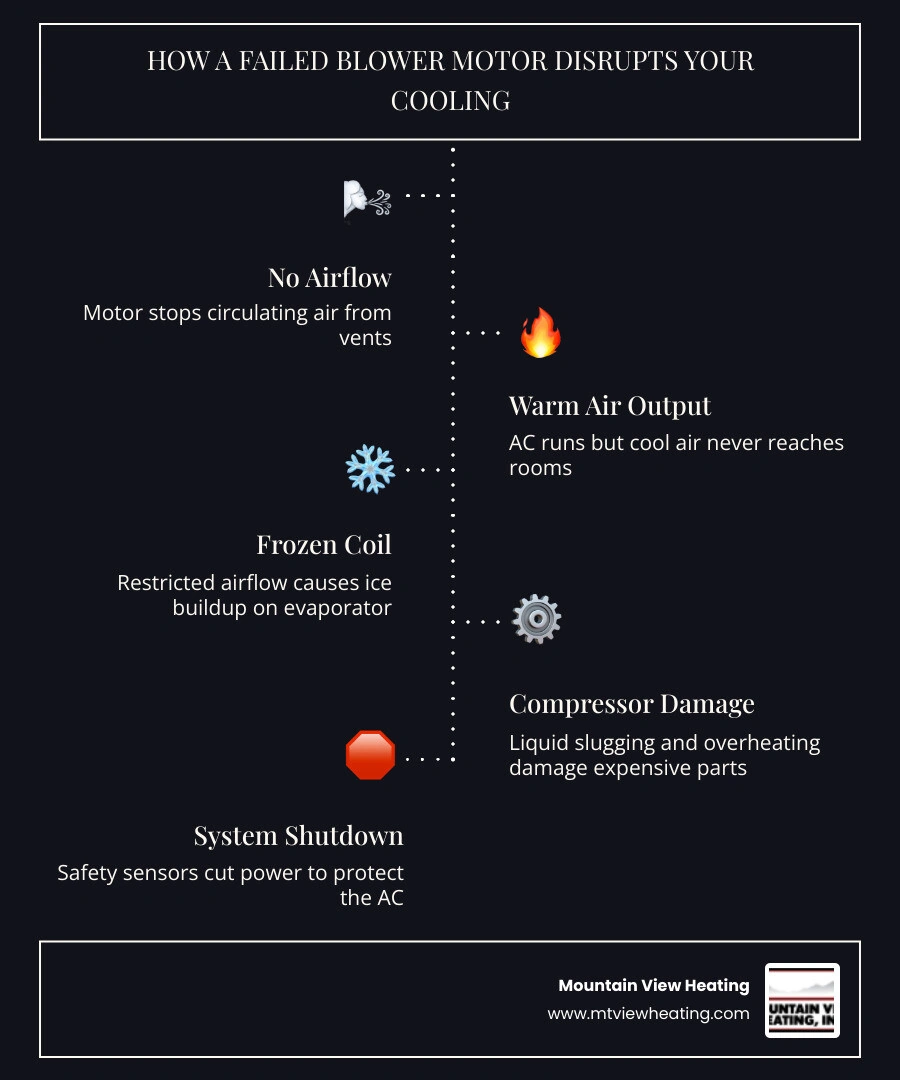
Here's a quick look at the main ways a failed blower motor disrupts your home cooling:
- No airflow from vents — the most immediate sign; cool air simply stops moving through your home
- Warm air despite AC running — the system is on, but conditioned air never reaches your living spaces
- Frozen evaporator coil — without airflow, the coil ices over and cooling stops completely
- Compressor damage — one of the most expensive consequences of letting the problem go too long
- Skyrocketing energy bills — a struggling motor draws more power before it fails entirely
- System shutdown — built-in safety sensors cut power to protect the system from overheating
The blower motor is the engine behind your home's airflow. It pulls air through your return ducts, moves it across the evaporator coil where heat is removed, and pushes the cooled air through your supply vents into every room. Without it, your AC is essentially running in place.
Many homeowners in Bend don't realize there's a blower motor problem until the symptoms are hard to ignore — weak airflow in one room, a faint burning smell, or a sudden spike in their electric bill. By that point, the damage may already be spreading to other parts of the system.
In this guide, we'll walk you through exactly what the blower motor does, how to spot the warning signs early, what happens if you ignore them, and what you can do to protect your system.
What Does an AC Blower Motor Do?
Think of your central air conditioning system as a team. The outdoor unit (the condenser) and the indoor evaporator coil do the heavy lifting of heat exchange, but they are completely helpless without a way to circulate that air. That is where the indoor blower motor comes in. Located inside your furnace or air handler, the blower motor is the literal heart of your HVAC system's air circulation.
When your thermostat calls for cooling, the blower motor spins a heavy, fan-like component called a blower wheel. This action creates a powerful pressure differential. It pulls warm, humid air from your living spaces through the return grilles and air filters. This air is then forced directly across the freezing-cold evaporator coil.
As the air passes over the coil, the refrigerant running inside absorbs the heat and moisture from the air. Once the air is properly cooled and dehumidified, the blower motor continues its job, pushing this refreshing, conditioned air through your supply ductwork and out into your bedrooms, living room, and kitchen.
Without this constant movement of air, the entire cooling process grinds to a halt. To understand more about the critical link between air movement and system performance, you can read about How Airflow Affects Your Air Conditioner's Performance.
Single-Speed vs. Variable-Speed (ECM) Motors
Not all blower motors are built the same way. If you have an older HVAC system in Redmond or Sisters, you likely have a traditional PSC (Permanent Split Capacitor) motor. If you have a newer, high-efficiency system, it is probably equipped with an ECM (Electronically Commutated Motor), often referred to as a variable-speed motor.
Understanding which one you have is crucial, as they behave very differently when they begin to fail and have different impacts on your comfort and utility bills.
- PSC Motors (Single-Speed): These motors are either 100% on or 100% off. When they run, they blast air at full capacity. While reliable and simpler in design, they are less energy-efficient. When a PSC motor starts to fail, it often does so suddenly. One day it works, and the next, you are met with complete silence and zero airflow.
- ECM Motors (Variable-Speed): These are highly sophisticated, smart motors that can adjust their speed incrementally. Instead of blast-or-nothing, an ECM motor might run at 30% capacity to maintain a steady temperature or ramp up to 90% on a hot July afternoon in Sunriver. They can use up to 75% to 80% less electricity than PSC motors. However, when they begin to fail, the symptoms can be more gradual—such as subtle, inconsistent airflow or a slow decline in humidity control—before they shut down completely.
| Feature | PSC Motor (Single-Speed) | ECM Motor (Variable-Speed) |
|---|---|---|
| Energy Efficiency | Standard (Consumes more electricity) | High (Uses up to 75% to 80% less power) |
| Airflow Control | On/Off only (Full blast or nothing) | Variable (Adjusts precisely to home needs) |
| Humidity Removal | Moderate | Excellent (Runs longer at lower speeds) |
| Failure Mode | Usually sudden and complete | Often gradual with declining performance |
| Lifespan | 10 to 15 years | 12 to 18 years |
How a Failed Blower Motor Affects Your Cooling
When a blower motor fails, the consequences reach far beyond simply not feeling a breeze. Because an air conditioner relies on a precise balance of heat exchange and airflow, a dead fan throws the entire thermodynamic cycle out of whack.
First, you will notice a severe drop in airflow. If the motor is struggling but still spinning, the air coming out of your registers will feel incredibly weak. If the motor has seized or suffered an electrical failure, the airflow will stop entirely.
Second, because the cold air is not being pushed away from the indoor evaporator coil, the cold temperatures remain trapped inside the air handler. The air immediately surrounding the coil gets colder and colder, but because it isn't moving, your home stays hot. If you notice your outdoor unit running continuously but your indoor vents are barely whispering, you are experiencing the classic symptoms of a failed blower motor. For a deeper look into this specific issue, check out our guide on Why Is My AC Blowing Warm Air? Troubleshooting Steps.
The Silent Signs of Blower Motor Failure
A blower motor rarely dies without warning. Usually, it will send out several "distress signals" in the weeks leading up to its ultimate demise. Recognizing these signs early can save you from a hot, uncomfortable afternoon and a much larger repair bill.
- Strange Noises: If you hear squealing, screeching, grinding, or rattling coming from your indoor unit, your blower motor is crying for help. Squealing often points to failing bearings or a dry, unlubricated shaft. Grinding sounds usually mean the motor bearings are completely shot, causing metal-on-metal wear that will soon seize the motor entirely.
- A Distinct Burning Smell: If you smell burnt plastic or electrical smoke coming from your supply vents, turn off your HVAC system immediately. This smell occurs when a failing motor draws too much electrical current, causing the internal wiring insulation to melt and overheat.
- Spiking Energy Bills: When dirt builds up on the blower wheel or the motor bearings wear down, the motor has to work twice as hard to spin. This extra physical resistance forces the motor to draw far more electricity, which you will quickly notice on your monthly utility bill.
- Frequent System Short-Cycling: If your AC starts up, runs for a couple of minutes, and then abruptly shuts off, the blower motor might be overheating. Most modern motors have a built-in safety switch called a thermal overload. When the motor gets too hot, this switch trips to cut power, shutting down the system before a fire can start.
If your system has shut down completely and won't turn back on, the blower motor or its starting capacitor could be the culprit. Learn how to rule out simple power issues with our checklist on AC Not Turning On: What to Check First.
How a Failed Blower Motor Affects Your Cooling and Causes Frozen Coils
One of the most common and visually shocking side effects of a failed blower motor is a frozen evaporator coil. Many homeowners find it hard to believe that an air conditioner can freeze solid on a hot summer day in La Pine, but it happens all the time.
Here is how it works: Your AC's indoor evaporator coil is filled with incredibly cold refrigerant. Under normal operation, the blower motor blows warm indoor air over this coil. The warm air warms the coil up just enough to keep it from freezing, while the coil cools the air down. It is a perfect, mutually beneficial relationship.
However, when the blower motor fails, that warm air stops flowing. The freezing refrigerant continues to pump through the coil, but there is no heat to absorb. As a result, the moisture and humidity that condense on the outside of the coil quickly turn to ice.
Once ice begins to form, it acts as an insulator, trapping the cold and causing even more ice to build up. Before long, your indoor unit is encased in a solid block of ice. This ice completely blocks any remaining airflow, rendering your cooling system useless. To learn more about how restricted airflow triggers this icy nightmare, read about How Dirty Filters Cause Frozen Evaporator Coils.
The Domino Effect: Risks of Running Your AC with a Bad Blower Motor
If you suspect your blower motor is failing, you might be tempted to "tough it out" and keep running the AC anyway. This is a very risky game. Running an air conditioner with a malfunctioning blower motor triggers a dangerous domino effect that can destroy your system's most expensive components.
The greatest risk of running an AC without proper airflow is compressor failure. Your outdoor compressor is designed to compress gas refrigerant, not liquid. When your indoor coil freezes due to a lack of airflow, the refrigerant cannot evaporate and absorb heat. This means cold, liquid refrigerant travels back down the copper lines directly into the compressor.
This phenomenon is known as "liquid slugging." Because liquid cannot be compressed, it physically destroys the internal pistons, valves, and bearings of your compressor. A compressor failure is one of the most severe repairs an HVAC system can face, and in many cases, it requires replacing the entire outdoor unit.
Additionally, the constant overheating of a struggling blower motor can damage your system's main control board. The excess electrical draw can melt wires, blow fuses, and ruin delicate circuitry, turning a simple motor repair into a major electrical overhaul.
How a Failed Blower Motor Affects Your Cooling Efficiency and Lifespan
Even if your blower motor hasn't completely seized yet, running a struggling, dirty, or worn-out motor severely damages your system's overall efficiency and operational lifespan.
When a motor is forced to work against worn bearings or a heavy layer of dust, it operates at a much higher temperature than it was designed to handle. This chronic overheating breaks down the motor's internal winding insulation. Over time, this leads to electrical shorts and premature motor burnout.
Furthermore, because the home isn't cooling down efficiently, the rest of your system (including the outdoor condenser fan and compressor) has to run for much longer cycles to try and reach your thermostat's target temperature. This extra runtime translates to accelerated wear and tear on every single moving part in your HVAC system, significantly shortening its overall lifespan. You can find out more about how skipping routine care leads to these compounding system failures in our article on What Happens If You Skip HVAC Maintenance.
DIY Troubleshooting and Prevention Tips for Homeowners
While a complete blower motor replacement is a job that should always be left to a licensed professional, there are several troubleshooting steps you can safely perform yourself to rule out simpler issues.
Before you call for emergency service, walk through this quick DIY troubleshooting checklist to see if the issue is something you can easily resolve:
- Check Your Thermostat Settings: Make sure your thermostat is actually set to "COOL" and the temperature setting is lower than the current indoor room temperature. Additionally, try switching the fan setting from "AUTO" to "ON." If the fan starts blowing constantly, your blower motor is getting power, and the issue may lie with your thermostat or control board.
- Inspect Your Air Filter: A severely clogged, dirty air filter blocks airflow so completely that it can mimic a failed blower motor or cause the motor to overheat and shut off. If your filter is dirty, replace it immediately.
- Check Your Circuit Breaker: Go to your home's main electrical panel and check for any tripped breakers. A struggling blower motor can draw too much current and trip the breaker. If the breaker is tripped, reset it once. If it trips again immediately, do not try to reset it a second time—this indicates a serious electrical short that requires professional inspection.
- Look for Ice Around the Indoor Unit: Check your indoor air handler or furnace cabinet. Do you see frost on the copper refrigerant lines or water pooling on the floor? If so, your coil is likely frozen. Turn your thermostat completely to "OFF" and set the fan to "ON" to help melt the ice before a technician arrives.
For more helpful steps you can take before calling in the pros, check out our AC Troubleshooting Tips Before Calling a Pro.
Preventing Failure with Regular Maintenance
The absolute best way to handle blower motor failure is to prevent it from happening in the first place. Fortunately, keeping your blower motor healthy is relatively simple and revolves around one main goal: keeping it clean and cool.
Dust is the ultimate enemy of your blower motor. When dust passes through a low-quality or neglected air filter, it settles on the blower wheel. A dirty blower wheel can reduce airflow efficiency by up to 20%. This buildup makes the wheel heavier and harder to turn, forcing the motor to draw more electrical current and overheat.
To prevent this, make sure to change your air filters regularly—typically every 1 to 3 months depending on your home's pet situation and dusty Central Oregon environments. For a detailed look at how a simple filter can make or break your cooling system, read How Dirty Air Filters Destroy Your AC Performance.
Frequently Asked Questions About Blower Motor Failure
Can I run my AC if the blower motor is making noise?
No, we strongly advise against running your AC if the blower motor is making screeching, grinding, or loud rattling noises. These sounds indicate severe mechanical wear, such as dry or failing bearings.
If you continue to run the motor, the bearings can seize completely, causing the motor to overheat rapidly. This increases the risk of an electrical short, damage to your control board, or even a fire hazard. If your system is making concerning noises, it is best to shut it down immediately and call for assistance. You can learn more about identifying urgent system issues in our article on Signs You Need Emergency HVAC Service.
Why is my AC running but no air is coming out of the vents?
If you can hear your outdoor unit humming but there is zero air coming from your indoor registers, you are likely dealing with one of three common issues:
- A Failed Blower Motor: The motor itself has burned out or seized.
- A Bad Capacitor: Blower motors rely on a small cylindrical component called a run capacitor to provide the necessary electrical torque to start and run. If the capacitor fails, the motor will hum but won't be able to spin.
- A Frozen Evaporator Coil: The coil has iced over completely, physically blocking any air from passing through the system.
How long do residential HVAC blower motors typically last?
Under ideal operating conditions, a residential HVAC blower motor typically lasts between 10 and 15 years. However, this lifespan can be significantly shortened by factors such as operating in dusty environments, neglecting regular air filter changes, or running a system with restricted ductwork. Regular annual maintenance is the single best way to ensure your blower motor reaches its maximum lifespan.
Conclusion
Your home's blower motor may be tucked away out of sight, but it plays a massive role in keeping your family cool and comfortable during our beautiful Central Oregon summers. Understanding how a failed blower motor affects your cooling is the key to catching minor issues before they turn into major, expensive system failures.
At Mountain View Heating, we have been serving homeowners in Bend, Redmond, La Pine, Sisters, Sunriver, Terrebonne, and Three Rivers for over 40 years. We prioritize 100% customer satisfaction for every single project, big or small, and we are proud to offer fast 24/7 emergency support when you need us most.
If you have noticed weak airflow, strange noises, or a sudden spike in your utility bills, don't wait for your system to break down completely. Contact us today to schedule our professional air conditioning services and keep your home cool and comfortable all summer long!