


Is That Burning Smell Normal on the First Fall Startup?
Are you standing near your vent, sniffing the air, and wondering if you need to shut off your furnace right now? Getting your common homeowner questions answered is critical when your heating system kicks on for the first time and fills the house with a sudden, alarming odor. The transition from summer to winter brings a lot of changes to your home, and few things cause more immediate panic than a burning smell coming from your ductwork.
This is a concrete problem many face during the first cold nights of October. You bump the thermostat up a few degrees, the blower motor roars to life, and within minutes, the entire house smells like something is catching fire. Right then, you face a critical decision point: Do you ignore it and hope it goes away, or do you kill the power at the breaker before an electrical fire starts?
Most of the time, this initial odor is completely normal. Your HVAC system has been sitting idle for months, or it has been dedicated entirely to keeping your house cool. As you transition away from relying on your air conditioning services and start demanding heat, the internal components of your furnace are heating up for the first time in over half a year. While many smells are harmless byproducts of this seasonal shift, knowing the exact difference between a safe startup odor and a dangerous mechanical failure is vital for your home safety.
Proactive care and a basic understanding of your system's anatomy can prevent these sudden surprises. By knowing what to expect during that first heating cycle, you can monitor your system with confidence instead of fear.
Understanding Dust Burn-Off vs. Dangerous Electrical Odors
To understand why your heater smells like burning, you have to look at what happens inside the cabinet during the off-season. Throughout the long, dry summers in the Central Oregon high desert, your furnace sits largely unused. Even if your system shares a blower with your air conditioner, the actual heat exchanger—the metal component that gets incredibly hot to warm your air—remains cold.
During these months, fine dust, pet dander, and airborne particles settle directly onto the surface of the heat exchanger. When the first cold snap hits and the burners ignite, the heat exchanger rapidly heats up to hundreds of degrees. All that accumulated dust instantly singes and burns off, sending a very distinct, dry, dusty odor through your vents. This is completely normal and expected.
However, you must be able to tell the difference between harmless dust and a serious hazard. NATE-certified technicians have passed rigorous hands-on exams that test real-world HVAC knowledge—not just book learning—and they use specific sensory clues to diagnose these exact odors. If you smell melting plastic, sharp ozone, or acrid chemicals, you are no longer dealing with dust.
• Dust Burn-Off — Common Description: Dry, singed, dusty, like a warm vacuum cleaner — Likely Cause: Dust settling on the heat exchanger over summer — Required Action: Monitor for 15-30 minutes; open a window if needed.
• Electrical / Plastic — Common Description: Sharp, acrid, fishy, melting wire insulation — Likely Cause: Failing blower motor, fried circuit board, melting wires — Required Action: Shut down system immediately at the thermostat and breaker.
• Gas / Rotten Egg — Common Description: Sulfur, rotten eggs, strong chemical scent — Likely Cause: Natural gas leak or cracked heat exchanger — Required Action: Evacuate the home, call the gas company, leave system off.
• Burning Rubber — Common Description: Harsh rubber, accompanied by squealing noises — Likely Cause: Slipping or degrading blower fan belt — Required Action: Turn off system and schedule a professional repair.
The 30-Minute Rule for Harmless Odors
If the smell coming from your vents is that dry, dusty scent, follow the 30-minute rule. Monitor the smell closely during the very first heating cycle of the year. You can ventilate your home by opening a few windows to help the odor dissipate faster. In almost all cases, a standard dust burn-off will clear out within 15 to 30 minutes. If the smell persists beyond half an hour, or if it grows noticeably stronger instead of fading, shut the system down. Prolonged odors mean the dust is unusually thick, the filter has failed, or there is a deeper issue inside the cabinet.
Red Flag Scents You Should Never Ignore
Some odors require immediate action. If you notice an electrical or "fishy" odor, this strongly indicates melting wire insulation or a failing electrical component. A sulfur or rotten egg smell is the universal warning sign for a potential gas leak. Finally, if you hear sharp metallic grinding noises accompanying a burning rubber smell, your blower motor or its belt is likely tearing itself apart. In any of these scenarios, cut the power to the system immediately.


Why Is There Ice on My AC Unit During the Fall Transition?
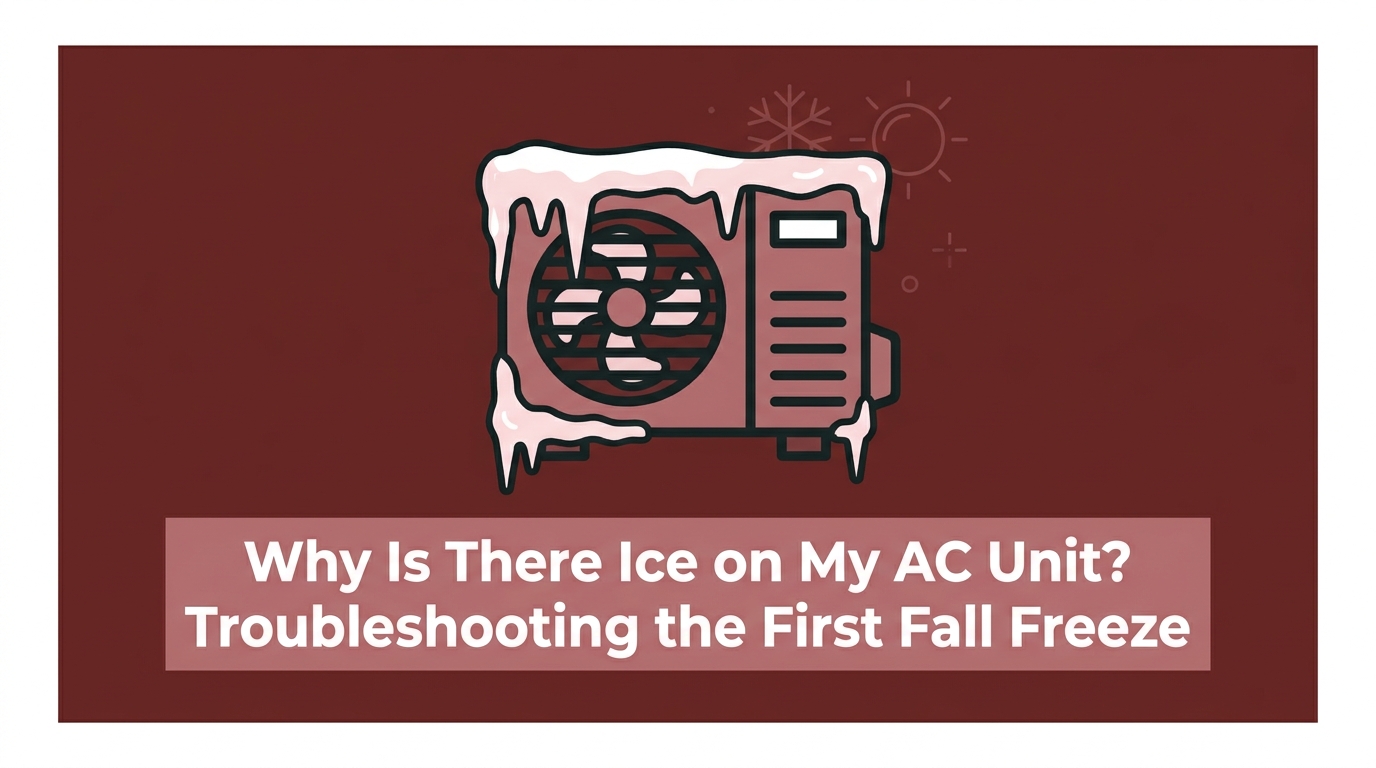
The Problem: You step outside during the first cold nights of October and notice a thick layer of white frost or solid ice encasing the copper lines and coils of your outdoor air conditioning unit. This is highly alarming, especially since you might still be running the AC during the warmer afternoon hours.
The Cause: Ice forms on an air conditioner when the temperature of the evaporator coil drops below freezing, causing the natural condensation in the air to freeze to the metal. The region's rapid nighttime temperature drops can exacerbate this exact issue. If your thermostat is still set to cool, and the system kicks on while the outside air is already chilly, the refrigerant runs too cold. However, the most common catalyst for ice formation is severely restricted airflow. If warm indoor air isn't blowing across the indoor coil fast enough, the coil freezes. Low refrigerant levels (a chemical leak) will also cause the pressure inside the system to drop, which forces the coil temperature below freezing.
The Solution: Do not ignore a frozen unit, and never try to chip the ice away with a tool—you will puncture the delicate copper lines and cause a massive, expensive refrigerant leak. Instead, turn the cooling function OFF at your thermostat immediately. Switch the fan setting from "AUTO" to "ON." This forces unchilled indoor air to blow continuously over the indoor coil, helping to melt the ice safely. Once the system thaws, you need a professional to check your refrigerant levels and airflow to determine the exact causes of ice forming on your AC unit.
The Role of Air Filters in Fall HVAC Performance
It surprises many homeowners to learn that both a burning dust smell and a frozen air conditioner often share the exact same culprit: a neglected air filter. Your air filter is the primary defense mechanism for your HVAC equipment. When it becomes clogged with the heavy dust typical of the Central Oregon high desert, it starves your system of the air it needs to function safely.
A clogged filter restricts airflow so severely that cold air gets trapped around the AC coil, causing the condensation to freeze into a solid block of ice. Simultaneously, a dirty filter allows excess debris and particulate matter to bypass the media entirely. This dirt settles directly onto your furnace's heat exchanger, resulting in a much stronger, longer-lasting burning smell when you finally turn the heat on.
To protect your system during the volatile fall transition, follow these steps:
1. Check the filter bi-weekly: During autumn, temperature swings mean your system works overtime. Pull the filter out every two weeks and hold it up to a light source. If you cannot see light passing through the media, it is time for a replacement.
2. Upgrade your MERV rating carefully: A standard fiberglass filter catches large debris, but a pleated filter (MERV 8 to 11) captures finer dust and dander. Do not exceed MERV 11 without consulting a technician, as filters that are too dense can accidentally restrict airflow just like a dirty filter.
3. Seal bypass gaps: Ensure the filter fits snugly in its track. If air can easily slide past the cardboard frame, dirt is entering your furnace cabinet.
4. Explore whole-home purification: Upgrading your filter quality or installing dedicated indoor air quality solutions can drastically improve overall home comfort during dusty autumn months, reducing both odors and allergy symptoms.
Switching Seasons: Heat Pump Operation in Cooler Weather
If your home utilizes a heat pump rather than a traditional gas furnace, the transition to fall weather comes with its own set of unique operational quirks. Heat pumps provide both cooling and heating, and they behave quite differently than standard split systems when the temperatures drop during the first cold nights of October.
The Reversing Valve "Whoosh"
When you switch your thermostat from cooling to heating, the heat pump engages a component called the reversing valve. This valve literally reverses the flow of chemical refrigerant through the system. When this happens, you will often hear a distinct "whoosh" or a sudden equalization of pressure from the outdoor unit. This sound is entirely normal and simply indicates that the system is shifting into winter mode.
The Defrost Cycle Steam
As outdoor temperatures drop toward freezing, condensation on the outdoor heat pump coil can turn to frost. To protect itself, the system will periodically enter a "defrost cycle." You might notice the outdoor fan stop spinning completely, the compressor grow louder, and a plume of white vapor or steam rise from the top of the unit. Many homeowners mistake this steam for smoke. The defrost cycle is a normal, built-in safety feature designed to melt frost off the outdoor coil.
Auxiliary Heat Activation
During sudden, steep temperature drops, your heat pump may struggle to extract enough ambient heat from the freezing outdoor air. When this happens, the system automatically engages "Auxiliary Heat" (often electric resistance heat strips). Because these heat strips sit unused for most of the year, they gather dust. When they finally kick on, they can produce a faint burning dust smell of their own. Advise against manually overriding the thermostat to force auxiliary heat, as this draws massive amounts of electricity and puts unnecessary strain on the system.
When to Shut Down Your System and Call a Professional
While a brief dusty smell or a normal defrost cycle shouldn't cause alarm, there are strict limits to what you should handle on your own. Knowing when to stop troubleshooting and call an expert is the most important part of home maintenance in the Central Oregon high desert.
If you encounter any of the following scenarios, shut your system down at the breaker panel and contact a licensed technician:
• Persistent electrical smells: Any odor resembling melting plastic, ozone, or electrical burning requires immediate system shutdown. Do not wait to see if it improves.
• Repeated freezing: If your AC unit freezes, thaws out after you run the fan, and then immediately freezes solid again the next time it cools, you have a deeper issue. A refrigerant leak or severe internal airflow blockage is likely, and this requires professional gauges to diagnose.
• Tripping breakers: If turning on your heat causes the circuit breaker to trip, do not simply flip it back on. A tripping breaker is doing its job by stopping a dangerous overcurrent situation.
• Loud, destructive noises: Screeching, metal-on-metal grinding, or heavy banging means a mechanical component is actively failing. Running the system will only cause further damage.
Attempting DIY electrical repairs or trying to handle chemical refrigerant without proper licensing is incredibly dangerous and illegal in many jurisdictions. The safest approach is to schedule a comprehensive pre-winter inspection. This allows a technician to wrap up your preventative AC maintenance from the summer while ensuring your heating components are clean, safe, and ready for the freezing months ahead.
Frequently Asked Questions About Fall HVAC Transitions
Why does my heater smell like burning?
A burning smell from your heater is usually caused by dust burning off the heat exchanger after months of inactivity. During the summer, dust and pet dander settle on the internal furnace components. When the burners ignite for the first time in the fall, this debris singes, creating a dry, dusty odor. It can also be caused by a dirty air filter or debris trapped in the floor vents. However, if it smells like melting plastic or chemicals, it is an electrical issue and requires immediate attention.
How long does furnace dust burn off last?
Furnace dust burn-off typically lasts between 15 to 30 minutes during the first heating cycle of the year. The smell should dissipate completely within the first few times the system runs as the remaining dust is cleared away. If you notice the smell lingering for longer than an hour, or if it returns strongly every time the system cycles on, you should shut the system off and check your air filter.
Is it safe to run my furnace if it smells like burning?
It is safe to run your furnace only if the smell is a dry, dusty odor that fades quickly. This indicates normal seasonal burn-off. It is completely unsafe if the odor is acrid, chemical, resembles melting plastic, or is accompanied by visible smoke or carbon monoxide alarms. When in doubt, it is always safer to turn the system off at the thermostat and schedule a professional inspection.
Why is my AC unit freezing up?
An AC unit freezes up most commonly due to restricted airflow from a dirty filter or blocked return vents. Without enough warm indoor air blowing over the indoor coil, the condensation freezes solid. It can also be caused by running the AC when outdoor temperatures are too low during the first cold nights of October. Additionally, low refrigerant levels from a chemical leak can drop the pressure and cause freezing, which requires a professional repair.
What does an electrical fire in a furnace smell like?
An electrical fire in a furnace smells distinctly of melting plastic, burning rubber, or sharp ozone. Unlike the dry smell of dust, an electrical fire produces a sharp, chemical, or "fishy" odor that irritates the nose. If you detect this specific scent, it means wire insulation or a circuit board is melting. This requires an immediate shutdown of the system at the main electrical breaker.
How often should I change my filter during the fall transition?
You should check your air filter every two weeks and change it at least once a month during the fall transition. Because the weather fluctuates wildly, your system often cycles back and forth between heating and cooling, moving a massive volume of air and trapping more dust. Keeping a fresh filter installed prevents airflow restriction, reduces burning odors, and protects the blower motor from overworking.
Get Expert Answers and Peace of Mind This Fall
Navigating the shift from summer cooling to winter heating doesn't have to be stressful. While smelling a sudden burning odor or finding frost on your outdoor unit can be alarming, most common homeowner questions answered here point back to routine maintenance. Dust burn-off is a normal part of the season, but persistent, acrid odors or repeatedly freezing units are clear signs that your system needs professional attention.
You don't have to guess whether your home is safe. Professional help is available to thoroughly inspect your equipment, clean away the heavy debris accumulated from the Central Oregon high desert summers, and calibrate your system for the freezing temperatures ahead. By scheduling a comprehensive pre-winter inspection, you ensure that your equipment operates flawlessly, giving you a clear, reassuring explanation of your system's health and the peace of mind you deserve.