


Navigating the First Frost: Preparing Your Home for October's Chill
Before the first deep freeze hits, walking through a comprehensive seasonal home maintenance checklist is the smartest step you can take for your property. October brings a sharp, undeniable shift to the Bend area. The long, warm afternoons quickly give way to crisp, freezing evenings, signaling that it is time to transition your home for the colder months ahead. Because you are likely done needing air conditioning repair services for the year, our team at Mountain View Heating, Inc. recommends shifting your focus entirely to your HVAC system and its heating components.
The October first heating cycle often brings a few surprises. As the thermostat clicks on and the blower motor engages after months of summer dormancy, our technicians frequently hear about strange odors, sudden popping noises from the ductwork, or some rooms warming up much faster than others. These initial quirks present a clear decision point for homeowners: do you ignore these early warning signs and hope for the best, or do you take proactive steps to ensure your equipment is ready for the heavy lifting ahead?
Ignoring those first-cycle symptoms can lead to unexpected breakdowns right when the real winter weather arrives. By following a structured approach to fall maintenance, you can catch minor issues before they escalate, optimize your home's energy efficiency, and secure a comfortable environment for your family. The steps below are designed specifically to address the realities of our local climate, moving beyond generic advice to tackle the exact challenges your heating equipment faces right now.
Understanding the Unique Demands of High Desert Temperature Swings
Standard national maintenance guides often assume a gentle, gradual transition from summer to fall. They assume your heating equipment will only need to run for a few minutes at a time to take the chill off a mild autumn morning. That is not the reality in the Central Oregon high desert. Here, the extreme day-to-night temperature fluctuations put a unique, heavy stress on mechanical components that requires a more rigorous preparation strategy.
During a typical October day in Bend, afternoon temperatures might feel completely comfortable, but the moment the sun dips behind the Cascade mountains, the temperature plummets. With average October low temperatures dropping rapidly to around 31 degrees Fahrenheit, your heating equipment is forced to go from completely idle to handling a sudden, heavy heating load in a matter of hours. This rapid thermal shift causes metal components like heat exchangers to expand and contract aggressively. If the system is dirty, poorly lubricated, or struggling with restricted airflow, this sudden demand can trigger safety switches or cause premature component wear.
At Mountain View Heating, Inc., our team has extensive experience with Central Oregon's unique temperature swings, and a pattern we see often is that late-season maintenance is a risky gamble. Waiting until November or December to verify your system's health means you are pushing untested equipment through weeks of freezing overnight lows. Proactive preparation in early fall ensures that your equipment has the reliability and efficiency required to handle the deep winter freezes without leaving you stranded in the cold.
Step 1: Inspecting Air Filters and Optimizing System Airflow
The foundation of any effective fall preparation routine begins with airflow. When our technicians are called out for early-season heating issues, we consistently find that restricted airflow is a primary cause of uneven heating, increased energy consumption, and unnecessary mechanical strain during the October first heating cycle. When your system cannot pull enough air through the return vents, the blower motor has to work twice as hard, and the heat exchanger runs the risk of overheating and shutting down.
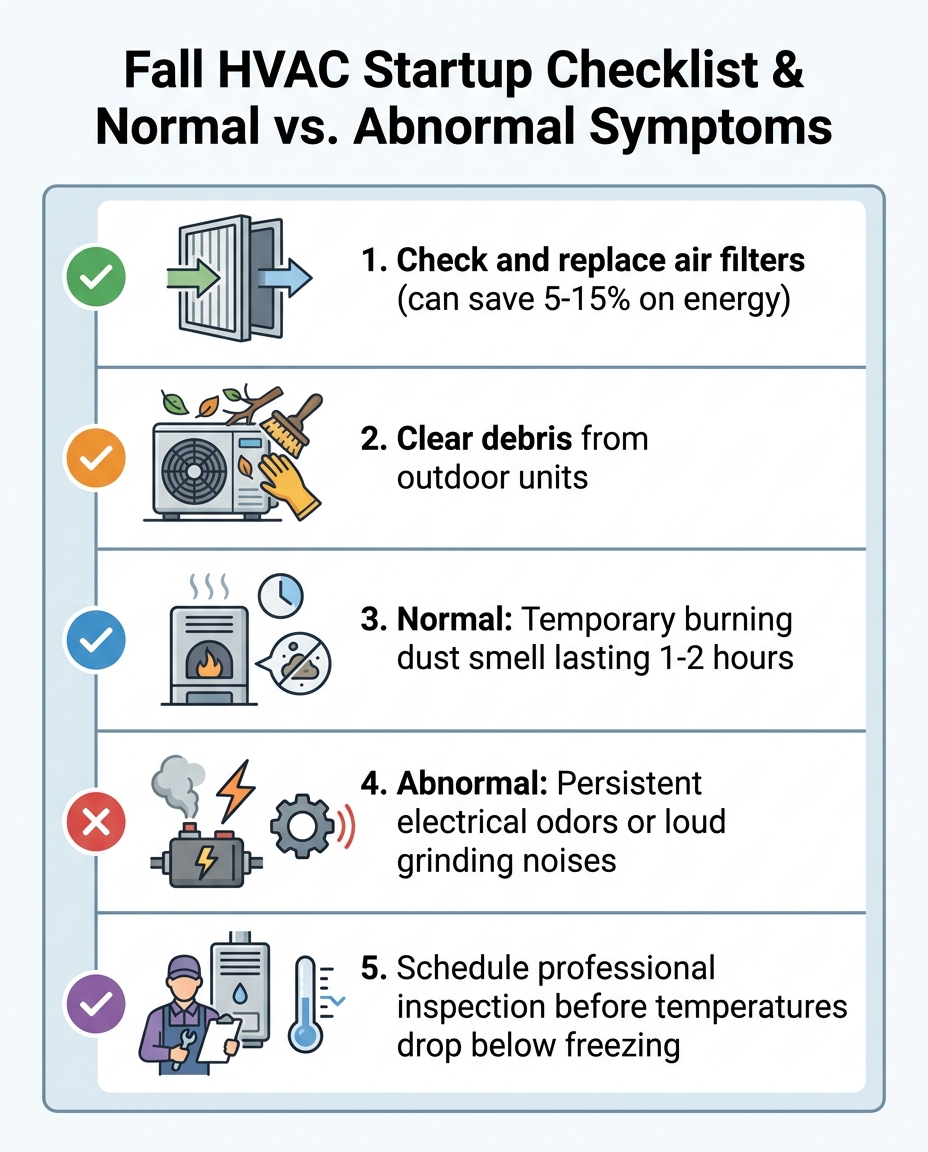
1. Locate and inspect your current filter: Pull the filter from your main return grille or the slot near your indoor air handler. Hold it up to a light source. If you cannot see light shining through the filter media, it is completely clogged with summer dust, pet dander, and pollen, and must be replaced immediately.
2. Install a fresh, high-quality replacement: Choose a filter with an appropriate MERV rating for your system (usually between MERV 8 and MERV 11 for standard residential setups). Make sure the airflow arrows printed on the side of the filter frame point toward the heating equipment.
3. Clear all supply and return registers: Walk through every room in your house and ensure that furniture, rugs, or heavy winter curtains are not blocking the floor or wall vents. Your system needs open pathways to distribute warm air evenly.
4. Leave interior doors open when possible: Closing doors in unused rooms traps cold air and disrupts the return airflow back to the central unit, forcing the system to run longer cycles to satisfy the thermostat.
According to the U.S. Department of Energy, replacing a dirty, clogged filter with a clean one can lower a system's energy consumption by 5% to 15%. This simple, homeowner-safe step is especially critical for those utilizing heat pump services, as heat pumps rely heavily on optimal airflow to extract and transfer heat efficiently during the seasonal transition.
Step 2: Decoding First-Cycle Heating Odors and Noises
Our dispatch team fields dozens of calls every October from homeowners concerned about the sudden appearance of strange smells and sounds during their first heating cycle. After sitting idle for months, your heating equipment accumulates a thin layer of household dust on the internal heat exchangers and heating elements. When the system fires up for the first time, this dust burns off, creating a distinct odor that permeates the house.
This temporary burning dust smell is a normal part of the fall startup process. It usually dissipates within the first hour or two of operation. Similarly, you may hear a few loud pops or bangs coming from your vents. This is simply the sheet metal ductwork expanding as hot air rushes through the cold, rigid channels for the first time in months. However, our experts stress that it is crucial to know the difference between these harmless startup quirks and actual mechanical hazards.
Normal vs. Abnormal Startup Symptoms
• Odors and Smells — Normal First-Cycle Behavior: A dusty, singed smell that fades after 1 to 2 hours of continuous operation. — Abnormal (Call a Professional): Acrid, melting plastic smells, persistent electrical ozone odors, or the smell of rotten eggs (gas leak).
• System Noises — Normal First-Cycle Behavior: Initial metallic popping from ducts, a smooth hum from the blower motor. — Abnormal (Call a Professional): Loud metal-on-metal grinding, continuous clicking without ignition, or violent rattling from the cabinet.
• Heating Cycles — Normal First-Cycle Behavior: Running for 15-20 minutes at a time to reach the set thermostat temperature. — Abnormal (Call a Professional): Short-cycling (turning on and off every 3-5 minutes) or running endlessly without warming the home.

Step 3: Managing the Outdoor Unit's Transition
Homeowners often focus entirely on the indoor furnace or air handler, forgetting that the outdoor equipment requires just as much attention during the shift to fall. In our decades serving the Central Oregon high desert, we've seen firsthand how outdoor units are exposed to heavy winds, falling pine needles, and rapid temperature changes that can severely impact performance.
Clear the perimeter: Take a walk around your outdoor unit and clear away any accumulated fall debris. Rake back leaves, remove overgrown vegetation, and brush off any pine needles that have settled on the top grille. Your system needs a minimum of two feet of clear space around all sides to pull in air efficiently.
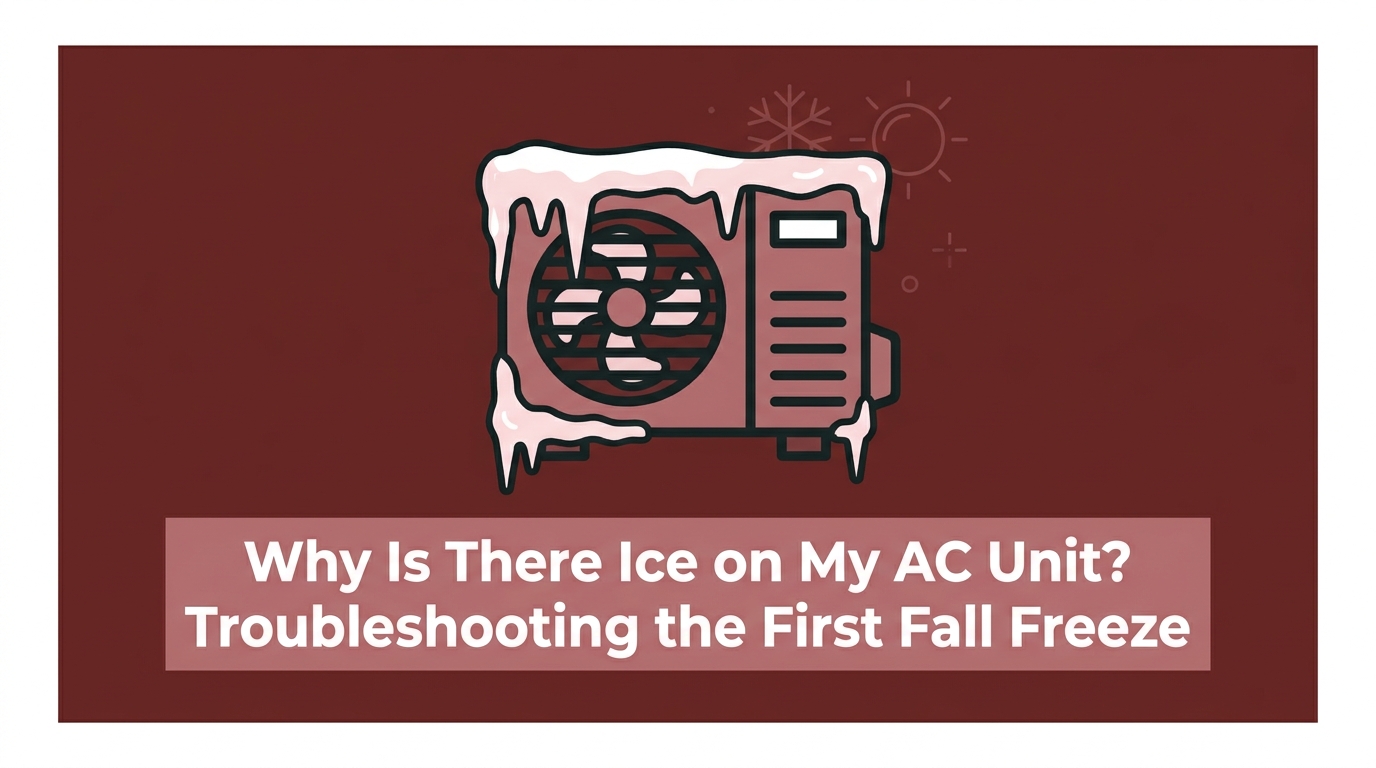
Understand cooling limits: Because Bend experiences warm afternoons followed by freezing nights, it can be tempting to run the air conditioning late into the season. However, running an air conditioner when the outside temperature drops below 60 degrees can cause the refrigerant to behave unpredictably, leading to frozen coils and severe compressor damage. If you accidentally run the cooling mode during a cold snap, you may need to review the causes of ice forming on your AC unit to understand the resulting damage.
Do not cover heat pumps: If you use a heat pump to warm your home, absolutely do not cover the outdoor unit with a tarp or custom wrap. Unlike standalone air conditioners that hibernate all winter, heat pumps run year-round and require unrestricted airflow to extract ambient heat from the cold outdoor air. Covering a heat pump will suffocate the system and cause an immediate breakdown.
Step 4: Sealing Drafts and Securing the Building Envelope
Your mechanical equipment is only one half of the comfort equation; the other half is your home's building envelope. The building envelope consists of the roof, walls, windows, and doors that separate your conditioned indoor air from the harsh Central Oregon high desert environment. If this envelope is compromised, your heating system will be forced to run longer, harder, and more frequently just to maintain a baseline temperature.
1. Inspect window and door weatherstripping: Over the summer, the intense high desert sun can cause rubber and foam weatherstripping to dry out, crack, and peel. Run your hand around the edges of your exterior doors and windows on a windy day. If you feel cold air seeping in, replace the worn weatherstripping immediately.
2. Re-caulk exterior penetrations: Walk the perimeter of your home and look for gaps where pipes, electrical conduits, or gas lines enter the house. Use a high-quality exterior silicone caulk to seal these gaps and prevent freezing drafts from entering your wall cavities.
3. Check attic and crawlspace insulation: Heat naturally rises, meaning a poorly insulated attic is the primary escape route for the warm air your system works so hard to produce. Ensure your attic insulation is evenly distributed and meets the recommended depth for our climate zone. Similarly, check that the crawlspace access doors are securely closed and sealed against the incoming cold.
4. Close foundation vents: If your home has traditional foundation vents, ensure they are properly closed off before the deep freezes arrive to protect your plumbing and keep the floors warmer above.
When to Transition from DIY Checks to Professional Maintenance
While clearing debris, changing filters, and sealing drafts are excellent homeowner-safe tasks, our team strongly advises that there is a strict limit to what you should handle on your own. Modern heating equipment involves high-voltage electricity, combustible gases, and complex electronic control boards. Opening the sealed cabinet of your furnace or attempting to clean internal components yourself is incredibly dangerous and can void your manufacturer warranty.
During the October first heating cycle, if you experience any of the abnormal symptoms discussed earlier—such as persistent electrical smells, loud grinding noises, or a system that refuses to reach the set temperature—it is time to stop troubleshooting and call a licensed technician. A professional possesses the specialized diagnostic tools required to measure gas pressure safely, test electrical draw, and analyze combustion gases for dangerous carbon monoxide leaks.
Mountain View Heating's commitment to accurate diagnosis and safe, professional service means we don't just guess at what might be wrong; our technicians test the system thoroughly to ensure it operates within factory specifications. Scheduling routine HVAC maintenance before the peak winter rush guarantees that a qualified expert has verified your system's safety and efficiency. Proactive professional inspections are the only proven way to prevent emergency, middle-of-the-night failures when the outside temperatures drop into the single digits.
Common Questions About Fall Heating Startup in Bend
Why does my furnace smell when I turn it on for the first time?
The most common cause of a burning smell during the first fall startup is the accumulation of dust on the heat exchangers over the summer. When the system fires up, this dust burns off rapidly. The odor is completely normal and should dissipate within one to two hours of continuous operation. If the smell persists or smells like melting plastic or electrical ozone, shut the system down immediately and contact our professional team.
What maintenance does a heating system need before winter?
A heating system requires both homeowner and professional maintenance before winter. Homeowners should replace dirty air filters, clear debris from outdoor units, and ensure all indoor vents are unblocked. A licensed technician must then perform a comprehensive tune-up, which includes cleaning the burners, testing safety limit switches, checking electrical connections, and verifying safe combustion to prevent carbon monoxide risks.
When should I schedule fall HVAC maintenance?
We recommend scheduling fall maintenance in late September or early October, right before the Central Oregon high desert temperatures drop significantly. Booking early ensures your system is tested and prepared before the first heavy heating load is required. It also allows you to secure an appointment before local technicians are overwhelmed by the first major cold snap of the season.
How do I prepare my HVAC for winter?
Start by transitioning your thermostat from cooling to heating mode and running a test cycle on a mild day. Replace your system's air filter to ensure maximum airflow. Clear away any fall leaves or pine needles from your outdoor heat pump or AC unit. Finally, seal any drafty windows and doors to reduce the heating load on your equipment.
Is it normal for my heating system to make popping noises during the first fall cycle?
Yes, occasional popping or pinging noises are entirely normal during the first few heating cycles. This sound is caused by the sudden expansion of cold sheet metal ductwork as hot air rushes through it. However, if you hear loud grinding, squealing from the blower motor, or violent rattling from the equipment cabinet, those are signs of mechanical distress that require professional attention.
Can extreme day-to-night temperature swings damage my HVAC equipment?
Yes, the rapid temperature drops common in our high desert climate put significant stress on mechanical components. The aggressive expansion and contraction of metal parts can expose weak points, especially in older or poorly maintained systems. Routine professional maintenance ensures that parts are properly lubricated and calibrated to handle these sudden thermal shifts without failing.
Ensure Reliable Comfort Before the Deep Winter Freezes Arrive
Tackling your seasonal home maintenance checklist early is the best way to ensure a smooth, comfortable transition into the colder months. By understanding the normal quirks of the October first heating cycle and taking proactive steps to optimize airflow and seal your home, you set your system up for success. If you notice any persistent warning signs or simply want the peace of mind that comes with a professional verification, do not wait until the severe weather hits. Reach out to the Mountain View Heating team for a thorough, expert inspection today to secure reliable warmth for your family all winter long.