


Spotting Ice on Your HVAC Unit During a Cold Snap
Have you ever walked outside on a crisp autumn morning only to find your outdoor unit encased in a thick layer of ice? If you are looking for reliable home maintenance tips and troubleshooting during the October first freeze, discovering a frozen HVAC system right as the weather turns is an alarming scenario. In our years of keeping Bend comfortable, the Mountain View Heating team frequently fields calls from homeowners caught off guard when they switch their thermostats over for the season, only to be greeted by lukewarm indoor air and a block of solid ice sitting in the side yard. The immediate stress of facing a potential equipment failure right as the heating season begins is entirely understandable.
The core problem you face in this moment is deciding whether these minor startup quirks and the presence of frost are normal operational behaviors, or if they are the glaring signs of a mechanical breakdown. Systems behave very differently in transitional weather than they do in the peak of summer or the dead of winter. Understanding exactly what you are looking at can save you from a panicked emergency call or, conversely, prevent severe damage to your compressor. If you are worried about the health of your system, reaching out for professional air conditioning services can help you properly diagnose the unit before the deep cold sets in.
How Extreme Temperature Swings Affect Your Outdoor Unit
The transition from cooling to heating during early fall places a unique kind of mechanical stress on climate control systems. In the Central Oregon high desert, the environment presents distinct challenges that directly impact how your equipment operates. Understanding this regional climate context is the first step in diagnosing why your system might be turning into an icebox.
The Shift from Summer Cooling to Fall Heating
One of the most significant factors contributing to frozen coils is the extreme diurnal temperature variation common in this region. During early autumn, daytime temperatures can easily reach a comfortable 70 degrees, prompting homeowners to leave their air conditioning systems running. However, once the sun sets, ambient nighttime temperatures can plummet rapidly into the 30s. Operating an air conditioner in near-freezing ambient temperatures forces the system to work under fluctuating pressures it was not designed to handle. When the outdoor air is colder than the air the system is trying to cool indoors, the pressure of the refrigerant drops significantly. This pressure drop causes the temperature of the evaporator coil to fall below freezing, turning any condensation on the coil into solid ice.
Dusty Winds and Airflow Restrictions
Summer environmental factors heavily carry over to cause fall operational issues. Throughout the long, dry summer months, Bend's dusty winds blow a massive amount of fine particulate matter through the air. Our maintenance technicians consistently notice that by the time October arrives, this high desert dust has steadily accumulated inside your ductwork and across the surface of your air filters. This heavy accumulation creates the perfect conditions for your evaporator coil to freeze. When the filter becomes choked with summer dust, the volume of warm indoor air passing over the indoor coil is drastically reduced. Without that warm air to keep the coil's temperature above 32 degrees Fahrenheit, the moisture pulled from your indoor air freezes on contact, eventually traveling down the refrigerant lines to the outdoor unit.
Normal Heat Pump Frost vs. Abnormal System Icing
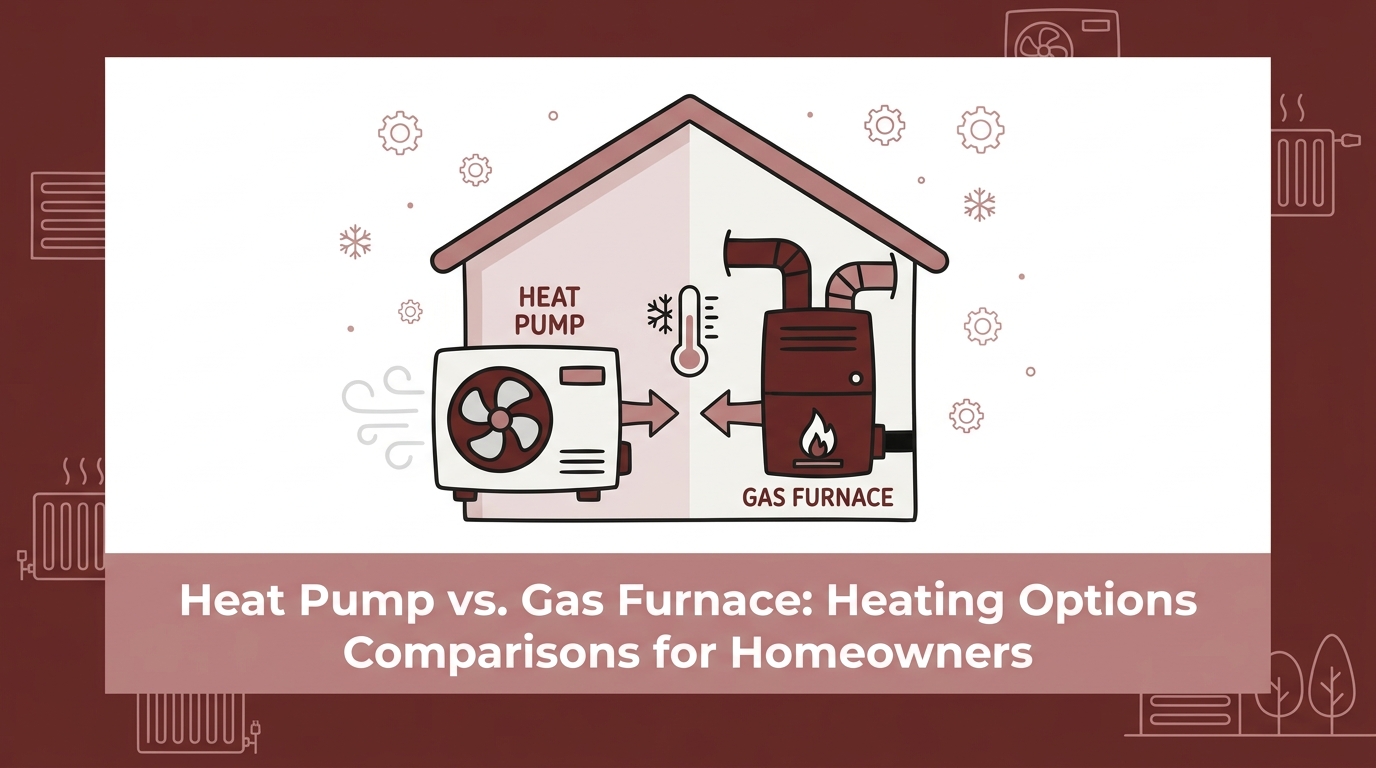
For anxious homeowners, distinguishing between a system that is functioning exactly as designed and one that is failing is critical. At Mountain View Heating, a pattern we see often during the unpredictable October first freeze is homeowners mistaking normal high desert heat pump defrost cycles for genuine system failures. Heat pumps and dedicated air conditioners handle cold weather very differently.
• Appearance — Normal Heat Pump Frost: A light, even coating of white frost resembling morning dew. — Abnormal System Icing: Thick, solid blocks of clear or opaque ice encasing the coils.
• Duration — Normal Heat Pump Frost: Clears completely within 30 to 90 minutes. — Abnormal System Icing: Persists for hours or continues to grow thicker over time.
• Location — Normal Heat Pump Frost: Confined to the outdoor coil fins. — Abnormal System Icing: Travels along the copper refrigerant lines and covers the compressor.
• System Type — Normal Heat Pump Frost: Expected on heat pumps in heating mode. — Abnormal System Icing: Never normal on a dedicated AC unit.
Understanding the Defrost Cycle
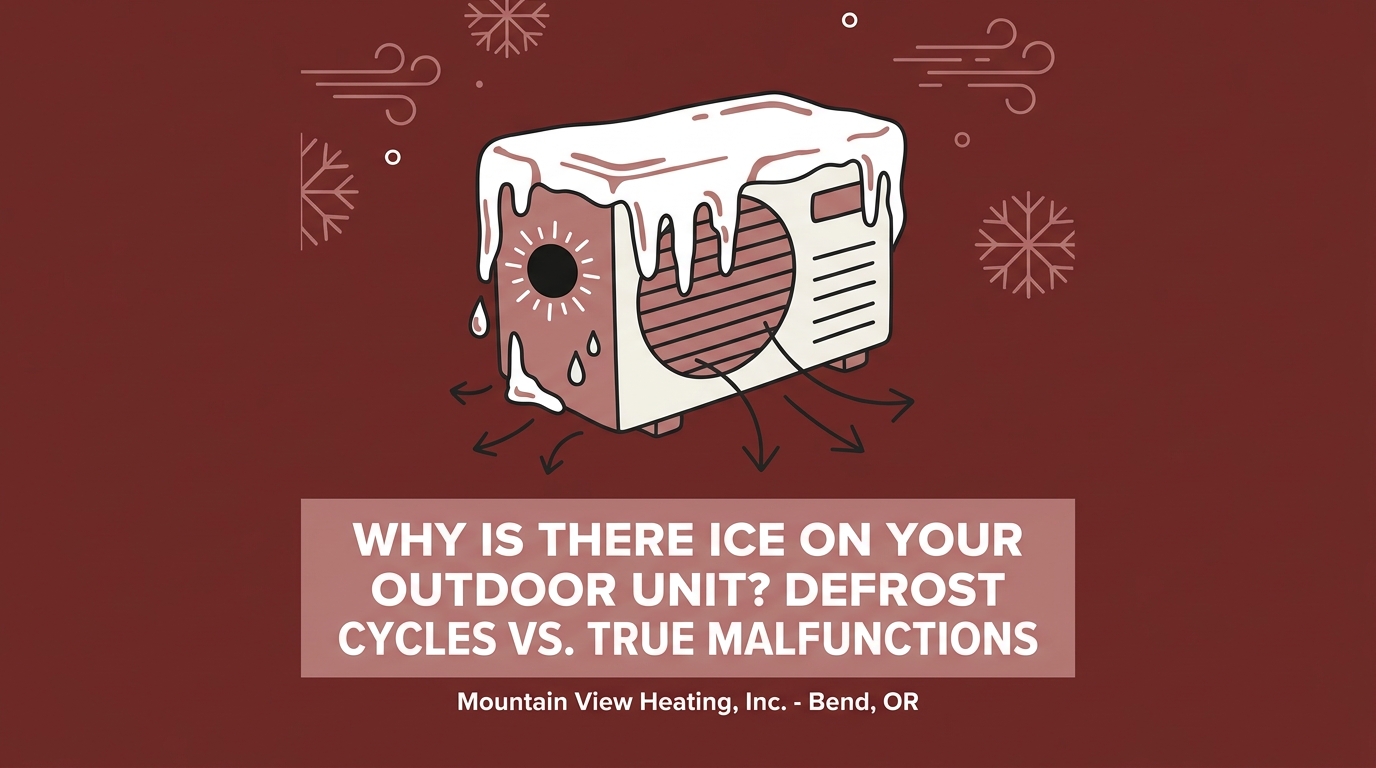
If you own a heat pump, a light layer of frost during near-freezing weather is entirely normal. Because a heat pump extracts ambient heat from the outdoor air to warm your home, the outdoor coil gets extremely cold—often colder than the outside air itself. Moisture in the air condenses and freezes on the fins. To combat this, heat pumps are equipped with an automated defrost cycle that typically initiates every 30 to 90 minutes. During this cycle, the system temporarily reverses its operation. It essentially switches back into air conditioning mode for a few minutes, sending hot compressed refrigerant gas to the outdoor coil to melt the frost. The outdoor fan usually shuts off during this process so the heat doesn't blow away. You might hear a whooshing sound as the reversing valve shifts, and you will likely see a plume of steam rising from the unit as the frost melts. This is a sign of a healthy system doing its job.
Recognizing Problematic Ice Buildup
Abnormal icing looks drastically different. Instead of a delicate layer of white frost, you will see thick, solid blocks of ice that completely smother the aluminum fins, encase the copper piping, and sometimes even creep into the fan enclosure. This type of ice does not melt away after an hour; it persists and grows. It is crucial to clarify that while heat pumps manage their own frost through the defrost control board, a dedicated air conditioning unit should never have ice on it under any circumstances. If your AC is frozen solid, or if your heat pump resembles an iceberg that never thaws, you are facing a mechanical problem.


The Leading Cause of Frozen Coils: Restricted Airflow
When our team diagnoses abnormal ice buildup across Bend, the most common and easily fixable cause we encounter is severely restricted airflow. The science behind this is straightforward: your indoor evaporator coil gets incredibly cold as liquid refrigerant expands into a gas. It relies on a constant, heavy volume of warm indoor air blowing across it to facilitate the heat exchange process. Without that warm air, the coil's surface temperature drops below freezing, and the natural humidity in your home's air freezes directly onto the metal. Staying on top of routine AC maintenance is the most effective way to prevent airflow-related freezing before it starts.
Checking for Clogged Filters
Dirty, clogged air filters are the number one culprit behind frozen coils in the Central Oregon high desert. During the transition into fall, our technicians find that homeowners often forget how quickly filters degrade during dusty summer seasons.
1. Locate your filter housing: This is usually found in the return air duct, at the bottom of the air handler, or behind a large return grille in a central hallway.
2. Perform a visual inspection: Pull the filter out and hold it up to a light source. If you cannot see light shining through the media, the filter is completely choked with dust, pet dander, and debris.
3. Replace immediately: Slide a fresh, clean filter into the slot, ensuring the airflow arrows point toward the equipment.
Inspecting Vents and Registers
Beyond the filter, the physical pathways for air in your home must remain clear. We often see homeowners mistakenly believe that closing vents in unused guest rooms or storage areas will save energy. In reality, closing vents in unused rooms can backfire spectacularly. Your blower motor is calibrated to push a specific volume of air through a specific number of openings. When you close vents, you increase the static pressure inside the ductwork, which drastically reduces the total volume of air returning to the unit. Furthermore, you must ensure that heavy furniture, thick rugs, or long curtains are not blocking your return grilles or supply registers. Proactive care regarding your home's airflow pathways is essential to prevent the system from suffocating and freezing over.
When Low Refrigerant Causes Your System to Freeze
In our experience servicing local HVAC systems, if your airflow is completely unobstructed but the unit is still turning into a block of ice, you are likely facing a mechanical failure that crosses the boundary into professional repair territory. The most common mechanical cause of a frozen system is low refrigerant charge.
The Mechanics of Pressure and Temperature
The relationship between pressure and temperature dictates how your climate control equipment functions. When the system is low on refrigerant, the pressure inside the indoor evaporator coil drops below its designed operational threshold. According to the laws of thermodynamics, a drop in pressure results in a corresponding drop in temperature. This lack of refrigerant makes the coils too cold—well below the freezing point of water. As warm, humid air blows across this super-cooled coil, the moisture instantly turns to ice. This creates a cascading effect: the ice acts as an insulator, preventing further heat exchange, which causes the refrigerant returning to the outdoor compressor to remain too cold, eventually freezing the outdoor lines and putting immense strain on the compressor motor.
Signs of a Refrigerant Leak
It is vital to understand that HVAC systems operate on a closed-loop circuit. They do not "consume" or "burn up" refrigerant like a car consumes gasoline. If your refrigerant levels are low in the Central Oregon high desert, it unequivocally indicates that there is a leak in the copper lines, the coils, or the fittings. Secondary symptoms of a refrigerant leak often accompany the ice buildup. You may hear hissing or bubbling sounds originating from the indoor air handler or the outdoor unit. Additionally, you will likely notice the system running continuously without ever reaching the temperature set on the thermostat, as it lacks the chemical capacity to transfer heat effectively. Because refrigerants are heavily regulated environmental chemicals, handling them requires a licensed professional with specialized recovery equipment and training. If you are facing major repairs on an older unit, keep in mind that generic utility incentives and federal tax credits may apply to qualifying high-efficiency heat pump installations, making a replacement more accessible.
Safe Troubleshooting Steps for Homeowners
Discovering ice during the October first freeze is stressful, but there are immediate, safe actions you can take to mitigate the damage while you assess the situation. If you are wondering about the boundaries of servicing your AC yourself, our technicians recommend these four steps as the safe limit of DIY intervention.
1. Step 1: Turn the system off immediately. Do not force the unit to keep running while it is encased in ice. Continuing to operate a frozen system can cause liquid refrigerant to slug back to the compressor, resulting in catastrophic and expensive mechanical failure. Switch the thermostat setting from "Cool" or "Heat" to the "Off" position.
2. Step 2: Turn the fan setting to 'ON'. On your thermostat, switch the fan setting from "Auto" to "On." This forces the indoor blower motor to run continuously, circulating warm indoor air over the frozen indoor coil. This constant flow of warm air will significantly speed up the thawing process.
3. Step 3: Check and replace the air filter. Once the ice begins to thaw and water starts draining into the condensate pan, pull out your air filter. If it is caked with dust, throw it away and install a fresh one. Never run the system without a filter in place, even temporarily.
4. Step 4: Ensure all indoor vents are fully open. Walk through every room in your home and verify that all supply registers are wide open and that no return grilles are blocked by furniture or household items.
Once the unit is completely thawed (which can take up to 24 hours in severe cases) and you have replaced the filter and opened the vents, you can try turning the system back on. If it runs normally, restricted airflow was likely the culprit. However, if the ice begins to form again, you have reached the absolute limit of DIY troubleshooting. You must shut the system down again and call a licensed professional, as you are likely dealing with a refrigerant leak or a failing blower motor.
Frequently Asked Questions About Frozen HVAC Units
When the temperatures drop in the Central Oregon high desert, homeowners often ask our team for quick answers to their heating and cooling emergencies. Here are clear, concise answers to the most common questions regarding AC and heat pump icing.
Why is my AC freezing up inside?
Your AC freezes up inside when the temperature of the evaporator coil drops below 32 degrees Fahrenheit, causing airborne moisture to freeze to the metal. The most frequent cause of this is restricted airflow from extremely dirty air filters that suffocate the system. Other common causes include blocked return ducts, closed supply vents, or a low refrigerant charge due to a leak in the system.
How do I fix a frozen AC unit?
The very first step to fix a frozen AC unit is to turn off the cooling mode at the thermostat to prevent severe damage to the compressor. Next, switch the thermostat fan setting to 'ON' to circulate warm indoor air over the coils and accelerate the melting process. Once the system is entirely thawed, change your air filter; if the unit refreezes after restarting, you must call a professional to check for mechanical issues.
Is it normal for a heat pump to have ice on it in the fall?
Yes, a light, even layer of white frost is completely normal for a heat pump operating during near-freezing weather. The system is designed to handle this by automatically initiating a defrost cycle that should clear the frost within 30 to 90 minutes. However, if you see thick, solid blocks of ice that persist for hours, this is abnormal and indicates a malfunction with the defrost control board, sensors, or reversing valve.
How to stop ice forming in AC?
To stop ice from forming on your AC, you must ensure the system has unrestricted airflow at all times. Maintain a strict schedule of regular filter changes, checking them monthly during dusty seasons. Keep all interior supply and return vents fully open and unblocked by furniture, and schedule seasonal professional maintenance to catch refrigerant leaks before they cause freezing.
Can running the AC on a cold autumn night cause it to freeze?
Yes, operating an air conditioner when the outdoor ambient temperatures drop too low can absolutely cause the system to freeze. Air conditioners are not designed to operate in near-freezing weather; doing so drops the system pressure drastically. This low pressure causes the evaporator coil to become too cold, leading to rapid condensation freezing on the coils.
What happens if I ignore ice on my outdoor unit?
Ignoring ice on your outdoor unit will inevitably lead to complete system failure and severe mechanical damage. The ice acts as an insulator, forcing the compressor to work harder while starving it of the proper refrigerant flow, which can cause the compressor motor to burn out. Furthermore, you will experience significantly higher energy bills due to the extreme inefficiency of a system struggling to operate through a block of ice.
Ensure Reliable Comfort Before Winter Arrives
Understanding the difference between standard operational behavior and a true mechanical failure is essential for protecting your home comfort equipment. While a light coating of frost on a heat pump is perfectly normal during the October first freeze, thick, solid ice on any system is a clear cry for help. Addressing these issues promptly prevents minor airflow problems from escalating into destroyed compressors. If you have followed the basic home maintenance tips and troubleshooting steps, such as changing your filter, and the ice returns, it is time to schedule an AC repair before the deep winter sets in.