


Essential heat pump troubleshooting tips before calling a professional
Before we dive into the mechanical details, we have to talk about safety. Your heat pump is a complex piece of machinery that uses high-voltage electricity and pressurized refrigerant. While we want to help you save money with these heat pump troubleshooting tips before calling a professional, your physical safety is always our priority.
The first rule of DIY HVAC work is to know when to cut the power. Most systems have a service disconnect switch located in a small box on the exterior wall near the outdoor unit. Before you open any panels or clear debris from inside the cage, pull that disconnect or flip the switch to "Off."
Inside your home, you should also locate your electrical panel and identify the breakers for your heat pump. That most systems are "dual-breaker" setups—one breaker controls the indoor air handler, and a separate, larger breaker controls the outdoor compressor.
If you are following our Heat Pump Repair Bend Or Complete Guide, remember the 5-minute wait rule. After you shut off the power, wait at least five minutes before poking around. This allows the electrical capacitors to discharge their stored energy safely. If you have a non-contact voltage tester, use it to verify that no electricity is flowing to the components before you touch them.
Checking the "Commander-in-Chief" thermostat settings
We often tell our neighbors in Redmond and Sisters that the thermostat is the "brain" of the home. If the brain is confused, the body (the heat pump) won't work. It sounds simple, but a significant number of service calls are resolved just by correcting a setting.
First, check the display. Is it blank? If so, your batteries might be dead. Even if your thermostat is hardwired, many models use batteries as a backup, and a low battery can cause the signal to the heat pump to fail.
Next, verify the mode. We’ve seen many cases where a homeowner thought their system was broken, but it was simply set to "Cool" during a chilly October morning or "Heat" during a surprise May 2026 heatwave. If you’re having trouble with your cooling specifically, check out our guide on Ac Troubleshooting Tips Before Calling A Pro.
Another common culprit is the fan setting. If your fan is set to "On," it will blow air continuously, even when the heat pump isn't actually heating or cooling. This can make the air coming out of the vents feel lukewarm or "room temperature." Switching the fan to "Auto" ensures the blower only runs when the system is actively conditioning the air.
Inspecting the power supply and circuit breakers
If your heat pump won't turn on at all, the problem is likely electrical. In the high-desert climate of Central Oregon, summer storms or winter grid strain can cause breakers to trip.
Go to your main electrical panel and look for the switches labeled "HVAC," "Heat Pump," or "Furnace/AC." A tripped breaker won't always be flipped completely to the "Off" position; sometimes it just looks slightly "mushy" or sits in the middle. Flip it all the way to "Off" and then firmly back to "On."
If the breaker trips again immediately, do not reset it a second time. A recurring trip is a definitive sign of a short circuit or a failing component that needs professional attention to prevent a fire hazard. For more on this, read why an Ac Circuit Breaker Keeps Tripping What It Means.
Don't forget to check the outdoor disconnect switch as well. Sometimes these can be bumped by a landscaper or a child playing in the yard. If the outdoor unit has no power but the indoor fan is running, you'll get plenty of air, but no temperature change. This is often the first thing to look for when Ac Not Turning On What To Check First.
Maximizing airflow to restore heating and cooling performance
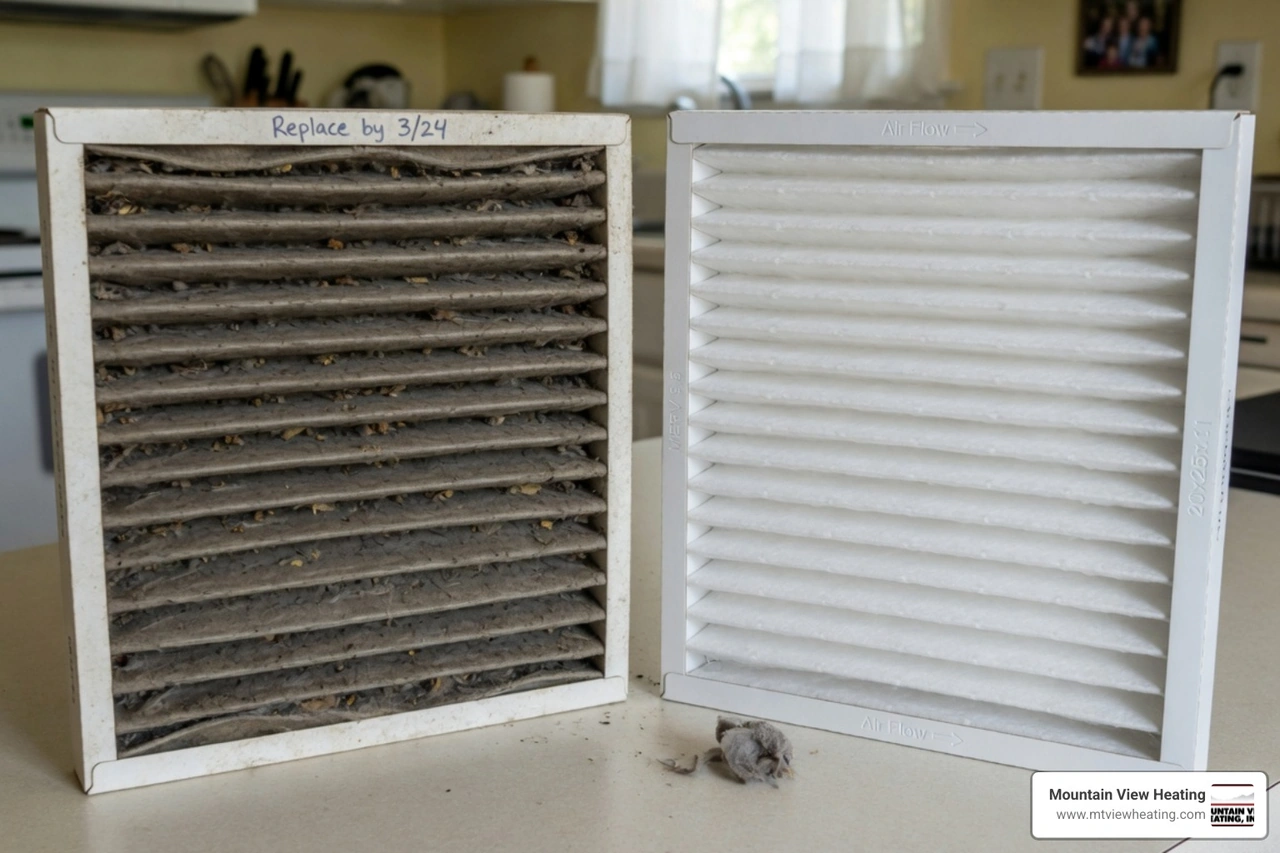
Airflow is the lifeblood of a heat pump. Unlike a furnace that creates heat by burning fuel, a heat pump moves heat from one place to another using air as the vehicle. If the air can’t move, the heat can’t move.
The single most effective DIY fix is a filter swap. A $25 filter can prevent a $1,000 repair. When a filter is clogged with dust, pet dander, and Central Oregon pollen, the system has to work twice as hard to pull air through the return. This causes the motor to overheat and can even lead to the coils freezing over.
If your system is struggling, check the filter immediately. If you can’t see light through it when holding it up to a lamp, it’s time for a new one. We recommend a MERV rating between 8 and 11 for most residential homes—it’s the "sweet spot" that provides great filtration without suffocating your blower motor. A dirty filter is one of the leading Reasons Your Ac System May Be Blowing Out Warm Air.
Clearing indoor vents and outdoor debris
Once you’ve checked the filter, take a walk through your house. It’s easy for a sofa to get pushed against a floor register or for heavy drapes to block a return vent. Ensure there is at least a foot of clear space around every vent in your home.
Now, head outside. Your outdoor unit needs to "breathe" just as much as the indoor one. To understand why, it helps to know How Does A Heat Pump Work—it essentially pulls heat out of the outdoor air (even when it’s cold!) and brings it inside.
Maintain a 2-foot clearance around the entire perimeter of the outdoor unit. This means trimming back sagebrush, removing weeds, and ensuring no patio furniture is leaning against the cage. In the winter, keep an eye on snow accumulation. A heat pump buried in a snowbank can't move air and will quickly lose efficiency or shut down entirely.
| Symptom | Normal Airflow | Restricted Airflow |
|---|---|---|
| Vent Temperature | Consistent & steady | Fluctuating or weak |
| System Cycle | 2-3 cycles per hour | Frequent "Short-Cycling" |
| Energy Bill | Predictable | Sudden, unexplained spikes |
| Unit Sound | Soft hum/whoosh | Strained whining or whistling |
Managing ice buildup and the defrost cycle
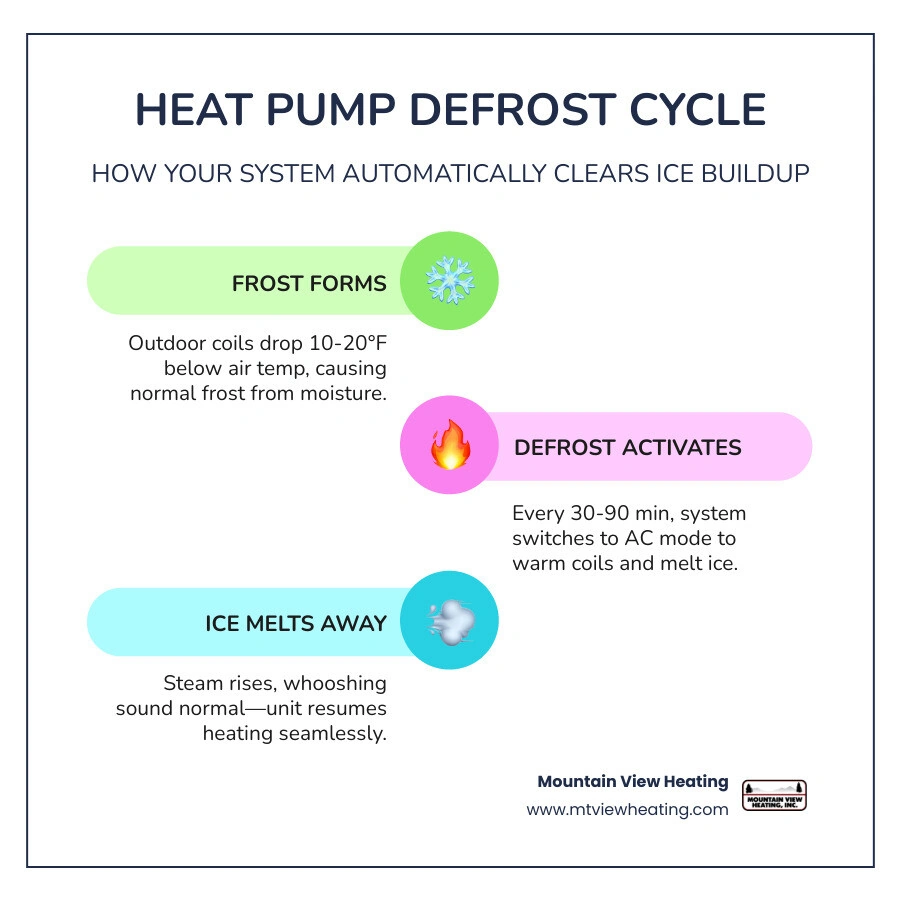
In places like La Pine or Sunriver, seeing frost on your heat pump during the winter can be alarming. However, a light coating of frost is actually a normal part of the physics of heat transfer. Because the outdoor coils are typically 10 to 20 degrees colder than the ambient air, moisture in the air naturally freezes onto them.
Your system is designed to handle this through a "Defrost Cycle." Every 30 to 90 minutes, the heat pump will temporarily switch into air conditioning mode. This sends warm refrigerant to the outdoor coils to melt the ice. You might see steam rising from the unit or hear a "whooshing" sound—don't panic! This is the system working exactly as it should.
However, if the unit is encased in a solid block of ice that doesn't melt after an hour, you have a problem. This often happens if Why Do Air Conditioners Freeze Up—the moisture can’t be managed because of a mechanical failure or a total lack of airflow. One common culprit is a leaky gutter overhead; if water drips directly onto the unit in freezing weather, the defrost cycle won't be able to keep up with the "artificial" ice.
Heat pump troubleshooting tips before calling a professional for frozen coils
If you find your coils are frozen, there are a few things you can do before calling us. First, check that airflow again. Is the filter clean? Are the outdoor fins clear of leaves?
If the airflow is fine, you might be looking at a more technical issue, such as a problem with The Function Of A Thermostatic Expansion Valve (TXV), which regulates refrigerant flow. While you can't fix a TXV or a refrigerant leak yourself, you can help the system recover.
The "Warm Water" Trick: If the ice is thick, you can gently pour warm (not boiling) water over the coils to help melt the ice. Never use a screwdriver, ice pick, or shovel to chip away ice, as you will almost certainly puncture the delicate aluminum fins or refrigerant lines.
Emergency Heat Mode: If it’s freezing outside and your heat pump is iced over, switch your thermostat to "Emergency Heat" or "Auxiliary Heat." This bypasses the outdoor unit entirely and uses electric heat strips inside your air handler to keep your family warm while you wait for the ice to melt or for a technician to arrive.
Identifying mechanical red flags and strange noises
A healthy heat pump should produce a steady hum and a gentle whoosh of air. As an expert in heat pump troubleshooting tips before calling a professional, I want to help you "listen" to your system. Some noises are easy DIY fixes, while others are warnings of an impending breakdown.
- Rattling or Vibrating: This is often just a loose panel. Check the screws on the exterior of the outdoor unit and tighten them with a screwdriver.
- Hissing: This can indicate a refrigerant leak or an internal valve issue. If you smell a "sweet" or chemical odor along with the hissing, shut the system down immediately.
- Grinding or Metal-on-Metal Screeching: This usually points to a failing bearing in the fan motor or a compressor issue. These are not DIY-fixable and require a professional to prevent the motor from seizing.
- Buzzing: This often indicates an electrical issue, like a failing contactor or capacitor.
If you're hearing something that doesn't sound right, our Heat Pump Repair Bend Or Guide can help you narrow down the source.
Frequently Asked Questions about heat pump troubleshooting
Is it normal for my heat pump to run constantly in May 2026?
In Central Oregon, May can be unpredictable. If we hit a string of 90-degree days or a sudden cold snap, your heat pump might seem like it never stops. Unlike older furnaces that blast high heat and then shut off, heat pumps are designed to run for long, low-energy cycles to maintain a perfectly steady temperature.
If the house is comfortable and your energy bills are normal, continuous operation is usually just the system doing its job efficiently. However, if the system is running non-stop and the temperature inside is still rising (or falling), it’s a sign that the system can't keep up, likely due to a dirty coil or low refrigerant. You can check our specific services for Heat Pump Repair Bend Or to see how we handle these capacity issues.
How do I perform a safe power reset on my heat pump?
Think of a system reset like rebooting your computer. It can clear "glitches" in the control board or thermostat communication.
- Turn the thermostat to "Off."
- Flip the breakers for both the indoor and outdoor units to "Off."
- Wait a full 5 minutes.
- Flip the breakers back to "On."
- Wait another 5 minutes for the internal components to communicate.
- Turn the thermostat back to "Heat" or "Cool."
When should I stop troubleshooting and call a professional?
DIY spirit is great, but there is a clear line where "troubleshooting" becomes "dangerous." You should stop and call Mountain View Heating if:
- You smell burning plastic or electrical ozone.
- The circuit breaker trips a second time after being reset.
- You see oil stains around the outdoor unit (a sign of a refrigerant leak).
- The system is making a loud grinding or clanking noise.
- You suspect a refrigerant issue. Handling refrigerant requires EPA Section 608 compliance and specialized tools that homeowners simply don't have.
Conclusion
At Mountain View Heating, we’ve spent over 40 years serving the families of Bend, Oregon, and the surrounding communities. We know that a malfunctioning heat pump is stressful, especially when the Central Oregon weather decides to be difficult. Our goal is always your 100% satisfaction, and sometimes that means giving you the knowledge to fix a simple problem yourself.
However, if these heat pump troubleshooting tips before calling a professional haven't restored your comfort, don't shiver (or sweat) it out alone. Whether you're in La Pine, Sisters, or right here in Bend, we offer 24/7 emergency support to get your system back to peak performance.
If you've checked your filter, your breaker, and your thermostat and you’re still not feeling the comfort you deserve, give us a call. We're here to help with expert Heat Pump Repair Bend Or and a commitment to keeping our community comfortable all year long.