


Are You Ready for the Freeze? Navigating Your Heating Options
Here at Mountain View Heating, Inc., we know exactly what happens when the sun goes down in the high desert. As we transition away from summer cooling and head straight into the pre-winter chill of mid fall, finding reliable options comparisons for homeowners becomes the most important step in securing your indoor comfort. Our team routinely helps families find a system that can handle rapid day-to-night temperature swings without missing a beat, especially as October 2026 brings those familiar freezing overnight lows.
If you spent the summer relying on air conditioning repair to get by, now is the time to shift your focus to dependable overnight heating before the harsh weather arrives. Navigating the world of HVAC services means understanding your primary choices: modern cold-climate heat pumps and traditional gas furnaces. Both technologies offer unique benefits, but choosing the right one requires a closer look at how they perform when the temperature plummets. Waiting until the first deep freeze puts you at risk of emergency breakdowns, rushed decisions, and uncomfortable nights. By evaluating your choices now with an experienced local team, you can select a system that aligns perfectly with your home's infrastructure and your family's comfort preferences.
Why Generic Heating Advice Fails in the High Desert
In our years of serving Bend OR, our technicians have seen firsthand that national averages and generic recommendations simply do not apply to our unique environment. The high desert presents a specific set of challenges that can easily overwhelm an improperly selected heating system. At an elevation of over 3,600 feet, the air is thinner, which subtly changes how heat transfers throughout your home. More importantly, the extreme day-to-night temperature swings mean your system must be highly responsive, capable of sitting idle during a mild afternoon and then kicking into high gear as soon as the sun dips below the horizon.
Another major factor our team accounts for is the notoriously dry air of the high desert. Dry indoor air actually makes your home feel colder than the thermostat reads, because moisture naturally evaporates from your skin more quickly in low humidity. This means your heating system has to work harder to achieve a perceived level of comfort. Generic rule-of-thumb sizing estimates fail to account for these variables.
Key factors that demand specialized local heating strategies:
• Rapid temperature drops: Systems must recover quickly from 30-degree evening plummets.
• Elevation impacts: Thinner air requires precise blower motor calibration for proper airflow.
• Low humidity: Heating cycles must maintain consistent warmth without overly drying out the indoor environment.
• Insulation variables: High desert homes require specific load calculations to match heat loss rates accurately.
Relying on national averages often leads to installing a system that struggles during our most demanding weather. We know from experience that your home requires a customized approach to ensure consistent, reliable warmth.
How Cold-Climate Heat Pumps Perform in Extreme Temperature Swings
The technology behind heat pumps has evolved dramatically over the last decade. In the past, traditional heat pumps were primarily recommended for mild, coastal climates. Today, modern cold-climate heat pumps are engineered specifically to extract ambient heat from the outside air, even when temperatures drop well below freezing. They operate similarly to an air conditioner in reverse; instead of pulling heat out of your home, they absorb heat energy from the chilly outdoor air, compress it to increase its temperature, and transfer it indoors.
When our experts evaluate these systems for a home in Bend OR, we always look closely at the Heating Seasonal Performance Factor (HSPF). This rating measures the efficiency of the heat pump over the entire heating season. Because heat pumps move heat rather than generating it through combustion, they offer exceptional energy efficiency and a significantly lower carbon footprint compared to traditional fossil fuel systems.
Can Heat Pumps Handle Sub-Freezing Nights?
Yes, in our experience, modern cold-climate heat pumps are fully capable of handling sub-freezing nights with ease. The secret lies in variable-speed, inverter-driven compressors. Unlike older models that only operated at one speed, these advanced compressors can ramp up or down in tiny increments to match the exact heating demand of your home. This allows them to maintain high efficiency and consistent comfort, avoiding the aggressive blasts of hot air associated with older heating methods. If you are considering upgrading, exploring modern heat pump systems offers a highly efficient way to handle the high desert's extreme swings.
The Role of Traditional Gas Furnaces in Rapid Heating
Despite the rise of heat pump technology, our team at Mountain View Heating still recommends and installs traditional gas furnaces as a highly popular and effective choice for many homeowners, particularly those who prefer rapid, intense heating. A gas furnace works through a combustion process: it burns natural gas or propane in a burner, which heats a metal heat exchanger. The system's blower motor then forces air over the hot heat exchanger, warming the air before distributing it through your ductwork.
The primary advantage of a gas furnace we highlight for our customers is its high supply air temperature. While a heat pump might deliver steady air at around 95 to 100 degrees, a gas furnace typically delivers air at 120 degrees or higher. For homeowners trying to recover from a deep nighttime temperature drop in mid fall, this intense blast of heat can warm a freezing house very quickly. This rapid recovery is a major selling point for those who prefer to turn their thermostats way down while they sleep or while they are away at work.
When comparing gas furnaces, the Annual Fuel Utilization Efficiency (AFUE) rating is your primary metric. An AFUE rating of 95% means that 95% of the fuel consumed is converted directly into usable heat, while the remaining 5% escapes as exhaust. Because furnaces rely on combustion, they do require strict safety protocols, including proper ventilation for flue gases to prevent carbon monoxide buildup. Regular inspections by our certified technicians are mandatory to ensure the heat exchanger remains intact and the venting system is clear.
Comparing Your Options: Efficiency, Comfort, and Reliability
We've found that making the right choice for your home in Bend OR comes down to balancing upfront installation requirements, long-term operational costs, and your personal comfort preferences. Both systems are highly reliable when properly maintained by a professional team, but they deliver warmth in very different ways.
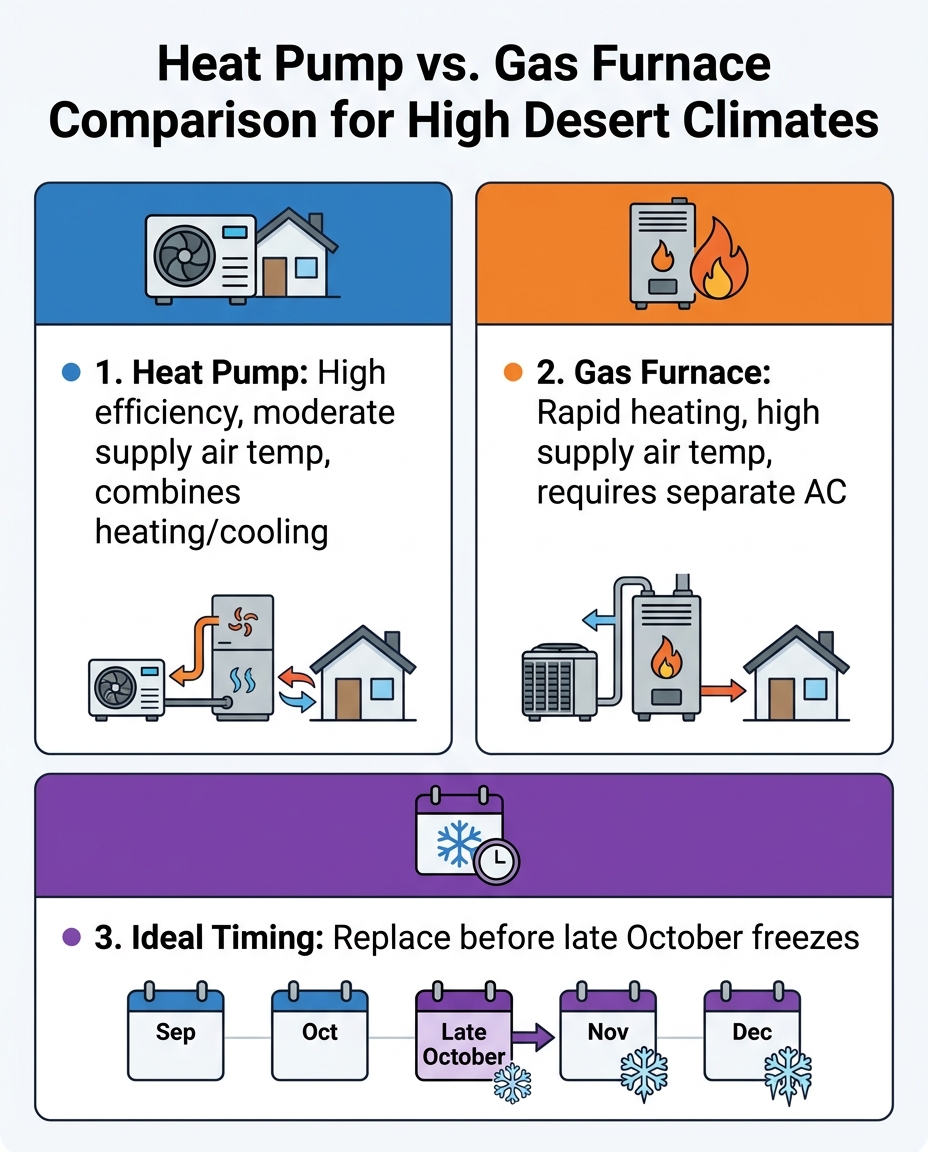
• Heating Method — Cold-Climate Heat Pump: Transfers heat from outside air — Traditional Gas Furnace: Generates heat via combustion
• Supply Air Temperature — Cold-Climate Heat Pump: Moderate, steady warmth (~95°F) — Traditional Gas Furnace: Intense, rapid heat (~120°F+)
• Energy Efficiency — Cold-Climate Heat Pump: Extremely high (moves heat rather than creating it) — Traditional Gas Furnace: High (modern units reach up to 98% AFUE)
• Cooling Capability — Cold-Climate Heat Pump: Yes, acts as an air conditioner in summer — Traditional Gas Furnace: No, requires a separate AC unit for cooling
• Environmental Impact — Cold-Climate Heat Pump: Lower carbon footprint (runs on electricity) — Traditional Gas Furnace: Produces combustion exhaust
Key considerations when weighing your options:
• Infrastructure requirements: A heat pump requires an electrical panel capable of handling the load, while a furnace requires access to a gas line and proper exhaust venting.
• Comfort profiles: If you dislike the feeling of a sudden, roaring blast of hot air, a heat pump's steady, continuous circulation is often more comfortable.
• Space considerations: Heat pumps combine heating and cooling into a single outdoor unit, potentially saving space compared to housing both a furnace indoors and an AC outdoors.
• Winter storm resilience: Both systems require electricity to operate the blower motor and controls, meaning neither will function during a power outage without a backup generator.

Why Proper Sizing Matters More Than the Equipment Brand
A pattern we see often is homeowners obsessing over the brand name of the equipment while ignoring the most critical factor in the installation process: proper sizing. Even the most advanced, top-of-the-line heating system will fail to keep you comfortable if it is not accurately sized for your specific home. In the HVAC industry, sizing does not refer to the physical dimensions of the unit, but rather its heating capacity, measured in BTUs (British Thermal Units).
If a system is oversized, it will heat the home too quickly and shut off. This process, known as short cycling, prevents the system from running long enough to properly filter the air or maintain an even temperature throughout the house. It also puts immense wear and tear on the components, drastically shortening the equipment's lifespan. Conversely, we often find that an undersized system will run continuously, struggling to reach the thermostat setting on cold nights in Bend OR, which drives up energy bills and causes premature mechanical failure.
This is why working with true professionals is non-negotiable. Our team at Mountain View Heating brings NATE-certified expertise to every installation, meaning our technicians have passed rigorous, real-world exams to prove their knowledge. We perform a comprehensive Manual J load calculation for every home, factoring in square footage, ceiling height, window quality, insulation levels, and the specific high desert climate. This custom-sizing ensures your system operates at peak efficiency. Attempting a DIY installation or relying on uncertified contractors who use generic guesswork for complex cold-climate setups is a recipe for long-term frustration and poor performance.
Maximizing Value with Energy Incentives and Routine Care
Upgrading your home's heating infrastructure is a significant investment, but there are numerous ways to maximize the value of that investment. Depending on the efficiency ratings of the equipment you choose, federal tax credits and local utility rebates may apply to qualifying high-efficiency installations. These incentive programs are designed to encourage homeowners to adopt greener, more efficient technologies. Because these programs update frequently, our team always recommends consulting a tax professional or checking with your local utility provider to understand the current, specific program details and eligibility requirements.
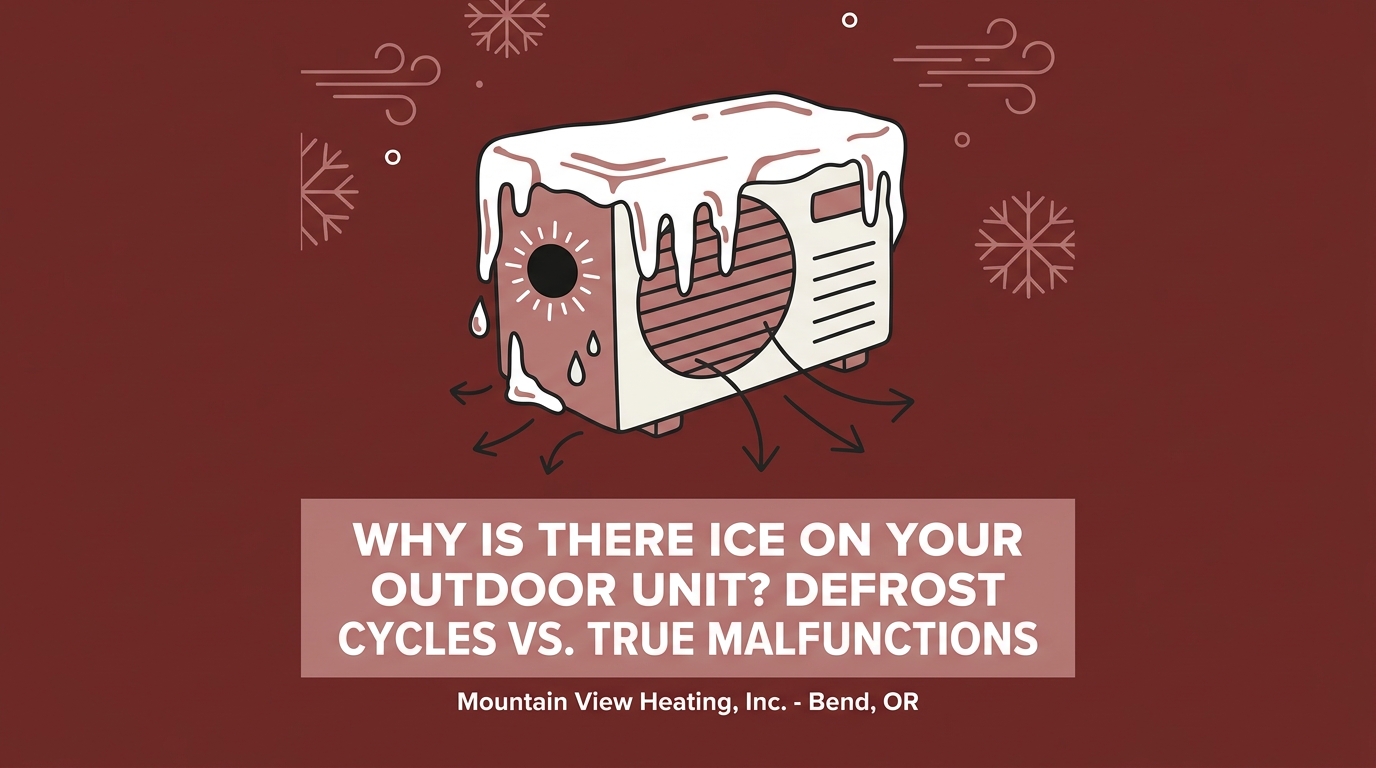
Beyond initial incentives, the best way to protect your investment is through ongoing, professional upkeep. A system that sits idle all summer needs a thorough inspection before being pushed to its limits in mid fall. Seasonal maintenance ensures that critical components are clean, calibrated, and operating safely. For heat pumps, this includes checking the defrost cycle. During winter operation, condensation can freeze on the outdoor coils. If the defrost cycle fails, you can experience severe heat pump ice buildup, which stops the system from heating your home and can damage the compressor.
Enrolling in a professional upkeep program ensures these checks happen automatically. Regular routine HVAC maintenance prevents minor wear and tear from escalating into major mid-winter breakdowns, keeps your warranty valid, and ensures your system continues to operate at the high efficiency levels you paid for.
Frequently Asked Questions About Heating Upgrades
Which is better for cold climates: heat pump or furnace?
Both systems are highly effective for cold climates; we typically advise that the better choice depends entirely on your home's infrastructure and your personal comfort preferences. Modern cold-climate heat pumps offer unmatched efficiency and consistent, even warmth, while traditional gas furnaces provide the rapid, intense heat that some homeowners prefer when recovering from deep nighttime temperature drops. An assessment of your ductwork, electrical panel, and gas lines by our technicians will help determine which is the most practical fit.
Do heat pumps work efficiently in Central Oregon winters?
Yes, modern cold-climate heat pumps are engineered to maintain high efficiency well below freezing, making them highly effective in Central Oregon winters. Unlike older generations of heat pumps that struggled in the cold, today's inverter-driven compressors can extract ambient heat from the outside air even during severe high desert freezes in Bend OR. They provide reliable, continuous comfort without the need for a secondary heat source in most typical winter conditions.
At what temperature does a heat pump become inefficient?
While older models often struggled when temperatures dipped below 40 degrees, modern cold-climate systems perform efficiently down to sub-zero temperatures. The exact threshold depends on the specific make and model, but many top-tier units retain 100% of their heating capacity at 5 degrees Fahrenheit and continue operating efficiently even colder. Your Mountain View Heating technician will help you select a model specifically rated for the extreme lows of the high desert.
Should I replace my furnace with a heat pump?
Replacing a furnace with a heat pump is an excellent option if you want to increase energy efficiency, lower your carbon footprint, and combine your heating and cooling into one unified system. However, you must consider your current ductwork, insulation levels, and electrical panel capacity, as switching from gas to electric heating may require minor electrical upgrades. A professional load calculation from our team will confirm if a heat pump is the right structural fit for your home.
What is a dual fuel heating system?
A dual fuel heating system is a hybrid setup that combines an electric heat pump with a traditional gas furnace to maximize efficiency and comfort. During moderate cold weather, the system uses the highly efficient heat pump to warm your home. When the temperature drops to an extreme freeze, the system automatically switches to the gas furnace to provide rapid, intense heat, ensuring you get the best performance and efficiency out of both technologies.
Make a Confident Heating Choice Before the Deep Freeze
When it comes to options comparisons for homeowners, we know there is no single "perfect" system for everyone—only the perfect system for your specific home. The right choice depends on your daily comfort preferences, your home's existing infrastructure, and your long-term efficiency goals. Whether you opt for the steady, year-round efficiency of a modern cold-climate heat pump or the rapid, intense warmth of a traditional gas furnace, the key is proper sizing and professional installation.
As mid fall progresses and October 2026 brings increasingly colder nights, the window to upgrade your system comfortably is closing. Do not wait until your current system fails during a severe winter storm. We encourage you to schedule a professional assessment with our team today. By weighing your options accurately with a certified expert at Mountain View Heating, you can make a confident heating choice and enjoy reliable, efficient warmth all winter long.