


Why Knowing Common Heat Pump Problems and How to Prevent Them Saves You Money and Comfort
Common heat pump problems and how to prevent them is something every Bend, Oregon homeowner should understand — especially when winter temperatures drop below 30°F and your heat pump is working its hardest. Heat pumps are efficient, year-round comfort systems, but like any mechanical equipment, they can develop issues that drive up energy bills and leave your home uncomfortable.
The most common heat pump problems — and how to prevent them — at a glance:
• Not heating or cooling properly — Most Likely Cause: Dirty air filter or low refrigerant — Prevention: Replace filter every 1-3 months; schedule annual tune-up
• Running constantly — Most Likely Cause: Undersized unit, dirty coils, refrigerant leak — Prevention: Regular maintenance; professional sizing assessment
• Short cycling — Most Likely Cause: Oversized unit or thermostat issues — Prevention: Proper installation; thermostat calibration
• Outdoor unit freezing — Most Likely Cause: Low refrigerant or blocked airflow — Prevention: Keep unit clear; annual refrigerant check
• Blowing cold air in heat mode — Most Likely Cause: Defrost cycle or stuck reversing valve — Prevention: Allow defrost to complete; call a pro if it persists
• Strange noises or smells — Most Likely Cause: Loose components or electrical issues — Prevention: Annual inspection; call a pro immediately for burning smells
• High energy bills — Most Likely Cause: Dirty filters or coils reducing efficiency — Prevention: Clean or replace filters; schedule seasonal tune-ups
Bend's high desert climate — with its wide temperature swings and cold winters — puts extra stress on heat pump systems. The good news is that most common heat pump failures are preventable with the right maintenance habits and a basic understanding of how your system works. Learn more about how a heat pump works and how heat pumps perform in a high desert climate to get a better foundation before diving in.
This guide walks you through the most common heat pump issues, what causes them, and the simple steps you can take to prevent costly breakdowns.
Understanding Common Heat Pump Problems and How to Prevent Them
Heat pumps do not create heat the way some heating systems do. They move heat from one place to another using refrigerant, coils, fans, a compressor, and a reversing valve. In winter, they pull heat from outdoor air and move it indoors. In summer, they reverse the process and move heat out of your home.
That year-round workload is one reason maintenance matters so much. Your heat pump is not taking a long summer nap or sitting out winter like separate heating and cooling equipment might. It works through warm afternoons, cold nights, shoulder-season temperature swings, wildfire smoke days, dusty high desert winds, and the occasional “why is it freezing this morning and warm by lunch?” Central Oregon weather moment.
Common heat pump problems usually come from one of five root causes:
1. Restricted airflow
2. Dirty coils or filters
3. Thermostat or control issues
4. Refrigerant leaks or low refrigerant charge
5. Worn electrical or mechanical components
When one part struggles, the whole system works harder. A dirty filter can reduce system performance by up to 15%, and neglected maintenance can contribute to short cycling, freezing, weak airflow, and higher energy use. Regular maintenance, including filter care and coil cleaning, can prevent many of the common service issues homeowners experience.
Heat pumps remain a smart option for many Central Oregon homes because they provide both heating and cooling efficiently. If you are considering whether a heat pump is right for your home, we recommend reading why heat pumps are a smart choice. If you are comparing heating options, our guide on heat pumps vs furnaces can help.
Airflow Obstructions: The Root of Many Common Heat Pump Problems and How to Prevent Them
If heat pumps had a love language, it would be airflow.
Airflow problems are behind many of the most common heat pump issues, including poor heating, poor cooling, frozen coils, long run times, overheating, weak air from vents, and short cycling. Your system needs steady airflow across the indoor coil and outdoor coil to transfer heat properly.
Common airflow restrictions include:
• Dirty air filters
• Closed or blocked supply vents
• Furniture or rugs covering registers
• Dusty return grilles
• Dirty indoor evaporator coils
• Dirty outdoor condenser coils
• Leaves, pine needles, weeds, snow, or ice around the outdoor unit
• Duct leaks or crushed ductwork
• A struggling blower motor
Dirty filters are especially common. As dust, pet hair, and debris collect in the filter, less air can pass through. That forces the blower motor and compressor to work harder. Over time, the system may run longer, cool or heat less effectively, and become more likely to freeze.
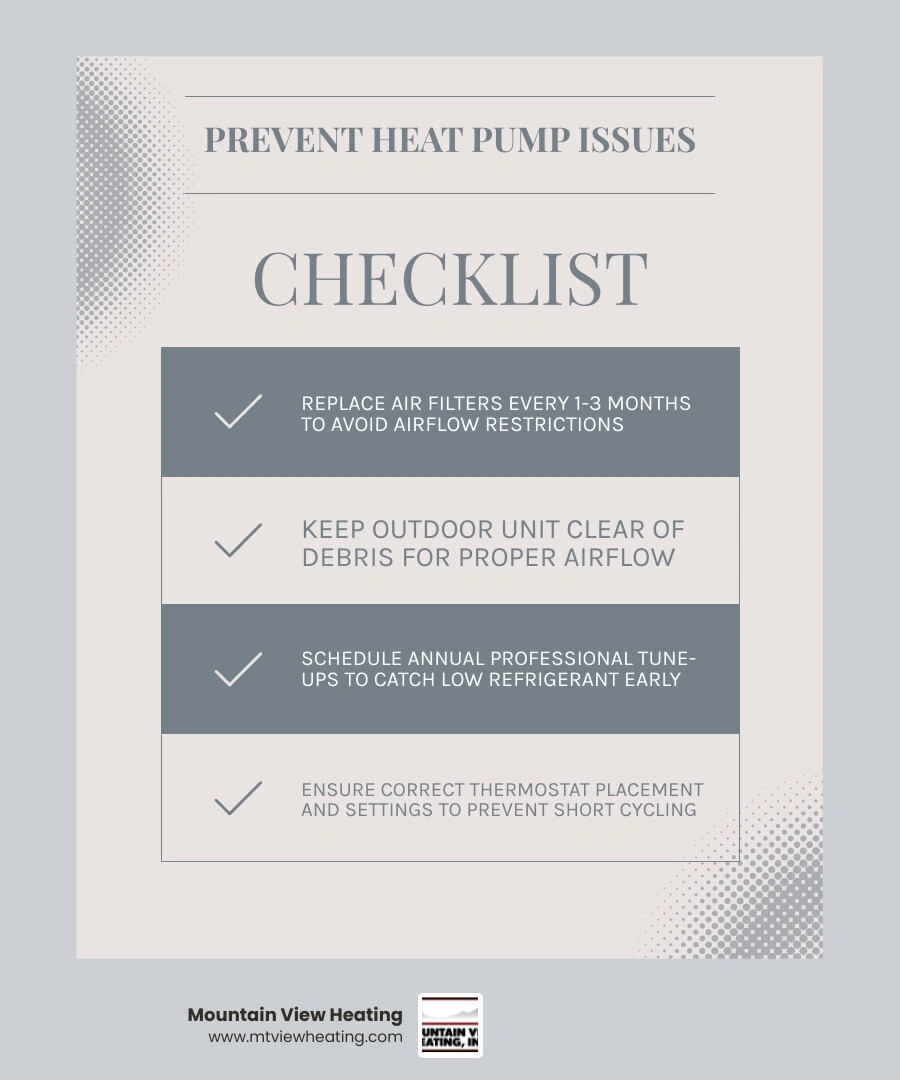
To prevent airflow-related heat pump problems:
• Inspect your air filter monthly.
• Replace or clean the filter every 1-3 months, depending on filter type, pets, dust, and household conditions.
• Use a filter with the right MERV rating for your system. Higher is not always better if it restricts airflow.
• Keep supply and return vents open and unobstructed.
• Maintain at least 2 feet of clearance around the outdoor unit.
• Gently rinse outdoor coils during warm weather when the system is off, if accessible and safe.
• Schedule professional maintenance so the indoor coil, blower, ductwork, and electrical components can be inspected.
Skipping these basics can lead to bigger problems. We explain the risks in more detail here: what happens if you skip HVAC maintenance.
Important note: The correct URL is case-sensitive in some systems. If the link above does not open properly, use this version: What Happens If You Skip HVAC Maintenance.
Thermostat and Electrical Issues: Diagnosing Common Heat Pump Problems and How to Prevent Them
Sometimes the heat pump is not the problem. Sometimes the thermostat is simply bossing it around incorrectly.
Thermostat issues can cause a heat pump to run constantly, fail to turn on, short-cycle, blow air at the wrong time, or use backup heat more than necessary. Before assuming something major is wrong, check the thermostat first.
Common thermostat-related problems include:
• Thermostat set to the wrong mode
• Fan set to “On” instead of “Auto”
• Temperature set too high in winter or too low in summer
• Weak thermostat batteries
• Incorrect heat pump programming
• Thermostat installed in direct sunlight
• Thermostat placed near a fireplace, lamp, kitchen, exterior door, or drafty hallway
• Poor calibration or outdated controls
For example, if the fan is set to “On,” your blower may run even when the heat pump is not actively heating. That can make it feel like cold air is coming from the vents. Switching to “Auto” allows the fan to run only during active heating or cooling cycles.
Electrical issues are another common category. Heat pumps rely on capacitors, contactors, relays, control boards, wiring, breakers, disconnect switches, sensors, and motors. A weak capacitor may cause clicking, humming, or failure to start. A tripped breaker may indicate a temporary overload, but repeated breaker trips point to a deeper issue that needs professional attention.
Safe homeowner checks include:
• Confirm the thermostat is set to “Heat” or “Cool,” not the wrong mode.
• Make sure the fan is set to “Auto.”
• Replace thermostat batteries if applicable.
• Check whether a breaker has tripped once.
• Make sure the outdoor disconnect has not been switched off.
• Look for obvious obstructions around the outdoor unit.
Call a professional if:
• The breaker trips again after resetting.
• You smell burning or electrical odors.
• The outdoor unit hums but does not start.
• You hear repeated clicking.
• The system starts and stops rapidly.
• The thermostat screen is blank and battery replacement does not help.
• You suspect wiring, capacitor, contactor, or control board issues.
Capacitors can hold electrical charge even when power is off, so they are not a safe DIY repair. Refrigerant and electrical diagnostics should always be handled by trained HVAC professionals.
Why Your Heat Pump Runs Constantly, Short-Cycles, or Blows Cold Air
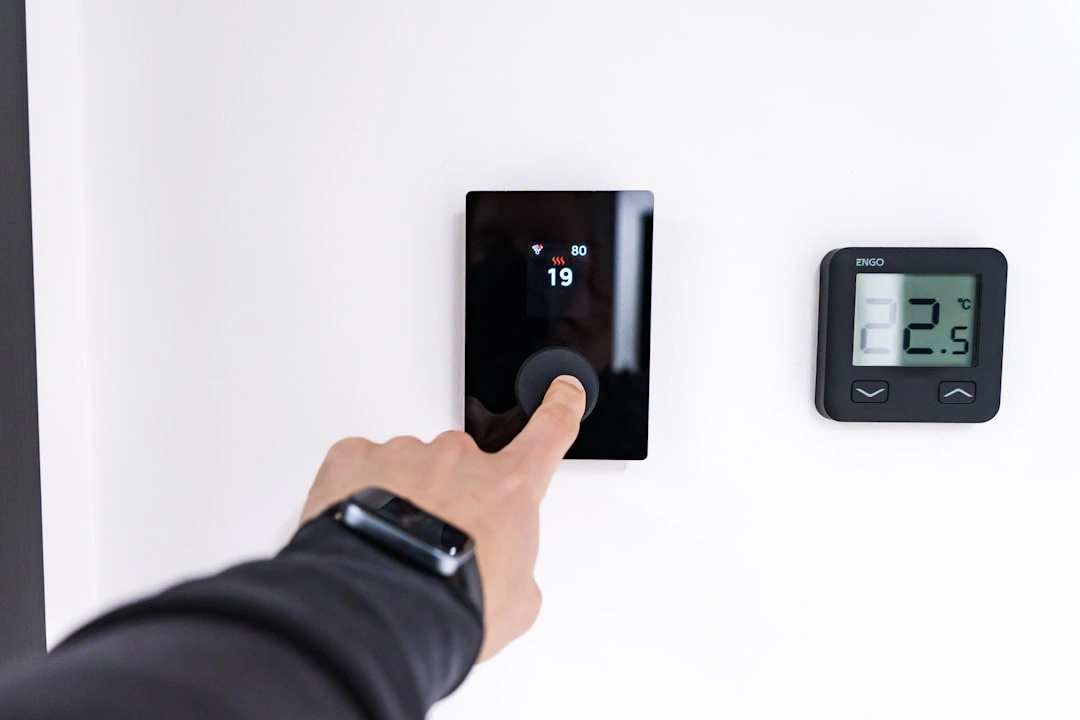
Run-time problems are some of the most frustrating heat pump complaints because they are so noticeable. Your system either will not stop, will not stay on long enough, or blows air that feels wrong. Very dramatic. Very unhelpful. Very heat pump.
Here is how to tell the difference.
• Constant running — What It Looks Like: System runs for long periods and struggles to reach the set temperature — Common Causes: Dirty filter, dirty coils, low refrigerant, poor insulation, undersized system, extreme outdoor temperatures — Prevention: Filter changes, coil cleaning, home air sealing, professional tune-ups
• Short cycling — What It Looks Like: System turns on and off frequently in short bursts — Common Causes: Oversized system, dirty filter, thermostat issue, refrigerant problem, electrical fault — Prevention: Proper sizing, thermostat calibration, clean filters, professional diagnosis
• Cold air in heat mode — What It Looks Like: Air feels cool even though thermostat is calling for heat — Common Causes: Defrost cycle, fan set to On, low refrigerant, reversing valve problem, auxiliary heat issue — Prevention: Correct thermostat settings, filter care, annual inspection
• Weak heating or cooling — What It Looks Like: System runs but does not condition the home well — Common Causes: Dirty coils, blocked vents, low refrigerant, duct leaks, failing blower motor — Prevention: Maintenance, duct inspection, refrigerant check
• High energy bills — What It Looks Like: Energy use rises without a clear reason — Common Causes: Reduced efficiency from dirty components, backup heat overuse, refrigerant issue, constant operation — Prevention: Seasonal tune-ups, smart thermostat settings, clean airflow path
A heat pump running longer during very cold weather can be normal. Heat pumps deliver warm air more gradually than some other heating systems, and they may run for extended periods during cold snaps. In Central Oregon, especially around Bend, La Pine, Sisters, Sunriver, Redmond, Terrebonne, and Three Rivers, winter nights can push systems hard.
However, constant running in mild weather is not something to ignore. Possible causes include:
• Dirty air filter
• Dirty outdoor coil
• Low refrigerant from a leak
• Thermostat setting or placement issue
• Leaky ducts
• Poor insulation
• Incorrect system size
• Compressor or reversing valve trouble
Short cycling is different. A short-cycling heat pump turns on and off repeatedly before completing a normal heating or cooling cycle. This can increase wear, reduce comfort, and shorten equipment life. Improperly sized heat pumps are a known contributor to short cycling, and repeated cycling can significantly reduce system lifespan.
A heat pump blowing cold air in heat mode may or may not be a problem. During defrost mode, the system temporarily reverses operation to melt frost from the outdoor coil. This can make indoor air feel cooler for a few minutes. Normal defrost cycles often last around 5-15 minutes. If cold air continues after defrost ends, or the home never warms up, it is time to troubleshoot.
Start with these simple checks:
1. Confirm the thermostat is set to “Heat.”
2. Set the fan to “Auto.”
3. Replace a dirty air filter.
4. Make sure vents are open.
5. Check whether the outdoor unit is covered in ice, snow, leaves, or debris.
6. Give the system time to complete defrost if frost is light.
7. Call us if cold air continues, ice remains, or the system cannot reach temperature.
Potential professional repairs may involve refrigerant leak detection, reversing valve diagnosis, blower motor testing, electrical component inspection, or system sizing evaluation.
What Causes an Outdoor Unit to Freeze Up in Central Oregon?
A little frost on the outdoor coil during winter is normal. A heat pump’s outdoor coil can run colder than the outside air, so moisture can freeze on the coil even when the weather is not brutally cold. That is why heat pumps have a defrost cycle.
What is not normal?
• Thick ice covering the coil
• Ice that does not clear after defrost
• Ice on the fan blades
• The outdoor unit encased in ice
• Repeated freezing in mild weather
• The unit making grinding, rattling, or scraping sounds
• Steam or vapor for a few minutes during defrost is normal, but constant ice is not
Common causes of outdoor heat pump freezing include:
• Dirty air filter restricting airflow
• Dirty outdoor coil
• Low refrigerant caused by a leak
• Faulty defrost control board
• Bad defrost sensor or thermostat
• Outdoor fan motor failure
• Blocked outdoor unit
• Snow, weeds, leaves, or pine needles around the cabinet
• Water dripping onto the unit from gutters or rooflines
• Unit not level, causing drainage problems
• Blower motor issues
• Reversing valve malfunction
Low refrigerant is a common cause of freezing because it changes coil pressure and temperature. Refrigerant leaks are responsible for a meaningful share of heat pump service calls and can increase energy consumption. Since refrigerant handling is regulated and requires specialized equipment, homeowners should never try to add refrigerant or seal leaks themselves.
To prevent freeze-ups:
• Replace or clean your filter every 1-3 months.
• Keep 2 feet of clearance around the outdoor unit.
• Remove leaves, weeds, branches, and snow from around the cabinet.
• Avoid stacking firewood, patio furniture, or storage bins near the unit.
• Make sure gutters are not dripping directly onto the heat pump.
• Check that the unit sits level.
• Do not chip ice with a shovel, screwdriver, hammer, or garden tool.
• Schedule professional maintenance before heavy heating and cooling seasons.
If the unit is heavily iced, turn the system off and call for service. Do not force it to run through a block of ice. That is not toughness. That is how components get damaged.
Homeowner DIY Maintenance vs. Professional HVAC Service
The best prevention plan combines simple homeowner habits with professional HVAC service. As of June 2026, the fundamentals are still refreshingly practical: keep air moving, keep coils clean, keep controls accurate, and have trained eyes inspect the parts homeowners cannot safely test.
Here is what homeowners can usually do safely:
• Inspect the air filter monthly.
• Replace or clean filters every 1-3 months.
• Keep indoor vents open and clear.
• Dust return grilles.
• Clear debris from around the outdoor unit.
• Maintain 2 feet of outdoor clearance.
• Gently rinse the outdoor unit with a garden hose in warm weather, with power off, if safe and accessible.
• Check thermostat mode, temperature, batteries, and fan setting.
• Watch for unusual noises, smells, ice buildup, or performance changes.
• Keep a simple record of filter changes and service visits.
Professional maintenance is different. During a tune-up, an HVAC technician can inspect, test, clean, and adjust components that homeowners should not handle. Depending on the system and condition, professional service may include:
• Electrical connection inspection
• Capacitor and contactor testing
• Refrigerant pressure and temperature checks
• Coil inspection and cleaning
• Blower motor and wheel inspection
• Condensate drain inspection
• Thermostat calibration
• Defrost cycle testing
• Reversing valve evaluation
• Outdoor fan motor testing
• Ductwork and airflow checks
• Safety and performance testing
Professional tune-ups twice a year can help extend heat pump lifespan and reduce annual energy use. Many heat pumps last 15 years or more with proper maintenance, while neglected systems often experience more frequent problems and reduced efficiency.
For local maintenance guidance, visit our heat pump maintenance tips for Bend, OR and our heat pump maintenance guide for Three Rivers, OR.
A simple year-round prevention schedule:
• Monthly — What to Do: Inspect filter, check vents, listen for unusual sounds
• Every 1-3 months — What to Do: Replace or clean air filter
• Spring — What to Do: Schedule cooling-season maintenance, clean around outdoor unit
• Summer — What to Do: Keep vegetation trimmed, monitor cooling performance
• Fall — What to Do: Schedule heating-season maintenance, test heat mode before the first cold snap
• Winter — What to Do: Keep snow and ice cleared around outdoor unit, watch defrost performance
• Anytime — What to Do: Call for burning smells, repeated breaker trips, refrigerant concerns, or persistent ice
When in doubt, choose safety. Homeowners can handle filters and debris. Professionals should handle refrigerant, electrical components, motors, compressors, reversing valves, and repeated system failures.
Frequently Asked Questions About Heat Pump Troubleshooting
Heat pump troubleshooting starts with the basics: thermostat, filter, airflow, outdoor unit, and power. Many problems begin there. If the basics do not solve it, or if the issue involves electricity, refrigerant, burning smells, loud mechanical noises, or persistent ice, call a professional.
Here are the questions we hear most often from Central Oregon homeowners.
Why is my heat pump blowing cold air in heat mode?
Your heat pump may blow cool air in heat mode because it is in defrost cycle, the thermostat fan is set incorrectly, the air filter is clogged, the refrigerant is low, or the reversing valve is stuck.
Start with the easy checks:
1. Make sure the thermostat is set to “Heat.”
2. Set the fan to “Auto,” not “On.”
3. Replace a dirty filter.
4. Check whether the outdoor unit is lightly frosted.
5. Wait 5-15 minutes to see if defrost finishes.
During defrost, the heat pump temporarily changes operation to warm the outdoor coil and melt frost. Indoor air may feel cooler during that short period. That can be normal.
Call us if:
• Cold air continues after defrost.
• The outdoor unit is covered in thick ice.
• The system cannot reach the thermostat setting.
• You hear hissing, bubbling, grinding, or repeated clicking.
• The breaker trips.
• The system switches modes incorrectly.
A stuck reversing valve, low refrigerant, or electrical issue requires professional diagnosis.
How often should I change my heat pump's air filter?
Inspect your heat pump air filter monthly and replace or clean it every 1-3 months. Homes with pets, dust, heavy system use, or indoor air quality concerns may need more frequent filter changes.
Your filter schedule depends on:
• Filter type
• Manufacturer recommendations
• Household dust levels
• Pets
• Smoke or pollen exposure
• How often the system runs
• Whether the filter is washable or disposable
Be careful with high-MERV filters. A higher MERV rating can capture smaller particles, but if the filter is too restrictive for your system, it can reduce airflow and create performance problems. The right filter should support indoor air quality without choking the system. A heat pump should breathe freely. It is not training for a marathon with a scarf over its face.
Signs your filter needs attention include:
• Weak airflow
• Longer run times
• Dust around vents
• Uneven temperatures
• Frozen coils
• Higher energy bills
• Whistling or unusual return-air noise
• Filter looks gray, dusty, or clogged
Changing the filter is one of the easiest and most effective ways to prevent common heat pump problems.
When should I call for emergency heat pump repair in Bend?
Call for emergency heat pump repair when there is a safety concern, a complete loss of heat during cold weather, or a problem that could damage the system if it keeps running.
Call right away for:
• Burning or electrical smells
• Repeated breaker trips
• Complete loss of heat in freezing conditions
• Loud grinding, banging, or screeching
• Outdoor unit encased in ice
• Refrigerant leak signs, such as hissing or bubbling
• System will not shut off
• Outdoor fan not running while the system is operating
• Smoke, sparking, or overheated components
• Heat pump repeatedly starts and stops
• Thermostat is calling for heat but no warm air arrives
Mountain View Heating provides fast 24/7 emergency support for homeowners in Bend and nearby Central Oregon communities. If you are unsure whether your situation is urgent, our guide to emergency heat pump repair in Bend, OR can help you decide what to do next.
Conclusion
Preventing heat pump problems is mostly about consistency. Replace the filter. Keep the outdoor unit clear. Pay attention to odd noises, smells, ice, weak airflow, and sudden energy changes. Schedule professional maintenance before the system is working at its seasonal limits. Small habits make a big difference.
At Mountain View Heating, we help homeowners in Bend, La Pine, Redmond, Sisters, Sunriver, Terrebonne, Three Rivers, and surrounding Central Oregon communities keep their heat pumps running reliably through high desert temperature swings. With over 40 years of experience and a customer-first approach, we prioritize 100% customer satisfaction on every residential HVAC service, repair, and replacement project, big or small.
If your system is already acting up, start with our complete heat pump repair guide for Bend, OR. If you want to stay ahead of breakdowns, read our heat pump service guide for Bend, OR.
Ready for help from our team? Schedule professional heat pump services with Mountain View Heating.