


The Frustration of a Clicking Furnace on a Chilly Fall Morning
That strange noise from your utility room is not going away on its own, and figuring out exactly why your older gas furnace clicks but refuses to ignite is a stressful way to start the morning. You walk over to the thermostat, turn the dial up, and wait for the familiar rush of warm air. Instead, the system hums to life, a rapid clicking sound follows, and then—nothing. The vents blow cold air, or the system shuts down entirely, leaving your home just as cold as it was before you woke up.
For comprehensive heating services and reliable diagnostics, relying on a licensed technician is the best first step when your equipment fails to start.
This specific sequence of events is a classic hallmark of a September early-fall first startup. After sitting dormant for months, heating systems often struggle to fire up on the first chilly morning of the season. While the clicking sound itself is a normal part of the ignition cycle, the failure to produce a steady flame indicates a breakdown somewhere in the sequence. Most commonly, this points to either a dirty flame sensor that cannot register the fire, or a failing spark igniter that lacks the power to create combustion.
What That Clicking Sound Actually Means
The quick takeaway: The clicking you hear is intentional. It is the sound of an electrical spark attempting to jump a gap and ignite the gas, much like the starter on a gas grill or a kitchen stove.
When the system works correctly, that clicking only lasts for a second or two before the burners light with a soft "whoosh" sound. When the system is malfunctioning, the clicking continues for several seconds, stops, and then repeats as the furnace makes multiple desperate attempts to start. Acknowledging this symptom early is critical. While a clicking furnace on a crisp autumn morning is a highly common issue, it requires professional diagnosis to ensure the system is safe to operate and to prevent a minor sensor issue from turning into a major winter breakdown.
Understanding the Ignition Sequence in Older Heating Systems
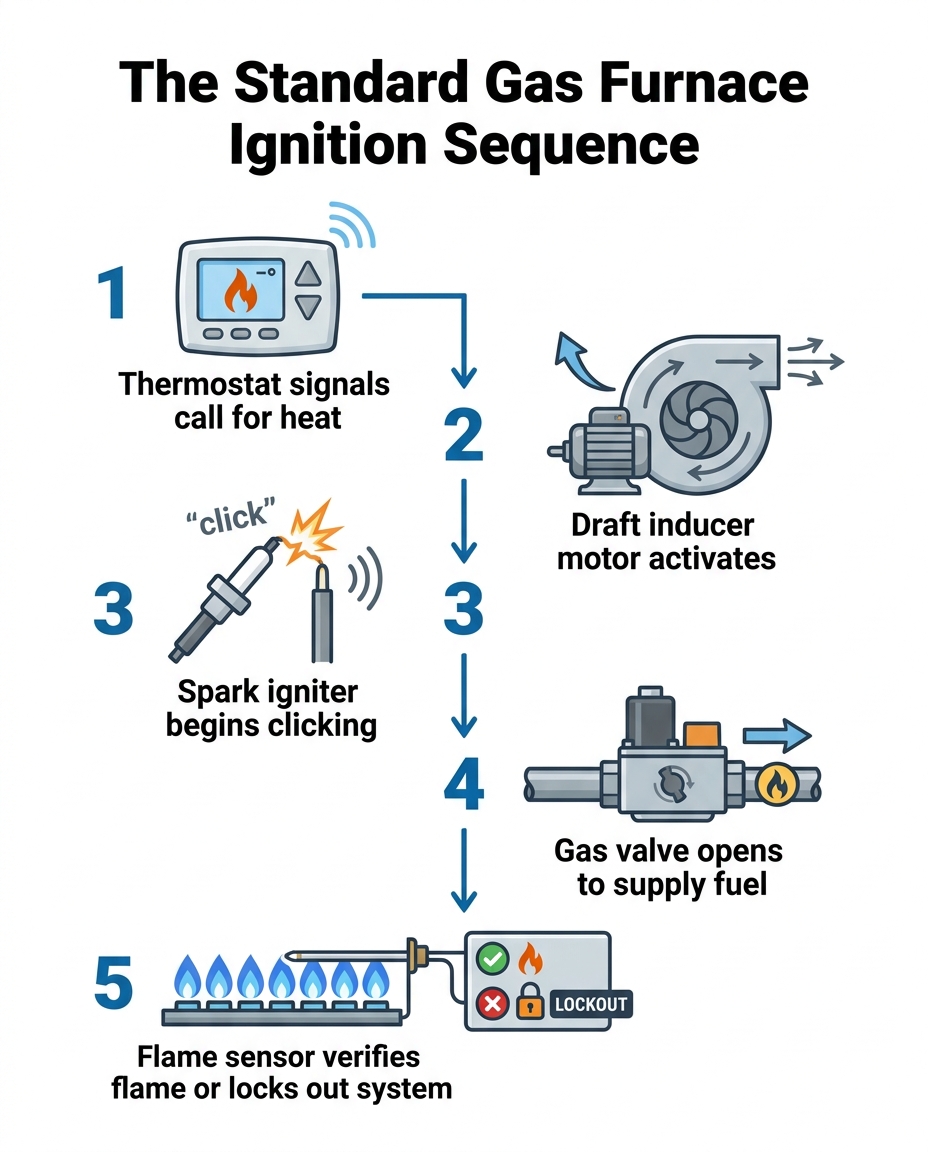
To understand why the system is failing, it helps to know exactly what is supposed to happen when you adjust the thermostat. Older conventional gas furnaces rely on a highly specific, step-by-step ignition sequence. If any single step fails, the entire process halts to keep your home safe from unburned fuel.
If you suspect a breakdown in this sequence, scheduling professional furnace repair ensures that each component is tested safely and accurately.
1. The thermostat signals a call for heat: The process begins when the ambient temperature in your home drops below your set point. The thermostat sends a low-voltage electrical signal to the furnace's main control board, requesting heat.
2. The draft inducer motor activates: Before any gas or spark is introduced, the control board turns on the draft inducer motor. This small fan pulls air through the heat exchanger and pushes it out the flue pipe. Its job is to clear out any residual, potentially dangerous combustion gases from previous cycles and ensure there is proper airflow for a safe fire.
3. The spark igniter begins to click: Once the system verifies that the inducer motor is running at the correct speed (via a pressure switch), the control board sends power to the spark igniter. This component generates a high-voltage electrical arc, which creates the rapid, repetitive clicking sound you hear.
4. The gas valve opens to supply fuel: Almost simultaneously with the sparking, the control board sends a signal to the gas valve solenoids. The valve opens, releasing natural gas or propane into the burner assembly, where it meets the electrical spark.
5. The flame sensor verifies the fire: Once the gas ignites, a metal rod called a flame sensor is engulfed in the fire. The fire conducts a tiny electrical current (measured in microamps) from the sensor to the metal chassis of the furnace. If the control board detects this microamp signal, it knows the fire is burning safely and allows the system to continue running. If no flame is detected within a few seconds, the system locks out for safety.

How Summer Dormancy Contributes to Ignition Failure
Heating systems do not exist in a vacuum, and the environment they sit in during their off-season plays a massive role in how they perform when called back into action. Months of inactivity allow dust, pet dander, lint, and airborne debris to settle on sensitive internal components. When a system sits idle from late spring until early fall, this accumulation goes entirely unnoticed until the exact moment you need warm air.
The High-Desert Dust Factor
In our years of experience servicing Bend OR area homes, our team at Mountain View Heating, Inc. regularly sees how the local climate adds an extra layer of complexity to seasonal HVAC performance. The high-desert environment features significant diurnal temperature variation in early fall—meaning you might experience freezing, frosty mornings followed by relatively mild, sunny afternoons. This intense temperature swing makes reliable morning heating absolutely critical, even if the system turns off by noon.
Furthermore, dry, dusty summer conditions contribute heavily to sensor buildup. Even a microscopic layer of silica dust or household lint baked onto a flame sensor acts as a powerful electrical insulator. Because the flame sensor relies on reading an incredibly weak microamp signal (often between 1 and 4 microamps), even the thinnest barrier of baked-on dust will stop the current from flowing. The control board assumes there is no fire and shuts the gas down, leaving you in the cold.
Routine maintenance clears this buildup before the system is forced to run. During a recent fall maintenance visit, our team helped a local homeowner who needed their regular furnace service handled before the cold weather set in. Our technician performed the maintenance, cleaned the delicate internal components, and provided an easy-to-understand explanation of how the system works. Proactive steps like this remove the summer dust layer safely, ensuring the flame sensor can read the fire perfectly on that first freezing morning.
Spark Igniters vs. Flame Sensors: Diagnosing the Click
When you hear that repetitive clicking, the control board is desperately trying to start the heating cycle. However, differentiating between the two most common culprits—the spark igniter and the flame sensor—requires paying close attention to what happens immediately after the clicking starts. Understanding the difference helps you communicate clearly with your technician when they arrive.
• Spark Igniter — Symptom You Experience: System clicks, but burners never light at all. No "whoosh" sound. — Underlying Cause: Worn ceramic base, micro-cracks, or failure to generate a strong enough arc. — System Response: System attempts to click several times, then enters a hard safety lockout.
• Gas Valve — Symptom You Experience: System clicks, but burners never light. No smell of gas at exhaust. — Underlying Cause: Solenoid failure preventing the valve from opening to release fuel. — System Response: System sparks but finds no fuel, eventually locking out for safety.
• Flame Sensor — Symptom You Experience: Burners light for 2–4 seconds, then immediately shut off with a click. — Underlying Cause: Dust or carbon buildup insulating the metal rod from the flame's electrical current. — System Response: System drops the gas valve to prevent unburned fuel buildup, then tries again.
The Safety Lockout Protocol
If the burners light for a few seconds, continue clicking, and then immediately shut off, the flame sensor is almost certainly failing to register the flame. Conversely, if the system clicks but the burners never light at all, the issue often lies with the spark igniter failing to generate a strong enough spark, or a faulty gas valve refusing to open.
In older conventional gas furnaces, wear and tear on the igniter's ceramic base is incredibly common. Years of expanding and contracting from intense heat can lead to microscopic cracks in the ceramic, causing the electrical current to ground out before it can create a spark strong enough to ignite the gas. Regardless of which component fails, the control board will eventually initiate a safety lockout. It shuts the entire system down for a designated period (often an hour or more) to prevent unburned gas from flooding the combustion chamber and your home.
The Hidden Dangers of DIY Gas Furnace Troubleshooting
When faced with a chilly house and a furnace that refuses to cooperate, it can be tempting to open the cabinet and try to clean or adjust components yourself. However, gas appliances pose severe fire, explosion, and carbon monoxide risks if handled improperly. There is a very strict line between changing your air filter and tampering with the combustion chamber.
The risks of DIY sensor cleaning: Flame sensors are highly sensitive instruments. A common internet myth suggests cleaning them with whatever abrasive material you have in the garage, such as heavy sandpaper or wire brushes. Using the wrong abrasive material will permanently ruin the component. Heavy grit creates deep microscopic grooves in the metal rod. While it might work for a few days, those deep grooves will quickly trap more silica, dust, and carbon than before, leading to a permanent failure that requires a complete replacement.
Furthermore, tampering with the gas valve, the spark igniter, or the wiring harness can inadvertently bypass critical safety lockouts. If you accidentally damage the gas valve solenoid while trying to inspect the igniter, the valve could stick open, flooding your utility room with explosive natural gas. If you are already diagnosing a furnace that smells like gas, shutting off the system and calling a professional is the only safe course of action.
Homeowners are strongly advised to leave the combustion chamber closed. Diagnosing electrical microamps, testing gas pressure, and verifying safe ignition sequences require specialized tools and the expertise of licensed professionals.
Deciding Between a Routine Tune-Up and a Component Replacement
Once a technician arrives, they will quickly determine whether your clicking furnace is suffering from a simple maintenance deficit or a failing mechanical component. This diagnosis guides the decision point of whether you just need a thorough seasonal cleaning or a specific, targeted repair.
If the issue is purely a dirty flame sensor caused by summer dormancy, a comprehensive pre-season furnace tune-up will completely resolve it. During this service, the technician will use specialized, non-destructive materials to clean the sensor rod, check the microamp draw, and inspect all other vital components to ensure the system is ready for winter.
However, if the spark igniter is cracked, the ceramic base is failing, or the gas valve is sticking, a targeted repair and component replacement is necessary. Catching these issues early in the season—during that first chilly September morning—is vastly preferable to waiting for a complete breakdown during freezing mid-winter temperatures.
When to Repair vs. Replace
In some cases, a minor ignition failure on an aging system reveals much larger systemic issues, such as a cracked heat exchanger or a failing blower motor. A pattern we see often at Mountain View Heating, Inc. is systems failing right when the temperature drops. Over a recent Labor Day weekend, one of our customers experienced a heating unit failure right as they needed urgent heat. A Mountain View Heating, Inc. technician came out on Saturday, diagnosed the severe problem, and brought space heaters to keep the home comfortable. Because the equipment was severely degraded, the 23-year-old unit was replaced promptly after the holiday, restoring safe, reliable comfort.
If a professional diagnostic reveals that your older furnace requires a full upgrade rather than a simple sensor cleaning, generic utility rebates or federal tax credits may apply to qualifying high-efficiency installations. A licensed technician can help you navigate these options after performing a thorough diagnostic of your current equipment.
Frequently Asked Questions About Furnace Ignition Failures
Why is my gas furnace clicking but not turning on?
The clicking sound is typically the spark igniter attempting to light the gas inside the combustion chamber. If the furnace fails to turn on, it means either the electrical spark is too weak to create combustion, the gas valve is failing to release fuel, or the flame sensor is too dirty to read the resulting fire. A professional diagnostic will isolate exactly which of these three components is interrupting the sequence.
What does it mean when a furnace clicks repeatedly?
Repeated clicking indicates that the furnace's main control board is making multiple, sequential attempts to ignite the burners after the first attempt failed. Modern and older conventional gas furnaces are programmed to try lighting the gas a set number of times (usually three or four). If all attempts fail, the system will enter a hard safety lockout to protect your home from unburned gas buildup.
Is a clicking furnace dangerous?
The clicking noise itself is not inherently dangerous; it is a completely normal mechanical part of the spark ignition sequence. In fact, the failure to start proves that the system's safety mechanisms—like the flame sensor and the control board lockouts—are working precisely as intended to prevent danger by shutting off the gas when safe ignition fails. However, ignoring the issue or attempting to bypass these safety features is highly dangerous.
Can a dirty flame sensor cause clicking?
Yes, a dirty flame sensor is one of the most common causes of a clicking furnace. If the sensor is coated in summer dust, the burners may ignite briefly, but the sensor will fail to detect the flame. The control board will immediately shut the gas off and attempt the cycle again, resulting in the repeated clicking and short-cycling behavior you hear from the hallway.
How do you fix a furnace that clicks but won't turn on?
The safest and most effective fix is scheduling a professional diagnostic with a licensed HVAC technician. A professional will safely open the combustion chamber, use a multimeter to test the igniter's electrical resistance, clean the flame sensor with the correct specialized materials, and verify that the gas valve is operating at the correct pressures. Attempting to fix these components yourself carries significant fire and safety risks.
Restore Your Home's Heating Safely and Quickly
A clicking furnace on a crisp morning is a clear, undeniable sign that your system needs professional attention before the deep winter arrives. Whether the culprit is a layer of summer dust insulating your flame sensor or a worn-out spark igniter struggling to create an arc, ignoring the symptom will inevitably lead to a cold house when you need warmth the most.
Because gas appliances carry inherent safety risks, DIY repairs and internet troubleshooting are never worth the danger they pose to your home and family. Relying on the local expertise of Mountain View Heating, Inc. ensures that your equipment is safely diagnosed and repaired before the Central Oregon winter sets in. Schedule a professional diagnostic or pre-season tune-up today to clear away the summer dust, replace failing components, and enjoy reliable, uninterrupted warmth all season long.