


Is It Normal to See Ice on Your AC Unit During Fall Heating Startup?
When you are looking for reliable home maintenance tips and troubleshooting, figuring out why there is ice on your outdoor equipment during the first cold nights of fall is a top priority. At Mountain View Heating, Inc., we hear from panicked Bend homeowners every October wondering if their system is broken when they see a layer of white frost covering the metal fins outside. You are not alone. As temperatures begin to drop, many homeowners switch their thermostats to heat for the first time, only to be alarmed by what looks like a freezing air conditioner.
The reality is that your outdoor equipment is likely a heat pump, which operates differently than a standard air conditioner during the colder months. When the sharp evening temperature drops typical of the High Desert climate trigger your October first-frost heating startup, your heat pump works hard to extract whatever ambient heat exists in the outside air. Addressing these early-season inconsistencies right away is the best way to prevent emergency no-heat situations later in the winter. If you are ever unsure about your system's performance, reaching out for professional HVAC services is always the safest bet. Interestingly, our technicians will tell you that even though the unit outside looks exactly the same, a freezing issue in the fall requires different diagnostic steps than standard air conditioning repair in the summer.
Heat Pump Defrost Cycles vs. Problematic Ice Buildup
Understanding the technical difference between a natural defrost mode and a genuine freezing problem can save you a lot of stress. Heat pumps naturally accumulate a light layer of frost when outdoor temperatures drop near freezing. This happens because the refrigerant inside the outdoor coil is actually colder than the outside air, causing ambient moisture to condense and freeze on the metal fins.
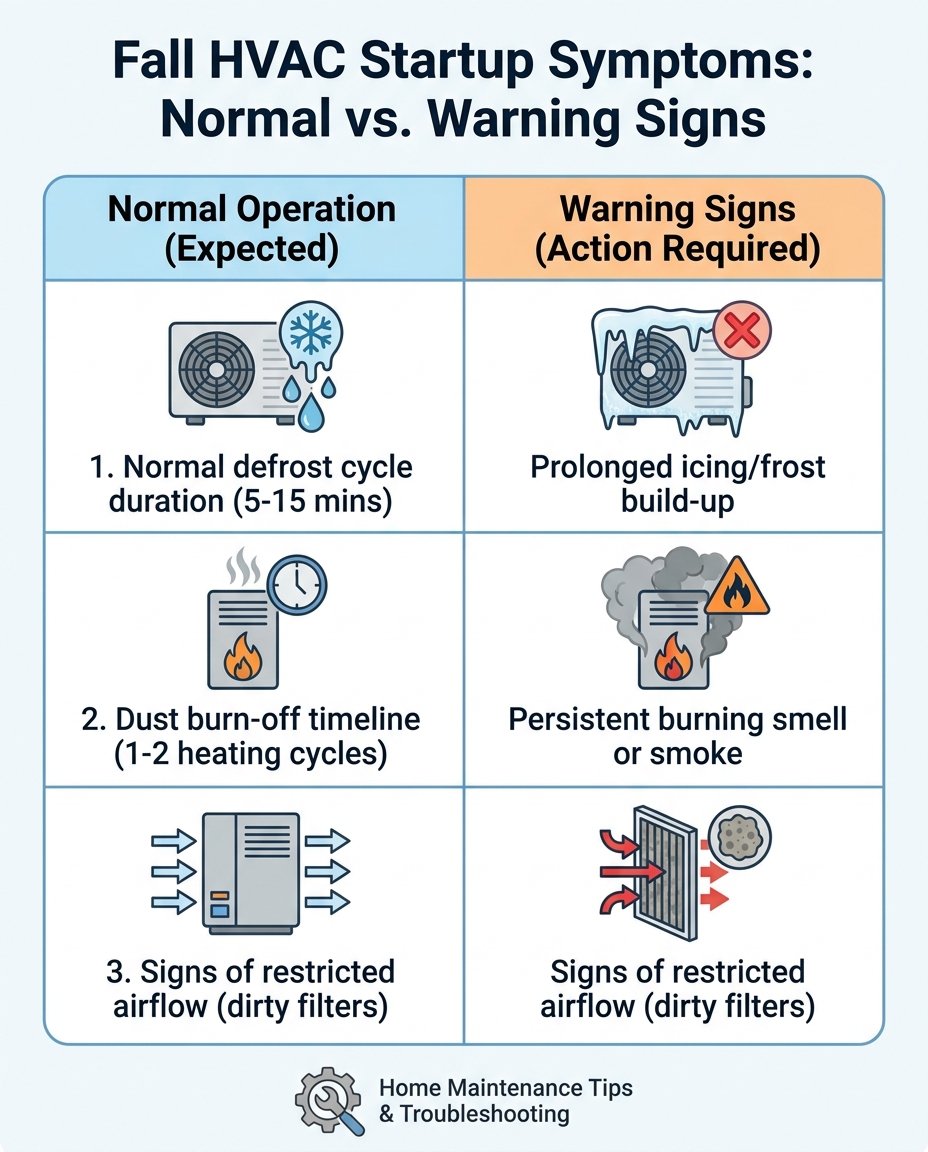
To combat this, your system is designed with a normal defrost cycle. The heat pump temporarily reverses its operation, essentially running in cooling mode for just a few minutes to send hot refrigerant out to the exterior coil. The outdoor fan stops spinning, allowing the heat to build up and melt the frost. This is a designed feature, not a mechanical flaw. However, the rapid diurnal temperature variations in Bend and Central Oregon force HVAC systems to switch rapidly between cooling during the day and heating at night, which can heavily stress these components.
True ice buildup is a different story. If you see thick, solid ice encasing the coils, ice that does not melt after a defrost cycle, or if your system is blowing cold air indoors while covered in ice, you have a problem. True ice buildup requires professional diagnosis to prevent severe compressor damage. Working with our NATE-certified technicians ensures that you get an accurate diagnosis—whether the ice buildup is caused by a simple airflow restriction or a highly complex refrigerant leak. For example, our Mountain View Heating team recently helped a local homeowner who experienced a complicated problem with their heat pump failing to heat properly during a cold snap. Our technician quickly identified the specific mechanical issue, developed a targeted fix, and completely repaired the heat pump in a short amount of time, proving the value of expert intervention.
How to Identify a Normal Defrost Cycle
Before you panic, watch your outdoor unit for these normal operational signs that our team always tells customers to look for:
• Light frost accumulation: The unit should look like it has a thin layer of snow or frost, not a solid block of clear ice.
• Short cycle duration: A healthy defrost cycle typically lasts only 5 to 15 minutes before switching back to standard heating.
• Visible steam: You may see steam rising from the outdoor unit as the frost rapidly melts. This is just water vapor, not smoke.
• Temporary fan shutdown: The top fan on the outdoor unit will stop spinning while the compressor continues to hum.
Top Causes of Ice on an AC Unit or Heat Pump in Autumn
If your system is not just running a quick defrost cycle, several underlying mechanical or maintenance failures could be to blame. Catching these issues during your October first-frost heating startup is crucial for maintaining efficiency.
Clogged Air Filters
In our years of serving Central Oregon homes, we've found the most common culprit for a freezing system is a severely restricted air filter. Throughout the summer, dust, pet dander, and pollen accumulate in the filter. If you forget to change it before switching to heating mode, that summer dust completely blocks airflow over your indoor coil. Without enough air moving across the coils to exchange heat properly, the system's internal temperatures drop, causing ambient moisture to freeze solid on the equipment. Changing your filter is the easiest way to prevent this chain reaction.
Low Refrigerant Levels
Heat pumps rely on a precise, pressurized charge of refrigerant to move heat between the indoors and outdoors. If a microscopic leak develops in the copper lines or coils, the pressure inside the system drops. Lower pressure leads to lower temperatures in the evaporator coil. Eventually, the coil drops below the freezing point of water, turning the natural condensation into thick ice. Refrigerant issues always require a licensed professional to locate the leak, seal it, and recharge the system.
Dirty Outdoor Coils
Your outdoor unit sits exposed to the elements all year. By autumn, it is often coated in a layer of yard debris, grass clippings, dirt, and cottonwood fluff. This debris acts like an insulating blanket, preventing proper heat transfer. When the system cannot pull heat from the outside air efficiently, it works harder, runs longer, and eventually freezes over. If you want to learn more about keeping your system clear, you can read more on how to melt away your AC ice problems by maintaining a clean exterior.
Thermostat Calibration Issues
Sometimes the hardware is fine, but the brain of the system is failing. Incorrect thermostat settings, faulty sensors, or rapidly switching the thermostat back and forth between heat and cool can confuse the system's control board. If the defrost control board fails to signal the reversing valve, the heat pump will simply continue to build up frost until it turns into a solid block of ice.
Decoding Fall Startup Smells: Burning Dust vs. Real Danger
Beyond seeing frost, another major concern during the October first-frost heating startup is the smell coming from your vents. Burning dust is the most common odor homeowners report to our dispatchers when turning on their heat for the first time. Throughout the long summer months, dust settles on the heat exchangers and internal heating elements. When those components heat up for the first time in autumn, that accumulated dust simply burns off.
Our team sees this constantly across our service area. The dusty conditions and occasional summer wildfire smoke contribute to heavier-than-normal dust accumulation on HVAC components across Bend and Central Oregon. Reassure yourself that a burning dust smell during the first one or two heating cycles is typically normal burn-off. The smell should dissipate within 30 to 60 minutes of the system running.
However, you must differentiate normal burn-off from electrical burning or plastic smells, which indicate a serious hazard. If the air coming from your vents smells like melting wires, ozone, or burning plastic, shut off the system immediately at the thermostat. These odors point to failing blower motors, melting wire insulation, or overheating electrical components. If you are concerned about persistent odors or the general cleanliness of your home's air after the initial burn-off, exploring professional indoor air quality solutions can help filter out residual particulates and keep your home smelling fresh.

What Unusual Rattling Noises Mean for Your Heating System
Sights and smells are not the only things to monitor during your October first-frost heating startup. The sounds your system makes can tell you exactly how healthy its internal components are. While a gentle hum and the rush of air are normal, unusual rattling, banging, or squealing noises demand immediate attention from an HVAC professional.
Popping and Banging in the Ductwork
If you hear a loud pop or bang shortly after the system turns on or off, we often find it is related to your ductwork rather than the furnace itself. Temperature fluctuations cause metal ducts to rapidly expand and contract. When the warm air hits the cold metal ducts in your crawlspace or attic, the metal flexes, creating a popping noise. While generally harmless, excessive popping might indicate that your ducts need better insulation or structural reinforcement.
Rattling and Vibrating
A persistent rattling noise usually points to loose hardware. This could be as simple as a loose access panel on the indoor cabinet or debris trapped inside the outdoor unit's fan grate. However, it can also indicate an unbalanced blower motor wheel. If the blower wheel accumulates too much dust on one side, it spins off-balance, shaking the entire cabinet. Ignoring this vibration will eventually destroy the motor bearings.
Grinding and Squealing
Never ignore a loud grinding or high-pitched squealing sound. These noises almost always point to failing internal components, such as worn-out motor bearings or a slipping fan belt in older models. When metal grinds against metal, catastrophic failure is usually just around the corner. Remind yourself that complex internal repairs require a licensed professional, not a DIY fix. Opening the cabinet to inspect moving parts exposes you to high-voltage electricity and dangerous mechanical components.
Immediate Steps to Take If Your System Freezes Up
If you walk outside in Bend and discover that your heat pump is completely encased in a thick block of solid ice, our team recommends taking immediate action to protect the equipment. While the final repair requires a professional, there are safe, actionable steps you can take right now to mitigate the damage.
1. Turn the thermostat off immediately: Switch your thermostat from "Heat" to "Off." Continuing to run a frozen system forces the compressor to work against extreme pressure, which can cause it to overheat and fail completely.
2. Switch the fan setting to 'On': Leave the heating function off, but change the fan setting on your thermostat from "Auto" to "On." This forces the indoor blower motor to run constantly, circulating warm indoor air over the frozen indoor coils to help melt the ice from the inside out.
3. Check the air filter: While the ice is melting, pull out your indoor air filter. If it is visibly dirty, clogged, or gray, throw it away and install a fresh one. A blocked filter is the leading cause of freezing.
4. Wait for the ice to melt completely: Depending on the severity of the freeze, it can take anywhere from a few hours to a full day for the ice to thaw. Never chip away the ice with tools, knives, or scrapers. The copper coils are incredibly fragile, and puncturing one will result in a massive refrigerant leak.
5. Schedule a professional diagnostic: Once the system is fully thawed, keep it off and wait for your technician to arrive. Running it again without fixing the root cause will just result in another freeze.
The Importance of Proactive October HVAC Inspections
Transitioning from reactive troubleshooting to proactive prevention is the secret to a stress-free winter. October is the critical window for pre-winter heating inspections before hard freezes hit. Winters in our region are unforgiving, and waiting until December to address heating inconsistencies is a massive risk. When the temperatures plummet, local service schedules fill up instantly with emergency calls.
A professional inspection covers much more than just a quick visual check. Our Mountain View Heating technicians will verify precise refrigerant levels, test the defrost control boards, clean the outdoor coils, inspect the heat exchanger for cracks, and ensure all electrical connections are tight. This comprehensive approach ensures uninterrupted comfort and can help maintain manufacturer warranties, which often require proof of annual maintenance. Enrolling in a preventative maintenance plan takes the guesswork out of scheduling these vital seasonal visits.
Proactive checks also catch secondary systems before they fail. For example, last winter, one of our customers faced a significant problem with their system's whole-home humidifier. Because our technician detected the humidifier issue early during a comprehensive service visit, we quickly repaired it, exceeding expectations and preventing a much larger indoor comfort crisis when the dry winter air set in. Furthermore, if your October first-frost heating startup reveals that your system is at the end of its lifespan, a proactive inspection gives you time to plan for a replacement. Federal tax credits may apply to qualifying high-efficiency heat pump upgrades, making an early fall replacement a smart financial move before the snow flies.
Frequently Asked Questions About Fall HVAC Troubleshooting
Why does my heater smell like burning dust when I turn it on?
A burning dust smell is entirely normal during the first few uses of the season. Over the summer, dust and airborne particles settle on your system's internal heat exchangers. When the heating elements activate for the first time in autumn, they bake off this accumulated dust, creating a distinct odor. The smell should naturally dissipate after one or two full heating cycles. If the smell persists for days or smells like melting plastic, turn the system off and call a professional.
Is it normal for a heat pump to have frost on it in the fall?
Yes, a light layer of frost is a completely normal part of a heat pump's operation in cold weather. Because the refrigerant in the outdoor coil is colder than the outside air, ambient moisture condenses and freezes on the fins. The system is designed to detect this frost and initiate a brief defrost cycle to melt it away. As long as the frost melts within 10 to 15 minutes and doesn't build into solid ice, your system is functioning perfectly.
Why is my furnace rattling?
Rattling noises usually indicate that a physical component has vibrated loose inside the cabinet. This could be an unsecured access panel, a loose screw on the blower motor housing, or debris that has fallen into the ductwork. If the rattling transitions into a heavy vibration or shaking, it often points to an unbalanced blower wheel that has accumulated too much dirt. Persistent rattling should be inspected by a technician to prevent long-term mechanical damage.
Why is there ice on my AC unit in winter?
If you have a heat pump, the outdoor unit serves as both your air conditioner in summer and your heater in winter. Ice forms because the unit is absorbing heat from the cold outdoor air, causing the coil's temperature to drop below freezing. While light frost is normal, thick ice indicates a failure in the system's defrost control board, low refrigerant levels, or a severely restricted airflow issue. Thick ice prevents the system from heating your home and requires professional repair.
When should I call a professional for furnace noises?
You should call a professional immediately if you hear loud grinding, high-pitched squealing, or heavy metallic banging. Grinding usually indicates failing motor bearings, while squealing can point to a failing belt or blower motor issue. Popping sounds in the ductwork are generally safe, but any noise that originates from the actual furnace cabinet and sounds like metal-on-metal contact is a warning sign of an impending breakdown.
How do high desert temperature swings affect heat pump defrost cycles?
The rapid temperature swings in Bend and Central Oregon force heat pumps to work exceptionally hard. During sunny fall afternoons, the system might not need to run at all, but as temperatures plummet at dusk, the heat pump abruptly kicks into high gear. This rapid shift increases the likelihood of condensation freezing quickly on the coils. The system's defrost board must trigger more frequently to manage these extreme evening temperature drops, making a well-maintained defrost sensor absolutely vital.
Can a dirty air filter cause my outdoor unit to freeze in October?
Absolutely. A dirty air filter restricts the amount of warm indoor air flowing over your indoor coils. Without adequate airflow, the system cannot properly exchange heat, causing the internal temperatures of the refrigerant to drop too low. This temperature drop travels down the refrigerant lines to the outdoor unit, causing ambient moisture to freeze into solid ice. Checking and replacing your filter is the most important maintenance task you can perform.
Schedule Your Pre-Winter HVAC Assessment Today
Understanding the difference between normal startup symptoms and genuine warning signs is the key to maintaining your comfort all winter long. By staying alert during your October first-frost heating startup, you can catch minor issues before they escalate into major breakdowns. Do not ignore persistent ice buildup, harsh metallic noises, or smells that linger beyond the first few cycles.
If your system is struggling to keep up or displaying any of these warning signs, now is the time to act. Implementing basic home maintenance tips and troubleshooting on your own—like changing your filter—is a great start, but complex mechanical issues require expert care. Contact our team at Mountain View Heating, Inc. to book a comprehensive pre-winter inspection before the severe cold arrives, ensuring your home remains a warm, safe haven regardless of what the Central Oregon weather brings.