


The Shock of Seeing Ice During an Autumn Cold Snap
Your thermostat is set to heat, but when searching for reliable home maintenance tips and troubleshooting, discovering a frozen outdoor unit often ranks as a homeowner's biggest panic moment. At Mountain View Heating, Inc., our dispatchers receive a flood of calls during Bend's first October cold snap from homeowners who walk outside to investigate a strange humming sound, only to find their outdoor cabinet completely covered in a layer of white frost. Experiencing unusual noises, a sudden drop in indoor heating performance, or strange smells can severely heighten these concerns during the first truly cold night of the year.
Homeowners often panic when they switch their system over to heating mode and immediately notice this frosty buildup. The immediate reaction is usually to assume the unit is broken, leaking, or failing. However, our technicians constantly remind customers that understanding the difference between a natural byproduct of normal operation and a genuine mechanical failure is critical for protecting your equipment.
Introduce yourself to the concept that while some light, fuzzy frost is entirely expected and harmless, a thick, solid block of ice requires immediate attention to prevent permanent damage to the compressor.
For more information on how these units operate, explore our comprehensive heat pump systems, or if you are dealing with a severe freeze-over right now, reach out for professional heat pump repair.
Understanding Normal Condensation and Frost
To understand why your outdoor unit turns white, it helps to look at the basic science of how your heating system operates. Your system does not burn fuel to create heat; instead, it moves heat from one place to another.
The Problem: A homeowner spots a thin, even layer of white frost on the sides of the outdoor cabinet and worries that the system is freezing to death in the cold air.
The Cause: Heat pumps pull ambient heat from the outside air, even when that air feels cold to the human touch. To absorb this heat, the refrigerant inside the outdoor coil must drop to a temperature significantly lower than the outside air—often well below freezing. As the fan pulls outdoor air across these extremely cold coils, any moisture present in the air condenses directly onto the metal. Because the metal is below freezing, that condensation instantly turns into a thin, white layer of frost. This is a completely normal thermodynamic process.
The Solution: A functioning system is designed to handle this light frost without any intervention from the homeowner. The frost will accumulate, and the system will eventually clear it on its own.
The Role of High Desert Humidity
Living in the Bend, OR high desert means experiencing wide diurnal temperature variations. You might enjoy a mild, 60-degree afternoon, only to see temperatures plummet below freezing after sunset. Even in drier climates, the relative humidity spikes rapidly as temperatures drop at night. In our decades of experience serving Central Oregon, we see how this sudden moisture change accelerates condensation on the cold outdoor unit, making evening frost a very common occurrence during the fall transition.
How the Automatic Defrost Cycle Protects Your System
Because frost accumulation is a normal part of extracting heat from cold air, modern heating systems are engineered with a built-in mechanism to clear it away. This mechanism is called the defrost cycle, and it operates entirely automatically.
1. Frost Detection: Modern heat pumps are equipped with internal sensors and timers that monitor the temperature of the outdoor coil and detect when frost accumulation begins to impede airflow.
2. Reversing the Flow: Once triggered, the system temporarily reverses its operation. A component called the reversing valve shifts, turning the unit back into an air conditioner for a brief period. This sends hot, pressurized refrigerant from inside the house out to the cold outdoor coil.
3. Melting the Frost: As the hot refrigerant floods the outdoor coil, the frost quickly melts away. During this phase, the outdoor fan stops spinning to prevent cold air from cooling the coil down, allowing the heat to build up rapidly and melt the ice.
4. Resuming Normal Operation: According to the U.S. Department of Energy, a typical defrost cycle activates every 30, 60, or 90 minutes of heating operation. The cycle usually lasts 5 to 15 minutes. You may notice steam rising from the unit as the ice melts—this is normal. Once the coil is clear, the reversing valve shifts back, the fan restarts, and the system resumes heating your home.
During an October first-freeze startup, you might notice this cycle happening more frequently as the system adjusts to the sudden drop in outdoor temperatures.
Crossing the Line: When Normal Frost Becomes Solid Ice
While a light dusting of frost is nothing to worry about, there is a clear threshold where normal operation crosses into a mechanical hazard. Knowing exactly what to do about heat pump ice buildup prevents catastrophic compressor failure.
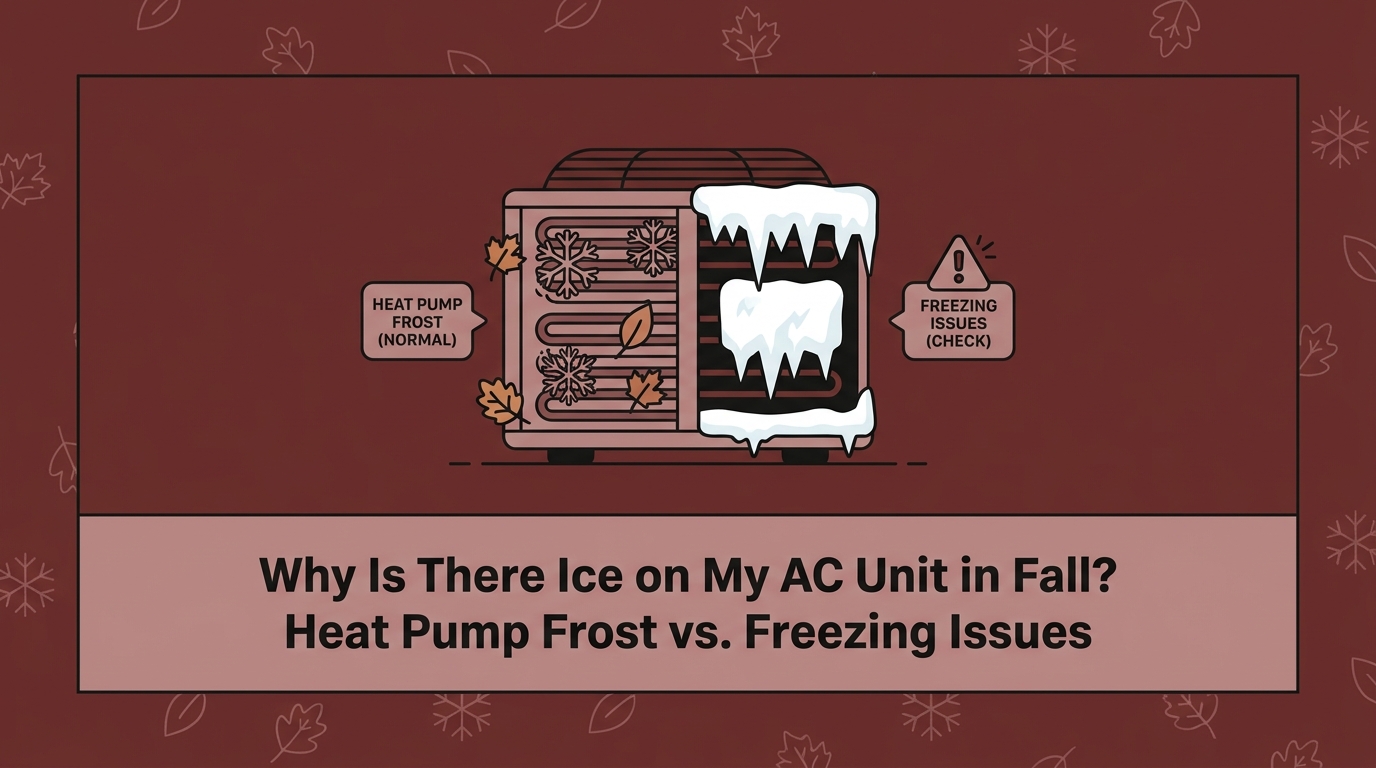
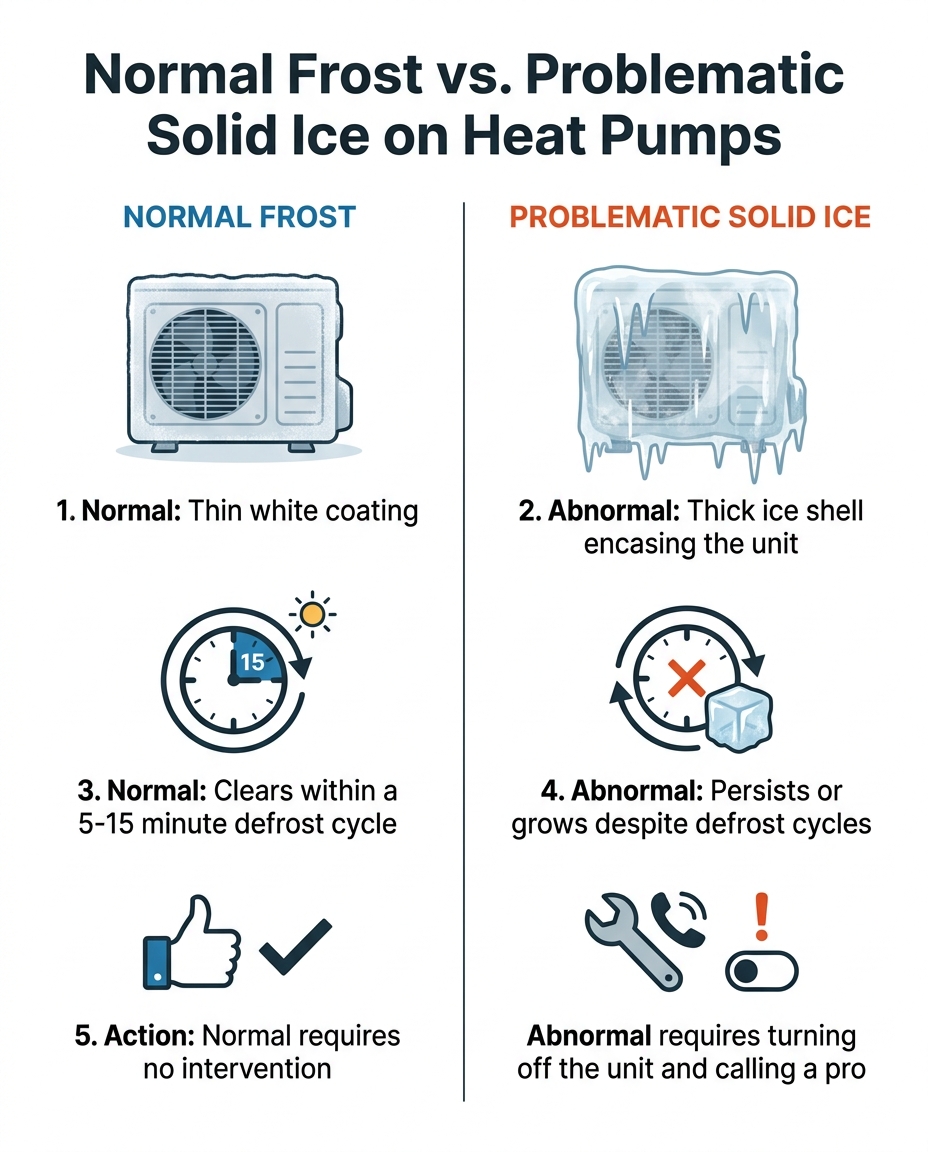
Normal frost looks like a light, even coating of white fuzz that disappears completely after a defrost cycle. Problematic ice, on the other hand, manifests as a thick, hard shell encasing the coils, fan blades, or the entire unit. If the defrost cycle runs but the ice remains, or if the unit sounds like it is straining, grinding, or struggling to pull in air, the system is malfunctioning.
• Normal Frost — Visual Appearance: Thin, white, fuzzy coating resembling morning frost on a windshield. — System Sound: Normal humming; occasional whooshing sound when defrost cycle starts. — Action Required: None. Allow the system to run its automatic 5-15 minute defrost cycle.
• Solid Ice Buildup — Visual Appearance: Thick, clear, or dense white ice encasing the metal fins, sometimes reaching the fan blades. — System Sound: Loud grinding, rattling, or a strained buzzing sound from the compressor. — Action Required: Turn off the system immediately at the thermostat and call a professional.

External Factors Restricting Critical Airflow
One of the most common reasons a system transitions from normal frost to a solid block of ice is a severe lack of airflow. Heat pumps require massive amounts of unobstructed airflow to operate efficiently. When air cannot move freely across the coils, the heat exchange process breaks down, causing the temperature of the coils to plummet uncontrollably.
Outdoor blockages: Leaves, pine needles, overgrown bushes, or early snowdrifts blocking the outdoor unit prevent it from properly exhausting cold air. If the unit is smothered by debris, the cold air it generates gets trapped around the cabinet, accelerating the freezing process. Homeowners should keep a two-foot clearance around the outdoor unit at all times, checking it frequently during the stormy autumn months, as our maintenance crews often discover overgrown foliage suffocating these units.
The Impact of Dirty Filters
The airflow issue isn't just an outdoor problem. A severely clogged indoor air filter restricts warm air from moving through the system, throwing off the temperature balance and causing ice to form on both the indoor and outdoor components. Filters clogged with summer dust and pet dander immediately cause issues when switching over to heating in the fall. Checking and replacing the indoor air filter is the only safe DIY troubleshooting step a homeowner should take during an October first-freeze startup.
Internal Malfunctions That Demand Expert Diagnostics
If the airflow is clear and the filter is clean, but the unit is still freezing solid, you are likely dealing with an internal mechanical failure. These issues require licensed professionals and cannot be fixed with DIY methods.
The Problem: The outdoor unit develops a thick shell of ice that continues to grow, eventually threatening to crush the delicate aluminum fins or freeze the fan blades in place.
The Cause: Several mechanical failures can cause this. Low refrigerant levels due to a slow leak will cause the coils to drop well below their intended operating temperature, resulting in rapid, uncontrollable freezing. Alternatively, a faulty defrost control board, a broken reversing valve, or a malfunctioning thermostat sensor can prevent the defrost cycle from initiating in the first place.
The Solution: Attempting to diagnose electrical components or check refrigerant pressures without an EPA license is dangerous and illegal. Our licensed Mountain View Heating technicians connect specialized gauges to measure refrigerant charge and use multimeters to test the control board logic. If our team finds that a system is aging and repeatedly suffering from these failures in the Bend, OR high desert, we often recommend considering a complete heat pump replacement to restore reliable heating. Keep in mind that federal tax credits and local utility incentive programs may apply to qualifying heat pump installations, so we advise homeowners to verify current programs with their utility or a tax professional.
Why DIY Ice Melting Methods Are a Risky Gamble
When faced with a frozen unit during an October first-freeze startup, many homeowners turn to the internet for quick fixes. Unfortunately, much of the DIY advice found online regarding melting ice off heating equipment is highly destructive.
Never use sharp objects: We've unfortunately had to condemn systems because a well-meaning homeowner used a screwdriver, ice pick, or shovel to chip ice off the coils. The aluminum fins are incredibly fragile, and the copper refrigerant lines running beneath them are easily punctured. A single slip of a tool will release all the refrigerant, turning a simple repair into a massive expense.
Avoid boiling water: Pouring boiling water over a frozen unit is a terrible idea. The rapid thermal expansion caused by hitting freezing cold metal with boiling water can cause delicate components to crack instantly. It also risks damaging exposed electronics and sensors.
Skip the heat guns: Using a hair dryer or heat gun risks melting the unit's internal wiring, destroying the protective coating on the coils, and introduces severe electrocution hazards if the melted ice drips into the electrical panel.
The only safe response to a completely frozen unit is to turn it off at the thermostat, switch on your emergency or auxiliary heat if you have it, and call a professional.
Proactive Measures Before the Deep Winter Hits
The best way to prevent unexpected icing is to have the system inspected before the continuous freezing temperatures set in. Rely on Mountain View Heating's deep expertise in Central Oregon's unique high desert climate to keep your heat pump running efficiently all winter.
Comprehensive testing: During a pre-winter inspection, our technicians verify that the refrigerant charge is exact. Even a slightly low charge can cause freezing issues. We also test the defrost sensors to ensure they are accurately reading the coil temperature, and manually force a defrost cycle to ensure the reversing valve shifts smoothly without sticking.
Long-term reliability: Scheduling routine heat pump maintenance ensures the system is prepared for the heavy workload of the coming months. Addressing minor startup quirks early—like a slightly sticky reversing valve or a weak capacitor—prevents them from escalating into total system failures in the middle of a sub-zero winter night in the Bend, OR high desert.
Frequently Asked Questions About Heat Pump Freezing
Is it normal for a heat pump to have ice on it?
A thin layer of white frost is completely normal when outdoor temperatures drop, as moisture in the air condenses and freezes on the cold coils. However, a thick, solid block of hard ice is abnormal and indicates a problem. If the frost clears away after a short defrost cycle, your system is operating exactly as intended.
How long does a heat pump defrost cycle last?
A standard defrost cycle typically lasts between 5 to 15 minutes, depending on the severity of the frost buildup and the outdoor temperature. According to Department of Energy benchmarks, the system will automatically initiate this cycle every 30, 60, or 90 minutes of active heating time. Once the ice is melted, the system will automatically switch back to heating your home.
What should I do if my heat pump is completely frozen?
The very first step is to turn the system off at your thermostat to prevent the compressor from burning out or the fan blades from breaking against the ice. Do not attempt to chip the ice away with tools or melt it with boiling water. Once the system is powered down, call a licensed HVAC professional to diagnose the root cause of the freeze.
Why is my heat pump freezing up in the fall?
During an October first-freeze startup, sudden nighttime temperature drops catch many systems off guard, especially if the indoor air filter is clogged with summer dust. The combination of high humidity as temperatures fall rapidly, combined with restricted airflow from a dirty filter, creates the perfect environment for rapid ice accumulation. Ensuring your filter is clean before switching to heating mode is the best preventative step.
Can a frozen heat pump fix itself?
If the buildup is just normal, light frost, the heat pump will fix itself by automatically running a defrost cycle. However, if the unit is encased in a solid block of thick ice, it will not fix itself. Solid ice indicates a mechanical failure, such as a refrigerant leak or a broken defrost control board, which requires professional repair.
Securing Reliable Heating Performance for the Winter
Navigating the transition into the colder months doesn't have to be a source of stress. Distinguishing between a normal seasonal defrost cycle and a dangerous mechanical failure protects your investment and keeps your home comfortable. When you understand that a light coating of frost in the Bend, OR high desert is just the system doing its job, you can save yourself a lot of unnecessary worry.
The safe approach: If your system is struggling to shed its icy coating, shutting it down is the safest first step. Never force a struggling system to keep running, as this is how minor electrical issues turn into catastrophic compressor failures.
A clear, authoritative understanding of your system's limits is your best defense against winter breakdowns. Reach out to our local experts at Mountain View Heating, Inc. to evaluate your system, clear away the underlying issues, and ensure it is ready to handle the cold months ahead safely and efficiently.