


The Panic of Steam on a Frosty Autumn Morning
Early fall has arrived in the high desert, and if you are wondering what to do when your heat pump goes into defrost mode too often, our team at Mountain View Heating always tells customers that the first step is simply taking a deep breath. There is nothing quite as alarming as looking out your window on cold, damp autumn mornings to see what looks like thick white smoke billowing out of your outdoor heating unit. When that visual is accompanied by sudden, aggressive steam and whooshing noises that sound like a massive pressure release, it is incredibly easy to panic. Many homeowners call our dispatchers immediately, assuming their system is catching fire or that a vital pipe has burst.
Whether you are looking to understand your heat pump systems better or you need professional heat pump repair, we have the answers you need.
The good news is that this dramatic display is usually a perfectly normal, built-in protective mechanism. Your system is designed to clear away ice so it can continue heating your home efficiently. However, as our technicians often see during early fall tune-ups, there is a clear threshold where routine seasonal operation crosses over into a genuine mechanical issue. If your system seems stuck in a loop, running this cycle continuously without actually clearing the ice, it is time to pay closer attention. Understanding the difference between a normal weather response and a failing component can save you from unnecessary stress—and prevent a minor malfunction from turning into a major winter breakdown.
What Actually Happens During a Defrost Cycle?
To understand why your system behaves this way, we find it helps to know exactly what is happening inside the machinery. When your heat pump is heating your home, it is extracting ambient heat from the outside air and moving it indoors. During this process, the outdoor coils get extremely cold. If the outside air contains moisture, that moisture condenses on the freezing coils and turns into frost. If left unchecked, this frost would eventually encase the entire unit in a solid block of ice, choking off the airflow entirely.
To prevent this, the system initiates a defrost cycle. Here is the step-by-step breakdown our service experts use to explain how it clears the ice:
1. The sensor detects frost: A specialized temperature sensor on the outdoor coil detects that the metal has dropped below a certain freezing threshold for a specific amount of time.
2. The valve shifts: The system temporarily reverses its flow of refrigerant. The loud steam and whooshing noises you hear are simply the mechanical reversing valve physically shifting position.
3. The system acts like an air conditioner: For a brief period, the unit stops sending heat inside your home and instead pumps hot, high-pressure refrigerant directly into the outdoor coils.
4. The outdoor fan stops: The large fan on top of the unit shuts off. This traps the heat inside the metal housing, allowing the hot coils to rapidly melt the accumulated frost.
5. The steam rises: As the ice melts against the hot metal, it instantly turns into water vapor. Because the outside air is cold, this vapor condenses into a thick white cloud that looks exactly like smoke.
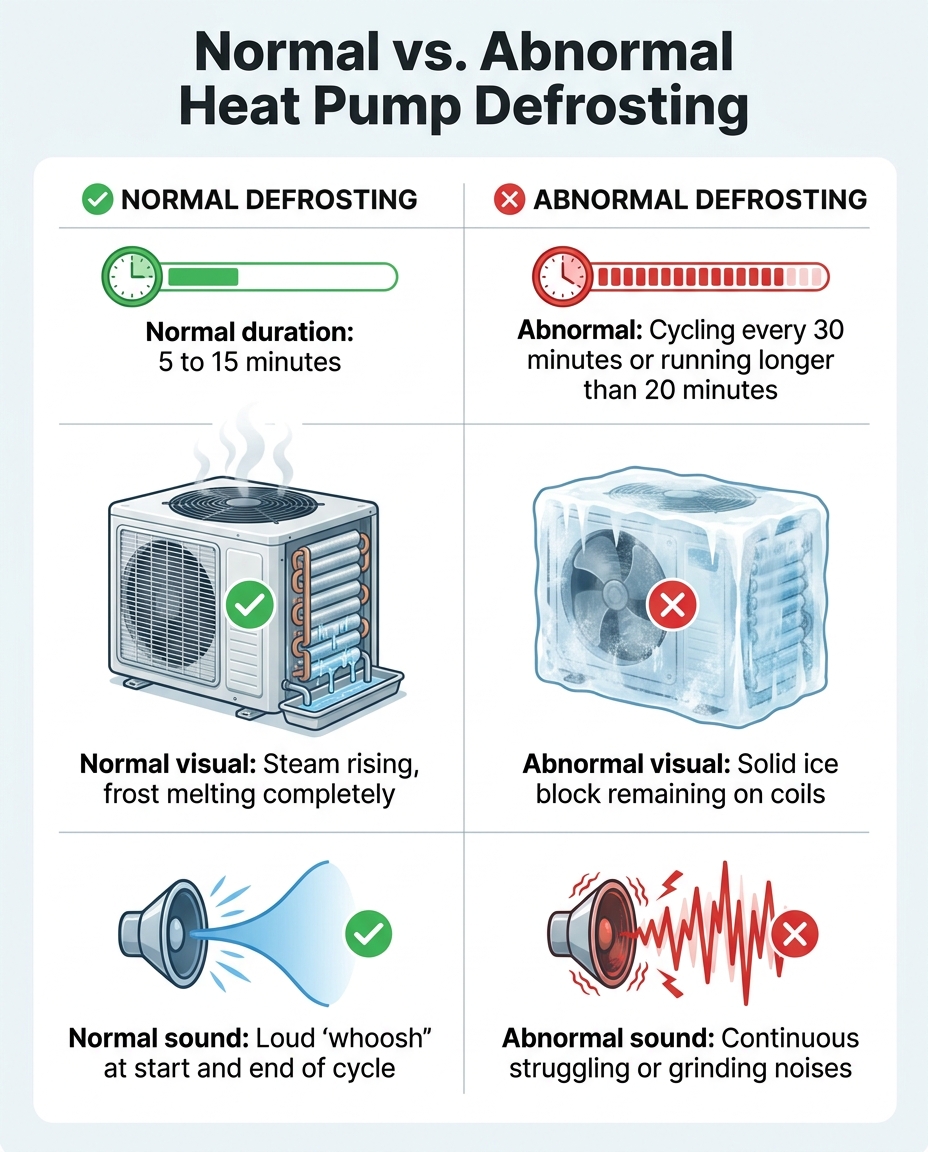
A normal defrost cycle typically lasts between 5 and 15 minutes. Once the sensor confirms the coil is warm enough and the ice is gone, the reversing valve shifts back, the fan kicks on, and standard heating resumes. Understanding the causes of heat pump ice buildup helps demystify the terrifying sounds and visuals of this completely normal process.
Why High-Desert Weather Triggers Frequent Cycles
If you live in Central Oregon, you will likely see your system defrost far more often than someone living in a mild coastal climate. At an elevation of 3,623 feet, Bend OR experiences dramatic diurnal temperature variations. It is incredibly common to enjoy a beautiful, sunny 65-degree autumn afternoon, only to watch the temperature plummet well below freezing by the time you wake up the next morning.
These massive overnight temperature drops create the perfect storm for condensation and rapid freezing. Here is why the high-desert climate matters:
• The Dew Point Factor: As the sun goes down and the air cools rapidly, it reaches its dew point. The ambient moisture in the air condenses on the coldest surface available—which happens to be your outdoor heat pump coils.
• The Freezing Threshold: Because the coils are actively pulling heat out of the air, they are actually colder than the surrounding outdoor temperature. Even if the outside air is 38 degrees, the coils might be 28 degrees, meaning that condensation turns directly into thick frost.
• The Transition Seasons: Early autumn and late spring are actually the most active times for defrosting. In the dead of winter, the high-desert air is often incredibly dry, meaning there is less moisture available to freeze. But during the damp transition seasons, heavy frost accumulation is a mathematical certainty.
At Mountain View Heating, our decades of hands-on experience servicing high-desert HVAC systems means we know exactly how these units behave when the first autumn frost hits Bend. We know that heavy morning frost is a standard part of living here. Seeing your system clear itself frequently during a cold October morning is usually a sign that it is doing exactly what it was designed to do.
How to Tell if Your Heat Pump is Defrosting Too Often
While frequent cycles are expected in our climate, our repair teams know that a system stuck in a loop or failing to clear the ice is a serious problem. You need to establish a baseline of normal operation versus abnormal behavior. If your unit is spending more time trying to melt ice than it is heating your home, you have crossed the line from routine operation to mechanical failure.
• Cycle Duration — Normal Operation: 5 to 15 minutes per cycle. — Abnormal (Call a Pro): Running longer than 20 minutes without resolving.
• Cycle Frequency — Normal Operation: Every 60 to 90 minutes of active runtime. — Abnormal (Call a Pro): Cycling every 30 minutes or looping continuously.
• Visual Result — Normal Operation: Coils are completely clear of ice afterward. — Abnormal (Call a Pro): A thick layer of solid ice remains permanently.
• Auditory Cues — Normal Operation: A brief, loud whoosh at the start and end. — Abnormal (Call a Pro): Continuous struggling, grinding, or buzzing noises.
• Indoor Comfort — Normal Operation: Home maintains the temperature you set. — Abnormal (Call a Pro): Auxiliary heat runs constantly; home feels chilly.
The biggest visual red flag is the condition of the coils after the steam clears. If the cycle finishes, the fan kicks back on, but the metal fins are still encased in a thick, solid block of ice, the system is failing to transfer heat properly. When this happens, your indoor comfort suffers immediately. Your system will likely rely on its expensive electric auxiliary heat strips to keep the house warm, which will cause your monthly energy bills to skyrocket.
Proactive seasonal care is the best way to prevent normal morning frost from turning into a hard, damaging freeze. Scheduling a routine heat pump tune-up with our team ensures that all the internal sensors and mechanical valves are perfectly calibrated before the heavy winter weather arrives.

Common Reasons for a Heat Pump Stuck in Defrost Mode
If your system is constantly producing steam and whooshing noises, or if it simply cannot shed its icy coating, a mechanical or electrical component has likely failed. When our Mountain View Heating technicians diagnose a system that is stuck in a loop, we usually trace the problem back to one of these common culprits:
• Faulty defrost thermostat or sensor: The system relies on a delicate sensor to read the exact temperature of the outdoor coil. If this sensor goes bad, it might tell the control board that the unit is freezing when it isn't, or it might fail to signal when the ice has successfully melted, leaving the unit stuck in reverse.
• Low refrigerant levels: Your system uses pressurized refrigerant to move heat. If there is a leak and the charge drops too low, the system simply cannot generate enough heat to melt the frost efficiently. It will try to defrost, fail, and try again shortly after.
• Malfunctioning reversing valve: The reversing valve is the physical brass component that switches the flow of refrigerant between heating and cooling modes. Over time, the internal slider can get physically stuck, preventing the system from shifting back into its normal heating cycle.
• Restricted outdoor airflow: The unit needs massive amounts of airflow to function. If the side panels are choked with wet leaves, yard debris, or early snowdrifts, the fan cannot exhaust the cold air, causing the unit to freeze over repeatedly.
• Failing outdoor fan motor: If the fan motor fails to re-engage after the cycle completes, the system cannot resume its normal heat-exchange process, leading to rapid re-freezing.
Our team sees these issues frequently in Bend OR. Just last season, one of our regular maintenance customers reached out with a complicated heat pump problem where their unit kept freezing up and running poorly during early fall. Because they were part of our maintenance program, a technician was dispatched quickly, identified a failing internal component, developed a fix, and repaired it the same day, getting the system back online in a short amount of time.
Safe Troubleshooting Steps Before Calling a Professional
When you notice your system struggling on cold, damp autumn mornings, there are a few safe, proactive steps you can take before picking up the phone. While the internal mechanics require specialized tools and licensing to repair safely, our service team often finds that many airflow issues can be resolved by the homeowner.
Here is what we recommend you safely check:
1. Check and replace the indoor air filter: It sounds entirely unrelated, but a clogged indoor air filter severely restricts the airflow across your indoor coil. This throws off the pressures and temperatures throughout the entire system, which can cause the outdoor unit to freeze up faster. Always start with a fresh filter.
2. Clear the perimeter of the outdoor unit: Safely clear away fallen autumn leaves, pine needles, tall grass, or wind-blown debris from around the outdoor cabinet. The system requires a strict 2-foot clearance on all sides to pull in enough air.
3. Check your thermostat settings: Ensure your thermostat is set to standard heating mode. Sometimes, homeowners accidentally switch the system to "Emergency Heat" or "Auxiliary Heat," which bypasses the heat pump entirely and runs the expensive backup strips.
What you must NEVER do: Never attempt to chip away the ice with a screwdriver, shovel, or scraper. The aluminum fins on the coils are incredibly fragile, and a single slip can puncture a refrigerant line, destroying the unit. Furthermore, never pour hot water over the frozen unit, and never attempt to open the electrical access panel to inspect the sensors yourself. High-voltage components and pressurized chemical refrigerants require a licensed professional to handle safely.
Is Excessive Defrosting a Sign You Need a Replacement?
Sometimes, a system that constantly freezes up isn't just suffering from a bad sensor or a dirty filter—it is simply reaching the end of its functional lifespan. As heating equipment ages, the internal compressor loses its efficiency, the coils degrade, and the entire system has to work twice as hard just to maintain the baseline temperature. This extra strain forces the unit to freeze up more easily and struggle to melt the frost away.
When evaluating an older unit in Bend OR, our Mountain View Heating installation team often uses a standard repair-versus-replace formula. We weigh the age of the unit against the cost of fixing a major, critical component. If your system is over 12 years old and requires a brand-new reversing valve or a major refrigerant leak repair, pouring money into the aging machinery is rarely the best long-term investment. The system will likely continue to struggle against the harsh high-desert winters.
Modern equipment has evolved significantly. Today's units feature advanced demand-defrost control boards that are incredibly efficient. Instead of running on a simple timer, these smart boards monitor precise coil temperatures, ambient air temperatures, and runtime, ensuring the system only reverses when absolutely mathematically necessary. This saves massive amounts of energy and reduces wear and tear on the components.
If your older system is constantly encased in ice, it might be time to look into a new heat pump installation. Keep in mind that general energy rebates and federal tax credits may apply to upgrading older, struggling systems to modern, high-efficiency models, making a replacement much more accessible. Our team can help point you toward current programs that apply to qualifying installations.
Frequently Asked Questions About Heat Pump Defrost Cycles
How often should a heat pump go into defrost mode?
A healthy unit typically goes into this mode every 30 to 90 minutes of active continuous runtime during freezing conditions. The exact frequency depends heavily on the outdoor humidity, the ambient temperature, and the specific dew point. On a dry, clear winter day, it might barely run at all, but on a damp, foggy autumn morning, it will cycle much more frequently.
Why is my heat pump constantly defrosting?
If your system is constantly shifting back and forth without actually heating your home, our technicians often find it points to a bad temperature sensor, low refrigerant levels, or a failing reversing valve. When the internal control board receives bad data, it panics and triggers the cycle repeatedly. This continuous looping requires professional diagnostics to resolve safely.
Is it normal for a heat pump to steam in the winter?
Yes, the steam you see is simply evaporating frost melting off the warm outdoor coils. Because the hot water vapor is hitting the freezing outdoor air, it creates a thick white cloud that is frequently mistaken for electrical smoke. As long as it dissipates quickly into the air, it is entirely safe and normal.
How do I get my heat pump out of defrost mode?
You should never manually interrupt the cycle; you must let it finish its automated 5-to-15-minute process. Forcing the system off mid-cycle leaves wet frost on the coils, which will instantly freeze into a hard block of solid ice when it restarts. If the unit stays stuck in reverse for more than 20 minutes, turn the system off at the thermostat and call our technicians for assistance.
Can I pour hot water on my heat pump to melt the ice faster?
No, pouring hot water on freezing machinery is incredibly dangerous for the equipment. Rapid, extreme temperature changes can easily crack the delicate metal coils or permanently damage sensitive electrical components. Additionally, the water you pour can pool at the base of the unit and refreeze instantly, causing a much worse ice buildup around the fan blades.
Rest Easy This Autumn with Reliable Heat Pump Operation
Seeing your outdoor unit dramatically vent a massive cloud of steam into the yard is always a bit startling the first time it happens. However, knowing what to do when your heat pump goes into defrost mode too often starts with recognizing that a bit of noise and vapor on cold, damp autumn mornings simply means the system is protecting itself. It is working hard to keep the coils clear so it can keep your family warm.
The key is watching the results. If the cycle ends and the ice is gone, you can rest easy. But if the ice simply won't melt, or the loud whooshing cycles never seem to stop, it is time to call in expert help from Mountain View Heating. We highly encourage homeowners to schedule a seasonal check-up before the deep winter freeze sets in. Ensuring your sensors are calibrated, your airflow is clear, and your refrigerant levels are perfect will give you true peace of mind all season long.