


That Toxic Odor: Recognizing a Cooling Emergency
You are relaxing at home when a harsh, chemical odor fills the room, leaving you urgently searching for exactly what a burning plastic smell means when your AC is running. It is a terrifying moment for any homeowner. The distinct, pungent scent of melting plastic or burning wire insulation drifting out of your air vents is not something you can ignore, and it is certainly not a problem that will resolve itself if you just wait a few minutes.
If you are concerned about the safety of your air conditioning system, it is critical to shut off the power immediately before investigating further. This is a vital conversion line to remember: electrical faults do not heal themselves.
Many homeowners initially mistake this odor for a minor airflow issue, a dirty filter, or dust burning off the system. However, a toxic, synthetic smell is a glaring red flag indicating a severe electrical symptom. Deep inside your outdoor condenser or indoor air handler, high-voltage components are overheating, failing, and literally melting their protective casings. By the time you notice the smell inside your living space, the internal damage is already well underway.
This type of failure rarely happens by accident. We typically see these exact electrical emergencies during the late August / end-of-season heavy summer load. After weeks of relentless operation, the electrical components that start and run your compressor are pushed to their absolute limits. Recognizing this odor for what it is—a true cooling emergency—is your first line of defense against catastrophic system damage and potential fire hazards.
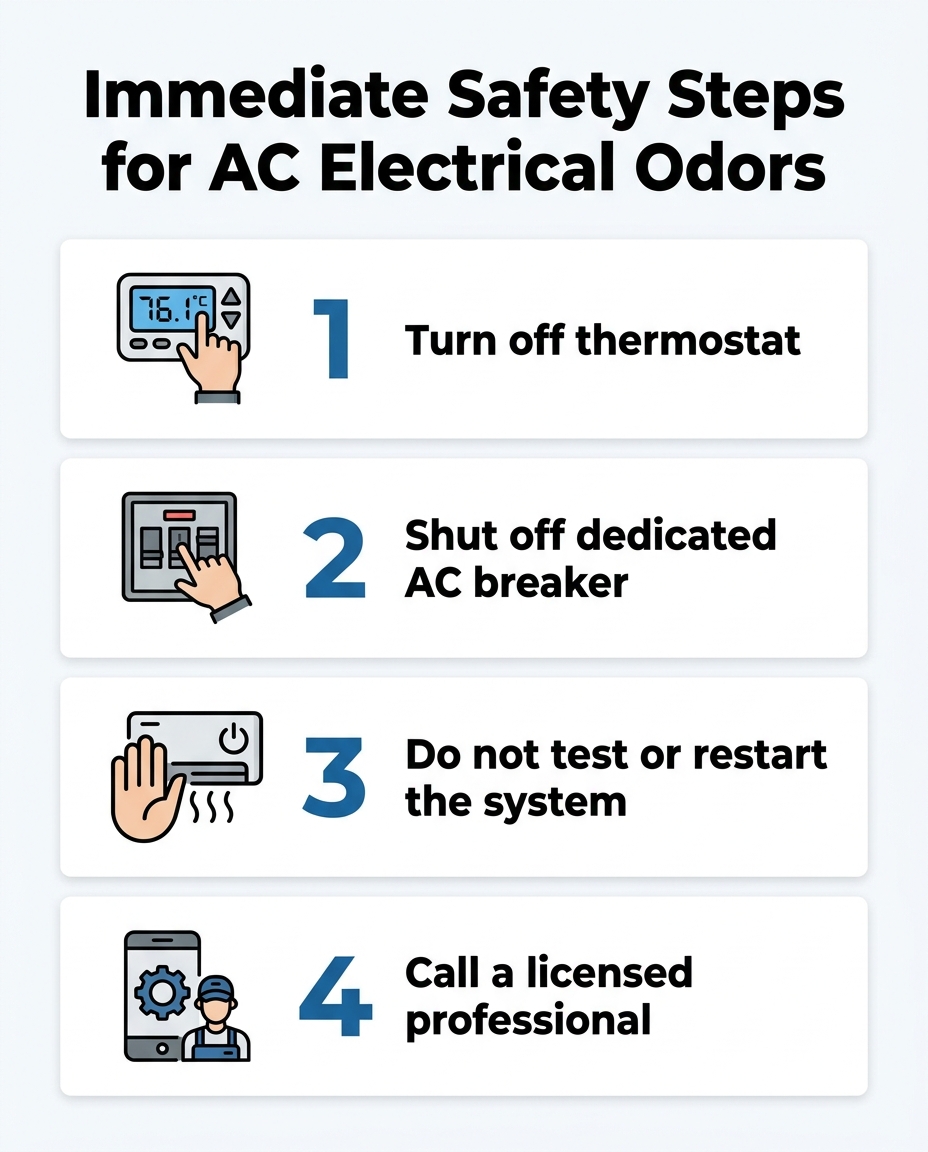
Immediate Safety Steps: Do This Before Investigating
When you detect a burning synthetic smell coming from your vents, your primary goal is to cut the flow of electricity to the equipment. High voltage combined with failing components is a dangerous mix. Follow these immediate safety steps before you attempt to look inside the unit or call for help.
1. Step 1: Turn off the system at the thermostat immediately. Walk to your thermostat and switch the system from "Cool" to "Off." Do not simply raise the temperature setting; you want to ensure the thermostat stops sending the cooling signal to the outdoor unit and indoor air handler entirely.
2. Step 2: Locate your electrical panel and flip the dedicated AC breaker. Even with the thermostat off, high voltage still flows to the outdoor condenser. Go to your main electrical panel, find the breaker labeled "AC," "Air Conditioner," or "HVAC," and flip it firmly to the "Off" position. This completely severs the power supply and immediately neutralizes the risk of an electrical fire.
3. Step 3: Do not attempt to turn the system back on to "test" it. It is incredibly tempting to wait an hour, let the smell dissipate, and turn the system back on to see if it was just a fluke. Do not do this. Re-energizing a melted electrical component can permanently destroy your compressor or spark a fire.
4. Step 4: Contact a professional for emergency electrical diagnosis. Once the power is safely disconnected, you need a licensed technician to inspect the damage. Because of the high voltage involved, this is never a do-it-yourself project.
Living in the Bend, OR high desert climate means you rely heavily on your cooling system, but safety must come first. By shutting the system down, you allow our team to provide a prompt, professional emergency response to safely mitigate potential electrical fire hazards. If you are dealing with this exact situation right now, you need 24-hour emergency AC service to secure your home and restore your comfort safely.

The Usual Suspects: What Exactly is Melting in Your AC?
To understand why your house smells like a chemical fire, it helps to know what is happening inside the metal cabinet of your outdoor unit. Your air conditioner relies on several heavy-duty electrical components to manage the massive surge of power required to start the compressor and spin the fan blades. When these parts fail, they produce distinct, toxic odors. If you are already troubleshooting an AC blowing warm air alongside this smell, one of the following components is almost certainly to blame.
Overheated Run Capacitors
The run capacitor is one of the most common failure points in any HVAC system. Think of the capacitor as a large, heavy-duty battery that stores high-voltage energy. When your thermostat calls for cooling, the capacitor delivers a massive, instantaneous jolt of electricity to start the compressor and the fan motor.
Because they handle such immense power, capacitors generate a lot of heat. Inside the metal cylinder, the internal components are suspended in oil to help dissipate that heat. However, during a late August / end-of-season heavy summer load, the capacitor can overheat. When it fails, the oil inside boils, causing the plastic top of the capacitor to bulge outward and literally melt. As the plastic casing degrades and splits, it releases a pungent, fishy, or chemical burning smell that is pulled directly into your ductwork.
Burnt Contactor Relays
The contactor relay is the mechanical switch that controls the high-voltage power flowing to your outdoor unit. When the thermostat sends a low-voltage signal, an electromagnet inside the contactor pulls a heavy metal plate down, closing the circuit and allowing high voltage to power up the compressor.
Every time that metal plate slams shut, a small electrical arc occurs. Over time, this arcing causes the metal contacts to become pitted, scarred, and covered in carbon buildup. When the contacts get dirty, electrical resistance increases dramatically. High resistance creates intense heat. Eventually, this heat becomes so extreme that it melts the plastic housing surrounding the contactor relay. If the plastic melts enough, the contacts can actually fuse together, locking the system in the "on" position while continuing to burn the surrounding plastic.
Melting Wire Insulation
Your air conditioning system is filled with heavy-gauge wiring designed to carry significant electrical currents safely. These wires are coated in thick, protective plastic or rubber insulation.
When a component like a fan motor begins to seize up, or when electrical connections vibrate loose over years of operation, the electrical resistance in the wires spikes. The wires act like the heating elements in a toaster, growing incredibly hot. This heat quickly melts the protective wire insulation. Melting wire insulation produces a very distinct, sharp chemical odor that is unmistakable. If left unchecked, the bare wires will eventually touch the metal cabinet, causing a direct short circuit.
Why Late Summer Triggers Electrical Failures
It is easy to view a sudden electrical failure as a random, unlucky event. However, in the world of HVAC, these breakdowns follow a very predictable pattern. Electrical components do not usually fail overnight; they degrade gradually over time due to constant use, thermal expansion, and cumulative stress.
We frequently see the impact of this climate firsthand. For example, during high temperatures in June, one customer experienced significant heat pump system issues due to the extreme demand. Our service teams worked extended hours to address the surge in service calls and get their system serviced professionally. When equipment is pushed that hard early in the season, the wear and tear accumulates rapidly.
Living in the Bend, OR high desert climate means your air conditioner faces a grueling schedule. The extreme daytime heat forces units into constant, heavy cycling. Your system might turn on and off dozens of times a day to keep up with the soaring afternoon temperatures. Every single time the system cycles on, the contactor slams shut and the capacitor discharges a massive jolt of electricity.
By the time August rolls around, those components have endured thousands of cycles. The relentless high-desert heat prevents the outdoor unit from properly cooling down between cycles, accelerating the degradation of plastic housings, wire insulation, and internal relays. This is why electrical failures peak at the end of the cooling season. The burning plastic smell is the final, dramatic conclusion to weeks of cumulative seasonal stress. The good news is that this is a common wear-and-tear issue. While the smell is terrifying, a melted contactor or a blown capacitor does not necessarily mean you need an entirely new air conditioner.
The Dangers of Ignoring Electrical Odors
While a melted capacitor is a common and relatively straightforward repair, ignoring the warning signs can lead to devastating consequences for your home and your equipment. The burning plastic smell is your system's final warning that a catastrophic failure is imminent.
The Risk of Electrical Fires
According to data from the National Fire Protection Association (NFPA), electrical failures are a leading cause of home cooling equipment fires. When plastic components melt, they expose raw, high-voltage wiring. If a bare wire arcs against the metal cabinet or ignites nearby debris, a spark can quickly turn into a dangerous fire. This is why our first instruction is always to shut off the breaker.
Catastrophic Compressor Damage
Your compressor is the heart of your air conditioning system, and it relies on the capacitor and contactor to operate safely. If a capacitor is failing and you continue to run the system, the compressor will struggle to start. It will pull excessive amperage, overheat, and eventually suffer a fatal electrical short. Replacing a five-dollar capacitor is easy; replacing a compressor is a major, costly operation.
Health and Air Quality Risks
The fumes produced by melting plastic, burning rubber, and boiling capacitor oil are toxic. When these fumes are pulled into your ductwork, they circulate throughout your living space, degrading your indoor air quality and potentially causing respiratory irritation. You should never allow your family to breathe in synthetic chemical smoke.
• Bulging/Leaking Capacitor — Underlying Cause: Overheating from heavy late-summer cooling loads — Consequence if Ignored: Compressor overheats, leading to fatal mechanical failure
• Fused Contactor Relay — Underlying Cause: Pitted contacts causing high electrical resistance — Consequence if Ignored: System runs non-stop, risking an electrical fire
• Melted Wire Insulation — Underlying Cause: Loose connections or failing motors drawing high amps — Consequence if Ignored: Bare wires short circuit against the metal cabinet
Because of the severe risks involved, there is a strict rule against attempting DIY electrical repairs on HVAC equipment. The capacitors store lethal amounts of high-voltage energy even after the power is turned off at the breaker. If you notice a burning smell during a late August / end-of-season heavy summer load, you must contact our HVAC technicians to handle the high-voltage diagnostics safely.
Comprehensive FAQ: Diagnosing AC Burning Smells
When an AC emergency strikes, homeowners need fast, accurate answers. Here are the most common questions we receive when a system starts producing a burning plastic odor.
Is it safe to run my AC if it smells like burning plastic?
Absolutely not. Continuing to run your air conditioner when it smells like burning plastic risks an electrical fire and catastrophic compressor failure. The smell indicates that a high-voltage component is actively melting due to extreme heat and electrical resistance. Shut the system down at the thermostat and the breaker immediately, and do not turn it back on until a professional has inspected the unit.
Can a burning AC cause a house fire?
Yes, electrical faults are a primary cause of HVAC-related fires. When plastic casings and wire insulation melt away, raw high-voltage wires are exposed. These wires can arc against the metal housing or ignite dry leaves and debris trapped inside the condenser unit. Shutting off the dedicated AC breaker at your electrical panel neutralizes this risk immediately.
Why does my AC smell like melting plastic?
Your AC smells like melting plastic because an electrical component, such as a run capacitor, a contactor relay, or heavy-gauge wire insulation, is overheating and degrading. This typically happens when the system is under immense strain, particularly in the Bend, OR high desert climate during the peak of summer. The extreme heat causes the plastic housings around these high-voltage parts to literally melt and release toxic fumes.
Will a bad capacitor smell like burnt plastic?
Yes, a failing capacitor can easily melt its plastic casing and emit a strong, chemical, or fishy odor. When a capacitor overheats under a heavy cooling load, the oil inside boils and expands, causing the plastic top to bulge and crack. You may also notice a clicking or buzzing sound coming from the outdoor unit as the system struggles to start.
How long does it take to fix a burnt contactor?
A licensed professional can typically replace a burnt contactor in under an hour. Once the technician safely disconnects the power and verifies the system is discharged, the physical replacement of the part is straightforward. The most important step is the professional diagnosis to ensure no other components, like the compressor, were damaged while the contactor was failing.
Restoring Safe, Reliable Cooling to Your Home
Experiencing a toxic burning smell from your vents is incredibly alarming, but the resolution is often much simpler than homeowners fear. While the odor suggests a catastrophic meltdown, the root cause is frequently a single, overworked electrical component that has succumbed to a late August / end-of-season heavy summer load. By acting quickly to shut off the power at the breaker, you have already taken the most important step: protecting your home from fire hazards and saving your compressor from further electrical damage.
The key to preventing these terrifying late-summer breakdowns is proactive care. Staying on top of routine AC maintenance allows technicians to test capacitors and inspect contactor relays for pitting before they have a chance to melt down during a heatwave. If your system is currently powered down due to a burning smell, do not panic. Reach out for a professional electrical diagnosis today, and let our experts safely restore reliable, worry-free cooling to your home.