


September Shifts: Shielding Your Cooling System from the Coming Freeze
Early fall in the high desert means the clock is ticking before the first hard freeze hits. Preparing Your Central AC Outdoor Unit for Winter Hibernation is a critical September task that protects your expensive equipment from harsh weather. You rely on your cooling system heavily during the peak heat of summer, but how you treat it while it sits idle during the pre-freeze September weeks determines how well it will run next year. The concrete problem many homeowners face is figuring out how to shield the outdoor condenser from heavy snow without accidentally trapping moisture inside the cabinet.
For comprehensive care, pair these homeowner-safe seasonal steps with professional central air conditioning service or enroll in a preventative maintenance plan.
Taking the time to winterize your cooling equipment correctly extends its lifespan significantly. A condenser left completely exposed to falling ice can suffer severe mechanical damage, but one that is wrapped incorrectly can rust from the inside out. Understanding the balance between physical protection and proper airflow is the key to a successful winter hibernation. By tackling this yard cleanup and system preparation early, you ensure your equipment rests safely until the spring thaw.
The 'Full Tarp' Mistake: Why Complete Wrapping Causes Damage
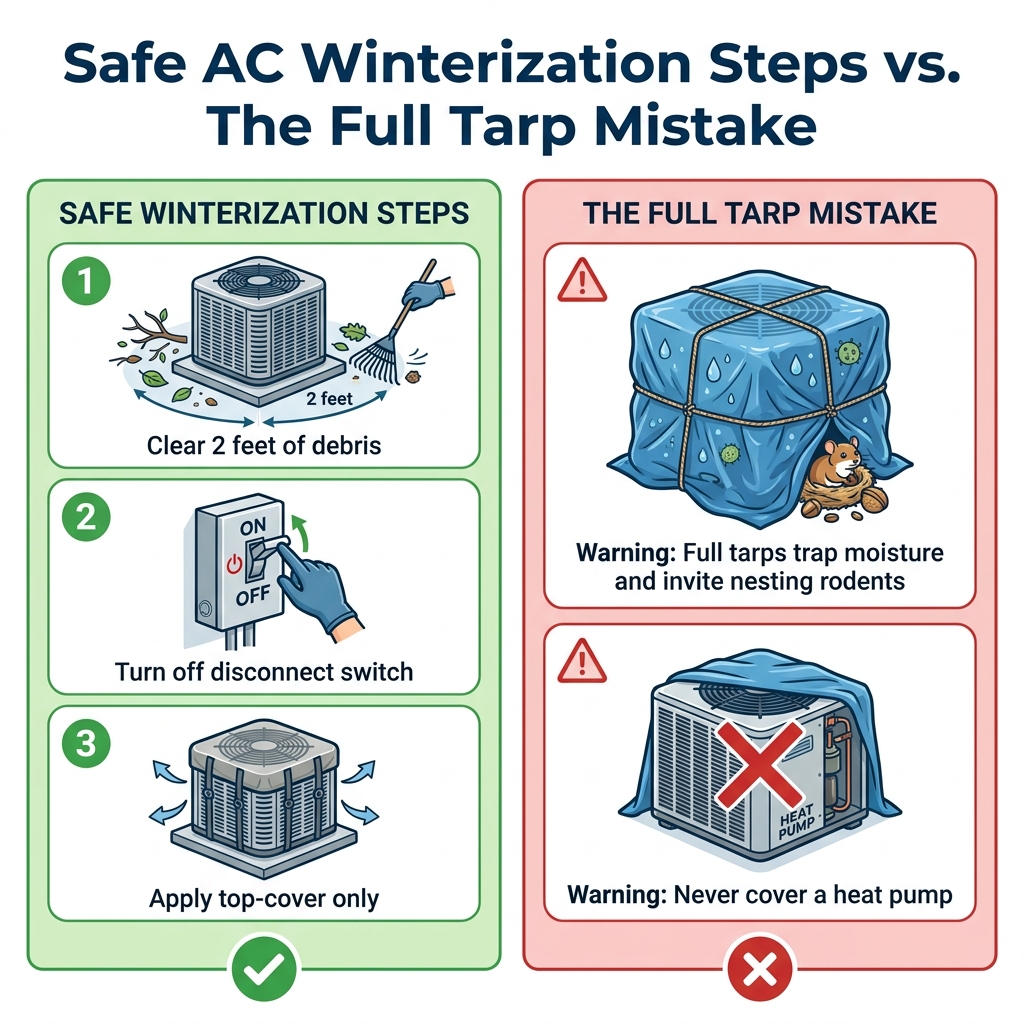
One of the most common errors homeowners make during fall cleanup is tightly wrapping their entire outdoor condenser in a standard plastic tarp. While the intention is to protect the equipment from the elements, this well-meaning approach often causes far more harm than good.
The Condensation Trap
The Bend OR region experiences unique weather patterns, featuring heavy winter snow loads combined with dry cold and rapid freeze-thaw cycles. When you seal a metal appliance in a non-breathable plastic wrap, you create a greenhouse effect. As the sun warms the tarp during a crisp winter afternoon, the frost underneath melts and evaporates. Because the tarp is airtight, that moisture has nowhere to go. It condenses on the cold metal coils, circuit boards, and wiring inside the unit. This trapped condensation accelerates coil corrosion and degrades critical electrical components over the winter months. As a local team with deep high-desert expertise, Mountain View Heating frequently sees the aftermath of generic manufacturer advice. The full-wrap covers sold in big box stores might work in mild, dry climates, but they fail spectacularly in Central Oregon's specific winter conditions.
The Rodent Hotel
Beyond moisture issues, full tarps create an irresistible shelter for local wildlife. Mice and other rodents actively seek enclosed, wind-protected spaces to build their winter nests. A tightly wrapped HVAC unit provides the perfect sanctuary: it blocks the wind, holds in slight amounts of residual warmth, and protects them from predators. Once inside, rodents chew through high-voltage wiring, tear up insulation for nesting material, and leave behind corrosive waste.
One local property owner reached out to us this past spring regarding a remote rental home. They needed the confidence to safely maintain and operate the property's HVAC system from afar, especially after seeing the damage improper winterization can cause. Our technician walked them through the exact maintenance steps, explaining that the ultimate goal is simply to protect the top fan from falling ice while allowing the sides to breathe freely, keeping the interior dry and unappealing to pests.
A Crucial Distinction: Do You Have an AC or a Heat Pump?
Before you take a single step toward winterizing your outdoor equipment, you must verify exactly what type of system sits in your yard. Mistaking a heat pump for a standard air conditioner is a catastrophic error during the fall preparation season.
While they look nearly identical—both are large metal boxes with a fan on top and coils on the sides—they serve very different functions in the winter. A cooling-only air conditioner sits completely dormant from October through May. However, heat pump systems run all winter long to heat your home. They absorb ambient heat from the cold outdoor air and transfer it indoors.
Never cover a heat pump. Because a heat pump must constantly pull massive amounts of air through its side coils to extract heat, restricting that airflow with any type of cover will cause severe system failure. An obstructed heat pump will quickly freeze over into a solid block of ice, triggering a complete breakdown and leaving your home without heat.
How to Tell the Difference
• Thermostat Settings — Cooling-Only AC: Only controls cooling; heating is handled by a separate indoor furnace. — Heat Pump: Often features an "Emergency Heat" or "Auxiliary Heat" setting.
• Winter Operation — Cooling-Only AC: Remains silent and completely off all winter. — Heat Pump: Fan runs actively during the winter to heat the home.
• Manufacturer Label — Cooling-Only AC: Label usually specifies "Air Conditioner" or "Cooling Unit." — Heat Pump: Label explicitly states "Heat Pump."
If you are unsure what type of equipment you own, always check the manufacturer's data plate on the side of the unit or consult a professional before attempting any winterization.
Step 1: Safely Powering Down at the Disconnect Box
If you have confirmed that your unit is a cooling-only air conditioner, the very first step in preparing for a pre-freeze September hibernation is cutting the electrical power. This is a simple, homeowner-safe task that prevents accidental winter start-ups.
Locating the Disconnect Box
Look at the exterior wall of your house near the outdoor condenser. You will see a small, weatherproof metal box mounted to the siding, with a thick conduit wire running from the box to the AC unit. This is the electrical disconnect box.
The Power-Down Process
1. Open the cover: Lift the weatherproof lid of the disconnect box.
2. Identify the switch type: Inside, you will find either a simple toggle switch (similar to a light switch) or a pull-out block with a handle.
3. Cut the power: If it is a switch, flip it to the "Off" position. If it is a pull-out block, pull the handle straight out, flip it upside down to the "Off" orientation, and push it back in (or simply store it safely inside your home for the winter).
4. Close the box: Shut the weatherproof lid securely to keep rain and snow out of the electrical components.
Why This Step is Critical
Air conditioners use a specific type of refrigerant oil to lubricate the compressor. In warm weather, this oil flows smoothly. In freezing temperatures, however, the oil thickens into a heavy sludge. If someone accidentally lowers the thermostat or flips the cooling switch on a warm winter day, the system will attempt to turn on. Forcing the compressor to pump that thick, cold oil will cause immense friction, often resulting in catastrophic compressor failure. Flipping the external disconnect switch guarantees the unit remains safely dormant, regardless of what happens at the indoor thermostat.
Step 2: Clearing Fall Debris Before the Snow Flies
With the power safely disconnected, your next task is a thorough physical cleanup of the immediate area around the condenser. Leaving organic debris packed against your equipment over the winter is a guaranteed recipe for rust and rot.
During early fall, leaves, pine needles, and twigs naturally accumulate around the base of the unit. When the snow eventually covers this debris, it creates a wet, decaying sponge that sits directly against the metal casing of your air conditioner for months.
Your Fall Cleanup Checklist:
• Remove heavy debris: Use your hands (wearing heavy gloves) to pull away large accumulations of wet leaves, pine needles, and sticks from the base of the unit.
• Clear the cabinet vents: Gently brush away any cottonwood fluff, dirt, or grass clippings stuck to the side louvers of the condenser cabinet.
• Trim surrounding vegetation: Cut back any encroaching bushes, shrubs, or ornamental grasses. You want to maintain a strict two-foot clearance zone entirely around the unit to promote good airflow.
• Wash the exterior: If the unit is particularly dirty, use a standard garden hose on a gentle spray setting to rinse the outside cabinet. Never use a high-pressure washer, as this will bend the delicate aluminum fins.
• Allow to dry: Let the unit sit in the sun and air dry completely before moving on to the final covering step.
By removing organic matter now, you prevent moisture retention and ensure the base of your unit remains clean and dry beneath the winter snowpack.
Step 3: Applying a Breathable Top-Cover
The final step in your winter hibernation process is physically protecting the fan grille from heavy snow and falling ice. The goal is to shield the top while leaving the sides completely exposed to the open air.
This top-cover strategy is specifically designed to handle heavy high-desert snowfall while respecting the dry cold air of the Bend OR region. When heavy, wet snow accumulates on the top grille, the sheer weight can bend the delicate fan blades or warp the housing. Furthermore, freezing rain can drop directly into the unit, which is a leading factor in ice forming on your AC unit components.
Two Effective Methods for Top-Covering
1. The Plywood Method: Measure the top dimensions of your condenser unit. Cut a piece of heavy, exterior-grade plywood so that it extends about one inch past the edges of the top grille. Place the plywood flat on top of the unit. To keep winter winds from blowing it away, place a heavy brick or cinder block directly in the center of the wood, or use bungee cords hooked to the side louvers to strap it down securely.
2. The Commercial Top-Cover: Purchase a canvas or heavy-duty vinyl cover that is specifically manufactured to protect only the top 12 inches of the unit. These covers slip over the top like a shallow cap and secure to the sides with built-in straps. Because they do not drape down to the ground, the side coils remain fully exposed to the breeze.
Both methods effectively block falling icicles, prevent heavy snow loads from crushing the fan, and stop debris from dropping inside the cabinet—all without creating the disastrous moisture trap of a full tarp.

Transitioning Inside: Preparing Your Home for Heating Season
Once the outdoor cooling unit is safely hibernating beneath its top-cover and the power is disconnected, it is time to shift your focus indoors. Pre-freeze September is the perfect window to prepare your indoor furnace or air handler for the heavy lifting it will do over the next six months.
Start by changing your indoor air filter. A dirty, clogged filter from the summer cooling season will severely restrict proper airflow during the heating cycle, forcing your furnace to work harder and increasing your energy consumption. A fresh filter ensures clean air and optimal efficiency as you turn on the heat for the first time.
Next, schedule professional heating services to inspect the critical internal components of your system. While exterior yard cleanup is safe for homeowners, inspecting a heat exchanger for microscopic cracks, testing safety controls, and tuning the burner assembly requires a licensed professional.
One local homeowner scheduled routine maintenance this past fall and noted how the technician took the time to do an above-and-beyond job explaining exactly how the heating system operates. Understanding your system helps you recognize when things are running smoothly and when something sounds off. A well-maintained system operates more efficiently, keeps your home consistently warm, and operates safely throughout the coldest winter nights.
Frequently Asked Questions About Winterizing AC Units
Should I cover my AC unit in the winter?
Yes, but only the top. You should use a sturdy piece of plywood or a specialized top-cap cover to protect the fan blades from heavy snow and falling ice. Never fully wrap the entire unit, as this traps moisture inside the cabinet and invites rodents to build nests in the wiring.
How do you winterize an outside AC unit?
Start by clearing away all leaves, pine needles, and debris from around the base of the unit to prevent moisture retention. Next, turn off the electrical disconnect switch located on the exterior wall to prevent accidental startups. Finally, apply a breathable top-cover to protect the fan from snow while leaving the side coils exposed to the open air.
Do you need to turn off AC power in winter?
Yes, flipping the exterior disconnect switch is a vital safety step for the Bend OR region. It prevents the unit from accidentally turning on during an unseasonably warm winter day. If the system tries to run when the temperatures are near freezing, it can severely damage the compressor.
What happens if I accidentally turn on my AC in the winter?
Running an AC in freezing temperatures forces it to pump thickened, cold refrigerant oil. Because the oil cannot flow smoothly to lubricate the moving parts, the immense friction can quickly destroy the compressor. This is why turning off the exterior power disconnect is so important.
Can I use a standard blue tarp to cover my air conditioner?
No. Standard tarps do not breathe. If used, they will trap ground moisture and freeze-thaw condensation inside the unit. Over the winter months, this trapped humidity leads to severe rust on the metal components and rapid corrosion of the delicate electrical wiring.
Secure Your HVAC System Before the Snow Flies
Handling your outdoor yard cleanup and properly Preparing Your Central AC Outdoor Unit for Winter Hibernation provides incredible peace of mind. By taking a few homeowner-safe steps in early fall—clearing the debris, flipping the external disconnect switch, and securing a breathable top-cover—you protect your equipment from the worst of the winter weather without causing accidental rust or inviting pests.
However, while you can easily handle the exterior top-cover yourself, internal tune-ups and safety checks should always be left to the pros. Before the snow completely covers the ground and the freezing temperatures fully set in, make sure your indoor equipment is just as prepared. Promptly book a preventative maintenance plan appointment for your heating system so you can enjoy a warm, comfortable, and worry-free winter season.