


Why Spring AC Maintenance to Prevent Summer Failures Starts Now
Spring AC maintenance to prevent summer failures is the single most effective thing you can do as a homeowner before the heat arrives in Bend, Oregon. Central Oregon's high desert climate is unforgiving — spring temperatures can swing from freezing overnight lows to near 90°F afternoons, and once the first real heatwave hits, HVAC technicians book up fast. If your system hasn't been checked since last summer, it has been sitting idle for months, and that's exactly when small problems quietly grow into expensive breakdowns.
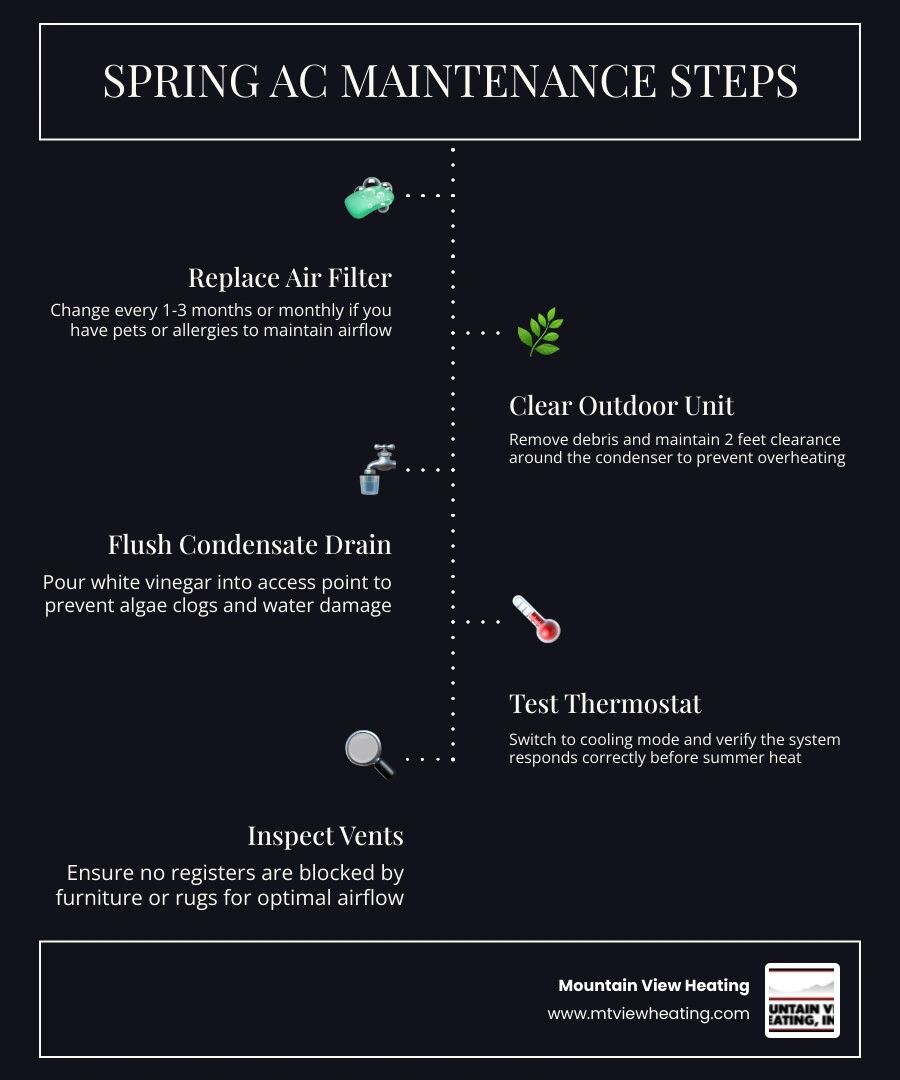
Here's a quick summary of the key spring AC maintenance steps to prevent summer failures:
- Replace your air filter — every 1 to 3 months, or monthly if you have pets or allergies
- Clear debris from the outdoor condenser unit — maintain at least 2 feet of clearance all around
- Flush the condensate drain line — pour white vinegar down the access point to prevent algae clogs
- Test your thermostat — switch to cooling mode and confirm the system responds correctly
- Inspect vents and registers — make sure none are blocked by furniture or rugs
- Schedule a professional tune-up — before May, when appointment slots fill up across Bend
According to industry data, 87% of emergency AC calls could have been prevented with a simple spring tune-up. The difference between a smooth summer and a sweaty, stressful breakdown often comes down to one proactive appointment in March or April.
Why Spring is the Golden Window for AC Tune-Ups
As we head deeper into June 2026, homeowners across Central Oregon are beginning to feel the first consistent warm days of the year. This seasonal shift marks the arrival of the "golden window" for cooling system care. Scheduling your air conditioner maintenance during the spring is a strategic move that saves you time, money, and stress.
During the peak of summer, HVAC companies are flooded with emergency calls from homeowners whose systems failed on the hottest day of the year. By booking your tune-up early in the spring, you beat the summer rush. You get flexible scheduling options, and our technicians have the time to perform a meticulous, unhurried inspection of your equipment.
Furthermore, we must consider the "Idle Unit" theory. Your air conditioner has been sitting completely inactive for six to eight months. During this long period of winter dormancy, several issues can develop quietly:
- Rodents and pests may have nested inside the outdoor cabinet, chewing on electrical wiring.
- Dust, pollen, and debris have settled deep into the coils.
- Electrical capacitors can weaken over time, even when not in use.
Forcing an idle system to run at maximum capacity on the first hot afternoon of the summer is like running a marathon without stretching first. It places immense, sudden stress on the compressor and fan motors. To understand how consistent care keeps your system running smoothly year after year, check out our guide on How Often Should You Service Your HVAC System.
The Financial and Efficiency Benefits of Proactive Care
Proactive maintenance is not just a chore—it is a smart financial strategy. Heating and cooling your home accounts for roughly 50% of your total household electricity bill. When your air conditioner is neglected, it has to work significantly harder to achieve your desired indoor temperature, driving your utility bills upward.
Regular maintenance provides immediate financial relief through improved energy efficiency:
- Cleaner Coils: Dirty outdoor condenser coils act as an insulating blanket, trapping heat inside the system and reducing efficiency by up to 30%. Thoroughly cleaning these coils can restore up to 15% of your system's operating efficiency.
- Optimized Airflow: Replacing a dirty, clogged air filter with a fresh one can reduce your air conditioner's energy consumption by 5% to 15%.
- Ductwork Integrity: The average forced-air system loses 20% to 30% of its conditioned air to duct leakage. Inspecting and sealing these gaps ensures the cold air you pay for actually reaches your living spaces.
Beyond monthly energy savings, routine spring maintenance acts as an insurance policy for your system's lifespan. A neglected air conditioner typically fails around the 10-year mark, whereas a well-maintained system can easily last 15 to 20 years. That is an extra 5 to 10 years of reliable performance.
Additionally, skipping professional service can put you in a tough spot with your manufacturer’s warranty. Most major HVAC brands explicitly require documented annual maintenance performed by a licensed technician to keep your parts warranty valid. If a major component like the compressor fails in mid-July, the manufacturer may deny your warranty claim if you cannot provide proof of regular professional tune-ups. Learn more about how to protect your investment in our article on How to Prepare Air Conditioner for the Summer.
DIY Spring AC Maintenance to Prevent Summer Failures
While complex mechanical and electrical tasks must be left to licensed professionals, there are several highly effective DIY maintenance tasks that homeowners can safely perform. Taking these steps in the spring will keep your system running efficiently and protect its key components. Review our 4 HVAC Maintenance Tips for Homeowners This Spring for a deeper look at seasonal preparation.
1. The Air Filter Check
Your air filter is the first line of defense for both your indoor air quality and your system's internal components. In central HVAC systems, the furnace filter and the AC filter are the exact same component. This means the heavy dust collected during the winter heating season will directly choke your summer cooling airflow if left unchanged.
- Inspect your filter monthly during peak use.
- Replace it every 30 to 90 days, or every 30 days if you have shedding pets or suffer from seasonal allergies.
- Hold the filter up to a light source; if you cannot see light through it, it is time for a replacement.
2. Clearing the Outdoor Condenser Unit
Your outdoor unit needs to breathe to release the heat extracted from inside your home. Over the winter, leaves, twigs, grass clippings, and weeds can accumulate around the cabinet.
- Turn off the power to the unit at the outdoor disconnect box before cleaning.
- Maintain a strict two-foot clearance radius around the entire unit by trimming back shrubs, tall grass, and branches.
- Clear away any leaves or pine needles that have settled on top of the grille.
- Gently rinse the exterior fins with a garden hose on a light spray setting to wash away accumulated dirt. Never use a pressure washer, as the high-pressure stream will bend and damage the delicate aluminum fins.
3. Flushing the Condensate Drain Line
As your AC cools your home, it removes moisture from the air. This moisture drains out through a small plastic pipe called the condensate line. Over time, algae, mold, and mildew can grow inside this wet pipe, creating a thick clog that backs up into your home, causing water damage or triggering safety switches that shut down your system.
- Locate the drain line access T-joint (usually near your indoor evaporator coil).
- Pour one cup of distilled white vinegar down the line to kill any developing algae and prevent blockages.
- Repeat this process monthly during the summer cooling season.
4. Preparing Empty or Vacant Homes (Snowbird Checklist)
If you travel during the summer or own a vacant property in Central Oregon, do not turn your air conditioner completely off. Leaving a home sealed without climate control in the hot summer months can lead to stagnant air, warped woodwork, and high indoor humidity.
- Set your thermostat to a conservative "away" temperature, such as 82°F to 85°F.
- This keeps the air circulating, manages indoor humidity, and prevents the system from having to work incredibly hard to cool the home back down when you return.
- Install a smart thermostat so you can monitor your home's temperature and humidity levels remotely.
What to Expect During a Professional HVAC Tune-Up
While DIY tasks are fantastic for daily upkeep, there is a clear boundary where homeowner maintenance ends and professional expertise begins. A professional spring tune-up is a comprehensive, technical inspection that requires specialized diagnostic tools and safety training. For a complete breakdown of what we do during a visit, read our guide on What Does an HVAC Maintenance Visit Include.
Here is what a professional technician will handle during a scheduled spring service:
- Tightening Electrical Connections: Loose electrical wires are responsible for approximately 30% of all sudden AC failures. Technicians inspect all wiring, tighten terminals, and measure voltage and amperage draw on motors to ensure safe operation.
- Testing Capacitors: Capacitors act as temporary batteries that provide the starting and running power for your compressor and fan motors. They are the number-one cause of summer AC breakdowns. Technicians measure their electrical capacitance to catch and replace failing capacitors before they leave you without cooling.
- Checking Refrigerant Levels: Your air conditioner does not "consume" refrigerant; it circulates it in a closed loop. If your system is low on refrigerant, it is almost always due to a small, hidden leak. Low refrigerant strains the compressor and can cause the indoor coils to freeze. Technicians measure pressures and use electronic leak detectors to ensure your system is properly charged.
- Deep Coil Cleaning: Technicians wash the indoor evaporator coil and the outdoor condenser coil with specialized self-rinsing cleansers to maximize heat transfer and system efficiency.
Recognizing the Warning Signs of an Impending AC Breakdown
Your air conditioner will rarely fail without warning. Most major breakdowns are preceded by small, subtle signs that indicate the system is under stress. Catching these warning signs during the spring allows you to address them before they turn into a complete system meltdown during a July heatwave.
Key warning signs to watch out for include:
- Weak or Warm Airflow: If the air coming from your vents feels weak or lukewarm, your system may have a failing blower motor, a severe duct leak, or low refrigerant levels.
- Unusual Noises: Squealing, grinding, rattling, or hissing sounds are clear indicators of mechanical wear, loose parts, or refrigerant leaks.
- Short-Cycling: If your AC turns on and off rapidly every few minutes, it is placing immense wear on the compressor and wasting energy. This is often caused by restricted airflow or thermostat calibration issues.
- High Indoor Humidity: Your air conditioner plays a vital role in managing indoor humidity. The EPA recommends keeping indoor humidity levels between 30% and 50%. When humidity rises above this range, it fosters mold growth, dust mites, and respiratory discomfort. Modern systems use advanced humidity sensors and smart thermostats to automatically adjust run times to keep your home comfortable and dry.
| AC Operation Indicator | Normal System Behavior | Warning Sign of Impending Failure |
|---|---|---|
| Airflow Temperature | Consistent, crisp cold air | Lukewarm air or uneven temperatures between rooms |
| System Cycle Length | Runs for 15–20 minutes to cool the home | Turns on and off every few minutes (short-cycling) |
| Operating Sounds | A quiet hum from the fan and compressor | Grinding, squealing, loud rattling, or hissing |
| Indoor Humidity | Keeps home comfortable (30% to 50% humidity) | Sticky, humid indoor air; condensation on windows |
| Utility Bills | Predictable, seasonal energy usage | Sudden, unexplained spikes in your electricity bill |
If you notice any of these red flags, it is time to bring in the pros. Discover how we diagnose and resolve these issues early in our article, 5 Ways a Professional Preps Your HVAC System for Summer.
Frequently Asked Questions About Spring AC Maintenance
Why is spring ac maintenance to prevent summer failures so critical in Bend, OR?
Bend and the surrounding Central Oregon communities present a highly unique set of climate challenges. In our high desert environment, spring temperatures fluctuate wildly, meaning your HVAC system may need to heat your home at night and cool it during the day.
Additionally, our dry climate produces high levels of dust and pollen, which quickly clog air filters and coat outdoor condenser coils. In recent years, seasonal wildfire smoke has also placed incredible stress on HVAC filtration systems. Proactive maintenance ensures your system can handle these intense local conditions while keeping your indoor air clean and breathable. For practical steps on managing indoor air quality during spring, read our Spring Cleaning Checklist for Better Indoor Air Quality.
How often should I perform spring ac maintenance to prevent summer failures?
You should have your cooling system professionally serviced once a year, ideally in the early spring (March or April). If you have an older system (over 10 years old) or live in an area with high dust and pet dander, twice-yearly inspections (spring for cooling, fall for heating) can help prevent unexpected breakdowns and keep your system running safely. For a complete breakdown of what local homeowners need to know about professional cooling services, see our AC Service Bend OR Complete Guide.
Can a dirty filter cause my air conditioner to fail in the summer?
Yes, absolutely. A dirty air filter is one of the most common causes of complete system failure. When a filter is clogged with dust and debris, it severely restricts airflow. Without enough warm air passing over the cold evaporator coil, the coil's temperature will drop below freezing, causing condensation to turn into a solid block of ice. This ice completely blocks airflow, strains the blower motor, and can cause liquid refrigerant to flood back into the compressor, which often destroys the compressor entirely.
Conclusion
Your home's air conditioner is a significant investment in your family's comfort and well-being. Taking a proactive approach to maintenance in the spring ensures your system is ready to handle whatever the Central Oregon summer throws its way.
At Mountain View Heating, we have been serving homeowners in Bend, La Pine, Redmond, Sisters, Sunriver, Terrebonne, and Three Rivers for over 40 years. Our family-owned business is built on a foundation of honest service, expert technical skill, and a 100% customer satisfaction guarantee on every single residential job.
Don't wait for the first sweltering summer day to find out if your air conditioner is up to the challenge. If you run into an unexpected issue, we provide fast 24/7 emergency support to keep your home safe and comfortable.
Ready to secure your summer peace of mind? Contact us today to schedule your professional tune-up on our AC Maintenance Bend OR page!