


Your Quick Answer: How Often Should You Service Your Heat Pump?
How often should you service your heat pump is one of the most common questions homeowners ask — and the answer is simpler than you might think.
Quick answer:
| Situation | Recommended Service Frequency |
|---|---|
| Most homeowners | Twice per year (spring + fall) |
| Minimum acceptable | Once per year |
| Older systems, pets, or allergies | Twice per year minimum |
| Showing warning signs | Schedule service right away |
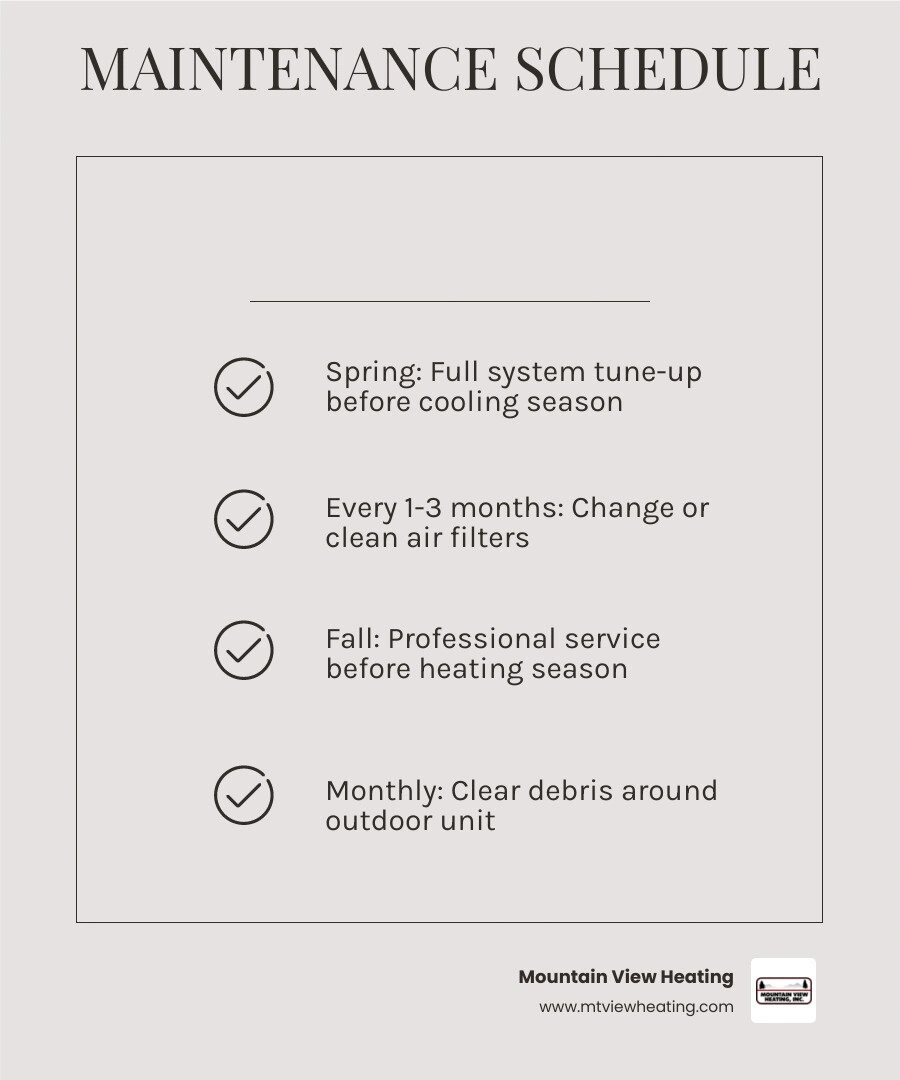
Heat pumps are different from a standard furnace or air conditioner. They run year-round — heating your home in winter and cooling it in summer — which means they wear down faster and need more attention than a single-season system. Most HVAC professionals recommend scheduling a professional tune-up twice a year: once in spring before the cooling season, and once in fall before the heating season begins.
Here in Bend, Oregon, where temperatures swing hard between summer heat and freezing winters, keeping your heat pump in top shape isn't just about comfort — it's about protecting a major investment in your home.
The good news? Most of what keeps a heat pump healthy is straightforward. A few simple habits between professional visits go a long way, and a yearly or twice-yearly service call handles the rest.
How Often Should You Service Your Heat Pump?
For most homeowners in Bend, Redmond, Sisters, Sunriver, La Pine, Terrebonne, Three Rivers, and nearby communities, the best plan is simple: schedule professional heat pump service twice a year. One visit should happen in spring before cooling season, and the other in fall before heating season.
That lines up with how heat pumps actually work. Unlike a furnace that mostly rests in summer, or an AC that gets a break in winter, a heat pump works through every season. That extra runtime means more wear on filters, coils, electrical parts, and airflow components.
If you want a local overview of seasonal care, our Heat Pump Maintenance Bend OR Tips article is a helpful companion.
The short answer for most homeowners
If you have been searching how often should you service your heat pump, here is the practical answer:
- Ideal schedule: every 6 months
- Good baseline: spring and fall
- Minimum: once a year if twice-yearly service is not possible
- More frequent attention may help if your system is older, runs heavily, or your home has pets, dust, or allergy concerns
Twice-yearly maintenance is the sweet spot because it prepares the system for both major jobs it performs:
- Cooling in warmer months
- Heating in colder months
That timing helps us catch problems before your heat pump is working its hardest.
Why heat pumps need more attention than single-season systems
Heat pumps do double duty. They heat and cool using many of the same components, and those components do not get much downtime. That matters.
More runtime can mean:
- Faster filter loading
- More coil buildup
- Greater airflow problems
- More wear on motors and electrical connections
- More chances for refrigerant or defrost issues to show up
Shoulder seasons in Central Oregon can also be tough on a heat pump. Spring and fall often bring temperature swings that make the system switch operating modes more often. That is another reason routine tune-ups matter.
Best times of year to schedule service
The best times to schedule maintenance are:
- Spring: before summer cooling demand arrives
- Fall: before winter heating demand and freezing weather begin
Spring service helps make sure airflow, thermostat operation, and cooling performance are ready. Fall service is especially important in our area because it allows us to check heating operation, defrost performance, and outdoor unit condition before cold weather settles in.
For a broader look at HVAC timing, see How Often Should You Service Your HVAC System.
What Homeowners Can Do Between Service Visits
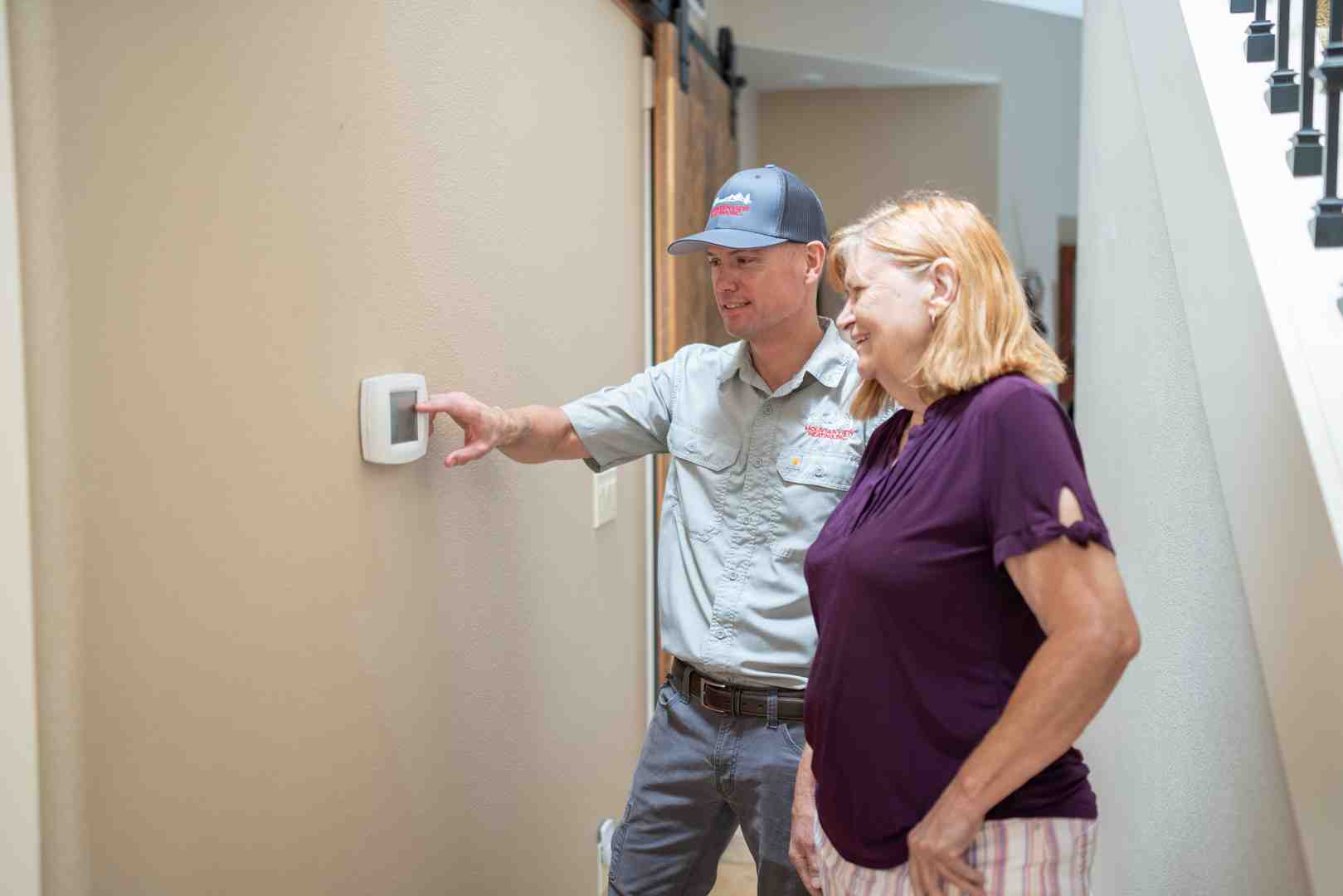
Professional maintenance is essential, but homeowners can do a lot between visits to keep a heat pump running well. Think of it as brushing your teeth between dental appointments. Not glamorous, but very effective.
Here are the safe, useful tasks most homeowners can handle:
- Check filters regularly
- Keep the outdoor unit clear
- Make sure vents are open and unobstructed
- Watch for changes in sound, airflow, and comfort
- Keep an eye on snow, ice, leaves, and debris around the unit
Change or clean filters on schedule
Air filters are small, but they have an outsized impact on performance.
A good rule is to:
- Check filters monthly
- Replace or clean them every 1 to 3 months, depending on your system and household conditions
You may need more frequent filter attention if:
- You have pets
- You have allergies
- Your home gets dusty
- Your heat pump runs heavily during extreme weather
Neglected filters can restrict airflow enough to waste a significant amount of energy. Research consistently shows clogged filters can contribute to major efficiency loss, and restricted airflow may waste up to 25% of a heat pump's energy performance. In plain English: a dirty filter can make your system work harder for worse results. Not exactly a winning life strategy.
Keep the outdoor unit clear and clean
Your outdoor unit needs room to breathe.
Try to maintain:
- About 2 feet of clearance around the unit
- Space free from shrubs, weeds, leaves, and yard debris
- Clear drainage around the base
In winter, gently remove snow buildup around the unit so airflow is not blocked. Never chip ice off with tools. That is a fast way to turn maintenance into repair.
If the outdoor coil looks dirty, a light rinse with a hose can help, as long as the power is off and you avoid high pressure. Bent fins, deep coil cleaning, or internal access should be left to a technician.
Check vents, thermostat, and airflow
Indoor airflow matters just as much as outdoor airflow.
Between service visits, homeowners should:
- Keep supply registers open
- Avoid blocking return vents with furniture or rugs
- Make sure the thermostat is set correctly for the season
- Use the fan setting recommended for your system, often "auto"
- Pay attention to rooms that suddenly feel uneven
A heat pump that cannot move air properly will lose efficiency and comfort. If one room feels like a sauna and another feels like a walk-in freezer, airflow deserves a closer look.
For broader seasonal upkeep, visit our HVAC Maintenance Guide 2026.
What requires a professional technician
Some heat pump maintenance should never be DIY.
These jobs require professional service:
- Refrigerant checks and leak diagnosis
- Electrical inspection and testing
- Deep coil cleaning
- Condensate and drain inspection
- Reversing valve checks
- Defrost control testing
- Blower and motor inspection
- Performance testing in heating and cooling modes
Heat pumps are more complex than they look from the driveway. If the task involves opening panels, testing live electrical parts, handling refrigerant, or measuring system performance, it belongs on a professional checklist.
For a more detailed breakdown, see What Does an HVAC Maintenance Visit Include.
What Professional Heat Pump Service Typically Includes
A proper heat pump tune-up is more than a quick glance and a filter reminder. A thorough service visit checks the system's health, cleanliness, and performance so small issues do not turn into bigger ones.
You can learn more in our Heat Pump Service Bend OR Guide.
Full inspection, cleaning, and safety checks
During professional maintenance, we typically inspect and service items such as:
- Electrical connections and wiring
- Contactors, capacitors, and controls
- Indoor and outdoor coils
- Blower components
- Condensate drainage
- Thermostat operation and calibration
- General system cleanliness and condition
We also look for wear, damage, corrosion, loose connections, and airflow restrictions. This kind of preventive care is what helps avoid surprise breakdowns during weather extremes.
Performance testing in both heating and cooling modes
One thing that makes heat pump service different from standard AC maintenance is that performance should be checked in both operating modes when appropriate.
That may include:
- Verifying refrigerant charge
- Measuring airflow
- Checking temperature split
- Watching cycling behavior
- Confirming defrost operation
- Testing heating and cooling response
Because a heat pump reverses operation depending on the season, service should confirm that both sides of its job are working correctly.
How long a tune-up usually takes and what to expect
A thorough tune-up usually takes about 1 to 2 hours, depending on the system and whether issues are found.
During a visit, homeowners can usually expect:
- A full system inspection
- Cleaning and testing
- Notes about worn or failing components
- Recommendations if repairs are needed
- Confirmation of overall system condition
Preventive maintenance is not the same as a repair call. The goal is to catch problems early, improve performance, and reduce the chance of a breakdown later.
For more on tune-up expectations, read our Best Heat Pump Tune-Up Guide Bend OR.
Why Regular Maintenance Matters for Efficiency, Lifespan, and Energy Savings
Heat pump maintenance is not just about avoiding a service call on a freezing morning. It affects efficiency, comfort, equipment life, and long-term household energy performance.
Energy savings and airflow benefits
Research shows the energy use gap between a well-maintained heat pump and a severely neglected one can range from 10% to 25%. That is a big difference for equipment that runs most of the year.
Here is why maintenance helps:
- Clean filters improve airflow
- Clean coils transfer heat more effectively
- Correct refrigerant levels support proper performance
- Electrical checks reduce strain on components
- Better airflow helps maintain even comfort
Properly maintained heat pumps can also deliver major electricity savings compared with electric resistance heating. In many homes, that difference is one reason heat pumps are such a smart comfort system in the first place.
| Maintained Heat Pump | Neglected Heat Pump |
|---|---|
| Better airflow | Restricted airflow |
| More efficient operation | 10% to 25% higher energy use possible |
| More consistent comfort | Hot and cold spots |
| Lower risk of breakdowns | Higher wear and surprise repairs |
| Longer service life | Earlier replacement likely |
Longer equipment life and fewer major breakdowns
A well-maintained heat pump often lasts 15 to 20 years. Without regular service, many systems need replacement much earlier, often around 10 to 12 years.
That difference comes from simple physics and wear:
- Dirty components force the system to work harder
- Poor airflow increases strain
- Electrical issues worsen over time
- Minor refrigerant issues can become major mechanical problems
- Short cycling can damage critical parts, especially the compressor
Routine maintenance is usually much easier on a homeowner than an unexpected major repair in the middle of winter.
What happens if you skip maintenance
If maintenance gets pushed aside for too long, the heat pump may start showing signs like:
- Rising energy usage
- Weak airflow
- Uneven indoor temperatures
- Ice buildup
- Short cycling
- Long run times
- More wear on major components
In the worst cases, skipped maintenance can contribute to frozen coils, compressor stress, electrical problems, and premature replacement.
If you want a fuller look at the consequences, read What Happens If You Skip HVAC Maintenance.
Signs Your Heat Pump Needs Service Sooner
Even if you stay on a spring-and-fall schedule, your heat pump may need attention between tune-ups.
Our 24-Hour Heat Pump Maintenance Guide Redmond OR covers urgent situations in more detail.
how often should you service your heat pump if it shows problems?
If your heat pump is showing clear warning signs, do not wait for the next planned maintenance visit. Schedule service right away.
A tune-up schedule is preventive. It is not meant to replace a repair visit when the system is already struggling.
Common warning signs homeowners should not ignore
Watch for signs such as:
- Weak airflow
- Uneven heating or cooling
- Higher energy usage without another explanation
- Heat pump running nonstop and not keeping up
- Short cycling
- Unusual noises like grinding, rattling, or buzzing
- Strange smells that do not go away
- Ice buildup on the outdoor unit beyond normal frost patterns
- Water leaks or pooling near indoor components
A little dusty smell at the first startup of a season can be normal. A burning smell, repeated odd odor, or anything electrical-smelling is not.
When to call for service right away
Call for service promptly if you notice:
- Repeated breaker trips
- Loud grinding or banging
- No heating or no cooling
- Electrical smell
- Persistent ice buildup
- Water leaking indoors
- System turning on and off rapidly
- Thermostat set correctly but system not responding
Those are not "keep an eye on it for a week" symptoms. Those are "let's not make this worse" symptoms.
For additional local guidance, see our Heat Pump Tune-Up Guide Sisters OR.
Are Heat Pump Maintenance Plans Worth It?
For many homeowners, yes. A maintenance plan can make heat pump care easier and more consistent, especially with a system that runs all year.
Our HVAC Maintenance Frequency for Central Oregon Homes article explains why regular scheduling matters in our climate.
Who benefits most from a maintenance agreement
Maintenance plans are especially helpful for:
- Older heat pumps
- Homes with pets
- Households dealing with allergies or dust
- Busy homeowners who do not want to track service dates
- Homes where the heat pump handles heavy year-round demand
The biggest benefit is often consistency. It is easy to forget preventive maintenance until the house is too hot, too cold, or making a noise that sounds like a serious problem.
What to look for in a residential maintenance plan
A good residential heat pump maintenance plan should include:
- Spring and fall service visits
- A clear maintenance checklist
- Documentation of service performed
- Easy scheduling or reminders
- Focus on preventive care, not just quick inspections
Service records can also be useful for warranty documentation and for keeping track of your system's condition over time.
Conclusion
So, how often should you service your heat pump?
For most homeowners, the best answer is twice a year: once in spring and once in fall. At a minimum, schedule professional service once a year and stay on top of simple homeowner tasks like filter checks, outdoor unit cleanup, and airflow basics.
Regular maintenance helps your heat pump:
- Run more efficiently
- Last longer
- Avoid unnecessary breakdowns
- Keep your home more comfortable through every season
At Mountain View Heating, we help homeowners across Bend and surrounding Central Oregon communities keep their systems dependable through summer heat, winter cold, and everything in between. If your heat pump is due for service, showing warning signs, or you simply want to stay ahead of problems, now is a smart time to schedule care.
For more information about your options, visit More info about heat pump services.