


Navigating a Freon Leak During Peak Summer Heat
Are you staring at a warm air vent and asking yourself, is it worth repairing a leaking R-22 system mid-summer? You are certainly not alone in facing this frustrating dilemma. When temperatures spike in July, realizing your air conditioner is blowing warm air can be incredibly stressful. You rely on your cooling equipment to keep your home comfortable, safe, and livable, and a sudden breakdown forces a difficult choice upon you immediately.
Here is the core dilemma: you have to decide between sinking money into an obsolete R-22 system to get through the current heatwave, or investing that same money into a reliable, permanent comfort solution. Making this choice requires an objective look at your equipment's overall health and a clear understanding of what a refrigerant leak actually means. Whether you need immediate diagnostics for your air conditioning systems or you want to explore reliable alternatives, having a structured plan is essential.
When the house is hot, the path of least resistance is usually to ask a technician to simply top off the system. However, understanding the mechanics behind that leak is crucial. Let's break down the reality of dealing with a compromised unit during the hottest time of the year, so you can make a confident, informed decision for your home.
The Reality of Servicing an Obsolete R-22 System
The short answer is that adding refrigerant to an older air conditioner is no longer a simple maintenance task. To understand why, you have to look at the regulatory changes that have impacted the HVAC industry over the last few years.
Understanding the EPA Phaseout
The Environmental Protection Agency (EPA) officially banned the production and import of R-22 refrigerant in the United States as of January 1, 2020. Because of its harmful environmental impact, this specific type of Freon is entirely obsolete. Any system still utilizing R-22 is inherently older, generally exceeding the standard 10-to-15-year expected lifespan of a residential air conditioner. Because new R-22 cannot be manufactured, the remaining supply is strictly limited to recovered or stockpiled quantities.
The Anatomy of a Refrigerant Leak
Most homeowners do not realize that an air conditioner is a closed-loop system. Refrigerant is not a consumable fluid like gas in a car—it never gets "used up" during normal operation. If your system is low on Freon, it means there is a physical hole in the copper coils or refrigerant lines. Continuing to patch a failing unit often leads to a sunk-cost fallacy, where you pay for temporary relief while the root problem remains entirely unsolved. Here is exactly what happens when your system develops a leak:
1. The initial breach: A microscopic pinhole develops in the aging copper coils, usually due to years of natural corrosion and wear.
2. Loss of pressure: As the R-22 escapes, the system loses its physical ability to absorb heat from your indoor air.
3. Mechanical strain: The compressor—the heart of your air conditioner—works overtime, running continuously to try and compensate for the missing fluid.
4. System freeze-up: The indoor evaporator coil drops below freezing, turning normal condensation into a solid block of ice and halting all airflow into your home.
How High-Desert Heat Compounds Cooling Failures
The mechanical vulnerability of an aging system is only half of the equation. The other half is the intense environmental stress placed on that equipment by your local climate. Older compressors have to work exponentially harder to maintain indoor temperatures when the outdoor heat becomes extreme.
The Impact of Central Oregon's Climate
Bend's high-desert climate features rapid temperature swings and intense afternoon heat. A cool morning can quickly transition into a scorching afternoon, demanding rapid, high-capacity cooling. This environment places maximum operational stress on aging HVAC compressors. The July peak summer cooling load is incredibly unforgiving. If you patch a leak and recharge an obsolete R-22 system, that worn-out compressor still has to battle severe afternoon temperatures immediately after the repair.
Why Patched Systems Fail Again
A patched leak may hold temporarily, but the extreme workload often causes secondary component failures shortly after. The stress of running continuously during a heatwave can easily cause a weakened compressor to fail entirely, leaving you right back where you started. A breakdown during extreme heat is not just an inconvenience; it is a major disruption to your home comfort and routine.
During a recent stretch of high temperatures in June, one local homeowner found their older system struggling to keep up with the intense heat. Demand for service was incredibly high across the region. Dedicated service teams worked extended hours to address the overwhelming need for urgent repairs and new system installations. Ultimately, the homeowner opted for a replacement rather than a risky patch, and they were highly pleased with the professionalism and the quality of work on their new, reliable system.
Repair vs. Replacement: A Side-by-Side Decision Matrix
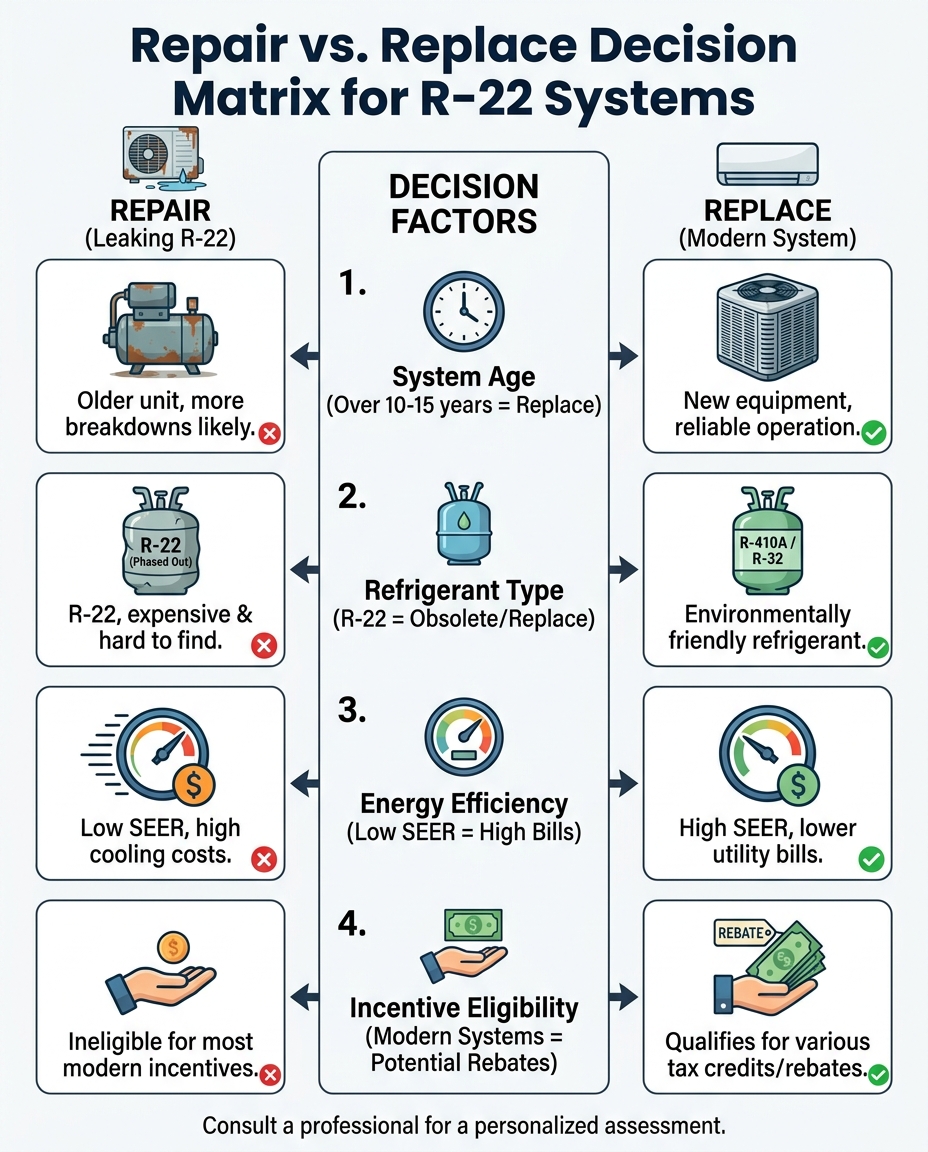
When you are sweating in your living room, you need a clear, scannable comparison framework to help weigh the pros and cons of recharging versus replacing. We believe in providing honest, transparent ROI advice here to help you avoid sinking money into an obsolete R-22 system when a replacement makes much more financial sense. Before making your choice, you might also consult a professional AC repair guide to fully understand the scope of typical cooling repairs.
The Objective Comparison
Use this decision matrix to evaluate your current situation logically, rather than reacting out of immediate frustration:
• Age of Equipment — Recharging the R-22 System: Extends the life of a unit already past its 10-15 year lifespan. — Upgrading to a Modern System: Resets the clock with a brand-new unit built to last 15+ years.
• Reliability Under Load — Recharging the R-22 System: High risk of secondary breakdowns during peak summer heat. — Upgrading to a Modern System: Guaranteed performance backed by a comprehensive manufacturer warranty.
• Energy Efficiency — Recharging the R-22 System: Outdated SEER ratings mean you continue paying high monthly utility bills. — Upgrading to a Modern System: Modern high-efficiency standards significantly lower monthly energy consumption.
• Long-Term Value — Recharging the R-22 System: Temporary relief with zero return on investment. — Upgrading to a Modern System: Permanent property improvement that adds lasting value to your home.

Weighing Sunk Costs Against Long-Term Efficiency
Addressing the financial aspect of this decision is critical. While an immediate repair might seem like the path of least resistance today, it is important to look at the bigger picture regarding your home's operational costs.
The Sunk Cost Trap
Here's the thing: spending money to top off an obsolete R-22 system offers zero return on investment. The refrigerant itself is highly restricted, making it a costly band-aid. Furthermore, because the leak is a symptom of failing copper coils, the new Freon will eventually leak out again. You are essentially pouring resources into a bucket with a hole in it. Every time the system runs low, your compressor works harder, drawing more electricity and driving up your monthly utility bills.
Unlocking Modern Efficiency and Incentives
On the other hand, modern systems offer significantly higher SEER (Seasonal Energy Efficiency Ratio) ratings. A higher SEER rating means the equipment uses far less electricity to produce the exact same amount of cooling. Upgrading eliminates the wasted energy of a struggling, older unit.
Additionally, generic federal tax credits and local utility incentives may be available for upgrading to qualifying high-efficiency systems. These programs are designed to reward homeowners who transition away from outdated, inefficient technology. By choosing to replace, you may offset a portion of the initial investment through these generic energy rebates. If the upfront commitment feels daunting, you can easily explore financing options for new installations that offer structured payment plans to make upgrading highly accessible.
Securing Reliable Comfort with a Modern Upgrade
Transitioning from the stress of an R-22 leak to the ultimate solution of a modern heat pump replacement brings immediate and lasting peace of mind. Making the decision to replace eliminates the ongoing anxiety of sudden summer breakdowns entirely.
The Environmental and Performance Benefits
Upgrading to a system that uses modern, environmentally friendly refrigerants ensures your home is compliant with current regulations and free from the scarcity issues of R-22. Modern heat pumps provide exceptionally consistent cooling, easily managing the July peak summer cooling load without straining. You also gain the immense reliability of a brand-new warranty and professional installation, ensuring that if anything does go wrong, you are fully protected.
Peace of Mind Through Professional Installation
For example, another local homeowner decided it was time for the installation of a new air conditioner, heater, and ducts after dealing with an unreliable, aging setup. During their first annual inspection a year later, the system was performing flawlessly. They noted that receiving quality equipment with a fair approach made the upgrade entirely worth it, and the new HVAC system has provided steady, worry-free comfort ever since. Protecting a new investment like this is simple when you enroll in an ongoing maintenance plan, which ensures routine check-ups keep the equipment running flawlessly year after year.
Frequently Asked Questions About R-22 Systems
Is it worth fixing an AC that leaks Freon?
Generally no, because leaks indicate a compromised system and R-22 is obsolete and highly restricted. A leak means there is a physical hole in the copper coils that will continue to widen over time. Patching it is often a temporary band-aid that leads to more expensive compressor failures down the line. Investing that money into a modern system is almost always the wiser choice.
Should I replace my R-22 air conditioner?
Yes, replacing is highly recommended due to the EPA phaseout, poor energy efficiency, and the high likelihood of continued breakdowns. Any unit still using R-22 is well past its expected 10-to-15-year lifespan. Upgrading provides better cooling performance, lower monthly utility bills, and the security of a new manufacturer warranty.
Can you still recharge an AC with R-22?
While recovered or stockpiled R-22 exists, it is scarce, and the production of new R-22 is completely banned. This scarcity makes recharging an older system a difficult and restrictive process. Furthermore, topping off a leaking system does not fix the underlying mechanical failure within the coils.
What happens if my AC runs out of R-22?
The system will blow warm air, the indoor coil may freeze over into a block of ice, and the compressor can suffer catastrophic damage if it continues to run. The compressor relies on the correct pressure of refrigerant to operate safely. Running it dry causes it to overheat and fail, which is a terminal event for the air conditioner.
Are there energy incentives for replacing an old R-22 system?
Many modern, high-efficiency systems may qualify for generic federal tax credits or local utility rebates. These programs are designed to encourage homeowners to adopt better, greener technology. Homeowners should always verify current programs and eligibility requirements with their local utility provider or a tax professional.
Take Control of Your Summer Comfort
The peace of mind that comes with a reliable, efficient cooling system far outweighs the temporary, stressful relief of an R-22 recharge. You deserve to relax in your home without worrying that the next afternoon heatwave will cause your patched air conditioner to fail again. By evaluating your equipment objectively, you can stop wasting resources on an obsolete unit and make a choice that adds lasting value to your property. We encourage you to get a professional, transparent evaluation of your current system to understand all of your options clearly. Take control of your comfort and explore a modern heat pump upgrade today.