


The Cost of Waiting for the First Freezing Night
Your thermostat says it is 68 degrees inside, but the chill settling into your living room tells a different story. You bump the heat up, wait for the familiar hum of the blower, and instead... nothing happens. Or worse, the vents start blowing cold air. This is the exact moment panic sets in for thousands of homeowners every year. Understanding why September is the exact right time for a furnace test run can save you from experiencing this freezing, frustrating scenario. If you need professional help right away, our expert Mountain View Heating team provides comprehensive heating services to get your Bend home warm again.
Many homeowners simply assume their heating system will work perfectly after sitting completely dormant all summer long. You flip the switch from "Cool" to "Heat," expecting instant comfort. However, complex mechanical systems do not like to sit idle. Over the warm months, dust settles over critical sensors, motor lubricants can stiffen, and electrical capacitors can lose their charge. When you wait for the first truly cold night to demand heavy performance from your furnace, you are asking a cold, stiff machine to sprint without a warm-up.
The Hidden Toll of Summer Inactivity
Our technicians frequently find that when a furnace sits unused from May through August, several subtle changes happen inside the cabinet. The flame sensor, a critical safety component, often develops a thin layer of oxidation or dust. If this sensor cannot detect a flame, it will shut the entire system down within seconds to prevent gas buildup. Blower motor bearings that haven't moved in months might struggle to turn smoothly, triggering built-in safety switches. These are tiny, easily resolvable issues that transform into massive headaches when discovered at midnight.
Discovering that your furnace blows cold air on the first 30-degree night means you instantly join a massive backlog of emergency calls. You are no longer just dealing with a broken furnace; you are dealing with regional supply and demand. Taking just 15 minutes on a mild September afternoon to run a preliminary thermostat test cycle is a strategic move we always recommend. By testing early during the September transition before 30-degree fall nights become the norm, you put yourself firmly in control of your home's comfort and maintenance schedule.
The High Desert Trap: Why Warm Afternoons Are Deceiving
The problem: In our years of keeping homes comfortable across Central Oregon, we've seen how massive diurnal temperature swings in early fall create a deceptive environment for homeowners trying to gauge when winter is actually arriving.
The cause: A comfortable 75-degree afternoon can rapidly drop 30 to 40 degrees by midnight. National Weather Service data confirms this rapid transition from summer heat to freezing fall nights is a hallmark of the High Desert climate. During the day, the sun warms your home's exterior, and that heat is absorbed by the building materials—a concept known as thermal mass. As the sun sets and the outside temperature plummets, your house slowly releases that stored heat. This process masks the severe cold outside, keeping your living room comfortable until well past sunset. By the time the thermal mass is exhausted and the indoor temperature finally drops, you are fast asleep, only to wake up shivering at 3:00 AM.
The solution: This false sense of security prevents proactive testing, leading to sudden, urgent heating needs across the region. Homeowners look at the afternoon forecast, see sunshine, and push furnace prep out another week. A proactive check aligns perfectly with the transition period before the severe cold permanently sets in across Bend and Central Oregon. Securing professional heating maintenance in Bend while the afternoons are still warm ensures your system is ready for the inevitable midnight temperature cliff.
How Diurnal Swings Impact HVAC Load
These massive temperature swings force your HVAC system to work exceptionally hard. In a single 24-hour period, your home might require minor air conditioning in the late afternoon and heavy furnace heating before dawn. This rapid switching stresses both the thermostat and the control board. Testing your system while the weather is still relatively mild allows you to verify that the reversing valve (if you have a heat pump) or the furnace ignition sequence operates correctly without the pressure of an active freeze.
Inside the Dispatcher's Office During the First Freeze Panic
Here at Mountain View Heating, our dispatchers know exactly when the "first freeze panic" hits—it is completely predictable. The moment the overnight forecast drops below freezing for the first time, our phone lines light up like a switchboard. Homeowners who waited to turn their heat on all discover their system issues at the exact same time.
During this massive spike in demand, wait times for emergency no-heat calls can stretch into a week-long queue. Dispatchers must perform difficult triage, prioritizing households with vulnerable residents or complete system failures over minor performance issues. If your furnace is making a strange noise but still producing some heat, you will likely be pushed to the back of the line.
The Holiday Weekend Bottleneck
Holiday weekends in early fall often exacerbate the schedule bottleneck when sudden failures occur. Late summer and early fall transitions bring unpredictable weather, and when a system fails during a long weekend, the disruption is severe. For example, one local homeowner reached out to us over the Labor Day weekend transition when their older heating unit failed completely. Our team was able to get out on a Saturday to diagnose the problem and provide space heaters to keep the family comfortable, ultimately replacing the exhausted 23-year-old unit the following Wednesday. (As a quick tip, upgrading an older failing unit is often a great time to explore generally applicable energy rebates or federal tax credits for qualifying high-efficiency installations, though we always advise verifying current programs with your utility provider or a tax professional). While we always strive to provide rapid emergency support, avoiding the emergency entirely is always the better option.
Testing in September isn't just about equipment health; it is a strategic move to jump the queue before local schedules are paralyzed. By identifying a problem before the September transition before 30-degree fall nights fully arrive, you can book a convenient Tuesday morning appointment rather than begging for a Friday night emergency visit.
How to Safely Perform a 15-Minute Thermostat Test Run
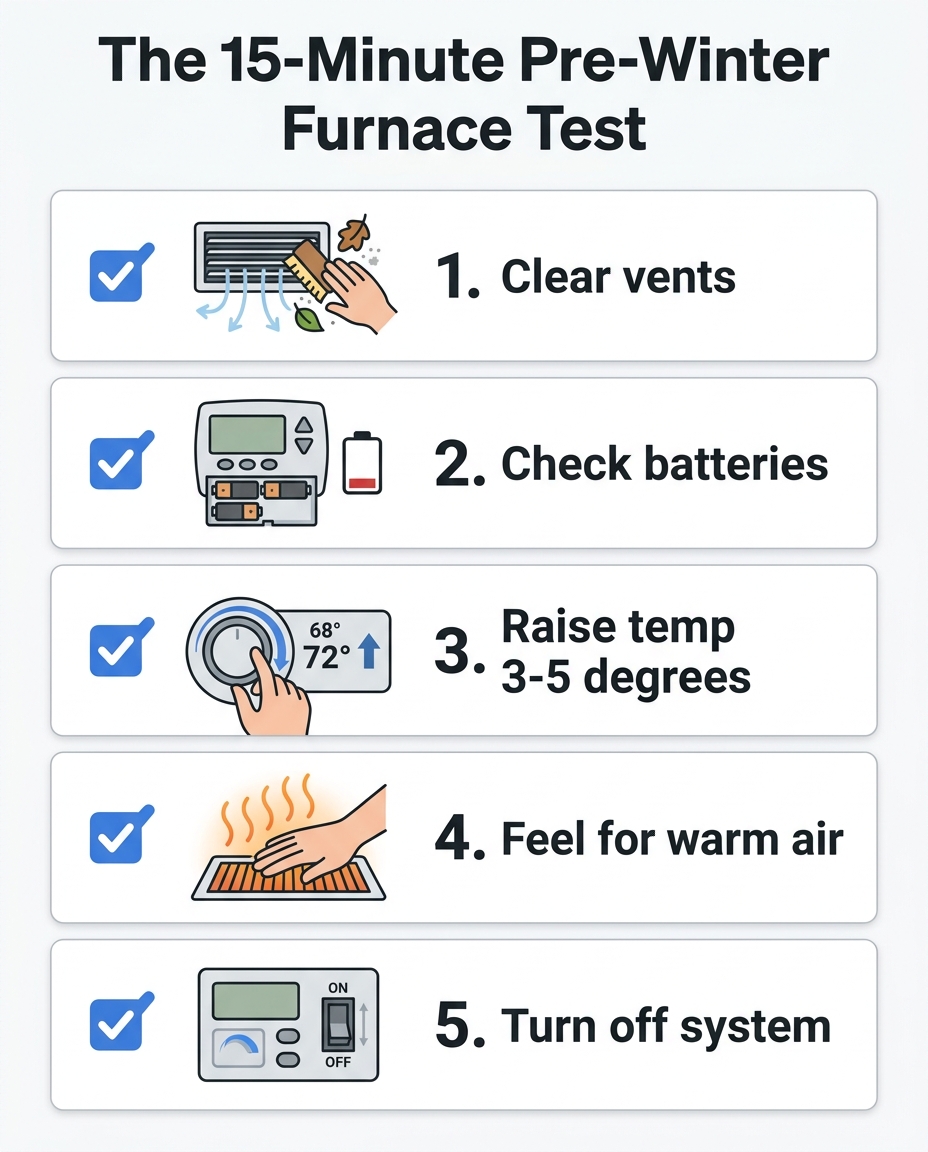
You do not need to be a mechanical expert to verify the basic operation of your heating system. Performing a test run is simply about observing how the system responds to a demand for heat. Here is how you can safely test your system in Bend and Central Oregon without ever needing to open the equipment cabinet.
1. Clear your airflow paths: Ensure all air vents and return grilles are open and unobstructed by furniture, heavy drapes, or thick rugs. Restricted airflow will cause the furnace to overheat and shut down prematurely.
2. Verify your power source: Check and replace the thermostat batteries if necessary. A blank thermostat screen or a flashing low-battery icon is the number one cause of "broken" furnaces in early fall.
3. Initiate the test cycle: Switch the thermostat from "Cool" or "Off" to "Heat." Manually raise the temperature setting 3 to 5 degrees above the current room temperature to force the system to call for heat.
4. Observe the startup sequence: Listen for the system to ignite. You should hear a click at the thermostat, followed by the inducer motor starting, the ignition sequence, and finally the main blower fan pushing air. Feel for warm air coming from the vents within a few minutes.
5. Complete the test: Once warm air is confirmed and the system has run steadily for about 10 minutes, turn the thermostat back down to your normal setting or switch the system back off.
Safety First: What NOT to Do
While testing at the thermostat is perfectly safe, you should never attempt to open the furnace cabinet, adjust gas valves, or bypass safety switches. If the system fails to ignite during your test, leave it off and call a professional. Modern furnaces contain high-voltage components and combustible gases that require specialized training to handle safely. If you notice an odd odor during this test, you might be wondering why your furnace smells like burning dust on the first fall morning—which is usually normal, but other sensory cues require professional attention.

What to Monitor During Your Preliminary Heating Check
Running the test is only half the process; you must also pay close attention to the sensory cues your system provides. Your furnace will often "tell" you it is struggling long before it completely breaks down.
• Temporary odors: A temporary burning smell is common and generally harmless as the system burns off dust that accumulated over the summer. This should dissipate within 15 to 30 minutes. If the smell persists, or if you smell electrical burning or rotten eggs (gas), shut the system down immediately.
• Unusual sounds: Listen for unusual banging, rattling, or squealing noises. A high-pitched squeal often indicates a failing blower motor belt or bearing. A loud bang upon ignition suggests delayed gas ignition, which is a serious safety hazard that requires immediate professional repair.
• Cycle length issues: Pay attention to short-cycling. If the system turns on, runs for two minutes, and shuts off rapidly without heating the house, this points to sensor failures, severe airflow restrictions, or an overheating heat exchanger.
• Temperature output: If the system blows cold air, runs continuously without reaching the set temperature, or fails to ignite entirely, it is time to call a professional before the rush begins.
Common Test Run Symptoms and Solutions
• Brief burning dust smell — Likely Underlying Cause: Summer dust burning off heat exchanger — Recommended Action: Monitor for 30 minutes; open a window.
• System runs briefly, shuts off — Likely Underlying Cause: Dirty flame sensor or clogged air filter — Recommended Action: Check filter; call for professional cleaning.
• Loud boom or bang on startup — Likely Underlying Cause: Delayed gas ignition — Recommended Action: Turn off immediately; schedule repair.
• Blowing cold air continuously — Likely Underlying Cause: Failed ignition sequence or pilot issue — Recommended Action: Schedule diagnostics before the freeze.
Catching these symptoms early during the September transition before 30-degree fall nights arrive gives you a massive advantage. If you identify an issue, you can schedule prompt furnace repair with our team while parts are readily available and technicians have open availability.
The Value of Proactive Fall Maintenance
A successful thermostat test is a great first step, but it is not a substitute for comprehensive care. A basic test run confirms the system turns on, but a professional tune-up ensures it runs safely and efficiently all season long. You might hear the blower running, but you cannot visually inspect the heat exchanger for microscopic cracks that could leak carbon monoxide into your home.
Routine maintenance catches minor ignition or sensor issues before they escalate under heavy winter load. A technician will clean the flame sensor, test the electrical draw of the blower motor, check gas pressure, and ensure all safety limits are functioning properly. This level of detail prevents the sudden breakdowns that happen when a neglected system is pushed to its absolute limit during a multi-day freeze.
Knowledge is Comfort
Thorough explanations during routine service help homeowners understand their systems better and gain confidence in their home comfort. During a routine fall furnace maintenance visit in Bend, one of our long-time customers noted how much they appreciated receiving a clear, easy-to-understand explanation of their heating system from our technician. We believe that an educated homeowner is an empowered homeowner. When you understand how your system operates, you are better equipped to notice when something sounds or feels slightly off.
Furthermore, pre-season maintenance optimizes energy efficiency, which is highly beneficial for the long heating season ahead. A clean, well-lubricated furnace runs shorter cycles and uses less fuel to maintain the same temperature, keeping your home comfortable without wasting energy.
How to Bypass the Queue Completely with Priority Scheduling
The problem: Even with early testing and proactive care, unexpected breakdowns can occasionally happen during peak winter months. Parts wear out, and extreme weather events put unprecedented strain on even the best-maintained equipment.
The cause: When these mid-winter failures occur, you are once again facing the massive service queue bottleneck, competing with hundreds of other homeowners for a limited number of emergency appointments.
The solution: Joining a dedicated maintenance program guarantees priority scheduling, allowing you to bypass the inevitable first-freeze rush entirely. By enrolling in the Mountain View Heating Comfort Club maintenance plan, you elevate your home to VIP status. Members receive proactive, scheduled tune-ups so they never have to remember to book an appointment during the busy season. We call you to schedule your service before the rush begins.
The VIP Advantage
This strategic approach provides ultimate peace of mind when the severe cold weather finally arrives. If a Comfort Club member experiences an unexpected issue during the September transition before 30-degree fall nights—or in the dead of winter—they skip the line. You will not be waiting a week for a technician to arrive; your call moves to the top of the board. Combining a quick 15-minute September test run with guaranteed priority service ensures you will never be left freezing in your own living room.
Frequently Asked Questions
When should I turn my furnace on for the first time?
Our technicians advise running a brief test cycle on your furnace in early to mid-September, before the overnight temperatures drop below freezing. Testing on a mild afternoon gives you ample time to schedule repairs if the system fails to ignite. Waiting until the first freezing night guarantees you will face long wait times for service if something goes wrong.
How do I test my furnace before winter?
To test your furnace, open all air vents, check your thermostat batteries, and switch the system to "Heat." Raise the temperature 3 to 5 degrees above the current room temperature and wait for the system to engage. Verify that warm air is flowing steadily from the vents for about 10 minutes, then return the thermostat to its normal setting.
Why does my furnace smell when I first turn it on?
A temporary burning smell is completely normal during the first startup of the season because the furnace is burning off dust that settled on the heat exchanger over the summer. This odor should dissipate within 15 to 30 minutes of continuous operation. If the smell persists, or if it smells like electrical burning or gas, turn the system off and call a professional.
Can I test my home heating system while it's still warm outside?
Yes, you can safely test your heating system on a warm afternoon. You only need to run the system for 10 to 15 minutes to verify that the ignition sequence works and the blower motor engages properly. Once you confirm warm air is blowing, you can simply turn the system back off until you actually need it.
What should I do if my furnace blows cold air during a test run?
If your furnace blows cold air, first verify that your thermostat is set to "Heat" and the fan is set to "Auto" rather than "On." If the settings are correct and the air remains cold after several minutes, turn the system off. This usually indicates an ignition failure or a safety lockout, which requires a professional technician to diagnose and resolve.
Taking control of your fall maintenance schedule means you never have to worry about the dreaded October rush. By testing your system early and securing priority service, you can rest easy knowing your home will stay warm exactly when you need it most.