


Is That Burning Smell an Emergency? What to Know Right Now
You just bumped up the thermostat to chase away the chill of a September first-frost, but instead of cozy warmth, you are wondering why your furnace smells like burning dust on the first fall morning. The vents start blowing, and suddenly, a harsh, smoky odor fills your hallways. Your first instinct is likely panic. Smelling something burning inside your house is always alarming, and it forces an immediate decision: do you shut the system down right now, or do you let it keep running?
Here is the good news: in the vast majority of cases, a brief burning dust smell when you turn on your heat for the first time is entirely normal. Before you reach for the phone to call the fire department, take a deep breath. At Mountain View Heating, Inc., we have decades of experience fielding these exact panic calls from Central Oregon homeowners during the first cold snap. We know exactly how stressful that sudden odor can be, but it usually comes down to a harmless process called heat exchanger burn-off.
To keep your home safe and comfortable, you need to know how to maintain your heating systems properly throughout the year. While a dusty odor is usually harmless, there are specific warning signs that mean you should turn your unit off immediately. Understanding the difference between normal seasonal burn-off and a true mechanical emergency is the key to keeping your home safe and your mind at ease.
Immediate Reassurance: How Long Does the Burning Dust Smell Last?
When you smell that dusty, hot-metal odor spreading through your Bend OR area home, our technicians know your most pressing question is how long you have to endure it. Having guided countless local families through this September transition, we find that knowing the normal timeline for this burn-off process helps you determine if your system is functioning correctly or if it needs professional attention.
If you find yourself needing furnace repair in Bend, it is often because a smell lingers far longer than it should. However, standard dust burn-off follows a very predictable pattern.
The 15 to 30-Minute Rule
The standard duration: In our experience servicing Central Oregon heating systems, the burning dust smell should completely dissipate within 15 to 30 minutes of your furnace running its first full heating cycle of the season.
The intensity curve: The smell will be strongest during the first five minutes. As the furnace continues to run, the odor should steadily decrease in intensity. By the time the thermostat reaches your desired temperature and the system cycles off for the first time, the smell should be barely noticeable.
The first cycle factor: The very first time your burners ignite after months of sitting idle is always when the smell is most potent. Subsequent cycles later in the day or later in the week should produce no noticeable odor at all.
What to Do While You Wait
While the smell is harmless, it can be irritating to your nose and throat. If the odor is bothersome during that initial 15 to 30-minute window, we recommend taking a few simple steps to make your home more comfortable:
• Open a few windows: Crack a few windows at opposite ends of the house to create a cross-breeze. This helps flush the stale, dusty air out quickly.
• Turn on ceiling fans: Keep the air circulating to prevent the smell from pooling in specific rooms or hallways.
• Monitor the time: Set a timer on your phone for 30 minutes. If the smell is still going strong or getting worse when the timer goes off, it is time to turn the system off at the thermostat.
The Science of the Smell: High Desert Summers and Your Heat Exchanger
To understand why this happens, we have to look at what goes on inside your heating system during the off-season. The burning smell is not a defect; it is a basic mechanical reality tied directly to our local climate.
Our team at Mountain View Heating, Inc. sees the effects of Bend's high desert environment firsthand. Dry, dusty summers mean you likely have your windows open to catch the breeze, or you are running your air conditioning to stay cool. During all of this time, the furnace's heat exchanger—the large metal component that actually heats the air—is sitting completely cold and idle.
Because your HVAC system shares the same ductwork and blower motor year-round, air is constantly moving past that cold heat exchanger all summer long. As that air moves, airborne particulates naturally settle on the metal surfaces. Pet dander, dead skin cells, pollen, and the fine, dry dust unique to our high desert climate all form a thin, invisible layer over the internal components of your furnace.
When you start preparing your home for the shift from cooling to heating season, that layer of dust is still sitting there.
The Mechanics of the "Burn-Off"
When the first cold snap hits and you switch your thermostat to "heat," the furnace burners ignite. The heat exchanger rapidly heats up, often reaching temperatures well over 140 degrees Fahrenheit in a matter of seconds.
That thin layer of accumulated summer dust cannot withstand the sudden, intense heat. It is instantly incinerated right there on the metal surface. As the blower fan pushes fresh air over the hot heat exchanger to warm your home, it picks up the fumes from that incinerated dust and blows them directly through your vents.
This is why the smell happens so suddenly and why it affects the whole house at once. It is a completely normal mechanical function of a combustion heating system in Bend OR area homes, not a sign that your equipment is failing.
Sensory Checklist: Decoding Normal vs. Dangerous Furnace Odors
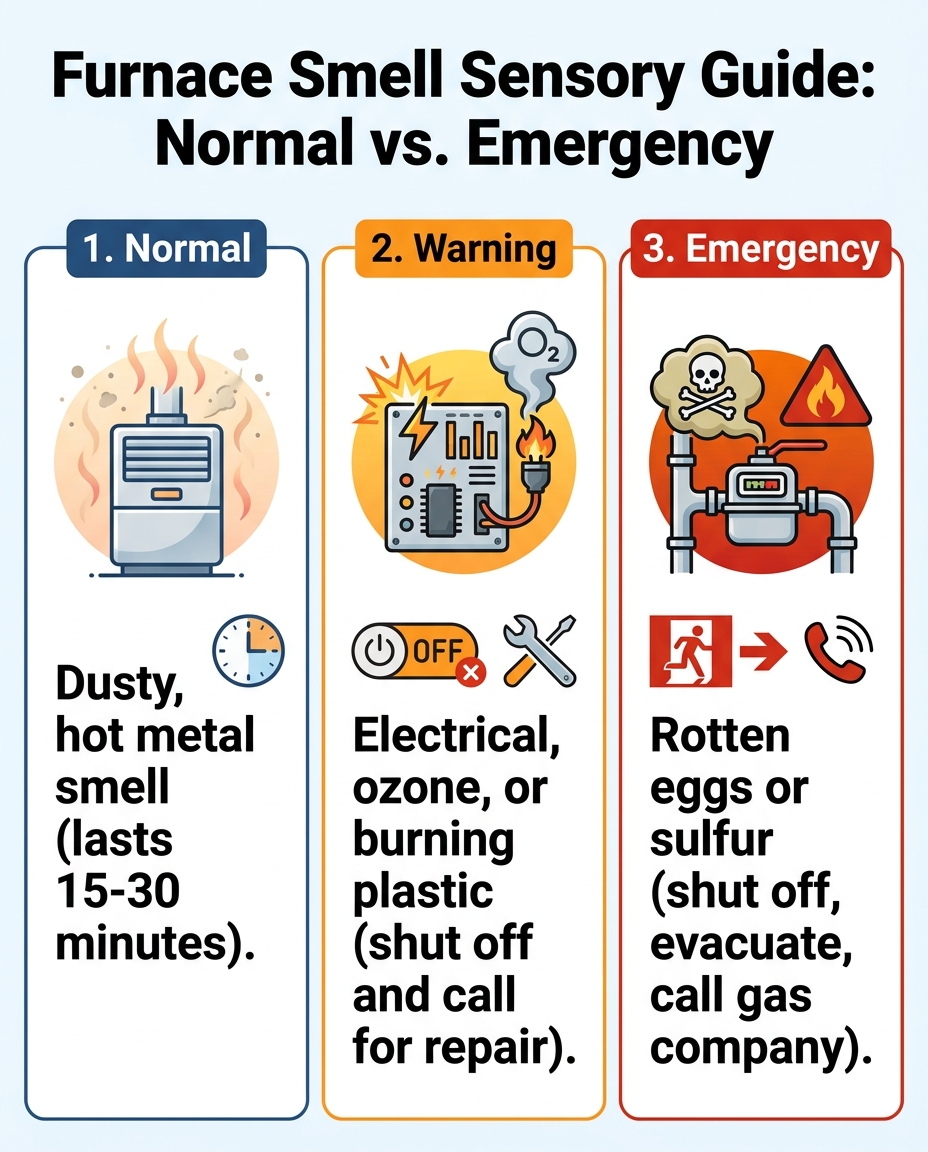
While burning dust is normal, other burning smells are absolute red flags. Your nose is one of the best diagnostic tools you have when dealing with a September first-frost heating start-up. Knowing how to categorize different odors can save your equipment from severe damage and protect your family from danger.
Over decades of responding to emergency fall heating calls, our dispatchers and technicians have categorized exactly what different smells mean:
• Hot clothes iron / dusty baseboard heater — What It Means: Normal dust burn-off on the heat exchanger. — Required Action: Let it run. Monitor for 15-30 minutes.
• Electrical melting / metallic burning — What It Means: An overheating blower motor, failing capacitor, or frayed wiring. — Required Action: Turn system off immediately. Call for repair.
• Ozone / burning plastic — What It Means: Melting wire insulation or a seized mechanical component. — Required Action: Turn system off immediately. Call for repair.
• Rotten eggs / sulfur / mercaptan — What It Means: A natural gas leak in or around the furnace. — Required Action: Evacuate the home. Call the gas company immediately.
When to Shut Down the System Immediately
If you detect the smell of electrical burning, melting plastic, or ozone, do not wait for the 30-minute timer to expire. Go straight to your thermostat and turn the system off. These odors indicate that a component is drawing too much amperage, a motor is seizing up, or wiring is actively melting. Letting the system run will only cause further, more expensive damage.
If you smell rotten eggs, you are smelling mercaptan—a chemical added to natural gas so leaks can be detected. This is a severe emergency. Do not turn on any lights, do not unplug anything, and do not use your cell phone inside the house. Evacuate your family outside immediately and call your local gas utility provider or emergency services from a safe distance.

Mitigating the Odor: Air Filters and Indoor Air Quality
While you cannot completely stop dust from settling in your Bend OR area home during the summer, you can take actionable steps to significantly reduce the amount of debris that reaches your furnace. The single most important factor in mitigating that burning smell is your air filter.
A dirty or clogged air filter causes a cascade of problems for your heating system. First, it forces the blower motor to work much harder to pull air through the restricted material. Second, a compromised filter allows fine particulate matter to bypass the media and settle directly onto the heat exchanger. Finally, when you turn the heat on, that dirty filter simply recirculates the dusty, smoky air back through your living spaces instead of trapping the airborne debris.
By investing in better indoor air quality solutions, you can capture more of that high desert dust before it ever reaches your heating equipment. Here is the simple filter management routine we recommend to all our Bend customers:
1. Check the filter before the first freeze: Do not wait until you actually need the heat. Pull your filter out in early September and inspect it. If you cannot see light through the material, it is time for a replacement.
2. Install a fresh filter for fall: Always start the heating season with a brand-new, high-quality pleated filter. This ensures maximum airflow and optimal dust capture during that crucial first cycle.
3. Consider your MERV rating: Standard fiberglass filters do very little to stop fine dust. Upgrading to a filter with a MERV rating of 8 to 11 will trap much smaller particles, keeping your heat exchanger cleaner and your indoor air fresher.
4. Monitor monthly: During periods of heavy use, or if we experience late-summer wildfires that introduce smoke and ash into the environment, you may need to change your filter every 30 to 60 days rather than the standard 90 days.
Breaking the Cycle: The Value of Routine Fall Maintenance
The most effective way to eliminate the burning dust smell entirely is to have the dust removed before the burners ever ignite. This is where professional preventative care makes a massive difference for your comfort and safety.
When you schedule a professional furnace tune-up before the September first-frost arrives, a technician physically cleans the internal components of your system. They wipe down the burner compartment, clear debris from the heat exchanger, and ensure that the ignitors and flame sensors are spotless. By removing the summer dust accumulation manually, there is nothing left to incinerate when you finally turn the thermostat to "heat."
Beyond just preventing bad smells, routine maintenance is a critical safety check. Just last fall, a local homeowner scheduled their routine furnace maintenance with our team after noticing a harsh burning smell the previous year. Our maintenance tech performed a comprehensive service on the system and showed them exactly where the high-desert dust had accumulated. By catching small electrical wear-and-tear early and cleaning the heat exchanger thoroughly, we provided the homeowner with excellent, understandable service and total peace of mind for the winter ahead.
A proper tune-up catches failing electrical components, loose wiring, and worn-out blower motors before they have a chance to overheat and cause those dangerous burning plastic smells. It breaks the cycle of neglect and ensures your system is operating safely, efficiently, and cleanly.
Frequently Asked Questions About Fall Furnace Odors
Is it normal for a furnace to smell like burning when first turned on?
Yes, a brief burning smell is completely normal when turning on your furnace for the first time in months. This is simply the dust and airborne particulates that settled on the heat exchanger during the summer burning off as the metal rapidly heats up.
How long should a furnace smell like burning?
The normal dust burn-off smell should last between 15 and 30 minutes during the very first heating cycle of the season. The odor will be strongest in the first few minutes and should steadily fade. If it lasts longer than an hour, turn the system off.
Can a burning smell from a furnace be dangerous?
While a dusty smell is harmless, smells resembling burning plastic, melting wire, ozone, or electrical metal are dangerous. These indicate overheating components or electrical failures. If you smell these specific odors, shut your system down immediately at the thermostat and call for professional repair.
Why does my heater smell like burning dust?
Your heater smells like burning dust because the heat exchanger sits idle all summer. Airborne debris naturally settles on the cold metal. When the burners ignite for the first time in fall, the sudden high temperatures instantly incinerate that thin layer of accumulated dust.
Does a burning smell mean my furnace is leaking carbon monoxide?
No, carbon monoxide is completely odorless, colorless, and tasteless. A burning smell does not indicate a carbon monoxide leak. However, a cracked heat exchanger can cause both unusual smells and carbon monoxide leaks, which is why having functional carbon monoxide detectors in your home is vital.
How can I prevent my furnace from smelling like burning dust next year?
We always tell our customers the best way to prevent the smell is to schedule professional furnace maintenance in the late summer or early fall. A technician will clean the heat exchanger and burner compartment, removing the dust manually so it does not burn off and circulate through your vents.
Breathe Easy This Fall With Expert Heating Support
At Mountain View Heating, Inc., we believe the transition into colder weather should bring comfort to your Bend OR area home, not stress and panic. While a brief burning dust smell on the first chilly morning is usually just a harmless sign that your system is waking up from its summer hibernation, our team strongly advises that you never ignore lingering odors, strange noises, or smells that resemble melting plastic and electrical issues.
You deserve the peace of mind that comes from knowing your heating system is safe, clean, and ready for whatever winter brings. If your furnace smell lasts longer than 30 minutes, or if you simply want to ensure your equipment is operating at peak safety and efficiency, scheduling a professional inspection is the smartest step you can take. Keep your filters fresh, trust your senses, and let the experts help you breathe easy all season long.