


What Causes That Sudden Rattling Noise in Your AC Vents?
Why is there a sudden, persistent vibration coming from your ceiling or floor registers right when you need cooling the most? Diagnosing a rattling noise from your AC vents often comes down to timing. If you hear this distinct sound specifically during late summer (August) afternoons, your system is likely working at maximum capacity to combat peak heat. That extra strain exposes minor quirks and mechanical flaws hidden within your home's infrastructure.
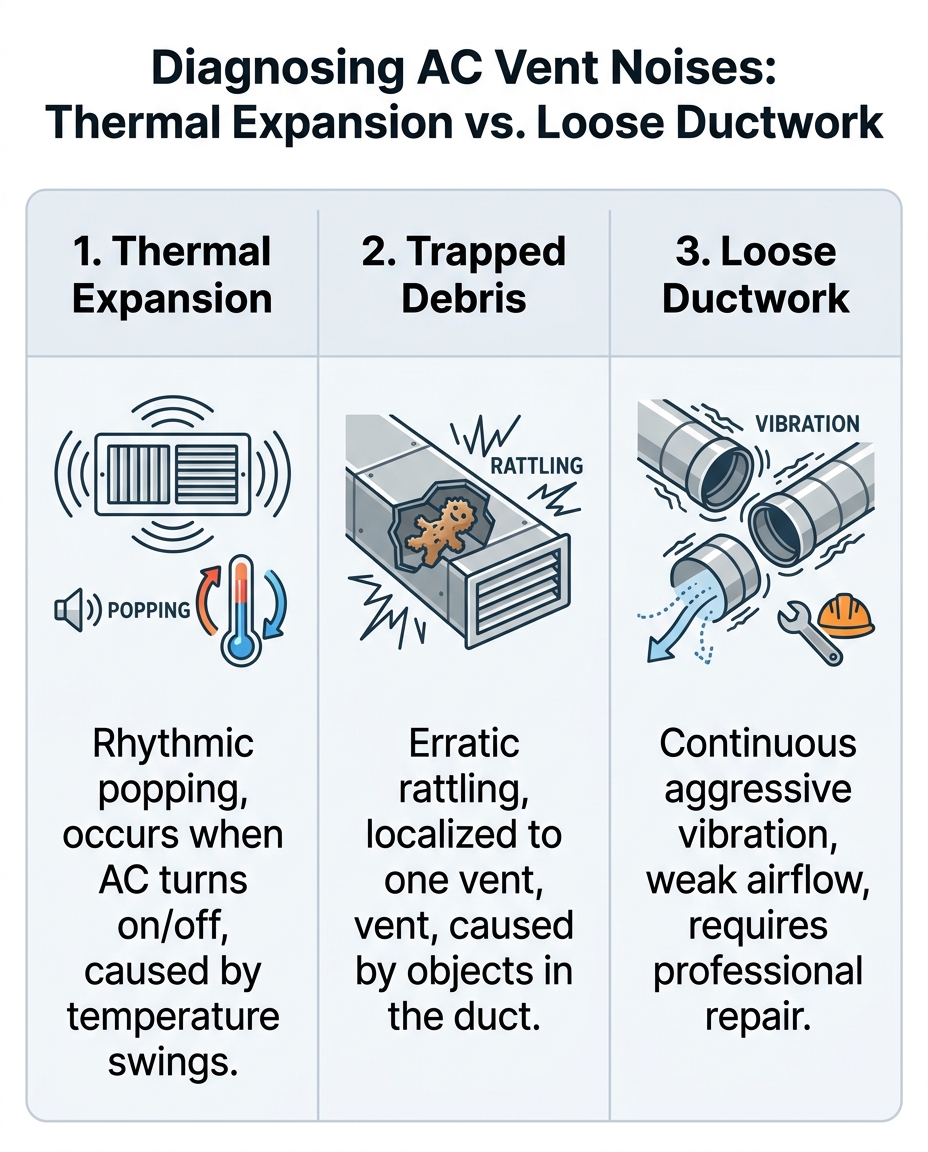
Most vent noises trace back to three primary culprits: thermal expansion, trapped debris, or mechanically loose ductwork. Some of these sounds are simply harmless physics at work. Others serve as an early warning sign that your system is losing conditioned air before it ever reaches your living space. Figuring out the difference helps you decide whether to ignore a minor annoyance or call a licensed professional to secure your system.
To better understand the mechanics behind your cooling setup, explore our comprehensive resources on air conditioning systems.
How High Desert Temperature Swings Trigger Thermal Expansion
Not every noise means your equipment is failing. In many cases, a rattling or popping sound is just metal reacting to rapid temperature changes. The ductwork running through your attic or crawlspace consists largely of galvanized sheet metal. Like most materials, this metal expands when it gets hot and contracts when it cools down.
Here in Bend OR, our high desert climate puts a unique strain on residential ductwork. We experience significant diurnal temperature swings—meaning hot late summer afternoons often drop into cool, crisp evenings. Your attic bakes in the sun all day, heating the metal ducts. The moment your thermostat calls for cooling, a blast of chilled air rushes through those hot pipes. That rapid temperature drop causes the metal to contract quickly, shifting against the wood framing of your house.
As a local team, Mountain View Heating understands exactly how Central Oregon's unique high desert climate impacts residential ductwork over a long cooling season. We frequently see systems that run perfectly well but still produce audible ticks, pops, and light rattles simply because the metal is flexing.
The Physics of Sheet Metal Ducts
Understanding why this happens can give you peace of mind. Here is what occurs behind your walls:
• Rapid material reaction: Galvanized steel has a high thermal conductivity, meaning it reacts almost instantly to the temperature differential between the attic air and the conditioned air inside.
• Friction against framing: Ducts are strapped to wooden joists and trusses. As the metal expands or shrinks, it rubs against these rigid wooden structures, creating a sound that echoes down into your living room.
• Pressure adjustments: The physical shifting of the metal can slightly alter the shape of the duct, causing a brief "oil-canning" pop—similar to pressing on the side of an empty soda can.
While minor thermal expansion noises can be annoying, they do not typically indicate a systemic failure. The sound usually fades a few minutes after the system starts or stops.
The Impact of High-Gear Blower Airflow on Vent Stability
Modern HVAC systems are designed to ramp up their power to meet extreme demands. When the outside temperature spikes, your system pushes a massive volume of air through an enclosed space to cool your home quickly. This creates a high-pressure environment inside your walls.
Static pressure is the resistance to airflow within your heating and cooling system. When your equipment pushes high-gear blower airflow through the ducts, the static pressure increases significantly. If your vents, registers, or internal dampers are even slightly loose, this maximum velocity air will cause them to vibrate rapidly against the drywall or flooring.
If you suspect airflow velocity is the issue, you can typically identify it by following these steps:
1. Listen for timing: Notice if the rattling only occurs when the system is blowing its absolute hardest, rather than during a low-speed fan cycle.
2. Check the register: Place your hand firmly (but gently) against the metal vent cover while the noise is happening. If the rattling stops instantly, the cover itself is vibrating against the wall.
3. Adjust the louvers: Sometimes, the small directional fins inside the vent are loose. Adjusting the angle slightly can change the aerodynamics and stop the vibration.
Properly balanced air distribution and ductwork will handle maximum airflow without excessive noise. If the vibration is severe, your system may be pushing too much air through ducts that are too small, creating a bottleneck that requires professional adjustment.
Trapped Debris: When Rattling Isn't Just the Metal
Sometimes the rattling isn't the structure of the ductwork at all—it is a physical object trapped inside. Over time, foreign objects can find their way into your floor registers or return vents. When the blower motor kicks on, the high-speed air catches these lightweight objects, tossing them around in the confined space.
Late summer winds in the high desert can easily introduce exterior dust, dried leaves, and debris into vulnerable parts of your home. Beyond natural debris, we frequently find construction materials like screws or drywall fragments, as well as small children's toys or pet kibble that have fallen through the floor grates.
This type of rattling sounds erratic and unpredictable, unlike the steady rhythm of thermal expansion. It is usually localized to a single vent rather than echoing through the whole house. Beyond creating an annoying noise, decaying debris in your ductwork can severely impact your indoor air quality by circulating dust and allergens throughout your living space.
Safe Visual Inspections
You can check for superficial debris safely, provided you follow a few basic rules:
• Power down first: Always turn off the system at the thermostat before removing a register to prevent the blower from kicking on while you work.
• Use a flashlight: Shine a bright light down into the vent opening to look for obvious obstructions resting just inside the boot.
• Keep tools out: Never insert vacuums, long brushes, or grabber tools deep into the ductwork. Modern flexible ducts are easily torn by sharp objects, turning a minor debris issue into a major repair.
Harmless Expansion vs. Failing Ductwork Connections
How do you know when a noise is just a quirk of the house versus a major mechanical failure? Providing a clear diagnostic framework helps you determine if the noise is a harmless quirk or a sign of disconnected ductwork.
Loose duct joints or completely disconnected segments are a serious issue. When the connections fail, your system pumps perfectly conditioned air straight into your attic or crawlspace. You end up paying to cool the outdoors while your living room stays hot. This constant high-gear blower airflow escaping through a narrow gap creates a loud, continuous, and aggressive vibration that sounds very different from standard metal popping.
• Sound Profile — Thermal Expansion (Harmless): Rhythmic popping, ticking, or light creaking. — Loose Ductwork (Requires Repair): Continuous, aggressive rattling or whistling.
• Timing — Thermal Expansion (Harmless): Occurs right after the system turns on or shuts off. — Loose Ductwork (Requires Repair): Persists the entire time the blower is running.
• Airflow Strength — Thermal Expansion (Harmless): Normal, strong airflow at the vent. — Loose Ductwork (Requires Repair): Noticeably weak airflow coming from the register.
• Temperature Impact — Thermal Expansion (Harmless): Rooms cool down evenly as expected. — Loose Ductwork (Requires Repair): Sudden warm spots or uneven cooling in specific rooms.
Failing ductwork often brings other unusual symptoms with it. If a return duct pulls apart in a hot, dusty attic, it will draw that stale air directly into your home. This is similar to diagnosing what a burning plastic smell means when your AC is running—the system is pulling in air from places it shouldn't. Persistent, loud rattling that doesn't fade after the system stabilizes is a red flag for structural duct issues.

The Risks of Investigating Attic and Crawlspace Ductwork Unassisted
When a rattling noise becomes unbearable, it is tempting to grab a roll of tape and head into the attic to fix it yourself. However, navigating hot, cramped attics or tight crawlspaces without proper safety equipment is highly dangerous. In Bend OR, summer attics can easily exceed 130 degrees, creating a severe risk of heat exhaustion within minutes.
Beyond the physical danger to yourself, there is a high risk of damaging the equipment. Modern insulated flex duct is surprisingly fragile. It is easily crushed, torn, or unsealed if handled improperly by an amateur. Stepping on a duct or leaning against a joint can create massive air leaks that weren't there before.
The balancing act: Your ductwork is a carefully calibrated network. Balancing static pressure requires specialized diagnostic tools. DIY tape jobs often fail to address the root cause of the pressure imbalance, causing the tape to blow off or the rattling to shift to a different part of the house. Homeowners should never attempt step-by-step repairs on licensed HVAC infrastructure. A misstep in the attic can easily result in thousands of dollars in structural damage or ruined equipment.
Securing Your System with Routine HVAC Maintenance
The most reliable way to stop your vents from rattling during those late summer (August) afternoons is to prevent the mechanical looseness from happening in the first place. Professional preventative maintenance identifies and resolves the root causes of rattling vents before they escalate into major comfort issues.
During a routine service visit, a licensed technician takes a comprehensive look at the entire air distribution system. A typical pattern we see is that homeowners are completely unaware their duct joints have slowly wiggled loose over five years of seasonal temperature swings. One local homeowner scheduled routine maintenance in the fall and was highly satisfied because the technician performed an above-and-beyond job, thoroughly explaining exactly how the heating and cooling system functioned and why certain vents were vibrating. Having an expert walk you through the mechanics makes the system much easier to understand.
When you schedule routine HVAC maintenance, the technician performs several vital checks to keep the system quiet:
1. Blower motor inspection: Checking the motor bearings and fan blades to ensure they are spinning smoothly without transferring heavy vibrations into the ductwork.
2. Static pressure testing: Measuring the airflow resistance to ensure the system isn't pushing too hard against closed dampers or undersized ducts.
3. Connection securing: Inspecting accessible duct joints to ensure the mastic sealant is intact and the mechanical fasteners are tight.
4. Register seating: Ensuring that all floor and ceiling vent covers are properly seated and secured against the drywall.
Frequently Asked Questions About Rattling Air Vents
Why is my AC vent rattling?
Your AC vent is likely rattling due to thermal expansion, trapped debris, or loose ductwork connections. When the metal ducts heat up in the attic and rapidly cool down as chilled air passes through, they expand and contract, causing a popping or rattling sound. High-speed airflow from the blower motor exacerbates these issues by vibrating loose vent covers or bouncing trapped debris inside the pipe.
How do I stop my air vent from rattling?
You can stop a surface-level rattle by ensuring the vent cover screws are snug against the wall or ceiling. Be careful not to over-tighten the screws, as stripping the drywall will make the vibration worse. If the rattling is coming from deep inside the ductwork, it requires a professional technician to properly seal and secure the mechanical joints.
Is a rattling AC dangerous?
While the rattling noise itself is not physically dangerous, it can be a symptom of failing mechanical components or disconnected ductwork. Disconnected ducts waste significant energy and can pull poor-quality, dusty air from attics or crawlspaces into your living areas. Ignoring a severe, continuous rattle can lead to premature blower motor failure due to imbalanced static pressure.
Can ductwork make a rattling noise?
Yes, ductwork frequently makes noise, especially galvanized metal reacting to sudden temperature changes. It is normal to hear a light popping or ticking as the metal expands and contracts against the wooden framing of your house. However, you should differentiate between normal, brief metal popping and the constant, aggressive rattle of a loose connection.
How do I know if my ductwork is loose?
You likely have loose ductwork if you hear persistent rattling that doesn't stop, notice weak airflow at the register, or experience unexpected warm spots in certain rooms. A loose joint allows high-gear blower airflow to escape into the walls or attic before it reaches your room. We recommend a professional static pressure test for a highly accurate diagnosis.
Does thermal expansion cause permanent damage to vents?
Sheet metal ductwork is specifically designed to handle standard expansion and contraction without suffering permanent damage. The material flexes naturally as temperatures shift. However, over many years, extreme and constant temperature swings can slowly loosen the mechanical screws and mastic seals at the joints, which is why annual preventative maintenance is necessary.
Why does the rattling only happen during the hottest part of the day?
The rattling happens during peak heat because your HVAC system runs at maximum capacity to keep up with the thermostat setting. The blower motor pushes the highest volume of airflow during this time, creating maximum static pressure. This intense air velocity causes any slightly loose components, dampers, or vent covers to vibrate aggressively.
Restore Quiet to Your Home's Cooling System
A noisy cooling system can make your home feel chaotic, especially during those long, hot late summer (August) afternoons. While a little bit of thermal expansion is completely normal for metal ducts, a loud, persistent rattling should not be ignored. It is usually your system's way of telling you that air is escaping or pressure is building up. Leave the dangerous attic inspections to the licensed experts. Talk to a professional technician to ensure your air distribution system is secure, efficient, and running quietly so you can get back to enjoying a comfortable home.