


The Chilly Illusion: Why Your Thermostat Setting Doesn't Match How You Feel
Your furnace is running nonstop, but you are still shivering on the couch under a heavy blanket. Understanding how dry fall air impacts your home's perceived warmth is the key to solving this frustrating and common seasonal problem. In our years of helping Bend families at Mountain View Heating, we constantly hear the assumption that if the thermostat says the room is warm, the body should feel warm. However, temperature is only half of the indoor comfort equation.
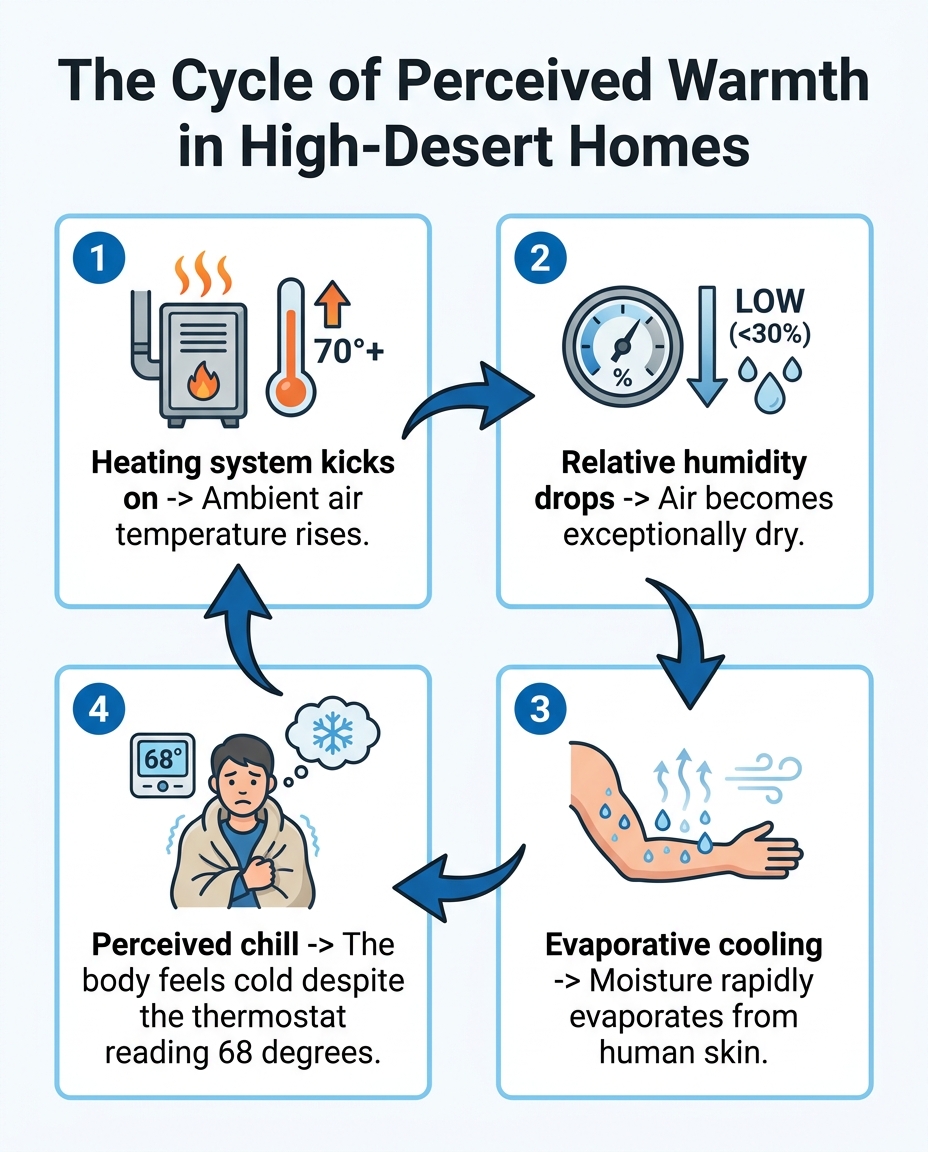
When you see exactly 68 degrees on the thermostat, you expect a perfectly comfortable living space. Instead, the air feels thin, harsh, and surprisingly chilly. This disconnect happens because of a concept known as "perceived warmth"—how the ambient air actually interacts with your body's natural thermal sensors. In dry climates, the ambient air temperature does not directly translate to how warm you actually feel.
To fix this chilly illusion, you have to look beyond the temperature dial. By addressing the invisible moisture levels in your home, you can bridge the gap between what the thermostat reads and how your family actually feels. Modern home heating systems are incredibly efficient at warming the air, but without proper moisture management, they can inadvertently make your living space feel colder than it should.
The Science of Psychrometrics and Skin Evaporation
To understand why a seemingly warm room leaves you shivering, we have to look at psychrometrics. This is the scientific study of moist air and its direct effect on human comfort. Psychrometrics proves that the human body does not just feel heat; it feels the rate at which moisture evaporates from the skin. When that evaporation happens too fast, you feel cold, regardless of the room's actual temperature.
Relative vs. Absolute Humidity
The confusion usually starts with how we measure moisture in the air. Absolute humidity is the actual, physical amount of water vapor floating in the air. Relative humidity, on the other hand, is how much water the air is holding compared to the maximum amount it could hold at its current temperature. Warm air acts like a giant sponge—it can hold significantly more water than cold air.
When you experience those sharp September early fall temperature drops, the chilly outside air holds very little absolute moisture. When your furnace pulls that air inside and heats it up, the air's capacity to hold water expands rapidly. Because no new moisture was added, the relative humidity plummets. The air becomes incredibly "thirsty" and starts looking for moisture wherever it can find it.
The Evaporative Cooling Effect
When your home's air becomes thirsty, it pulls moisture from the most available source: you. The dry indoor air accelerates the evaporation of natural moisture from your skin. In the summer, evaporative cooling is a great thing—it is how sweating keeps you from overheating. In the fall and winter, however, this exact same physiological process works against you.
This rapid evaporation acts like a constant, invisible breeze blowing across your skin. It tricks your body's thermal sensors into feeling a draft that simply is not there. As the moisture leaves your skin, it takes your body heat with it. This is the exact scientific reason why a room heated to 70 degrees with 15% humidity feels significantly colder than a room heated to 68 degrees with 40% humidity.

Why High-Desert Autumns Amplify the Indoor Chill
Generic heating advice often assumes that severe indoor dryness only happens during the darkest, coldest days of deep winter. Our team at Mountain View Heating knows firsthand that if you live in the Bend, OR high desert, this standard advice falls short. Our regional climate operates by a different set of rules, and the indoor chill sets in much earlier in the season.
The natural elevation and unique geography of Central Oregon result in extremely low ambient humidity year-round. We do not have the heavy, muggy autumns experienced in the Midwest or the South. Instead, our crisp fall days transition into freezing nights very quickly. These rapid evening temperature drops prompt homeowners to turn on their furnaces weeks before people in other climates touch their thermostats.
Because the outside air in the high desert is already devoid of moisture, the moment your furnace kicks on for the season, it creates exceptionally dry indoor air. You are not just dealing with standard winter dryness; you are dealing with a compounded effect. The furnace bakes the little remaining moisture out of the air, instantly triggering the evaporative cooling effect on your skin. This is why high-desert residents often feel that harsh, biting indoor chill the very first week of fall.
The Energy Trap: Cranking the Heat vs. Adding Moisture
When you feel cold sitting in your living room, the most natural reaction is to walk over and nudge the thermostat up another degree or two. While this might provide a brief blast of warm air, it quickly turns into a frustrating and wasteful energy trap. You are treating the symptom rather than the underlying cause.
Every time you force your furnace to burn more fuel to heat already dry air, you lower the relative humidity even further. You are essentially making the air thirstier, which increases the rate of evaporation from your skin. You might get exactly 68 degrees on the thermostat—or even 72 degrees—but the vicious cycle of evaporative cooling means you will still feel a lingering chill. This results in massive energy waste, as your furnace runs longer and harder just to overcome the physical cooling effect happening on your skin.
Instead of fighting a losing battle with the temperature dial, moisture management is the scientifically sound alternative. By adjusting the humidity, you can achieve true comfort while optimizing your thermostat settings for better efficiency.
• Cranking the Thermostat — Impact on Relative Humidity: Lowers humidity further by heating dry air. — Impact on Perceived Warmth: Minimal improvement; rapid skin evaporation continues. — Energy Efficiency: Poor. Furnace runs constantly to overcome the chill.
• Adding Whole-Home Humidity — Impact on Relative Humidity: Maintains balanced moisture levels (30-60%). — Impact on Perceived Warmth: High improvement; stops the evaporative cooling effect. — Energy Efficiency: Excellent. Allows for a lower thermostat setting while feeling warmer.
Reclaiming Comfort with Whole-Home Humidity Control
The secret to staying warm in the Bend, OR high desert is not a bigger furnace; it is balanced indoor moisture. The American Society of Heating, Refrigerating and Air-Conditioning Engineers (ASHRAE) and the EPA both recommend maintaining indoor relative humidity between 30% and 60%. Staying within this sweet spot optimizes both human health and perceived thermal comfort.
While portable room humidifiers can offer a slight bump in moisture for a single bedroom, they are completely unmatched against the powerful airflow of a central heating system. They simply cannot output enough water vapor to impact a home's overall perceived warmth. To truly reclaim your comfort, whole-home humidity control solutions integrate directly into your existing ductwork. As the furnace blows warm air, the humidifier injects a precise amount of water vapor, distributing balanced, comfortable air into every single room.
Just last season, our technicians helped a local homeowner who experienced a significant problem with their system's humidifier, leaving their entire house feeling uncomfortably cold despite the heating running constantly. Our team quickly detected the problem and repaired the unit. Once the moisture balance was restored, the home immediately felt warmer, resolving the issue and exceeding their expectations for comfort. Maintaining this proper humidity allows you to lower your thermostat settings, achieving cozy warmth without excessive energy use.
The Role of Professional IAQ Solutions
Managing your home's moisture is a foundational part of broader indoor air quality (IAQ) improvements. Dry air does not just make you feel cold; it also dries out your nasal passages, aggravates allergies, and can even cause hardwood floors to crack. Professional installation of whole-home humidity control solutions ensures that moisture levels are perfectly balanced. A professional setup prevents over-humidification, protecting your windows from condensation while keeping your family perfectly comfortable.
Preparing Your Heating System for High-Desert Realities
An efficient furnace and a properly functioning humidifier go hand-in-hand. You cannot optimize one while ignoring the other. Before the deep winter freeze sets in, preparing your heating equipment for the specific realities of Central Oregon is critical. Our team at Mountain View Heating brings decades of local expertise in managing high desert HVAC challenges, ensuring systems are prepped specifically for our unique climate.
When those September early fall temperature drops arrive, a comprehensive pre-season check ensures everything is calibrated for dry weather. During a routine furnace maintenance visit last fall, one of our maintenance techs performed a thorough service for a local customer and took the time to explain exactly how the heating system interacts with the home's air distribution. This level of comprehensive care prevents mid-season breakdowns.
A thorough preparation process should always include a few critical steps:
1. Inspect and clean the burners: Ensures the furnace is generating heat safely and efficiently without wasting fuel.
2. Test the indoor air quality components: Verifies that the humidifier water panel is clean, the solenoid valve is operating, and moisture is successfully entering the airstream.
3. Calibrate the thermostat and humidistat: Ensures the sensors are accurately reading the room's current conditions so the system does not overwork.
4. Evaluate system airflow: Checks for duct leaks or blockages that might trap warm, moist air in the basement rather than delivering it to your living spaces.
Our technicians can help you understand exactly how your specific equipment interacts with local climate factors. Scheduling routine heating maintenance early in the fall ensures your comfort systems are ready to handle the dry, freezing months ahead without missing a beat.
Frequently Asked Questions About Indoor Humidity and Comfort
Understanding the relationship between temperature and moisture can be complex. Managing this balance is a key part of broader indoor air quality improvements. Here are the most common questions homeowners ask about staying warm in dry climates.
Why does 68 degrees feel cold in my house during the fall?
It feels cold because low indoor humidity accelerates the evaporation of moisture from your skin. This natural physiological process acts like a constant breeze, pulling body heat away from you. Even though the ambient air is 68 degrees, the evaporative cooling effect tricks your body into feeling much colder. Adding moisture to the air slows down this evaporation, making the room feel true to temperature.
Does adding a humidifier make a room feel warmer?
Yes, adding a humidifier makes a room feel significantly warmer without actually raising the temperature. By increasing the moisture in the air, you stop the rapid evaporation of water from your skin. This allows your body to retain its natural heat. Many homeowners find they can lower their thermostat by two or three degrees after installing a humidifier and still feel perfectly cozy.
What is the ideal indoor humidity in fall and winter?
The ideal indoor relative humidity during the fall and winter months is between 30% and 50%. This range is recommended by ASHRAE to balance human comfort, respiratory health, and home protection. If humidity drops below 30%, you will experience dry skin, static shocks, and a perceived chill. If it rises above 50% during freezing weather, you risk condensation forming on cold windows.
How does dry air affect my heating bills?
Dry air negatively impacts your heating bills by forcing you to turn up the thermostat to feel comfortable. Because dry air makes you feel colder, you naturally demand more heat from your furnace, causing it to run longer cycles. By maintaining proper humidity, you feel warmer at a lower temperature setting. This reduces the workload on your furnace and prevents unnecessary energy consumption.
Are portable humidifiers enough for a high-desert home?
Portable humidifiers are generally not enough to combat the extreme dryness of a high-desert home. While they can provide a slight benefit to a single, closed-off bedroom, they cannot keep up with the constant circulation of a central heating system. A whole-home humidifier is required to distribute adequate moisture evenly throughout the entire house. This is the only way to effectively change the perceived warmth of your main living areas.
How can I measure my home's relative humidity?
You can easily measure your home's relative humidity using a small, inexpensive device called a hygrometer. Many modern smart thermostats also have built-in hygrometers that display the indoor humidity right on the screen. If your reading consistently falls below 30% when the heat is running, it is time to look into moisture management solutions. Monitoring this number is the first step to optimizing your indoor comfort.
Take Control of Your Home's Comfort This Fall
True comfort requires balancing both temperature and moisture. When you only focus on the heat, you leave yourself vulnerable to the harsh, skin-chilling effects of dry air. If you are tired of seeing 68 degrees on the thermostat but still feeling freezing cold, it is time to stop fighting the temperature dial and address the root cause of the chill.
By understanding the science of perceived warmth, you can take proactive steps to improve your home's environment. Managing your indoor humidity is the smartest way to achieve cozy, consistent warmth without overworking your furnace. Take control of your comfort this season and explore how whole-home moisture solutions can transform the way your home feels.