


The First Frost: Navigating Your Heating System's Wake-Up Call
The overnight temperature just plummeted, and while you know it is time to run through your seasonal home maintenance checklist, flipping the thermostat from 'cool' to 'heat' can trigger a wave of anxiety. Here at Mountain View Heating, Inc., we know that sudden drop in the mercury forces homeowners to make an abrupt switch. For months, your furnace or heat pump has sat dormant, gathering dust while the air conditioner handled the heavy lifting. Now, as the October first-freeze sets in across the region, you are asking that idle equipment to wake up and immediately perform at peak capacity.
Turning on the heating system for the first time often comes with unexpected quirks. You might notice a strange odor wafting through the vents, or hear unfamiliar pops and bangs echoing from the ductwork. These sensory signals can be alarming, leaving you wondering if your home is safe or if you are about to face a major mechanical failure right as the cold weather hits.
As you wrap up your cooling needs for the year, the focus naturally shifts toward preparing a closed-up home for winter, which means prioritizing indoor air quality solutions and heating reliability. The goal of this guide is to share our firsthand knowledge and provide a definitive, step-by-step checklist to help you distinguish between normal startup behaviors—like harmless dust burn-off—and genuine mechanical red flags that require professional intervention from our team before the deep freeze arrives.
Phase 1: Transitioning from Summer Smoke to Fall Warmth
Seasonal maintenance does not begin with simply turning on the heater; it starts with properly retiring your cooling system for the year. Bridging the gap between the end of the summer cooling season and the beginning of the fall heating season requires a few critical, proactive steps. In our years of experience servicing homes across Bend and the Central Oregon high desert, we know the semi-arid, dusty summer conditions leave residual dust and particulates trapped inside your ductwork and system components.
Heavy summer usage takes a toll on your equipment, especially during periods of poor outdoor air quality. When you transition from Running Your AC During Bend Wildfire Smoke to preparing the indoor unit for heat distribution, that accumulated debris becomes a primary factor in how your system performs.
Follow these numbered steps to properly transition your system for the fall:
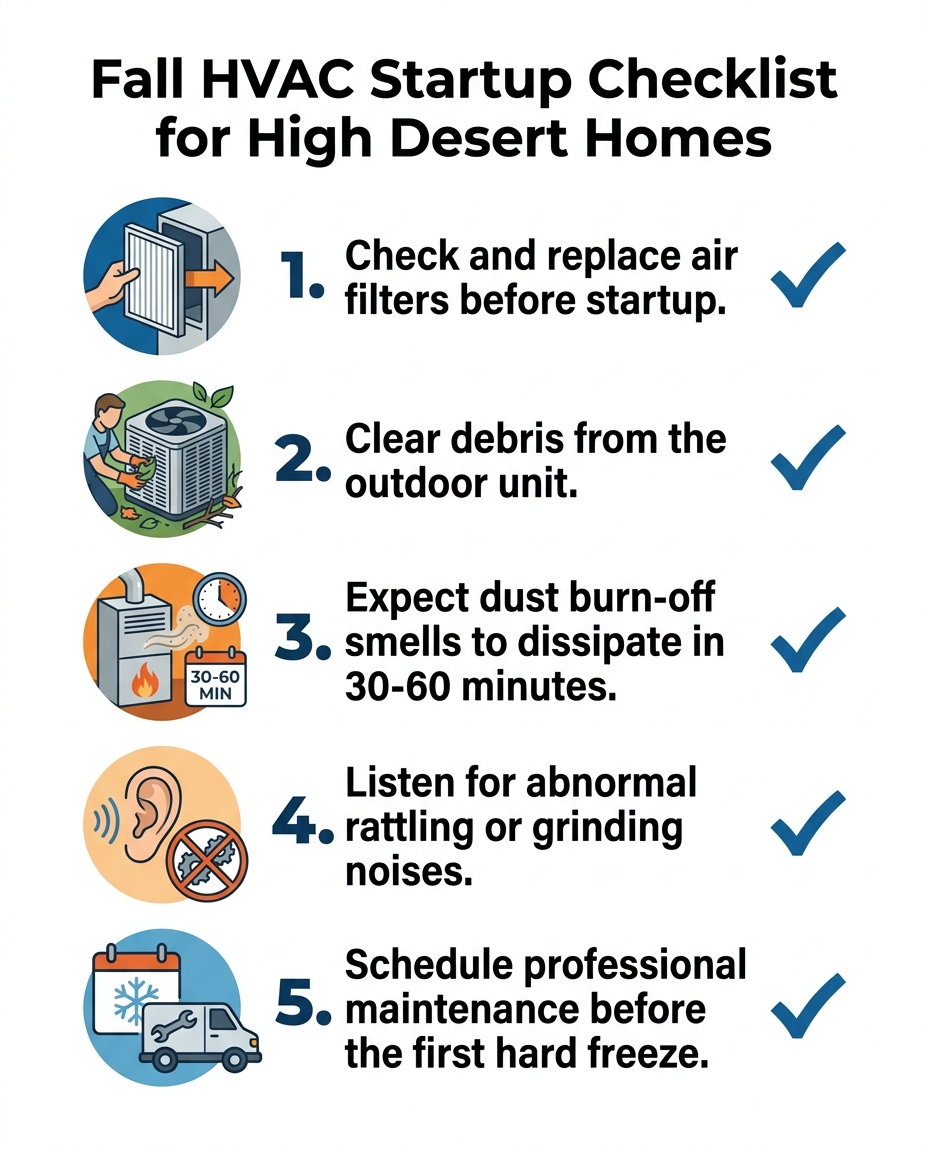
1. Evaluate and replace the air filter: After a long summer of filtering out wildfire smoke, pollen, and high-desert dust, your current filter is likely heavily loaded. A clogged filter restricts airflow, forcing the blower motor to work harder and increasing the risk of overheating when the furnace kicks on. Swap it out for a fresh, high-quality pleated filter before initiating the first heating cycle.
2. Clear exterior debris from the outdoor unit: Heat pumps require unobstructed airflow to extract heat from the outside air. Over the summer and early fall, leaves, pine needles, twigs, and dust can accumulate around the base and coil fins of the outdoor cabinet. Carefully clear away any vegetation or debris within a two-foot radius of the unit before the frost sets in, ensuring the system can breathe freely.
3. Inspect the indoor cabinet exterior: Take a look at the area surrounding your indoor furnace or air handler. Ensure that no boxes, stored items, or flammable materials have been stacked against the unit over the summer. The system needs adequate clearance for safe operation and proper ventilation.
4. Check your thermostat settings: Before turning the system on, verify that your thermostat is set to 'heat' and that the fan is set to 'auto.' If you have a programmable or smart thermostat, take a moment to update your heating schedules to align with your family's fall routines.
Phase 2: Decoding the 'Burning Dust' Phenomenon
The Problem: You turn on the thermostat for the first cold night of the season, and within minutes, a distinct burning smell fills the house. Our dispatchers take dozens of calls about this every October—it is the most common and urgent concern homeowners face during the first freeze, often leading to immediate panic and a rush to turn the system back off.
The Cause: The science behind this phenomenon is entirely normal. Over the idle summer months, airborne particles, pet dander, and household dust settle onto the heat exchangers and heating elements inside your furnace or air handler. When the system fires up for the first time, these components rapidly reach high temperatures. The accumulated dust literally incinerates, producing a noticeable odor that gets distributed throughout your home via the ductwork.
The Solution: Apply the 30-to-60-minute rule. In a healthy, functioning system, the burning dust smell should begin to dissipate within half an hour to an hour of continuous operation. Open a few windows to allow fresh air to circulate and let the system run. If the smell fades, your system has successfully cleared the summer dust accumulation.
When a Smell Warrants Shutting Down the System
While burning dust is harmless, other odors are critical warning signs. It is vital to contrast normal dust smells with dangerous electrical, melting plastic, or persistent gas odors. If you detect any of the following, turn off the system immediately at the thermostat and contact our professionals:
• Acrid, electrical burning: A smell resembling melting plastic or burning wire insulation indicates an overheating electrical component, a failing motor, or a short circuit.
• Ozone or metallic odors: Often described as the smell of an overheated appliance, this can point to a blower motor that is seizing up or drawing too much amperage.
• Sulfur or rotten eggs: This is the universal warning sign of a natural gas leak. Leave the house immediately and call your utility provider or emergency services.
• Persistent odors: Any burning smell that lasts beyond the first hour or two of operation indicates a mechanical or electrical failure, not seasonal dust.
The quick fix: Never attempt DIY electrical or gas checks. If the smell falls into a red-flag category, leave the system powered down until one of our trained technicians can perform a comprehensive diagnostic.

Phase 3: Investigating Strange Startup Noises
Just as smells can be deceiving, the sounds your heating system makes upon startup require careful interpretation. As the Central Oregon high desert transitions into colder weather, the equipment undergoes significant thermal stress. Understanding whether these sounds are normal expansion and contraction or signs of mechanical failure is a crucial part of your seasonal home maintenance checklist.
Normal sounds typically include mild popping, clicking, or pinging. When the furnace ignites and sends a surge of hot air into cold metal ductwork, the metal naturally expands. This expansion creates a popping sound that echoes through the vents. Similarly, you may hear a soft click from the thermostat or the furnace control board as relays engage. These noises are harmless operational quirks.
Warning sounds, however, are loud, persistent, and jarring. Rattling, screeching, or metal-on-metal grinding are immediate red flags. A loud rattling often indicates a loose blower motor wheel, compromised mounting hardware, or physical debris caught inside the blower assembly. Screeching typically points to a worn-out belt or unlubricated motor bearings that are struggling to spin after months of inactivity.
Complex heat pump issues can also manifest as strange noises upon startup. Recently, our team at Mountain View Heating responded to a homeowner with a complicated problem with their heat pump after they noticed unusual, aggressive vibrating sounds during the transition to heating mode. Our technician identified the underlying mechanical issue, developed a targeted fix, and repaired the system quickly before the cold weather fully set in. Catching these noises early prevents minor adjustments from turning into complete system failures.
The Danger of Ignoring Banging or Grinding
Ignoring mechanical noises leads directly to cascading component failures. A slightly loose blower wheel might only rattle at first, but over time, the imbalance will destroy the motor bearings and eventually shatter the wheel itself, turning a simple adjustment into an expensive replacement.
• Mild popping or pinging — Likely Cause: Ductwork expanding with heat — Required Action: None (Normal operation)
• Soft clicking at startup — Likely Cause: Thermostat relays engaging — Required Action: None (Normal operation)
• Loud rattling or vibrating — Likely Cause: Loose blower wheel or cabinet panel — Required Action: Schedule professional inspection
• High-pitched screeching — Likely Cause: Failing motor bearings or bad belt — Required Action: Shut down system; call technician
• Metal-on-metal grinding — Likely Cause: Severe internal component failure — Required Action: Shut down immediately; emergency repair
Reiterate to yourself that opening the cabinet to investigate moving parts is deeply unsafe for untrained homeowners. Modern HVAC systems contain high-voltage capacitors and rapidly spinning components. Always leave internal cabinet inspections to a licensed professional.
Phase 4: Evaluating Airflow and Heat Pump Loads
Once you have verified that the startup smells have dissipated and the system sounds normal, the next phase is checking the functional output. A system that runs quietly but fails to deliver adequate heat is still a system in distress. Evaluating airflow is a critical step in verifying that the transition from air conditioning services to winter heating has been successful.
Working in Bend's 3,623-foot elevation, our technicians see firsthand how the extreme diurnal temperature variations in the fall affect local HVAC units. It is not uncommon for daytime temperatures to be comfortably warm, only for the mercury to plummet rapidly at night. These rapid day-to-night temperature swings place a sudden, heavy load on heat pumps, forcing them to ramp up aggressively after sitting idle during the day.
Use this checklist to evaluate your system's functional output during the October first-freeze:
• Check all room vents for consistent airflow: Walk through your home and hold your hand over the supply registers. The airflow should feel steady and distinctly warm. If certain rooms feel weak while others are strong, you may have ductwork issues, closed dampers, or a failing blower motor struggling to push air to the furthest reaches of the house.
• Verify the return air paths are clear: Ensure that no furniture, rugs, or heavy curtains are blocking the large return grilles in your home. The system needs to pull in as much air as it pushes out; starving it of return air will cause the equipment to overwork and overheat.
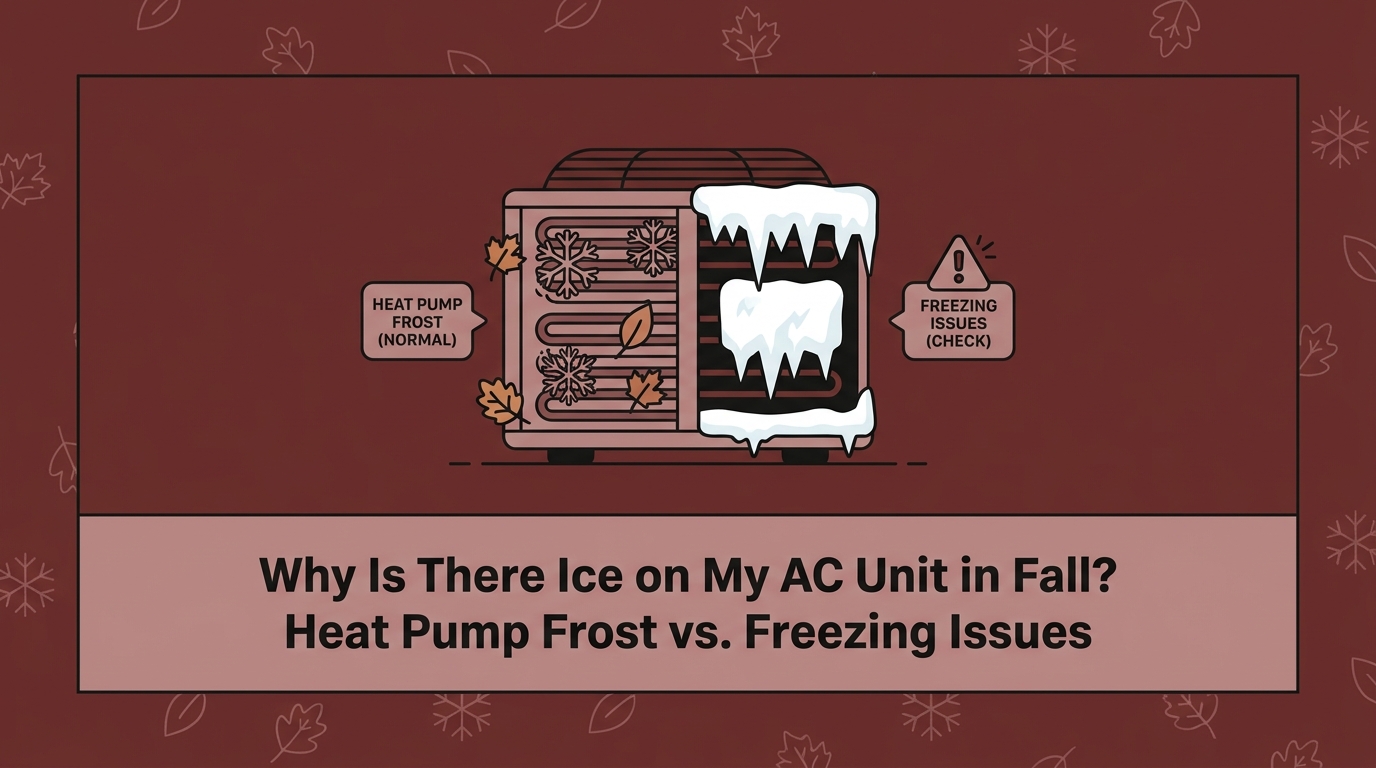
• Monitor the heat pump's defrost cycle: If you use a heat pump, it is normal for the outdoor unit to occasionally pause its fan and produce a whooshing sound as it melts frost off the outdoor coils. However, if the outdoor unit becomes encased in solid ice that does not melt, the defrost board or reversing valve may be failing.
• Re-verify the air filter: We cannot overstate the critical role of checking and replacing the air filter. A restrictive filter is the number one cause of weak airflow, leading to premature system wear and poor indoor comfort during a cold snap.
Phase 5: Securing the Pre-Winter Professional Inspection
DIY observation and checklist execution are excellent for catching obvious issues, but they represent only the surface level of system health. Transitioning from DIY observation to the necessity of professional preventative maintenance is the most important step before severe weather hits. The window of time before the deep freeze sets in is the most critical period for a comprehensive system evaluation.
Consistent, long-term care through routine HVAC maintenance prevents mid-season breakdowns. When the temperature drops below freezing, emergency service calls spike, and you do not want to be caught in the backlog with a failing furnace. For example, our technicians recently helped a customer needing HVAC maintenance and a propane fireplace repair at a vacation home on a narrow winter timeline; they relied on our prompt scheduling to get the thorough service completed before the weather deteriorated further. Proactive scheduling avoids the stress of narrow timelines and freezing living conditions.
A professional inspection covers highly technical safety and performance metrics that a homeowner checklist cannot address safely or accurately. Technicians utilize specialized tools to measure refrigerant levels in heat pumps, ensuring the charge is exact for optimal heating performance. They perform electrical load testing on capacitors, contactors, and motors to identify components that are drawing too much amperage and are nearing failure. For gas furnaces, a professional will verify heat exchanger integrity, checking for microscopic cracks that could leak dangerous combustion gases into the home.
Energy efficiency and system longevity are maximized when systems are tuned up annually. Working with a local team that truly understands Central Oregon's specific seasonal transitions and high-desert HVAC wear-and-tear ensures that your equipment is calibrated for the unique demands of altitude and extreme temperature shifts. Investing in this professional oversight guarantees that your system will run efficiently, keeping utility costs in check while providing reliable warmth.
Frequently Asked Questions About Fall Heating Startup
What should be on a fall home maintenance checklist for my HVAC system?
Your checklist should prioritize equipment health and airflow. Start by changing the air filter, clearing debris from around the outdoor heat pump or AC unit, checking that all indoor vents are open and unobstructed, and testing the thermostat. Finally, schedule a professional pre-winter inspection with our team to handle internal diagnostics like electrical testing and heat exchanger verification.
What should I check before turning my heat on for the winter?
Before flipping the switch, verify that the area around your furnace is completely clear of stored items and flammable materials. Check your air filter, ensure your outdoor unit is free of leaves and pine needles, and confirm your thermostat has fresh batteries if required. This basic prep ensures the system has the airflow and clearance it needs to operate safely.
Is it normal for a heater to smell when first turned on?
Yes, a brief burning dust smell is entirely normal during the first startup of the season. Over the summer, dust settles on the heating elements and heat exchanger; when the system heats up, this dust burns off. The smell is harmless and should naturally dissipate as the system runs.
How long should the burning dust smell last after turning on the furnace?
The standard dust burn-off odor should fade within 30 to 60 minutes of continuous operation. If the smell persists beyond a few hours, or if it smells like melting plastic, electrical ozone, or sulfur, turn the system off immediately and call a professional, as this indicates a mechanical issue.
Can a dirty air filter cause my heat pump to struggle during a cold snap?
Absolutely. A dirty filter acts as a physical barrier, severely restricting the amount of air the blower motor can pull through the system. This forces the equipment to work much harder to distribute heat, leading to poor indoor comfort, increased energy consumption, and a high risk of the system overheating and shutting down.
Ensure a Warm, Safe Winter with Proactive Care
The key to a stress-free winter in the Central Oregon high desert is being proactive rather than reactive when it comes to seasonal maintenance. Understanding the difference between normal startup behaviors—like a brief dust smell or the popping of expanding ductwork—versus actual mechanical red flags provides immense peace of mind. By addressing these factors early, you protect your home from unexpected mid-season breakdowns. The team at Mountain View Heating, Inc. encourages you to explore professional maintenance options today, ensuring your system is safe, efficient, and fully prepared for whatever winter brings.