


Is Your Home Ready for the High Desert Deep Freeze?
Are you wondering if your current heating system will survive another harsh winter, or are you hoping it holds together for just one more year? Deciding Between a Cold-Climate Heat Pump and a Gas Furnace for Bend Winters is a choice best made right now, during the September pre-heating season, before emergency replacements become your only option. As the fall shoulder season progresses, nighttime temperatures begin their rapid descent, turning a minor system inefficiency into a major comfort issue. At Mountain View Heating, we frequently hear from homeowners caught between sticking with traditional natural gas technology or making the switch to a modern, fully electric system.
Waiting until your equipment fails in the middle of a November freeze severely limits your choices. Taking a proactive approach allows you to evaluate your home's infrastructure, compare energy efficiencies, and make an objective decision that aligns with your long-term comfort goals. Whether you prioritize high-heat output or energy optimization, making this upgrade now ensures your home remains consistently warm regardless of what the weather brings.
For comprehensive support, explore our heating services or learn more about professional heat pump installation in Bend to secure your winter comfort.
Understanding the Demands of a Central Oregon Winter
Heating a home in Central Oregon is fundamentally different than heating a home in the Willamette Valley or the coastal regions. In our years serving the local community, our team has seen firsthand how the Bend high desert climate introduces unique thermal challenges that require a highly responsive and resilient HVAC system. Most generic national heating advice fails to account for the extreme environmental factors present in our specific region.
The most significant challenge is the High Desert diurnal temperature shift. It is entirely common for Bend residents to experience pleasant, sunny afternoons followed by rapidly freezing nights. Your home's thermal envelope expands and contracts with these swings, meaning your heating system must be capable of sitting idle during a 55-degree afternoon and immediately ramping up to combat a 20-degree drop just a few hours later.
A reliable heating system in this climate must handle several specific demands:
• Sudden temperature plummets: The ability to quickly recover indoor temperatures after the sun goes down and the ambient air rapidly cools.
• Sustained sub-freezing lows: Consistent operation when average winter lows dip into the 20s, with occasional deeper freezes pushing closer to zero.
• Dry air considerations: The high desert air holds very little moisture, which can make indoor air feel cooler than the thermostat reads, requiring steady, even heat distribution to maintain comfort.
• Uninterrupted reliability: A system that will not lock out or fail during extreme cold snaps when you need it most.
As local experts who understand these exact weather patterns, we know that generic solutions do not work here. Your equipment must be specifically sized, installed, and calibrated by our Mountain View Heating technicians to handle the aggressive temperature swings that define our local winters.
The Reality of Cold-Climate Heat Pumps in Sub-Freezing Temperatures
For decades, a common myth persisted that heat pumps were only suitable for mild, southern climates and would simply freeze up or blow cold air if the outdoor temperature dropped below freezing. While that may have been true for older, standard units, modern cold-climate heat pumps have completely rewritten the rules of electric heating.
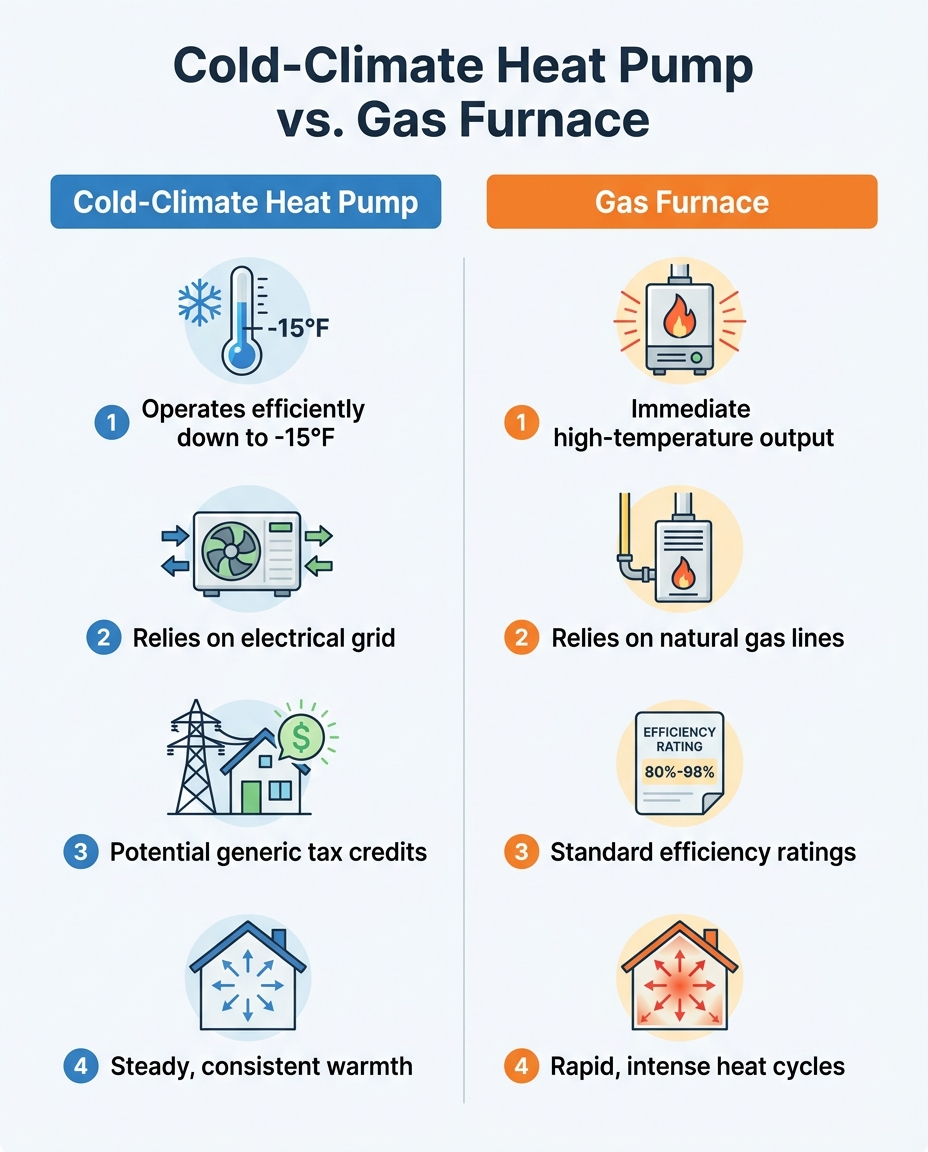
Standard heat pumps struggle in the cold because they rely on fixed-speed compressors. When the temperature drops, they lose their ability to extract ambient heat efficiently. Cold-climate models, however, are engineered with advanced refrigerants and sophisticated hardware designed specifically for northern winters. These systems can efficiently extract heat from the outside air even when the thermometer reads -15 degrees Fahrenheit. This technological leap has made home electrification a highly viable and increasingly popular trend across Oregon.
Because these systems are highly advanced, they require precise setup and maintenance. We frequently see the importance of expert diagnostics during routine service calls. For example, during a recent early fall tune-up, our technicians helped a homeowner who was experiencing a complicated problem with an older heat pump. Our team quickly identified the underlying issue, developed a targeted fix, and repaired it promptly. This highlights how complex these modern systems can be, and why having a knowledgeable local professional is critical for maximizing their lifespan and efficiency.
How Inverter Technology Works
The secret behind a cold-climate heat pump's winter performance is the inverter-driven compressor. Here is how this variable-speed technology changes the heating game:
1. Variable speed operation: Instead of simple on/off cycles (like a traditional furnace), an inverter compressor ramps up and down in tiny increments, much like the accelerator pedal in a car.
2. Continuous adaptation: The system constantly monitors the outdoor temperature and the indoor demand, adjusting its output to match the exact thermal load of the house.
3. Even heating: Because the unit runs longer at lower speeds, it eliminates the cold spots and temperature spikes associated with traditional single-stage heating.
4. High efficiency (HSPF2): By avoiding the massive energy draw of constantly starting and stopping, inverter systems achieve exceptionally high Heating Seasonal Performance Factor (HSPF2) ratings, maximizing the heat generated per unit of electricity consumed.
Preparing these advanced systems during the September pre-heating season ensures that the inverter technology is calibrated and ready to handle the sudden nighttime freezes typical of our region.
The Immediate Power and Reliability of Natural Gas Furnaces
While cold-climate heat pumps offer incredible efficiency, natural gas furnaces remain a cornerstone of winter comfort for a very good reason: immediate, high-temperature heat output. For homeowners who want the absolute guarantee of rapid warmth during a brutal cold snap, traditional combustion heating is hard to beat.
A gas furnace generates heat by burning fuel in a combustion chamber, which rapidly heats a heat exchanger. The blower motor then forces air over this extremely hot surface and distributes it throughout your ductwork. The air coming out of your vents from a gas furnace is typically much hotter (often exceeding 120 degrees Fahrenheit) than the air produced by a heat pump (which generally hovers around 95 to 100 degrees). This difference in supply temperature is why a gas furnace feels so powerful when you walk indoors from the freezing cold.
Modern gas furnaces are also remarkably efficient. Today's condensing furnaces boast Annual Fuel Utilization Efficiency (AFUE) ratings of up to 98%, meaning nearly all the fuel consumed is converted directly into usable heat for your home, with very little waste exhausted outside. This provides tremendous peace of mind for homeowners who rely on a familiar, robust technology.
Routine upkeep is essential to maintain this power. We emphasize this during every service visit. For instance, during a routine fall visit, our technicians performed comprehensive maintenance and provided the homeowner with an easy-to-understand explanation of their heating system's condition. Educating homeowners on their equipment ensures they understand the importance of regular furnace repair and maintenance to prevent unexpected breakdowns.
When High-Heat Output Matters Most
The Bend high desert climate often creates scenarios where high-heat output is the most desirable feature of a heating system. A gas furnace excels in specific situations:
• Rapid recovery times: If you turn your thermostat down while away at work, a gas furnace can recover those lost degrees significantly faster than a heat pump when you return to a cold house—a scenario our technicians encounter frequently.
• Extreme temperature plummets: When outdoor temperatures drop into the single digits, a gas furnace maintains consistent, blazing-hot warmth regardless of how cold the outside air becomes.
• Drafty or older homes: Homes with older insulation or less-than-ideal air sealing often benefit from the sheer volume of heat a gas furnace provides to overcome thermal loss.
Weighing Energy Efficiency Against Utility Reliance
Beyond the mechanics of heating your home, the choice between gas and electric fundamentally changes your utility reliance. This is a critical factor for homeowners evaluating long-term operational realities and utility bills.
Opting for a cold-climate heat pump means shifting your heating load entirely to the electrical grid. This is highly efficient, but it does make your winter comfort dependent on uninterrupted electrical service. Conversely, a natural gas furnace relies on underground gas lines. While a furnace still requires electricity to run its blower motor and control board, the primary fuel source is gas, which many homeowners view as a reliable backup during severe winter storms.
Long-term utility bills are directly impacted by the efficiency of the system you choose and the fluctuating rates of local utilities. Because heat pumps transfer heat rather than generating it from scratch, they can deliver more energy into your home than they consume. However, if your home is poorly insulated, an electric system might run constantly to keep up, negating some of those efficiency gains.
It is also worth noting that generic federal tax credits and local utility incentives may apply to qualifying high-efficiency installations. Programs designed to encourage home electrification often offer substantial generic rebates for heat pumps, while high-efficiency gas furnaces may also qualify for certain energy-saving incentives. Because these programs change frequently, we strongly advise consulting with our unbiased local experts at Mountain View Heating. We can help you navigate these generic rebate opportunities and determine which system aligns best with your home's existing infrastructure, which is a major factor in why Central Oregon homeowners are choosing heat pumps or sticking with gas.
Side-by-Side: Matching the Right Heating System to Your Needs
To make the best bottom-of-funnel decision for your home before the September pre-heating season ends, you need to weigh your specific priorities. There is no single "best" system—only the best system for your home's layout, your comfort preferences, and the realities of the Bend high desert climate.
If you want to prioritize high efficiency, reduce your carbon footprint, and you prefer steady, continuous heating, a cold-climate heat pump is an excellent choice. If you prioritize immediate, high-temperature heat, have existing gas infrastructure, and want rapid temperature recovery during extreme cold, a natural gas furnace remains the standard.
For many Central Oregon homeowners, a pattern we see often at Mountain View Heating is the shift toward a dual-fuel system. Also known as a hybrid system, this setup pairs a high-efficiency electric heat pump with a natural gas furnace. The heat pump handles the heating duties during the milder fall days and moderate winter weather. When the temperature drops below a specific economic balance point—typically around 30 degrees—the system automatically switches over to the gas furnace to provide powerful, immediate heat. This gives you the extreme efficiency of electricity most of the time, with the robust backup of gas when you truly need it.
• Heat Output Style — Cold-Climate Heat Pump: Steady, continuous, moderate temperature (approx. 95°F - 100°F) — Natural Gas Furnace: Immediate, rapid, high temperature (approx. 120°F+)
• Utility Reliance — Cold-Climate Heat Pump: 100% reliant on the electrical grid — Natural Gas Furnace: Relies on natural gas lines (requires minor electricity for blower)
• Efficiency Metric — Cold-Climate Heat Pump: HSPF2 (Heating Seasonal Performance Factor) — Natural Gas Furnace: AFUE (Annual Fuel Utilization Efficiency)
• Best For... — Cold-Climate Heat Pump: Well-insulated homes, moderate-to-cold days, electrification goals — Natural Gas Furnace: Older homes, rapid temperature recovery, extreme sub-zero freezes
• Incentive Potential — Cold-Climate Heat Pump: Often qualifies for generic federal electrification tax credits — Natural Gas Furnace: May qualify for standard high-efficiency utility rebates

Frequently Asked Questions About Heating Upgrades in Bend
At what temperature does a heat pump stop being effective?
Modern cold-climate heat pumps remain highly effective even when temperatures drop to -15 degrees Fahrenheit. Unlike older standard models that struggled below freezing, inverter-driven compressors allow these advanced units to extract heat from extremely cold air. However, as temperatures approach zero, their efficiency decreases, which is why proper sizing and installation by a local expert are critical for the Bend high desert climate.
Is a heat pump better than a gas furnace in Oregon?
Neither system is universally better; it depends entirely on your home's infrastructure and your comfort goals. A heat pump is better for homeowners prioritizing high energy efficiency, steady temperatures, and moving away from fossil fuels. A gas furnace is better for those who want rapid temperature recovery, blazing-hot vent air, and reliable performance during the deepest winter freezes.
Do I need a backup furnace with a cold climate heat pump?
While a true cold-climate heat pump can handle sub-freezing temperatures on its own, many Central Oregon homeowners choose to install a backup furnace, creating a dual-fuel system. This hybrid approach allows the heat pump to operate during mild weather while the gas furnace takes over during extreme cold snaps, providing an optimal balance of efficiency and high-heat reliability.
Can a heat pump keep my house warm in Bend winters?
Yes, a properly sized cold-climate heat pump can absolutely keep your house warm during a Bend winter. The key is ensuring your home is adequately insulated and that the system features a variable-speed inverter compressor designed for northern climates. Standard, single-stage heat pumps will struggle here, but cold-climate models are engineered specifically for these exact conditions.
Should I replace my gas furnace with a cold-climate heat pump?
Replacing a gas furnace with a heat pump is a great option if you want to lower your carbon footprint, take advantage of generic federal tax credits, and enjoy highly efficient, even heating. However, you must be prepared for a different style of heat—heat pumps deliver steady, moderate warmth rather than the sudden blast of intense hot air you are used to with a furnace.
How do diurnal temperature shifts in the High Desert affect heating efficiency?
The rapid swing from warm afternoons to freezing nights forces a heating system to adapt quickly to changing thermal loads. Inverter-driven heat pumps handle this well by ramping their speed up and down to match the exact temperature drop. Gas furnaces handle it by rapidly injecting high heat into the home to quickly recover the temperature once the sun goes down and the cold sets in.
Secure Your Winter Comfort Before the First Snow
Waiting until your aging equipment breaks down limits your options and forces a rushed decision during the most inconvenient time of the year. The September pre-heating season is the ideal window to evaluate your home's needs, compare the benefits of gas versus electric, and make a calculated upgrade.
Whether a modern cold-climate heat pump or a robust natural gas furnace is the right fit, our team at Mountain View Heating is committed to providing unbiased advice tailored to your unique situation. Schedule a professional assessment today to secure a clear, localized breakdown of your options. Let us help you confidently weigh efficiency and utility reliance so you can enter this winter with a reliable, high-performing heating system.