


Why Mini Split Maintenance Tips for High Desert Homeowners Are Different From the Rest of the Country
If you're looking for mini split maintenance tips for high desert homeowners, here's what you need to know right away:
Quick-reference maintenance checklist for high desert mini-splits:
1. Clean filters every 2-4 weeks during summer (not the standard 90 days)
2. Rinse the outdoor unit with a gentle garden hose after dust storms — never a pressure washer
3. Flush the condensate drain monthly with white vinegar to prevent mineral buildup
4. Keep 24 inches of clearance around the outdoor condenser at all times
5. Check for warning signs after heat waves: weak airflow, rattling, longer run cycles, or error codes
6. Schedule two professional tune-ups per year — once in spring, once before winter
7. Never DIY refrigerant or electrical work — these require certified technicians
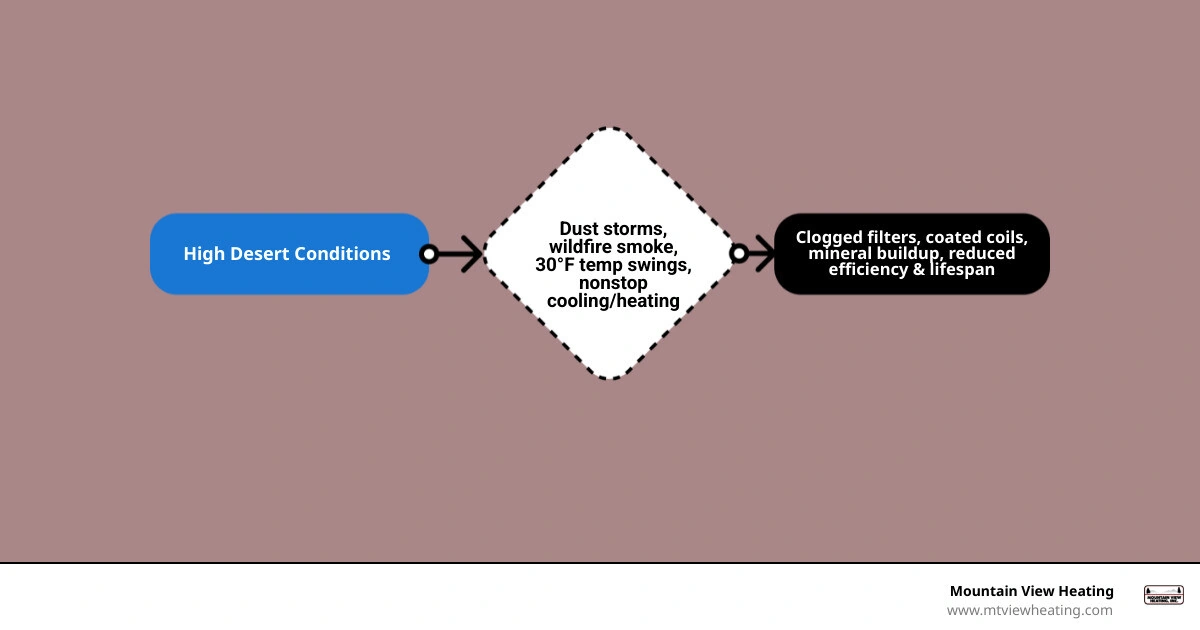
Living in Central Oregon — whether you're in Bend, Redmond, Sisters, or the surrounding high desert communities — means your mini-split faces conditions that most HVAC guides simply don't account for. Fine alkaline dust coats coils and clogs filters far faster than in temperate climates. Wildfire smoke can load a filter in days. Daytime temperatures can swing 30 or more degrees between morning and afternoon, putting constant stress on your system's components. And when summer arrives, your mini-split may run 12 to 15 hours a day just to keep up.
The result? A system that wears faster, works harder, and fails sooner — unless you stay ahead of it with a maintenance routine built specifically for where you live.
Standard manufacturer schedules are written for average climates. The high desert is anything but average. Neglected systems in conditions like these can consume 10 to 25 percent more energy than a well-maintained unit, and that strain adds up quickly over a long cooling season.
This guide walks you through everything you need — from safe DIY cleaning steps to seasonal checklists to knowing when it's time to call a professional — so your mini-split stays efficient and reliable all year long.
Why mini split maintenance tips for high desert homeowners matter more here
High desert homes put mini-splits through a lot. In Central Oregon, we deal with dust, pollen, wildfire smoke, hot sunny afternoons, chilly nights, and winter snow. That combination is hard on both indoor and outdoor equipment.
Mini-splits are already a smart fit for our climate because they avoid the duct losses that can rob traditional systems of efficiency. If you want a broader overview of how these systems work and why homeowners like them, visit Mini Splits.
Why high desert conditions wear mini-splits faster
A few local conditions matter most:
• Fine dust and airborne particulates load filters faster than in milder climates
• Dust can form a film on evaporator and condenser coils, reducing heat transfer
• Wildfire smoke can clog filters in a hurry during heavy smoke events
• Strong sun and UV exposure can age outdoor materials faster
• Big day-night temperature swings create repeated expansion and contraction in components
• Long summer run times increase wear on motors, boards, and compressors
In plain English: your system has to breathe, and high desert air makes that harder.
How regular maintenance protects efficiency, comfort, and lifespan
Routine care is not just housekeeping. It directly affects performance.
Research consistently shows that dirty filters alone can raise energy use by 10% or more. Neglected HVAC systems can use 10% to 25% more energy than well-maintained ones. Keeping equipment clean can also reduce cooling costs, with DOE-backed guidance pointing to meaningful savings when coils and filters stay clear.
Well-maintained mini-splits can cut energy waste by up to 30% through regular filter cleaning, coil care, and early problem detection. Monthly homeowner checks can catch many issues before they turn into repairs.
That means maintenance helps with:
• Lower energy use
• Better airflow and more even comfort
• Cleaner indoor air
• Fewer surprise breakdowns
• Longer system life
• Better performance in both summer cooling and winter heating
The safest DIY mini split maintenance tips for high desert homeowners

There are several maintenance tasks homeowners can safely handle. The key word is safely.
Before doing any cleaning:
• Turn the system off
• Shut off power at the breaker if you will open panels or work near components
• Wait a few minutes before touching the unit
• Use soft tools, not aggressive cleaners or high pressure
A safe homeowner tool list includes:
• Soft brush vacuum attachment
• Microfiber cloth
• Mild dish soap
• Spray bottle with water
• Garden hose with gentle flow
• Wet/dry vacuum for drain line clearing
• White vinegar
• Work gloves
• Flashlight
Skip pressure washers, harsh coil chemicals, and anything metal that can bend fins.
How often to clean filters in dusty high desert homes
In a typical home elsewhere, filter cleaning may be less frequent. In Bend, Redmond, Sisters, Sunriver, La Pine, and nearby areas, that schedule is usually too slow.
A practical high desert schedule is:
• Every 2 to 4 weeks during summer
• After dust storms or especially windy weeks
• Immediately after heavy wildfire smoke exposure
• About monthly in spring and fall
• More often if you have pets, allergies, or nearby construction
Some desert research found filters can clog 2 to 3 times faster than in moderate climates. That lines up with what we see locally: a filter that looked fine two weeks ago can be packed with fine dust by the next hot spell.
Cleaning the indoor head without damaging fins or electronics
For basic indoor cleaning:
1. Turn the system off
2. Open the front panel carefully
3. Remove the washable filters
4. Vacuum loose dust with a soft brush attachment
5. Rinse filters with lukewarm water and mild soap if needed
6. Let filters dry completely before reinstalling
7. Wipe the front cover, louvers, and accessible plastic surfaces with a damp microfiber cloth
8. Check that furniture, curtains, or shelves are not blocking airflow
A few rules matter here:
• Do not soak electronics
• Do not scrub aluminum fins with force
• Do not reinstall damp filters
• Do not spray cleaners deep into the unit unless the manufacturer specifically allows it
If the indoor head still smells musty, airflow remains weak, or the blower wheel looks dirty inside, it is time for a deeper professional cleaning.
Cleaning the outdoor unit and keeping airflow open
Outdoor units in Central Oregon collect more than just dust. We also see pine needles, sagebrush debris, seed fluff, and windblown material collecting around the base.
Safe cleaning steps:
1. Turn power off
2. Remove loose debris by hand
3. Keep at least 24 inches of space around the unit, and more is even better when possible
4. Gently rinse the coil with a garden hose
5. Avoid spraying directly into electrical sections
6. Clear the base pan so drain holes stay open
A few important reminders:
• Never use a pressure washer
• Do not mash fins with a stiff brush
• Do not stack things around the unit "just for now" - outdoor units hate that
• Keep shrubs, fencing, and stored items back so the system can breathe
Good clearance helps combat sand, dust, and summer heat because the unit can move air properly. Restricted airflow makes the compressor work longer and harder.
How to handle condensate drains in dry climates
People often assume dry climates mean drain lines are less important. Not true.
Even in low humidity, cooling mode still creates condensation. Dust, residue, and mineral deposits can collect in the drain pan and line. A partially clogged drain can lead to water leaks, odors, or shutoffs.
Homeowner-safe drain care includes:
• Visually checking for standing water in or around the indoor head
• Looking for drips on the wall below the unit
• Flushing the drain line with white vinegar monthly during heavy cooling season if your system design allows access
• Using a wet/dry vacuum at the outside drain termination to pull minor clogs
Call for service if you notice:
• Water leaking indoors
• Repeated drain clogs
• Gurgling sounds
• Musty smells that return quickly
• A unit shutting off unexpectedly due to drainage issues
How to prevent dust buildup on coils and spot high desert warning signs early
Dust prevention is mostly about staying ahead of buildup rather than waiting for obvious dirt. By the time a coil looks bad, efficiency has usually already dropped.
Coils stay cleaner longer when you:
• Clean filters on schedule
• Rinse the outdoor unit after dusty weather
• Maintain proper clearance
• Keep windows and doors sealed to reduce indoor dust load
• Schedule regular professional coil and blower cleaning
If you need help diagnosing a system that is no longer keeping up, you can learn more here: More info about mini split repair in Bend.
Signs your mini-split is struggling after dust storms or extreme heat
Watch for these high desert trouble signs:
• Rooms taking longer to cool or heat
• Weak airflow from the indoor head
• Longer run cycles than usual
• Short cycling or frequent restarting
• Rattling, buzzing, or vibration
• Dusty or musty odors
• Frost or ice where it should not be
• Error codes on the unit
• Rising energy use without a clear reason
After a dusty week or smoke event, the first thing to suspect is usually airflow restriction. Filters and coils are common culprits.
Refrigerant, line insulation, and electrical issues homeowners should not DIY
Some tasks are not DIY jobs, full stop.
Do not attempt to handle:
• Refrigerant charging or leak diagnosis
• Opening sealed refrigerant lines
• Electrical troubleshooting inside the unit
• Control board repairs
• Compressor testing
• Major drain disassembly
• Line-set insulation replacement near live components
Mini-splits use sealed refrigerant systems. Refrigerant is not something the unit "uses up." If levels are low, there is a leak that must be found and repaired. In extreme heat, even a small refrigerant problem can reduce capacity sharply and strain the system.
Also keep an eye on refrigerant line insulation outdoors. If it is cracked, sun-damaged, or falling apart, efficiency can suffer and the line may sweat or overheat.
Installation mistakes that make desert wear and tear worse
Some maintenance problems start with installation choices.
Common mistakes that make high desert conditions harder on a mini-split include:
• Outdoor unit placed in harsh direct afternoon sun with no thought to airflow
• Unit mounted too low where snow, mud, or debris collect
• Too little clearance around the condenser
• Poor line protection
• Loose or stressed line connections
• Incorrect system sizing
• Indoor head installed where airflow is blocked by furniture or room layout
• Open airflow on all sides — Problem setup: Unit crowded by fencing, shrubs, or storage
• Placement with reduced afternoon heat load when possible — Problem setup: Full blast afternoon sun with poor ventilation
• Elevated for drainage and winter conditions — Problem setup: Mounted where snow or debris packs around the base
• Proper sizing for local load — Problem setup: Oversized or undersized system
• Protected line set and sound insulation — Problem setup: Exposed, degraded, or poorly supported lines
A seasonal maintenance calendar for high desert mini-splits
High desert maintenance works best on a seasonal rhythm.
Spring startup checklist for dusty shoulder seasons
Spring is the best time to reset your system before summer demand hits.
Checklist:
• Wash or rinse filters
• Check the indoor head for dust film
• Inspect outdoor coil and remove debris
• Test the condensate drain
• Replace remote batteries if needed
• Run the system in cooling mode on a mild day
• Listen for odd noises
• Check line insulation for sun damage
• Confirm outdoor clearance
Spring matters in Central Oregon because weather swings can be dramatic. A unit may heat in the morning and cool in the afternoon. That is not the time to discover a maintenance issue.
Summer maintenance during peak dust and cooling demand
Summer is when mini-splits earn their keep.
Summer checklist:
• Check filters every 2 weeks
• Clean filters every 2 to 4 weeks, or sooner if dusty
• Rinse outdoor coils after dust storms
• Keep the area around the unit free of weeds and debris
• Monitor airflow and cooling speed
• Check again after wildfire smoke events
• Avoid large thermostat swings if possible
Mini-splits are built to run steadily. They are usually happier maintaining a consistent setpoint than being forced into constant stop-start cycles.
Fall prep for cleaner operation and winter readiness
Before heating season starts:
• Do a more thorough cleaning of filters and visible indoor surfaces
• Inspect the outdoor unit base and mounting pad
• Check that drain paths are clear
• Inspect line insulation
• Test heating mode before the first cold snap
• Listen for unusual noises during startup
• Make sure leaves, needles, and yard debris are cleared away
Fall is also a smart time to schedule service if your unit worked hard all summer.
Winter heating maintenance in high desert conditions
High desert winters are different from low-elevation deserts. In our area, outdoor units may deal with snow, frost, and freezing temperatures.
Winter best practices:
• Keep snow from piling around the outdoor unit
• Brush off snow gently with a soft broom
• Do not chip ice off with tools
• Allow the system to complete defrost cycles normally
• Keep the thermostat steady instead of making large temperature swings
• Make sure airflow around the outdoor unit stays open
Defrost cycles are normal in heating mode. The unit may pause, steam, or make unfamiliar noises briefly. That can look dramatic if you are not expecting it, but it is often just the system doing its job. For a broader explanation of cold-weather heat pump operation in our climate, see More info about high desert heat pump performance.
When to schedule professional mini-split service in Central Oregon
For most high desert homeowners, we recommend professional maintenance twice a year:
• Once in spring before peak cooling
• Once in fall or early winter before heavy heating use
That schedule matches the climate better than a one-size-fits-all annual visit. If you want local service support, learn more here:
• More info about mini split service in Bend
• More info about mini split service in Redmond
• More info about mini split service in Sisters
What a professional tune-up should include for high desert homes
A thorough tune-up should cover more than a quick rinse.
It should include:
• Indoor coil cleaning
• Outdoor coil cleaning
• Blower wheel inspection and cleaning as needed
• Condensate drain and pan service
• Filter inspection
• Refrigerant performance check
• Electrical inspection and tightening where appropriate
• Amp draw and operating test
• Thermostat or remote control check
• Inspection for wear, vibration, and abnormal noise
• Performance verification in heating or cooling mode
This is also where early problems are often found. Research suggests routine maintenance can catch the majority of developing issues before they turn into bigger repairs.
When repair or replacement makes more sense than more cleaning
Sometimes the issue is no longer dirt.
You may need repair or replacement if you have:
• Repeated breakdowns
• Persistent rattling or buzzing
• Poor output even after cleaning
• Ongoing refrigerant leaks
• Major coil damage
• Electrical faults
• Aging equipment with declining reliability
If your system is past the point where maintenance alone will solve the problem, replacement may be the better long-term answer. Learn more here: More info about mini split replacement in Bend
Frequently Asked Questions About mini split maintenance tips for high desert homeowners
How often should I clean my mini-split filter in Bend, Redmond, or Sisters?
During summer, every 2 to 4 weeks is a good rule for most homes. Check even more often if you have pets, allergies, wildfire smoke, or a lot of dust exposure. In spring and fall, monthly checks are usually appropriate.
Can I rinse my outdoor mini-split unit with a garden hose?
Yes, as long as you do it gently and with the power off. Use a normal hose spray, not a pressure washer. The goal is to remove dust from the coil without bending fins or forcing water into electrical parts.
What should I do if my mini-split stops cooling well after a dusty week?
Start with the basics:
1. Check and clean the filters
2. Make sure nothing is blocking the indoor airflow
3. Inspect the outdoor unit for dust and debris
4. Rinse the outdoor coil gently
5. Confirm there is at least 24 inches of clearance
6. Check for drain issues, odors, or error codes
If cooling is still weak, schedule a repair visit. Dust often reveals an airflow problem, but it can also uncover deeper issues like coil fouling, blower buildup, or refrigerant problems. For more guidance, see More info about mini split repair in Redmond
Conclusion
High desert living is beautiful, but it is not gentle on HVAC equipment. Dust, smoke, heat, cold nights, and winter weather all add stress to a mini-split system. The good news is that consistent maintenance goes a long way.
By cleaning filters often, keeping the outdoor unit clear, watching for warning signs, and scheduling professional tune-ups before summer and winter, you give your system its best chance to stay efficient, reliable, and ready for whatever Central Oregon weather decides to do next.
At Mountain View Heating, we focus on helping homeowners in Bend and surrounding communities protect their comfort year-round with customer-first service and practical solutions that fit our local climate. If your ductless system needs seasonal care, troubleshooting, or a deeper inspection, start here: More info about mini split service in Sisters