


Why Heat Pump Maintenance Tips for Homeowners Matter More Than You Think
Heat pump maintenance tips for homeowners can be the difference between a system that runs smoothly for 20 years and one that breaks down right when you need it most — like during a cold Bend, Oregon winter.
Here are the most important heat pump maintenance tasks every homeowner should know:
1. Replace or check air filters every 1–3 months to keep airflow strong and energy bills low
2. Clear at least 2 feet of space around the outdoor unit — remove leaves, debris, and snow regularly
3. Set your thermostat to a consistent temperature and avoid large swings that trigger expensive backup heat
4. Rinse outdoor coils gently with a garden hose a few times a year (power off first)
5. Keep indoor vents open and unobstructed by furniture, rugs, or curtains
6. Schedule professional maintenance at least once a year — twice if your system runs year-round (which most do)
7. Watch for warning signs like strange noises, ice buildup, musty smells, or rising energy bills
Heat pumps are different from furnaces or air conditioners — they run year-round, handling both heating and cooling without an off-season. That constant workload means wear adds up faster, and small problems can snowball quickly. A neglected heat pump can use 10–25% more energy than a well-maintained one, and may need replacement years sooner than expected.
The good news? Most of what keeps a heat pump healthy is simple, low-cost, and easy to do yourself. And when you know what to look for, you can catch the issues that do need a professional before they turn into expensive emergencies.
Essential DIY Heat Pump Maintenance Tips for Homeowners
Maintaining a heat pump doesn't require a degree in engineering. In fact, some of the most impactful heat pump maintenance tips for homeowners involve basic household chores that keep the air moving freely.
Airflow is Everything
Your heat pump works by moving heat from one place to another. To do this efficiently, it needs to "breathe." When airflow is restricted, the system has to work twice as hard to achieve the same temperature, which spikes your energy bills and wears out the motor.
The single most important thing you can do is manage your filters. We recommend using pleated filters with a MERV rating between 8 and 11. While higher ratings (like MERV 16) might seem better for air quality, they can actually be too restrictive for standard residential systems, causing the same strain as a dirty filter. For more specific advice on local conditions, check out these Heat Pump Maintenance Bend OR Tips.
Outdoor Unit Care
The outdoor portion of your system is constantly battling the elements. In Central Oregon, this means dealing with pine needles, dust, and falling leaves. To keep it running right:
• Clear the Perimeter: Maintain at least a 2-foot clearance around the entire unit. Trim back shrubs and tall grass that might block air intake.
• Keep it Clean: Use a garden hose to gently rinse the outdoor coils. Never use a pressure washer, as the high-powered stream can flatten the delicate metal fins.
• Check the Base: Ensure the unit is level and elevated at least 4 to 8 inches off the ground to allow for proper drainage.
For those living in more wooded areas, our Heat Pump Maintenance Sisters OR Guide offers deeper insights into managing forest debris.
How often should I use these heat pump maintenance tips for homeowners?
Consistency is key. We suggest checking your air filters every month, especially during the peak of summer and the depths of winter. If you have pets or live in a particularly dusty area, you may need to replace them more frequently.
Ideally, you should perform a "seasonal sweep" of your outdoor unit during the spring and fall transitions. This ensures that the system is clear of winter debris before the cooling season starts and free of summer dust before the heating season kicks in. You can find a helpful schedule in these Redmond Heat Pump Maintenance Tips.
Are these heat pump maintenance tips for homeowners enough to skip professional service?
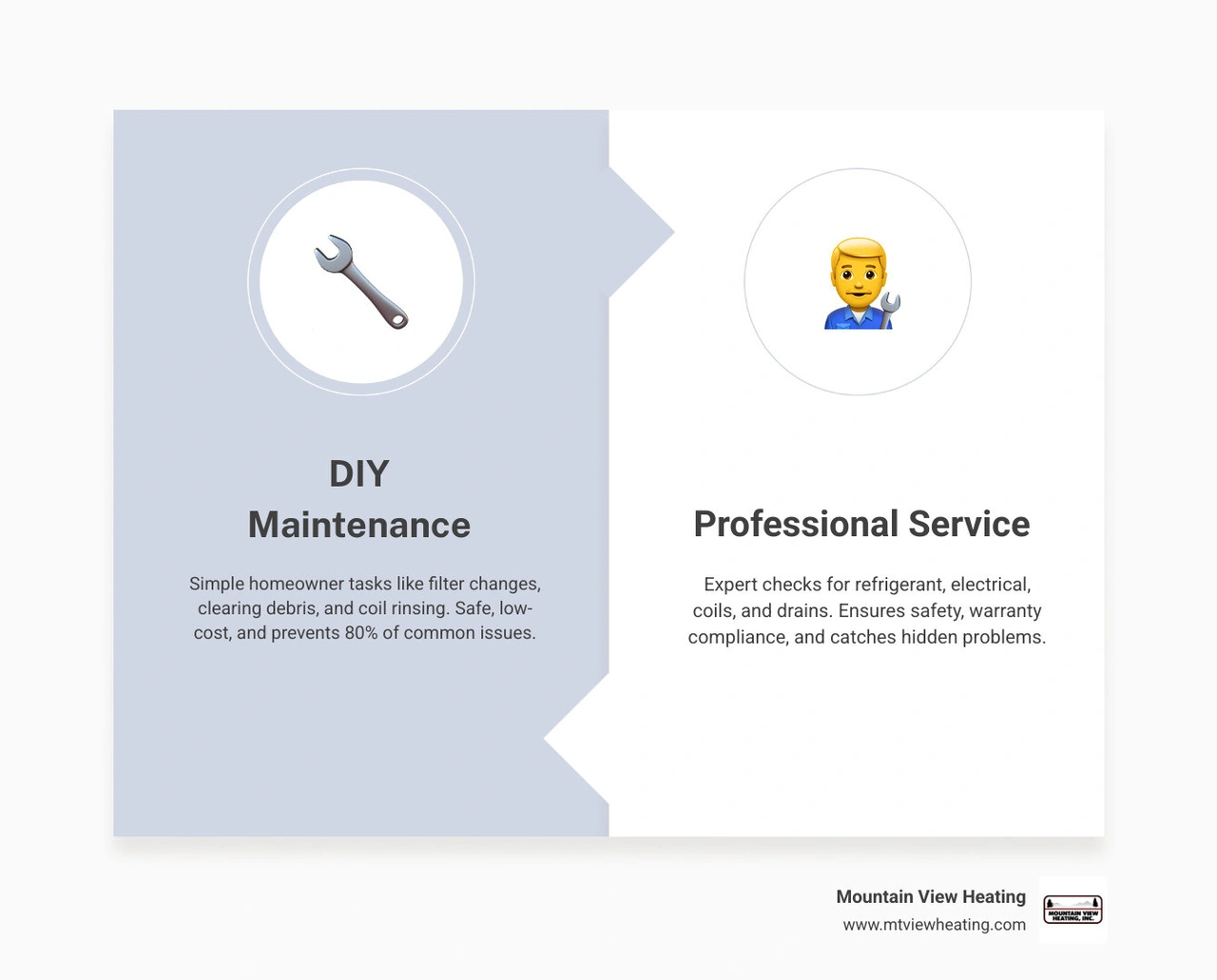
While DIY tasks are essential, they are only half the battle. Think of it like your car: you can check the oil and wash the exterior, but you still need a mechanic for the internal engine work.
DIY maintenance cannot address refrigerant levels, electrical connections, or internal component testing. Attempting to open the electrical panels or handle refrigerant yourself is not only dangerous due to high-voltage circuits (240 volts) but can also void your manufacturer's warranty. Professional visits are required to keep that warranty valid. For a better understanding of where DIY ends and professional service begins, refer to our Heat Pump Maintenance Guide Three Rivers OR.
"How can I keep my system running efficiently during a Bend winter?"
Winter in Central Oregon brings unique challenges, from heavy snow in La Pine to freezing temperatures in Sunriver. Your heat pump is designed to handle cold, but it needs a little help when the snow starts to pile up.
Understanding the Defrost Cycle
It is perfectly normal to see a light layer of frost on your outdoor unit during winter. When this happens, the heat pump enters "defrost mode," which temporarily reverses the cycle to melt the ice. You might see steam rising from the unit or hear a loud "whoosh" sound—don't panic! This is the system working exactly as it should.
Snow and Ice Management
While light frost is fine, heavy snow or solid ice is not. If snow blocks the top or sides of the unit, the heat pump can’t pull in air, which can lead to a total system shutdown.
• Clear the Snow: Use your hands or a soft brush to clear snow off the top and sides.
• Avoid the Chisel: Never use a screwdriver, ice pick, or shovel to chip away at ice on the coils. You could easily puncture a refrigerant line, leading to a very expensive repair.
• Gutter Check: Ensure your gutters aren't leaking directly onto the unit. Water dripping from the roof can freeze into a thick block of ice that the defrost cycle can't handle.
For more cold-weather strategies, read our Heat Pump Maintenance Tips for the Winter.
Maximizing Efficiency: Thermostat and Operation Strategies
How you operate your thermostat has a massive impact on your energy bills. Heat pumps are "slow and steady" machines; they work best when maintaining a consistent temperature rather than trying to heat a room quickly.
• The "Auto" Fan Rule: Set your fan to "Auto" rather than "On." This ensures the fan only runs when the system is actively heating or cooling, which saves energy and helps manage humidity.
• Avoid Large Setbacks: Unlike a furnace, you shouldn't drop your thermostat by 10 degrees at night. A jump of more than 2 or 3 degrees can trigger the "Emergency Heat" or "Auxiliary Heat" (electric resistance strips). This backup heat is significantly less efficient and can double or triple your heating costs.
• Smart Thermostats: Installing a heat-pump-compatible smart thermostat can help manage these triggers automatically, ensuring you stay comfortable without the sticker shock on your utility bill.
For more ways to save, check out Heat Pump Maintenance Bend OR Best Deals.
"What should a professional inspection include for my Central Oregon home?"
When we come out for a professional visit, we do a deep dive into the mechanical health of your system. This isn't just a "quick look"—it’s a comprehensive tune-up designed to prevent 80% of common emergency breakdowns.
A high-quality professional visit should include:
1. Refrigerant Charge Verification: We check that your refrigerant levels are exact. Too much or too little can slash efficiency and damage the compressor.
2. Electrical Inspection: We tighten all connections and inspect the "contactors" and "capacitors." These are the parts most likely to fail during a heatwave or cold snap.
3. Coil Cleaning: We use specialized, self-rinsing cleaners on the indoor evaporator coil to remove pet dander, dust, and mold spores that a hose can't reach.
4. Drainage Care: We flush the condensate drain line to prevent water backups and leaks inside your home.
5. Blower Calibration: We inspect the blower motor and wheel to ensure optimal airflow throughout your ductwork.
Whether you need Heat Pump Service Bend OR or a Heat Pump Maintenance Sunriver OR check-up, our team ensures every component is ready for the season ahead.
"How do I recognize when my unit needs urgent repairs?"
Sometimes, despite your best efforts, things go wrong. Recognizing the early warning signs can save you from a total system failure in the middle of the night.
• Grinding or Screeching — What it Usually Means: Failing motor bearings or a bad belt. — Action Required: Turn off and call for service immediately.
• Musty or Burning Odors — What it Usually Means: Mold in the drain line or electrical issues. — Action Required: Professional inspection needed.
• Short Cycling — What it Usually Means: The unit turns on and off every few minutes. — Action Required: Check filter first; then call a pro.
• Weak Airflow — What it Usually Means: Clogged filter, blocked ducts, or blower issue. — Action Required: Check filters and vents.
• Spiking Energy Bills — What it Usually Means: System is losing efficiency or stuck in Aux Heat. — Action Required: Schedule a tune-up to find the leak/fault.
• Persistent Ice — What it Usually Means: Malfunctioning defrost cycle or low refrigerant. — Action Required: Professional repair required.
If you notice these signs in the South County area, our Heat Pump Maintenance La Pine OR experts are ready to help. For those further north, we offer dedicated Heat Pump Maintenance Redmond OR support to get your comfort back on track.
Frequently Asked Questions
What MERV rating is best for my heat pump?
For most residential heat pumps in Central Oregon, a MERV 8 to MERV 11 filter is the "sweet spot." It provides excellent filtration for dust, pollen, and pet dander without putting undue stress on your blower motor. Avoid MERV 13 or higher unless your system has been specifically modified to handle the increased resistance.
How do I safely remove ice from the outdoor unit?
If your unit is encased in a thick layer of ice, the safest method is to turn the system off at the thermostat and pour warm (not boiling) water over the coils to melt the ice. Never use sharp tools like hammers or ice picks, as the copper tubing inside the coils is very thin and easily damaged. If the ice returns quickly, you likely have a technical fault that needs a professional.
Is a maintenance service contract worth the investment?
Yes, primarily for the peace of mind and "priority" status. Most service contracts include two annual visits (spring and fall), which pays for itself in energy savings and prevented repairs. Additionally, contract members usually get priority scheduling during the busiest times of the year, ensuring you aren't stuck waiting when everyone else's system breaks down at once.
Conclusion
At Mountain View Heating, we’ve spent over 40 years keeping Central Oregon families comfortable. We know that your heat pump is a major investment, and our goal is to help you protect it. Whether you are looking for more information on Heat Pumps or need to schedule a tune-up, our team is committed to your 100% satisfaction.
From Bend to Redmond and Sisters to La Pine, we provide 24/7 emergency support to ensure you’re never left in the cold. Don't wait for a breakdown—give your heat pump the care it deserves today.